Aa
  • Read, Watch, Listen
  • TJI Series
  • Community Action
  • Events
  • Zedi
Follow us and continue the conversation
  • LinkedIn
  • Instagram
  • FaceBook
  • X
  • YouTube
Test yourself with the TJI Quiz!

Adjust size of text

Aa

Follow us and continue the conversation

  • LinkedIn
  • Instagram
  • FaceBook
  • X
  • YouTube

Your saved articles

You haven't saved any articles

What are you looking for?

Original reporting, insightful analysis and diverse views, delivered straight to your inbox

  • LinkedIn
  • Instagram
  • FaceBook
  • X
  • YouTube
Your support fuels our mission to inform, entertain and inspire.

The Jewish Independent is bound by the Standards of Practice of the Australian Press Council. If you believe the Standards may have been breached, you may approach The Jewish Independent or make a complaint to the Australian Press Council in writing at www.presscouncil.org.au. The Council may also be contacted on 1800 025 712.

  • Our Story
  • Contact us
  • Our Team
  • Support us
  • Guidelines
  • Pitch your idea
  • Republishing us
  • Community Action
  • Our Awards
  • LinkedIn
  • Instagram
  • FaceBook
  • X
  • YouTube
Aboriginal FlagTorres Strait Islanders Flag

The Jewish Independent acknowledges Aboriginal and Torres Strait Islander peoples as the Traditional Owners and Custodians of Country throughout Australia. We pay our respects to Elders past and present, and strive to honour their rich history of storytelling in our work and mission.

© The Jewish Independent 2026All Rights Reserved
Website design and development by Your Creative, MelbourneTerms & ConditionsPrivacy Policy
HomeRead, Watch, ListenAustralia
ExplainerAustraliaIsrael

Controversial Israeli journalist Zvi Yehezkeli to speak in Australia

Yehezkeli blames Muslim immigration for antisemitism and has argued there are "no ordinary civilians" in Gaza.
The Jewish Independent
Print this
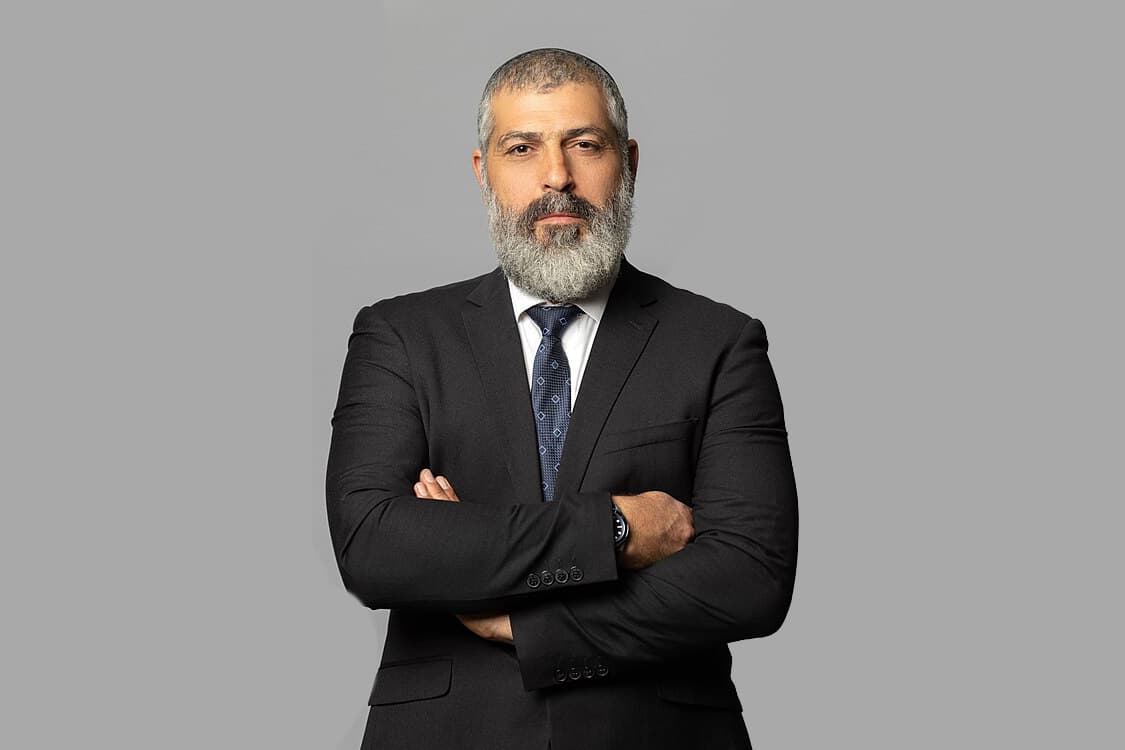
Zvi_Yehezkali

Zvi Yehezkali (Ran Yehezkel, CC)

Published: 19 February 2026

Last updated: 19 February 2026

Few Israeli media figures working on Arab affairs are as recognisable, or as polarising, as Zvi Yehezkeli, who is scheduled to visit Australia as a keynote speaker in March.

A veteran journalist and commentator, Yehezkeli built his reputation over two decades covering Palestinian politics, Islamist movements and regional security dynamics, first as head of the Arab Affairs desk at Channel 10 (later News 13), and more recently as a senior commentator and program host on i24NEWS.

He is known for his strong statements about Arab and Palestinian issues, including blamings Muslim immigration for rising antisemitism across the west and supporting immigration restrictions. He has also garnered controversy for his hawkish views on Gaza, including saying Israel should have begun the war with the mass killing of Gazans.

Yehezkeli will be speaking at fundraising events in Melbourne and Sydney, with former Israeli president Reuven Rivlin and psychologist Dr Yamit Sol. The event is supported by mainstream community organisations including Wizo Victoria, the Melbourne Hebrew Congregation, Magen David Adom, and Central Synagogue, as well as advocacy groups including the Australian Jewish Association and StandWithUs.

Who is Zvi Yehezkeli?

Born in Jerusalem in 1970 to a family of Iraqi and Kurdish Jewish background, Yehezkeli’s path into journalism followed earlier service in the Shin Bet security service and diplomatic security roles abroad. He later studied Middle Eastern studies and Arabic, including immersive periods living in Palestinian communities, experiences that shaped his on-the-ground reporting style and long-running focus on political Islam and Arab societies.

His documentaries and undercover series on Islamist networks, including investigations filmed while posing as a Muslim cleric, drew large audiences and cemented his public profile. Supporters view his work as rare, hard-hitting insight into ideological and security threats facing Israel. Critics, however, argue his reporting often blurs the line between investigation and advocacy, and accuse him of promoting sweeping or inflammatory characterisations of Arabs and Muslims — criticisms that intensified during the Gaza war.

A central theme in Yehezkeli’s commentary is his claim that, unlike Western governments and “useful idiots”, he understands the Arab world and the “Islamic mentality”. He frequently frames the Israeli-Palestinian conflict as a civilisational clash of values rather than a territorial dispute. “I understand that in the Arab, tribal space, there is a different attitude towards human life… October 7 was, for many, a moment of painful disillusionment. Suddenly we saw the real clash between two worldviews,” he wrote in a recent email promoting his subscriber broadcasts.

On Gaza: 'no ordinary civilians'

Yehezkeli has faced sustained criticism over a series of televised remarks in which he argued that Israel should have opened the Gaza war with far more expansive and lethal force, including the killing of large numbers of civilians.

In appearances on HaTzinor (“The Pipe”) and the following day on War Zone with Raviv Drucker in December 2023, Yehezkeli said Israel should have begun the war by killing “100,000 Gazans” — a figure he repeated on air. In those discussions, he indicated he was not referring only to Hamas fighters, whom he estimated at roughly 25,000, but also to wider civilian circles he viewed as supporting the organisation.

Asked to clarify his position in a subsequent interview, Yehezkeli said he “stood behind” his remarks. He argued that individuals who support Hamas politically, work in Hamas-run institutions, receive salaries from its governing structures, or belong to what he termed “Hamas clans” could be considered legitimate wartime targets. At one point, he stated that, in his view, “there are no ordinary civilians in the Gaza Strip.”

During the exchange, fellow journalist Gideon Levy challenged the comments as amounting to a call for genocide. Yehezkeli later qualified parts of his remarks, including saying children should not be harmed, but did not retract the broader argument. When pressed on how such distinctions would be made in practice, he said he did not know.

Other controversial statements attributed to Yehezkeli in interviews and commentary have included suggesting the kidnapping of relatives of senior Hamas figures as leverage, and arguing that the families of militants could be targeted as part of deterrence strategy — positions that drew condemnation from legal experts, journalists and human rights advocates.

On journalist deaths: 'Nukhba men in every way'

Yehezkeli has also come under criticism following remarks in which he appeared to praise Israel’s killing of Palestinian journalists in an attack near Nasser Hospital in Khan Younis.

Speaking during an i24NEWS broadcast, later circulated on social media, Yehezkeli referred to the slain journalists as “Nukhba men in every way,” invoking the name of Hamas’s elite military unit. He argued that some Gaza-based reporters function as operational or propaganda assets for Hamas, accusing them of advancing the group’s narrative internationally by documenting humanitarian conditions, including images of starvation in the enclave.

In the same segment, Yehezkeli suggested that if Israel had deliberately targeted such journalists, “it’s better late than never,” framing their deaths as part of a broader “consciousness battle” between Israel and Hamas. He claimed that certain media figures in Gaza operate from sensitive sites such as hospitals and serve militant interests rather than independent journalism.

Critics, including press freedom advocates and political opponents, condemned the comments as an endorsement of violence against journalists and a legitimisation of attacks on media workers, who are protected under international law. They argue the rhetoric blurs the line between combatants and civilians and risks normalising the targeting of reporters.

On the Bondi Beach attack: 'the root is mosques, street incitement and support for Gaza from governments'

In the immediate aftermath of the Bondi Beach attack, Yehezkeli posted a Hebrew-language social media video that quickly circulated online, drawing scrutiny for linking the incident to his long-standing warnings about Islamist radicalisation and Western immigration policy.

In the video, Yehezkeli framed the attack within what he described as a broader climate of rising antisemitism in Australia. “1,300 antisemitic incidents in Australia in the last year alone,” he said, arguing that public opinion and political leadership had “decided to side with Gaza,” which he claimed emboldened hostility toward Jews.

He went on to recount a past visit to Australia, saying he had warned the country’s leadership about immigration risks. “I remember being in Australia in 2014 and telling Prime Minister Albanese — if you don’t take control of immigration, it will bring you ISIS,” he said.

The anecdote cannot be factually correct. Anthony Albanese did not become prime minister until 2022. In 2014, he was in opposition.

Yehezkeli broadened his argument further, linking antisemitism in the West to Muslim immigration and government policy. “Uncontrolled immigration, hatred of Jews and antisemitism… will bring you a nest of terror that now threatens the Jews,” he said, accusing Western governments of being “innocent and abandoning” in their approach.

He also argued that security measures around Jewish institutions would not address what he saw as the root causes. “Even if they now secure Jewish institutions, it won’t help… the root is mosques, street incitement and support for Gaza from governments,” he said, calling for immigration restrictions and greater state intervention in religious spaces.

The Jewish Independent approached WIZO, Melbourne Hebrew Congregation and Central Synagogue for comment on Yehezkeli but none was prepared to comment.

You might also like
  • New evidence Netanyahu was warned about October 7
    Shahar Burla
  • Who is Ofer Winter and could he upset Netanyahu’s election?
    Shahar Burla
  • Palestinians disillusioned with Hamas and armed struggle: new survey
    Shahar Burla
logomark.67a07ee3
We believe in the free flow of information

Republish our articles for free, online or in print, by using our Creative Commons licence

You might also like

    Knesset divided
    Israel Votes 2026ExplainerIsrael

    Israel election explainer: the main parties

    Shahar Burla 1
    tame kostakidis west
    AnalysisAustralia

    How not to apologise

    Zac Klugman
    bialik Jewish schools shabbat
    OpinionAustralia

    Jewish schools are the marinade that infuses continuity

    Jeremy Stowe-Lindner

About the author

The Jewish Independent

The Jewish Independent

More from the author

EditorialAustralia

Facing a new year with the knowledge life can be better

VideoLifestyle

Neurodivergence and inclusion in the Jcom

PodcastLifestyle

Finding Our Why

EditorialAustralia

We must fight Hanson’s regressive monoculturalism

Comments2

  • Avatar of Dan

    Dan23 February at 08:28 pm

    It is disappointing but not surprising to see that the Australian Jewish community is choosing to host someone like Zvi Yehezkeli, a man who promotes racism, genocide and war crimes. Such abhorrent views are unfortunately extremely prevalent and popular in the Australian Jewish community.

    Having spent much of my formative years attending various shules around Australia with my family, I know full well how racist and bigoted the Australian Jewish community can be. I can honestly say that I have never heard such vicious hatred towards other people as I did at those shules and at the homes of Chabad rabbis.

    By inviting Zvi Yehezkeli, the Australian Jewish community is confirming exactly who they are and what they support. More and more everyday Aussies who abhor racism are waking up to reality of what the Australian Jewish community actually believes.

  • Avatar of Dror Doron

    Dror Doron19 February at 01:08 am

    Yehezkeli is definitely a controversial person, but some of his claims are well established.

    For example the fact the the majority of “jurnalists” killed in Gaza during the war, were actually active members of Hamas and other teror organizations. For details, See:

    https://www.terrorism-info.org.il/en/about-60-of-the-gazans-classified-as-journalists-and-other-media-personnel-killed-in-the-gaza-strip-war-belonged-to-hamas-and-other-terrorist-organizations/