Aa
  • Read, Watch, Listen
  • TJI Series
  • Community Action
  • Events
  • Zedi
Follow us and continue the conversation
  • LinkedIn
  • Instagram
  • FaceBook
  • X
  • YouTube
Test yourself with the TJI Quiz!

Adjust size of text

Aa

Follow us and continue the conversation

  • LinkedIn
  • Instagram
  • FaceBook
  • X
  • YouTube

Your saved articles

You haven't saved any articles

What are you looking for?

Original reporting, insightful analysis and diverse views, delivered straight to your inbox

  • LinkedIn
  • Instagram
  • FaceBook
  • X
  • YouTube
Your support fuels our mission to inform, entertain and inspire.

The Jewish Independent is bound by the Standards of Practice of the Australian Press Council. If you believe the Standards may have been breached, you may approach The Jewish Independent or make a complaint to the Australian Press Council in writing at www.presscouncil.org.au. The Council may also be contacted on 1800 025 712.

  • Our Story
  • Contact us
  • Our Team
  • Support us
  • Guidelines
  • Pitch your idea
  • Republishing us
  • Community Action
  • Our Awards
  • LinkedIn
  • Instagram
  • FaceBook
  • X
  • YouTube
Aboriginal FlagTorres Strait Islanders Flag

The Jewish Independent acknowledges Aboriginal and Torres Strait Islander peoples as the Traditional Owners and Custodians of Country throughout Australia. We pay our respects to Elders past and present, and strive to honour their rich history of storytelling in our work and mission.

© The Jewish Independent 2026All Rights Reserved
Website design and development by Your Creative, MelbourneTerms & ConditionsPrivacy Policy
HomeRead, Watch, ListenIsrael
Israel

Arabs and Haredim: A tale of two minorities

Ittay Flescher
Print this

Published: 11 April 2019

Last updated: 4 March 2024

THE ELECTIONS FOR the 21st Knesset were, on one level, about how minorities respond to persecution. Both Arabs and Haredim feel their way of life is under threat in Israel today. The record  low Arab voter turnout  (44% this election compared to 64% in 2015)  means that for Palestinian citizens of Israel, the next phase of their struggle against racism and inequality will take place mostly outside the Knesset.

For the Haredim, the union between Gantz and their arch nemesis Yair Lapid was the best thing that ever happened to them. It mobilised their base like never before to turn out in high numbers in order to protect their values, traditions and customs. In the Haredi West Bank Settlement of Modiin Ilit, voter turnout was at 84%.

To see the ultra-Orthodox Shas party go from teetering on the electoral threshold a month ago, according to the polls, to winning eight seats on election night is quite incredible.

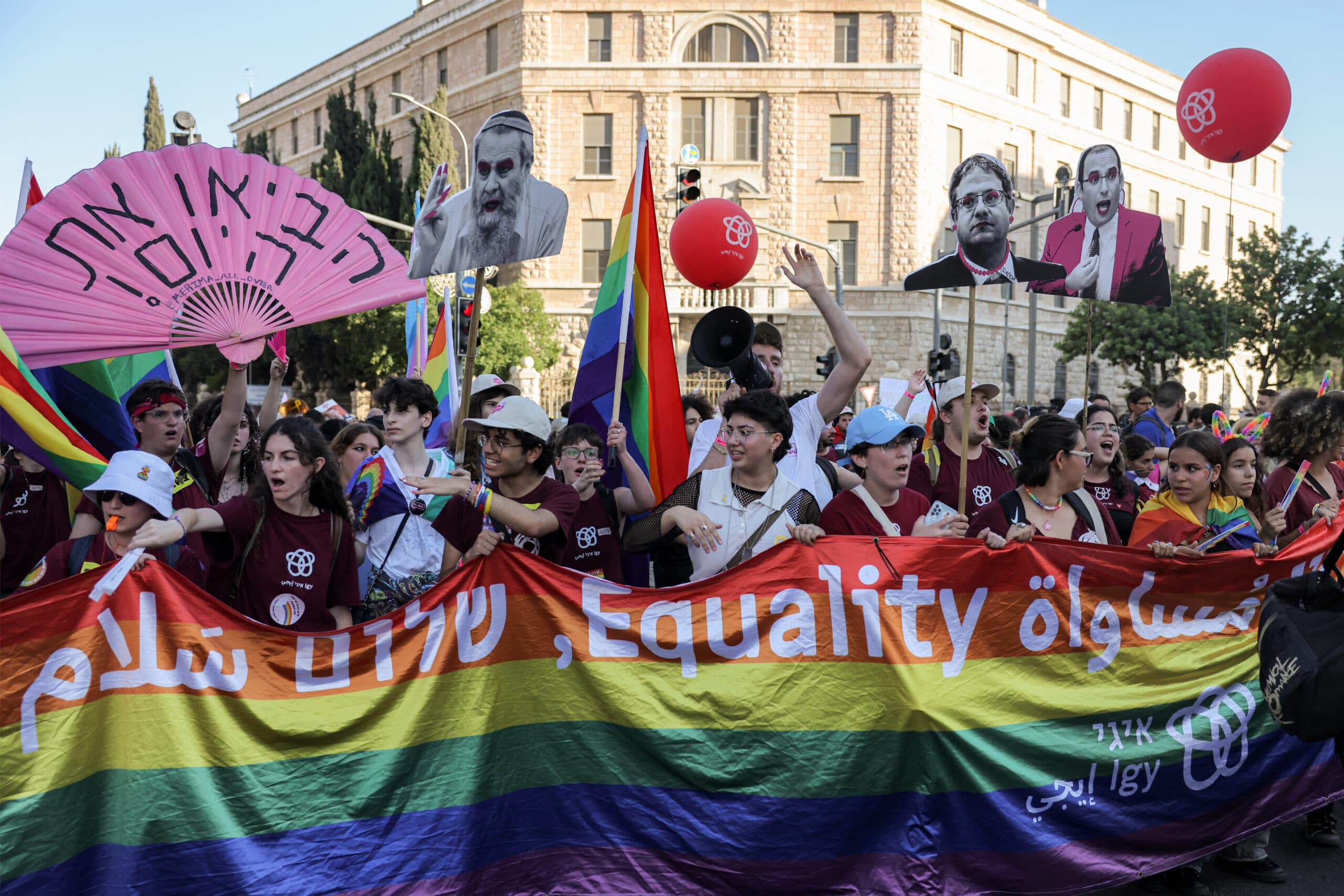
When one of Shas’s founders, Aryeh Deri, released an advertisement last week ominously warning that a Blue and White-led government would relocate the gay pride parade in Jerusalem to the Kotel and allow pork to be sold in Israel’s malls, many were shocked.

Even though the suggestion was so obviously fake, the sentiment and fear that a Blue and White government would destroy everything that Haredim hold dear was very real.

[gallery columns="1" size="medium" ids="27526"]

The loathing many Haredim feel towards the IDF draft board, the LGBT and Reform communities in Israel over struggles around surrogacy, shabbat and national service is very real.

For most analysts, the feelings of persecuted Haredim are rarely offered to explain election results, but this may be the most important story of this election.

Party leaders such as Aryeh Deri (Shas) and Deputy Health Minister Yaacov Litzman (UTJ), who are both under police investigation at the moment for corruption, would struggle to hold office in Australia.

The Shas leader is facing serious charges of tax evasion and fraud, whilst the UTJ leader is accused of interfering with psychiatrist medical reports in order to assist accused pedophile Malka Leifer.

In a 2015 election debate, there was a moment when the Arab Joint List leader Ayman Odeh reached out to Aryeh Deri and said to him that despite their differing views on security matters, Shas and Hadash shared much in common regarding their economic outlook and desire to heal the historic wrongs inflicted on their sector by previous governments.

He suggested that if the Haredi and Arab parties cooperate, their power to affect change in Israel would be immense. Deri wasn’t interested in the suggestion.

Although most observers see the Israeli elections as a battle between right and left blocs, there is another narrative - about who will support the Arab and Haredi persecuted minorities - poised to leapfrog over the Likud and Blue-White establishment.

If and when that day comes, Israeli politics will never be the same.

Photo: Shas election ad that says “Breaking: The Pride March reaches the Kotel”
You might also like
  • Fear of Netanyahu victory may drive big surge in Palestinian voter turnout
    Ben Lynfield
  • The memory of the hostages should guide Israel’s choices for the future
    Nirit Eylon
  • What ‘Zionism’ means in Israel:  it’s not what you think
    Ittay Flescher
logomark.67a07ee3
We believe in the free flow of information

Republish our articles for free, online or in print, by using our Creative Commons licence

You might also like

    Netanyahu
    Israel Hamas WarFeatureIsrael

    New evidence Netanyahu was warned about October 7

    Shahar Burla 2
    Penny Wong
    DebateAustralia

    Sanctions must influence, not just perform disapproval

    Adam Slonim
    Rozana Beit Oula
    PeacebuildingOpinionIsrael

    Peacebuilding through the eyes of a sceptic

    Ron Finkel

About the author

Ittay Flescher

Ittay Flescher

Ittay Flescher is the Jerusalem Correspondent for The Jewish Independent. For over twenty years, he has worked as an educator, journalist, and peacebuilder in Melbourne and Jerusalem. His book, The Holy and the Broken: A Cry for Israeli-Palestinian Peace from a Land that Must Be Shared, was longlisted for the 2025 Walkley Book Awards.

More from the author

AnalysisIsrael

What ‘Zionism’ means in Israel:  it’s not what you think

AnalysisIsrael

From haven to hotbed: how Israel’s perception of Australia has changed

FeatureIsrael

New wave of Russian-speaking migrants may be key to Israel’s future

AnalysisIsrael

How a new International Peace Fund could make a tangible difference