Aa
  • Read, Watch, Listen
  • TJI Series
  • Community Action
  • Events
  • Zedi
Follow us and continue the conversation
  • LinkedIn
  • Instagram
  • FaceBook
  • X
  • YouTube
Test yourself with the TJI Quiz!

Adjust size of text

Aa

Follow us and continue the conversation

  • LinkedIn
  • Instagram
  • FaceBook
  • X
  • YouTube

Your saved articles

You haven't saved any articles

What are you looking for?

Original reporting, insightful analysis and diverse views, delivered straight to your inbox

  • LinkedIn
  • Instagram
  • FaceBook
  • X
  • YouTube
Your support fuels our mission to inform, entertain and inspire.

The Jewish Independent is bound by the Standards of Practice of the Australian Press Council. If you believe the Standards may have been breached, you may approach The Jewish Independent or make a complaint to the Australian Press Council in writing at www.presscouncil.org.au. The Council may also be contacted on 1800 025 712.

  • Our Story
  • Contact us
  • Our Team
  • Support us
  • Guidelines
  • Pitch your idea
  • Republishing us
  • Community Action
  • Our Awards
  • LinkedIn
  • Instagram
  • FaceBook
  • X
  • YouTube
Aboriginal FlagTorres Strait Islanders Flag

The Jewish Independent acknowledges Aboriginal and Torres Strait Islander peoples as the Traditional Owners and Custodians of Country throughout Australia. We pay our respects to Elders past and present, and strive to honour their rich history of storytelling in our work and mission.

© The Jewish Independent 2026All Rights Reserved
Website design and development by Your Creative, MelbourneTerms & ConditionsPrivacy Policy
HomeRead, Watch, Listen

Bennett’s first 100 days: Israelis enjoy the quiet and take heart from reforms

Eetta Prince-Gibson
Print this

Published: 28 September 2021

Last updated: 4 March 2024

EETTA PRINCE-GIBSON: The PM is more manager than king, the focus is on problem-solving; his ministers are proving they can work together, even in disagreement

ONE HUNDRED DAYS of quiet. After 12 years of Benjamin Netanyahu's noisy, cacophonic administrations, in the 100 days since Prime Minister Naftali Bennett and Foreign Minister Yair Lapid established Israel's 36th government, their most striking achievement is a sense of quiet. They promised to bring a different style to Israeli politics - and they have.

Under Netanyahu’s leadership, Israeli political life became increasingly coarse, crude and dishonest. When style becomes substance, politicians can deceive and dissemble, because truth is secondary to presentation and real achievements, or lack thereof, don't really matter.

Bennett is more a manager than a king, and he doesn't put on any affectations of royalty or destiny. The ministers in his incredibly diverse government, which critics thought wouldn't even make it to the 100-day mark, are busy doing their jobs rather than fighting with each other. They are proving that it is possible to work together, even in disagreement. Their style is calm, oriented towards problem-solving. Instead of mean-spirited, they want to be nice guys.

The difference in style was very clear as Bennett addressed the UN General Assembly overnight. For over a decade, Netanyahu's addresses provided the biggest show in town. Equipped with his infamous audio-visual aids, Netanyahu spoke to the leaders of the world as if they were uneducated children, and only he understood the true danger of Iran.

Bennett, in contrast, spoke to an almost-empty room, calmly and statesmanlike. Netanyahu perpetuated the Biblical (Numbers 23:9) view of Israel as "A People Alone Will Dwell," especially with regard to Iran. Bennett said Israel and the world are together as they face the Iranian threat.

Netanyahu spoke of Israel as embattled; Bennett spoke about hope, saying that "for too long, Israel was defined by wars with our neighbours. But this is not what Israel is about."

For a hundred days or so, we have cared less about what Bennett and his government are doing, because we remember what Netanyahu did and how he did it And because we are really enjoying the quiet. But Netanyahu's demise shows that style can't replace substance forever. In the quiet of the past hundred days, we're becoming able to assess a government's achievements and failures.

The national budget
If it is able to pass a national budget (the vote is scheduled for early November); this government will rack up several important achievements. The last budget was passed in March, 2018.

National budgets reflect national priorities, demonstrate the extent to which the government caves in to pressure groups and reveal the government's commitment to a just distribution of wealth. They also enable government ministries to function.  Netanyahu used the passage of the budget as a political tool; if this government is able to pass the budget, it will show that it cares more about governance than politics. It will also reinforce the message that disagreeing parties can still work out a way to achieve something good together.

Having said that, the budget, as proposed, already reflects that this government has, like all its predecessors, kowtowed to the defence establishment lobby and will not cut back on the huge salaries, perks, and pensions that senior military personnel enjoy.  It remains to be seen to what other pressure groups they will, or will not, give into.

Covid-19
Despite the high infection rates, the country is open, schools will reopen following the Sukkot holiday and life seems fairly normal. Bennett – ignoring warnings of the Health Ministry and some of his own government's experts – is against lockdowns.  He is counting on the booster shot, and on his ability to convince – and shame – objectors and hesitaters to finally get vaccinated.

Bennett with colleagues in a hospital ward

Initial data seems to indicate that this may be working.  But this virus has surprised us all more than once, and the public seems resigned rather than convinced. 

Arab society
For the first time in its history, Israel has an Arab party in the coalition and an Arab minister who serves alongside right-wing parties. The symbolic and practical importance of these positions, especially in terms of budget allocations, cannot be overstated.

However, the government has yet to come up with a realistic strategy to tackle violence within the Arab sector. Close to 100 Arab citizens have been murdered since the beginning of this year, and local and national governments have yet to take any meaningful steps to curb the violence.  Bennett has declared that this is a national, rather than sectoral, problem, but declarations on their own are not enough to  not save lives.

Instead of grovelling to the ultra-religious parties to curry their favour and vote, this government is beginning to clip their outsized influence.

Religion and state and domestic issues
Religious Services Minister Matan Kahana, himself an observant Jew, is trying to break up the Rabbinate's monopoly on the system for certifying kosher food. The kashrut industry has long been a multi-billion shekel behemoth, suspected of corruption and cronyism.

In addition, current Interior Minister Ayelet Shaked has reversed the decision of her ultra-Orthodox predecessor, Aryeh Deri, who refused to allow fibre-optic wiring to be installed in new buildings because ultra-Orthodox rabbis ruled that their followers are not allowed to have internet in their homes. Kahana has made it clear that he intends to introduce other reforms in matters of religion and state.

These changes are happening under Bennett – who, much of the media emphasized, is Israel's first religious prime minister. Taken by themselves, they are not that significant.  But they are clear signs that, instead of grovelling to the ultra-religious parties to curry their favour and vote, as Netanyahu did, this government is beginning to clip their outsized influence.

Against these positive signs, the government is continuing to pursue some of Netanyahu’s  nastier policies. Despite changes to the law, Shaked is continuing to refuse to allow West Bank Palestinians to obtain Israeli residency and citizenship in order to unite with their spouses. As a result, 51 members of the Hebrew Israelites Communities in the southern city of Dimona are under threat of deportation, although they have lived in Israel for decades.

Lapid is projecting a diplomatic demeanour to temper the antagonistic relationships that Netanyahu formed with most of the liberal Western world.

International relations
Under Lapid, the foreign ministry actually works – meetings are convened and positions that had been vacant for years are being filled. Lapid is projecting a gentlemanly, even diplomatic demeanour in an effort to temper the antagonistic relationships that Netanyahu had formed with most of the liberal Western world.

Bennett's meetings with US President Joe Biden gave hope for a restart in the relationships between the two leaders and the two countries, after Netanyahu's disastrous relationships with the Democratic presidents and his alliance with Trump. The appointment of Mike Herzog as Israel's ambassador to the US seems to be an excellent choice that can advance this momentum even further.

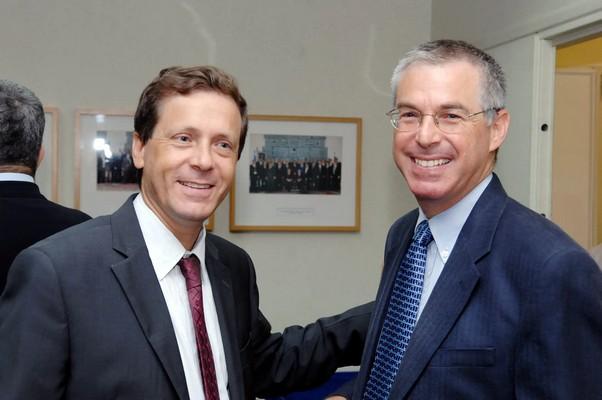
Israeli president Isaac Herzog with his brother Michael, the new ambassador to the US

With regard to Iran, there seems to be little that Bennett can do, as Biden is unwilling to open a new front against Iran, and especially not now.  But it is clear that Bennett does not intend to create a public confrontation over this. Netanyahu tried that, and it backfired badly, causing serious damage to Israel's most vital strategic interests.

Bennett has also succeeded in warming up the relationship with Egypt, including new trade and cultural agreements. As part of his pessimistic world view and belligerent stance towards the world, Netanyahu had tried to convince Israelis that the cold peace with Egypt and Jordan were inevitable, but Bennett has already shown otherwise. 

And Egypt could play an important role in any future mediation between Israel and Hamas and as the leader of the international community's efforts to rebuild the Gaza Strip.

But will this government ever engage in those mediations? Bennett has declared that he will not, and that he will never allow a Palestinian state to be established in the West Bank. Instead, he is hoping that improving the every-day lives of some Palestinians – providing additional work permits, ending nighttime searches and arrests, allowing additional civilian goods into Gaza – will make the majority of Palestinians forget about their need for self-determination. 

Defence Minister Benny Gantz has even floated a proposal to provide building permits for more than 800 housing units in Area C – although he seems to have postponed this decision in the face of the objections of the Jewish settlers – perhaps hoping that this would quieten Palestinian demands for national recognition.

As Yossi Alpher notes in an American Peace Now newsletter, the broad spectrum of mutually-neutralising political approaches in the new coalition, along with the fact that Palestinian President Mahmoud Abbas presides over a moribund government, make it impossible for this government to come up with anything more than a tepid, tentative status quo.

Biden knows that pressuring Bennett could also lead to something even worse: the return of Netanyahu if his coalition fails.

“Bennett, Lapid and Gantz seem to think that they can compensate by offering both the West Bank and Gaza, under their separate Palestinian leaderships, economic benefits. They have yet to learn that ‘economic peace’ measures will not solve an ideological, geostrategic conflict."

Bennett is unlikely to face much pressure to change his positions – and certainly not from the Americans.  As Biden told the UN last week, the two state solution is not feasible and "we're a long way from that goal at this moment". And while this gives Bennett some wriggle room around his unwieldy cabinet, as Haaretz commentator Amos Harel writes, Biden also knows that pressuring Bennett could also lead to something even worse: the return of Netanyahu if his coalition fails.

And it could fail.  On a good day, this coalition has a majority of only one. In order to work together, each of the constituent parties has made compromises that could cost them votes in future elections.

As the new style of government evolves, we will see more substance and the criticism may sharpen.  But in the meanwhile, we're enjoying the quiet.

READ MORE
Latest News Leaving for NY, Bennett dismisses ‘failed’ anti-Israel minority in US House
(Times of Israel)
PM says 420-9 vote in favour of Iron Dome funding shows US support for Israel is solid; premier will address UN General Assembly on Monday

PM Bennett: Anti-Israel group in House failed in Iron Dome vote (Jerusalem Post)
Bennett will meet with Bahrain Foreign Minister Abdullatif bin Rashid Al Zayani and United Arab Emirates Minister of State in the Foreign Ministry Khalifa Shaheen Almarar on Sunday evening.

Photo: Israeli PM Bennett addressing the UN General Assembly in New York on September 27 (John Minchillo/Pool/AP)

You might also like
  • Unlikely bedfellows: How Arab parties could deliver Israel’s next government
    Ben Lynfield
  • Widespread destruction as IDF carries out large-scale operation in Hebron
    Ben Lynfield
  • Your Israel election cheat sheet
    Deborah Stone
logomark.67a07ee3
We believe in the free flow of information

Republish our articles for free, online or in print, by using our Creative Commons licence

You might also like

    Israel Hamas War

    IDF: Hamas will steal fuel for tunnel ventilation systems and rockets

    TJI Wrap
    Australia’s Prime Minister Albanese Speaks After Bondi Shootings
    News

    What PM, Premier, Police say about Bondi antisemitic attack

    The Jewish Independent 1
    Web Banner – Andrew Casey Internship

    Andrew Casey Memorial Internship Program

    Paul Amato

About the author

Eetta Prince-Gibson

Eetta Prince-Gibson, who lives in Jerusalem, was previously Editor-in-Chief of The Jerusalem Report, is the Israel Editor for Moment Magazine and a regular contributor to Haaretz, The Forward, PRI, and other Israeli and international publications.

More from the author

Israel

Where are the women in this election campaign?

AnalysisIsrael

Israel does not need another unity government. We need the courage to face our lack of unity

AnalysisIsrael

Segalovitz decision to join Arab party is a paradigm change for Israel

AnalysisIsrael

Netanyahu pre-election juggling act