Aa
  • Read, Watch, Listen
  • TJI Series
  • Community Action
  • Events
  • Zedi
Follow us and continue the conversation
  • LinkedIn
  • Instagram
  • FaceBook
  • X
  • YouTube
Test yourself with the TJI Quiz!

Adjust size of text

Aa

Follow us and continue the conversation

  • LinkedIn
  • Instagram
  • FaceBook
  • X
  • YouTube

Your saved articles

You haven't saved any articles

What are you looking for?

Original reporting, insightful analysis and diverse views, delivered straight to your inbox

  • LinkedIn
  • Instagram
  • FaceBook
  • X
  • YouTube
Your support fuels our mission to inform, entertain and inspire.

The Jewish Independent is bound by the Standards of Practice of the Australian Press Council. If you believe the Standards may have been breached, you may approach The Jewish Independent or make a complaint to the Australian Press Council in writing at www.presscouncil.org.au. The Council may also be contacted on 1800 025 712.

  • Our Story
  • Contact us
  • Our Team
  • Support us
  • Guidelines
  • Pitch your idea
  • Republishing us
  • Community Action
  • Our Awards
  • LinkedIn
  • Instagram
  • FaceBook
  • X
  • YouTube
Aboriginal FlagTorres Strait Islanders Flag

The Jewish Independent acknowledges Aboriginal and Torres Strait Islander peoples as the Traditional Owners and Custodians of Country throughout Australia. We pay our respects to Elders past and present, and strive to honour their rich history of storytelling in our work and mission.

© The Jewish Independent 2026All Rights Reserved
Website design and development by Your Creative, MelbourneTerms & ConditionsPrivacy Policy
HomeRead, Watch, ListenAustralia
Australia

Bianca’s gift to John: ‘I’ve gone back to acknowledging my background’

Miriam Hechtman
Print this

Published: 11 June 2021

Last updated: 4 March 2024

Hungarian-born John Havas tells MIRIAM HECHTMAN how his daughter Bianca helped him get back in touch with the Jewish roots he had buried

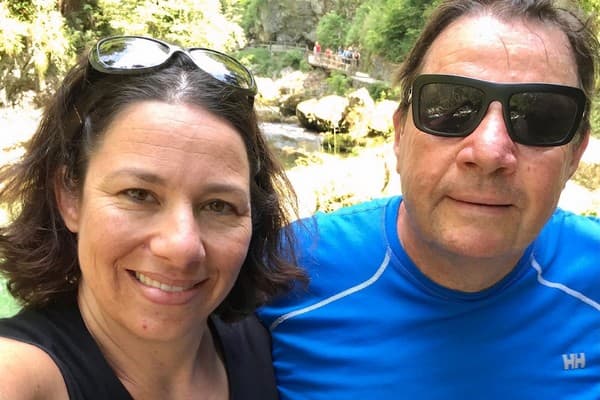
John Havas, 78, worked in finance for many years and now volunteers his time to coach others. Bianca Havas, 46, John’s daughter, is a leadership facilitator and consultant. They both live in Sydney.

JOHN

I was born in 1942 into a Jewish family in Hungary. In April 1944, when the Nazis came into power in Hungary, my parents organised “upstanding” Christian families to care for my brother and me. We both survived. I was there for about 18 months and the family looked after me so well they didn’t want to give me back to my parents. I never found out who they were.

I remember my two grandmothers were often praying in Hebrew or Yiddish on Friday evenings. We always kept the Sabbath Friday night dinners. That was my only exposure to Judaism because my parents never took me to synagogue. They stopped going because they were too insecure for our family’s safety in the post-war years.

When I was six years old, I went to a Catholic school and made my first communion. But at home, I would see my grandparents praying and reading the Old Testament. It was very confusing. My father had decided that for safety reasons, he would bring his children up as Catholics.

Years later I realised he never believed in it because before he passed away, I asked him where he wanted to be buried and he said, “of course in the Jewish cemetery”.

When the Communists came in 1950, I lived in fear. I remember my parents saying, “dive under the bed” when there was a knock on the door. I remember very clearly as a seven-year-old when the secret police came and took everything away - all our money, books, my father’s car, jewellery.

Growing up, I knew I was of Jewish origin but my energies as a child were helping my parents survive. So religion wasn’t an important part of my life; it was more about surviving. I realised later in life that surviving was a low level of existence because it doesn’t allow one to learn the importance of reaching a higher level of one’s existence. Luckily, later in life I learnt a little bit more about that.
We left Hungary in 1956 for Australia when I was 14. We lived in Birrell Street, Bondi. My parents mixed with Jewish people, we moved into a Jewish area, all our neighbours were Jewish, we got accepted as Jewish. 

I got married in 1971 to a beautiful Hungarian Jewish woman. It’s subconscious. I just most probably felt more comfortable culturally and that was a very smart move because it makes it easier in the long term.

We had two daughters and I decided I’d tell the kids about our background. We didn’t hide anything. We had a bedtime ritual when they were little, when I would tell them stories about my childhood. They would have heard from me that we had a Jewish background, that we suffered, that we were lucky to be alive. I expressed my Judaism through stories.

We were very supportive of Bianca choosing a Jewish path. I feel quite emotional about it. She brought a different aspect to our lives that we wouldn’t have had otherwise, especially when she had a barmitzvah for our oldest grandchild, Luca.

While I didn’t understand the whole ceremony, having been asked to be part of it and go up and read from the Torah was quite emotional. We come from a Jewish family, so it felt deep and meaningful.

What Bianca has given me in terms of a Jewish life is very important. I’ve gone back towards acknowledging my background. She never pushed me. It was always an opening for me. She helped me a lot because I most probably needed that in a deeper way.

Bianca and I are emotionally quite similar. She likes people. She likes socialising. I’m the same. I need people.

I feel comfortable with Bianca. I can talk to her and feel the love between us. She’s organised her life well and has chosen meaningful work.

My wife and I talk often with Bianca about how much our Jewish backgrounds affected us in terms of our security and behaviour. We are all hoping that thanks to this country, maybe our children, grandchildren and their children will eventually not have this insecurity that we have.

Because we have it. There’s no doubt about it.

The Jewish Independent

BIANCA

My dad and I share this thirst for life. We get a lot of energy from each other. When we call each other, it’s hard to get off the phone in less than half an hour because there’s just a million and one stories, observations, insights, ideas that we’re constantly sharing with each other. At this point in my life, I’ve come to value his elder wisdom. 

In my childhood, Judaism existed as a story or a word or a name. We knew we were Jewish but we didn’t really understand what that meant because it didn’t live in a cultural sense through rituals or observing festivals. So it was just a concept. It was part of my history but it didn’t really live in the present.

In primary school, when everyone went off to scripture, I was adamant that I went off to non-scripture because I didn’t feel any connection to any faith or belief, and I wasn’t even curious. I felt like “religion is not something for me”. I was quite strong in my agnostic belief from a young age.

In high school on the north shore in Sydney, there were about five Jewish girls in my year and I remember having different kinds of conversations with them. They were more observant and knew a lot about Judaism, which sparked a curiosity in me.

They invited me to come with them to the Jewish youth movement, Netzer. I went and it provided me a great opportunity to learn more about the long history of Jewish people that I had come from. 

It wasn’t until my university years, when I was again coincidentally drawn to making friends who happened to be Jewish, coupled with moving to Bondi, that something awakened in me where I felt, on a cellular level, that “I kind of belong here”.

Suddenly I wasn’t too loud, I wasn’t too expressive, I wasn’t too opinionated. All these things that I often felt in my day-to-day life on the north shore were a little bit too much for people, felt pretty much the norm in this new environment.

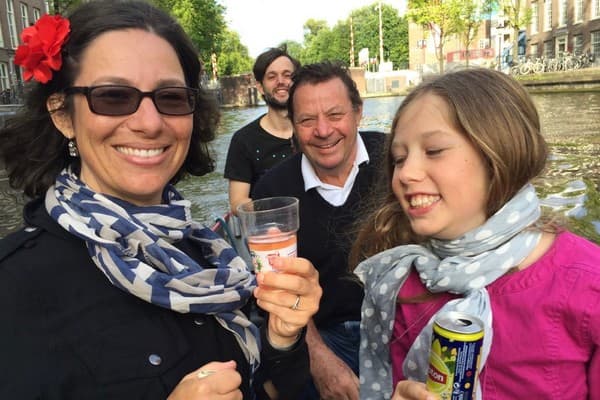
John, Bianca and her daughter

I think I was yearning for a way of making meaning of life, and some of the Jewish rituals just resonated for me. Others didn’t. I didn’t take it all hook, line and sinker; I questioned a lot.

I think my rediscovery of Judaism, was quite emotional for my dad. He was at a stage in his life where he was starting to want to make sense of the past. In a way, I was that avenue to bring him back in because it was hard for him to do it on his own.

I also felt that I wasn’t as alone on that journey because he was with me. And particularly, later when I had kids, because my husband’s not Jewish, I felt like I was pioneering something for me and our family. I was following a gut feeling that this was something I wanted for us even though there was uncertainty to navigate too.

It really hit home when my husband and I did a DNA test and my results said I was 100 per cent Ashkenazi Jewish. So even though our family had a big gap in living a Jewish life, every single one of my ancestors had lived within the Jewish community.

I realised that in my generation every single one of us had married out and were not involved in anything to do with a Jewish life. I felt like I wanted to reconnect.

My dad is a survivor but he has moved beyond surviving as he’s thrived in his life. He’s so resilient. He was born in the middle of the war, he was hidden, he survived the Final Solution. He experienced so much at a young age and yet he maintains a high level of openness, curiosity, non-judgement, positivity and a general love of life. He’s a thriver as well as a survivor.

You might also like
  • This might be the smallest synagogue in the world 
    György Polgár
  • Happiest man resurrected on stage
    Peter Kohn
  • The safest country in Europe for Jews has a new government 
    György Polgár
logomark.67a07ee3
We believe in the free flow of information

Republish our articles for free, online or in print, by using our Creative Commons licence

You might also like

    Isabelle oderberg
    NewsAustralia

    ‘The Jewish Independent’ commentary makes finals in Walkley journalism awards

    The Jewish Independent 1
    JA06
    FeatureArts & Culture

    From Bondi to the Tree of Life

    Gideon Cohen
    Brendan Nugent Haines
    NewsAustralia

    Alleged Helen Haines attacker wrote anti-Israel, pro-Iran posts

    Deborah Stone 2

About the author

Miriam Hechtman

Miriam Hechtman

Sydney-based Miriam Hechtman is an Australian writer, creative producer and poet. She is the founder and creative director of Poetica, a live poetry and music initiative and co-presenter and producer of WORDSMITH – the poetry podcast.

More from the author

FeatureArts & Culture

Yiddish poetry finds new audience through Bashevis Singers

FeatureArts & Culture

New ‘spoken word’ festival in Sydney offers stories directly from creators

FeatureArts & Culture

A circle of communal healing on stage, with a dash of humour

FeatureArts & Culture

Not so secret mother’s business