Published: 14 March 2023
Last updated: 5 March 2024
Palestinian residents in East Jerusalem can vote in municipal elections, but they don’t — and they suffer as a result. DEBORAH STONE reports.
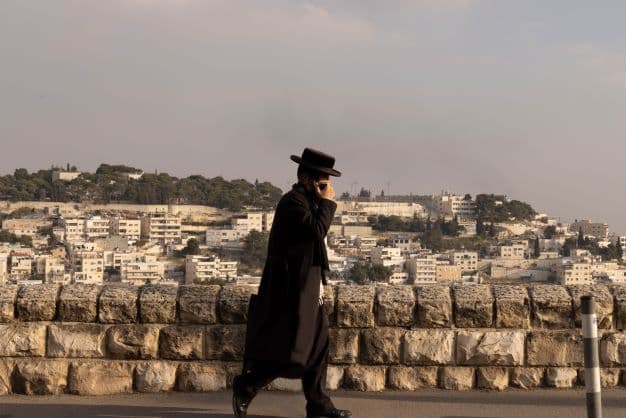
To the untrained eye, one side of a winding road in East Jerusalem looks much like the other. Pale stone buildings, water tanks and satellite dishes, lines of washing, an occasional struggling succulent.
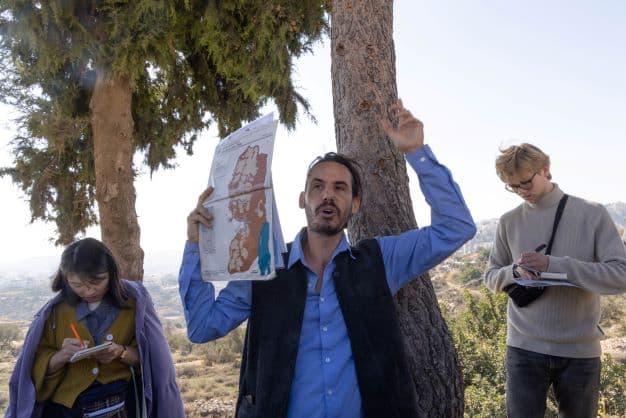
But Yaniv Mazor can spot the differences. He points out a pile of rubble in an Arab village, remnants of a home demolished because the owners did not have the requisite permit. In another, he notices a build-up of old mattresses and broken furniture, indications of inadequate rubbish removal by the municipality.
In the Jewish suburb, he gestures to a new religious girls’ school, fresh white buildings and high fences with private security systems.
Mazor is a guide with Ir Amin (City of Nations), an organisation dedicated to making Jerusalem a more equitable home for Israelis and Palestinians.
In many ways, Palestinians in East Jerusalem are better off than their fellows in the West Bank or Gaza. They don’t live under Israeli military rule, nor with the political and economic precarity of the Palestinian Authority (PA) or Hamas. Since Israel annexed East Jerusalem in 1980, they have all the advantages of living in a developed country: education, employment, health care. While the Arab Israeli standard of living remains below the average for Jewish Israelis, the gap is closing.
But East Jerusalem is where the Israeli-Palestinian conflict has its jagged edge. Most of East Jerusalem’s Arab population are residents not citizens. They can apply for citizenship, and some have done so successfully, but many don’t want to be Israeli citizens so they are stateless. They cannot vote in Israeli national elections and Israel won’t acknowledge them as Palestinians and allow them to vote in PA elections - if PA elections ever happen. They can get travel permits, and many travel freely, but they do not have passports. Even their residency status is precarious and can be lost if they leave the country for seven years or become resident elsewhere.