Aa
  • Read, Watch, Listen
  • TJI Series
  • Community Action
  • Events
  • Zedi
Follow us and continue the conversation
  • LinkedIn
  • Instagram
  • FaceBook
  • X
  • YouTube
Test yourself with the TJI Quiz!

Adjust size of text

Aa

Follow us and continue the conversation

  • LinkedIn
  • Instagram
  • FaceBook
  • X
  • YouTube

Your saved articles

You haven't saved any articles

What are you looking for?

Original reporting, insightful analysis and diverse views, delivered straight to your inbox

  • LinkedIn
  • Instagram
  • FaceBook
  • X
  • YouTube
Your support fuels our mission to inform, entertain and inspire.

The Jewish Independent is bound by the Standards of Practice of the Australian Press Council. If you believe the Standards may have been breached, you may approach The Jewish Independent or make a complaint to the Australian Press Council in writing at www.presscouncil.org.au. The Council may also be contacted on 1800 025 712.

  • Our Story
  • Contact us
  • Our Team
  • Support us
  • Guidelines
  • Pitch your idea
  • Republishing us
  • Community Action
  • Our Awards
  • LinkedIn
  • Instagram
  • FaceBook
  • X
  • YouTube
Aboriginal FlagTorres Strait Islanders Flag

The Jewish Independent acknowledges Aboriginal and Torres Strait Islander peoples as the Traditional Owners and Custodians of Country throughout Australia. We pay our respects to Elders past and present, and strive to honour their rich history of storytelling in our work and mission.

© The Jewish Independent 2026All Rights Reserved
Website design and development by Your Creative, MelbourneTerms & ConditionsPrivacy Policy
HomeRead, Watch, ListenIsrael
ReflectionIsrael

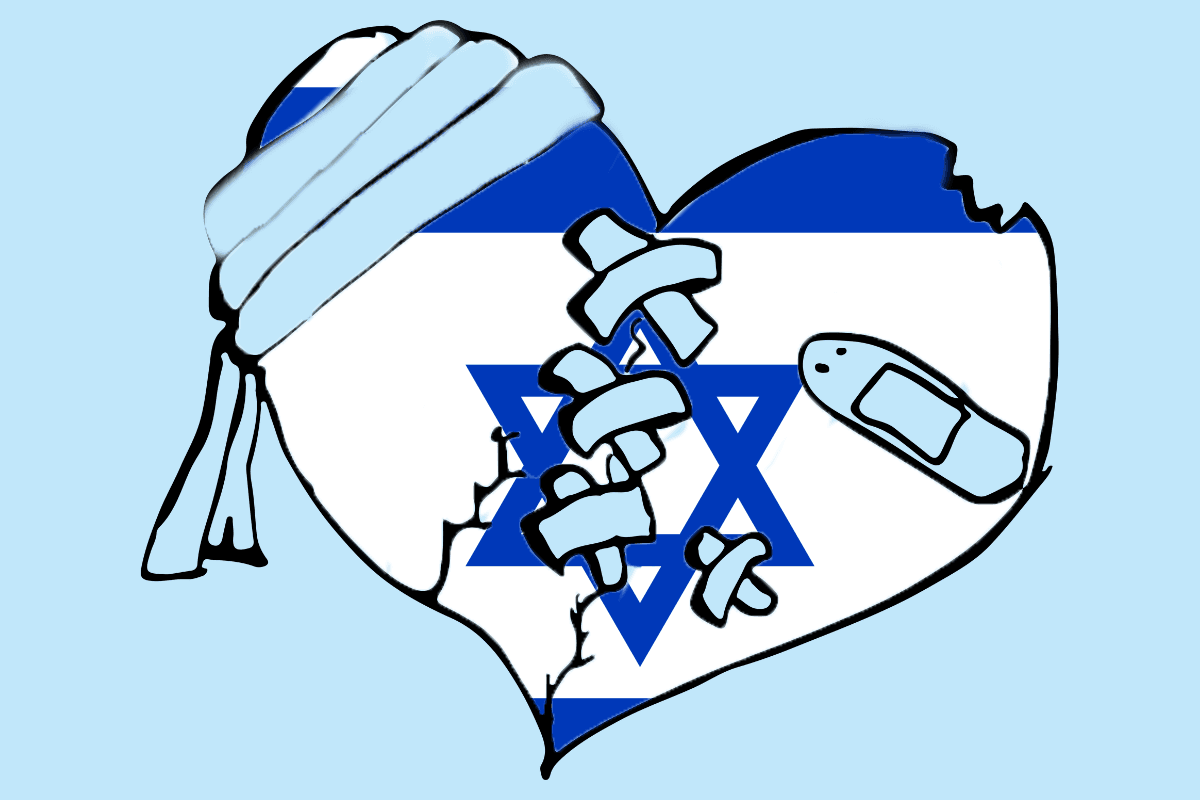
Israel relationship status: It’s complicated

Yom Ha'atzmaut this year arrives when I no longer know how to talk about a country I fell in love with.
Nomi Kaltmann
Print this
battered heart israel

Published: 13 April 2026

Last updated: 17 April 2026

My first trip to Israel was when I was 11 years old, my pre-bat mitzvah gift was a trip to a country that I already loved despite never having visited. More than 20 years later, I can still remember the texture of that visit: my first view of the Western Wall bathed in the soft late-afternoon light, vending machines stocked with kosher food, climbing Masada and thinking about the people who had held out there under Roman siege and eating falafel that tasted fresher than anything I had ever eaten in Melbourne.

I fell in love with that version of Israel. Or more honestly, I fell in love with the way I experienced Israel at that age, uncomplicated, immersive, and entirely certain of its meaning.

I have been back to Israel many times since, usually for something significant, like my sister's wedding or accompanying an Australian parliamentary delegation as a staffer. I am not Israeli; I am an Australian-born Jew with a deep family history here. My family has been in Australia since the 1860s, and my mother's ancestors are buried in the Jewish section of the Ballarat cemetery.

And yet, when I arrive in Israel, there is a relief at not having to explain the basic contours of my Judaism. For once, I am not the "interesting Jew", as I am to so many of my non-Jewish friends and colleagues at home. I love being in a place where my religious practices require no translation, where kosher food can be assumed and where Shabbat is built into the structure of the week.

The Israel I fell in love with and celebrated feels vastly different from the one I am watching today.

For a long time, I have found it easy to sit inside my dual identities. I am Australian, but I have a deep love of Israel. I speak Hebrew, I follow Israeli news, and I understand, at least in part, the national sensitivities that shape Israeli public life. Yet, despite this love, I do not want to move to Israel, and I feel culturally very Australian.
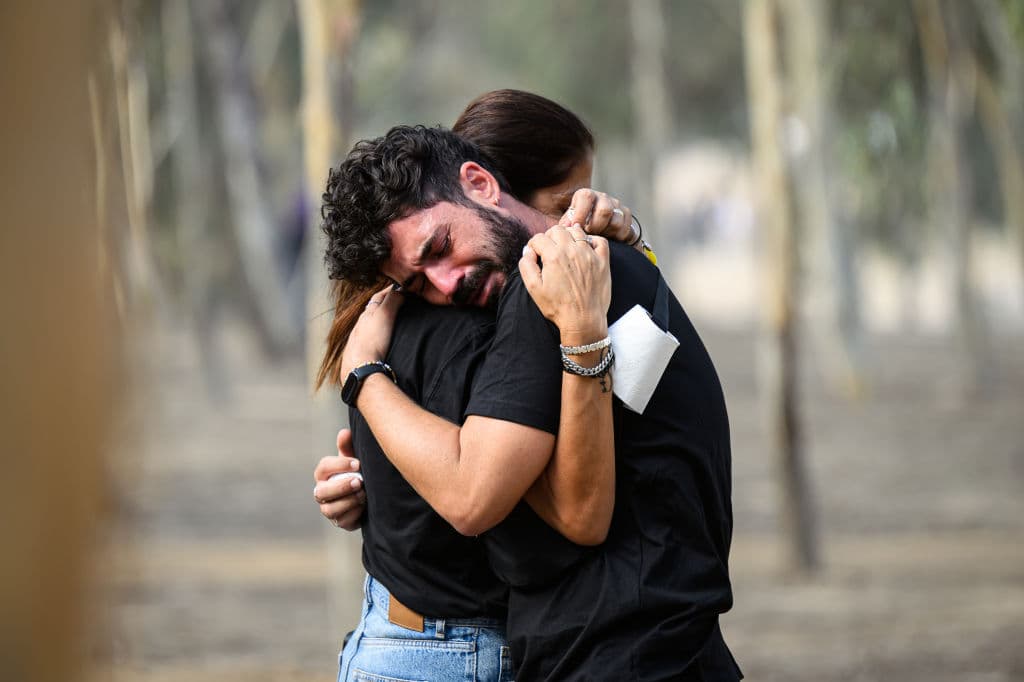

Yet, since October 7, my relationship to Israel has changed and I’m still trying to unpack exactly how I feel.

I have never expected conversations about Israel to be easy, but since October 7, criticism of Israel has become something I don't really even know how to engage with anymore. People whose thinking I respect, whose analysis I rely on in other contexts, now speak about Israel in language that leaves almost no room for nuance, describing it as a genocidal state, as a uniquely illegitimate political project.

In the circles I move in, particularly among writers, journalists, and lawyers, there is a working assumption that Israel represents a kind of moral failure, something to be condemned rather than wrestled with. I find myself increasingly unsure how to enter these conversations. Anything I say feels either inadequate or misread, too critical or not critical enough, too emotional or not sufficiently detached.

To be clear, I am not talking here about the more ignorant or antisemitic commentary that has become so prevalent in recent years, nor the kinds of claims that reduce Israel to something it clearly is not. What I am struggling with are the more nuanced critiques, coming from people who are informed and thoughtful, who are engaging with what is actually happening on the ground in Israel.

My difficulty is compounded by my own unease about the direction of Israeli politics. Figures like Itamar Ben-Gvir and Bezalel Smotrich represent a version of Israel that feels more extreme than the one I grew up feeling connected to, one that sits against my values of equality and democracy that I was always taught were central to the Israel's identity.

The violence against Palestinians in the West Bank, particularly by “hilltop youth,” is so often met with limited or inconsistent consequences from police, a force now overseen by Ben-Gvir, which seems to signal a worrying direction for Israel. What troubles me most is the way violence has settled into Israeli political life and is no longer seen as aberrant.

I also abhor Israel's recently-passed death penalty. These laws specifically target Palestinians and exempt Jews, and they risk entrenching a legal framework where the law is not applied equally. To me, this signals where things may be heading, a move towards a country that has a legal system that distinguishes on race rather than on a shared and consistent legal standard for all people. Is this law part of a broader Israeli shift? One that raises serious and, at times, confronting questions about the strength of Israel's democratic institutions? I think so.

And yet, my connection to Israel is not objective. It is emotional, tangled up in the specific and the personal. My siblings live there and many of my closest friends from Australia have built their lives there. When I think about Israel, I am not only thinking about a state or a set of policies. I am thinking about people whose lives are directly shaped by what happens. I cannot emotionally detach, and I do not think I should have to, because for me Israel is bound up with Jewish history, with my identity as a Jewish, and with a sense of our people's vulnerability.

Yom Ha'atzmaut this year arrives for me at a time where I no longer know how to talk about a country I fell in love with. I think about myself as an 11-year-old standing at the Western Wall in the late afternoon light, certain of what she was seeing and what it meant. Yet I feel that the Israel I fell in love with and celebrated feels vastly different from the one I am watching today. I do not know if there is a way to fully reconcile my deep love for the country with my deep worry and concern about its direction.

In the end, when I think about Israel, I think about its people. My siblings, my friends and so many people I know and care about who live there. Whatever I feel about the direction of the country, I still love and care about Israel, and all the people who have to live with what it becomes.

You might also like
  • Jewish schools are the marinade that infuses continuity
    Jeremy Stowe-Lindner
  • Israel election explainer: the main parties
    Shahar Burla
  • Sanctioning settlements is a defence of Israel, not an attack
    Elisheva Madar
logomark.67a07ee3
We believe in the free flow of information

Republish our articles for free, online or in print, by using our Creative Commons licence

You might also like

    Arab Israeli Palestinian election vote
    Israel Votes 2026FeatureIsrael

    Fear of Netanyahu victory may drive big surge in Palestinian voter turnout

    Ben Lynfield
    Erdogan Turkey
    AnalysisIsrael

    Turkey emerges as military threat to Israel

    Dror Doron
    Btselem
    NewsIsrael

    ‘Israel is systemically eliminating Palestinian collective life’:  Israeli human rights report

    Deborah Stone 1

About the author

Nomi Kaltmann

Nomi Kaltmann

Nomi Kaltmann is an Australian lawyer and journalist. Her writing has appeared in major Australian and international publications including Crikey, Griffith Review, Mamamia, Tablet Magazine, The Australian Financial Review, The Daily Beast, The Forward, The Guardian, The Jewish Telegraphic Agency and The Spectator. She regularly appears on radio and podcasts to discuss Australia’s Jewish community, including NPR (USA), CBC (Canada), LBC (London), Call Me Back, Unholy: Two Jews on the News, SBS and The Times of Israel. An influential Orthodox feminist leader and founding president of the Jewish Orthodox Feminist Alliance (JOFA Australia), she is a sought-after speaker on religion, interfaith and contemporary Jewish life.

More from the author

OpinionAustralia

Mind the mentality: not every rejection is antisemitism

OpinionAustralia

Cancellation backfires but we are at it again

OpinionWorld

From NY to Melbourne, local politicians are whipping up hate 

ReflectionAustralia

I have lost faith in our multicultural institutions 

Comments10

  • Avatar of Rachel Sussman

    Rachel Sussman23 April at 05:33 am

    Hi Nomi
    I identify with much of what you are trying to express. It is important to understand that loving and supporting a country is not subject to agreeing with everything the government does at a particular time, even though it is much easier when we are aligned with a particular government.
    Like you I am worried about Ben Gvir and Smotrich and the violence of some extreme right youth on the West Bank towards the Palestinians. Like every country Israel has its shares of social and political problems, these needs to be addressed, without deserting the country if you know what I mean.
    It is also important not succumb to misinformation. I also dislike the death penalty, nevertheless, it does not project discrimination nor apartheid. Palestinians are not Israeli citizens and fall under different juristriction, this must be clearly understood. Discrimination is if Israeli citizens have different sets of laws due to religion or race.
    Likewise with Bart’s comment that current behavior is extension of 1947-48 ethnic cleansing, the fact that the Israeli Arabs population grew to more than 2million, answers this ‘misinformation’.
    So lets stay diligent, strong, fact full, and unapologetic in our love and support.

  • Avatar of Bart

    Bart18 April at 02:15 am

    Hi Nomi, I think your article captures a significant and under-discussed aspect in the debate. Although you don’t name it, I think you capture what most diaspora Zionist Jews understand as their ‘Zionism’: an emotional attachment to Israeli people, places and culture that is both shallow as the contents of a political ideology but also very deep as an identity.

    One aspect of that identity is this perception that the current period is an aberration, what you describe as a new extreme “version of Israel” contrasted with a vanilla Israel you were taught about.

    While this belief is necessary to maintain an ideology, it is insulated from the facts. Extremist-right governments have been in power for 40 of the last 50 years in Israel, their values are the dominant values of Israeli society, and Revisionist Zionism has long since buried Labor/Liberal Zionism.

    Israel’s actions today are just an extreme extension of the war crimes, ethnic cleansing and apartheid structures introduced from 1947-48 and reinforced every decade that followed.

    A starting point has to be acknowledging Israel as what Israelis have chosen it to be, not what diaspora jews imagine it once was or dream it to one day be.

  • Avatar of Ruth Fleishman

    Ruth Fleishman17 April at 04:17 am

    The nuances of what it is to be Jewish is wide and varied. That Jew-vibe deep inside is kinda hard to shake – even for those of us who did not grow up in Caulfield and get the trip to Israel.
    Trying to explain the joys of this complex identity to anyone who is not Jewish is a complicated business at the best of times. Add Israel to the conversation and you are often looking at total discombobulation.
    These people you apparently respect but speak about Israel, as a genocidal state, an illegitimate political project, and yet you also call these people informed and thoughtful.
    I have news for you: they do not care for your complex relationship with your milk-and-honey-soaked memories of Israel in your youth or your troubled urge to find “middle ground.” This is what antisemitism looks like. What is happening with Israel is simply not your fault. ” Is collective blame not as nuanced as you hoped?
    We have all lost safety, friends, colleagues, and safe work environments. That’s what antisemitism looks like. You might have to take a hit for the team, I’m afraid.

  • Avatar of Pat

    Pat17 April at 02:17 am

    You express perfectly the ambivalence I feel about a country whose right to a peaceful existence I would defend against all comers. However, the actions of the government and, sadly, too many of its cirizens I cannot begin to defend.

  • Avatar of Arlene

    Arlene16 April at 08:30 am

    Nomi, your vexed article is unfortunately only too common in a lot of people. So much ambivalence and disbelief in some of the internal structures within Israel. But , I keep asking myself, do we turn our backs on a homeland in trouble with enormous conflicting challenges?
    I hope for a change in government in October to afford this beloved country the chance to repair.

  • Avatar of Dror Doron

    Dror Doron16 April at 07:25 am

    What you describe is 100% correct and is the reason thousands of liberal Israelis are leaving it in the past years (including myself).
    Israel has become a distorted version of the state its founding fathers planned.

    Dominated by violent branch of Judeism, corrupted politicians who are willing to do what ever it takes to stay in power, and weak democratic institutions, has turned it into a an unlibral and violant country heading in the way of a failed democracy.

    A sad reality which is hard to accept, let alone explaining to others.

  • Avatar of judy

    judy16 April at 06:42 am

    this article raises israel’s recent death penalty law and observes this might be a “move towards a country that has a legal system that distinguishes on race rather than on a shared and consistent legal standard for all people” …

    i asked dr google for what that might be called – “legal system that distinguishes on race.” the good dr g responded with this:

    “generally referred to as systems of institutionalized racism, segregation, or apartheid”

    … systems used to:

    “create, maintain, and justify inequalities between different racial groups, often designed to privilege a dominant group while limiting the rights and ownership of others.”

    should we not use the proper word: racism? apartheid? or is it – the reflection in the mirror – just too frightening?

    especially when the myth of youth (yes; i shared it, too!) is smashed by the reality of today?

    peace,
    judy

  • Avatar of Joseph Silver

    Joseph Silver15 April at 05:52 am

    Nomi, your ambivalence about Israel has apparently appealed to Crikey magazine who have published your article expressing your doubts about Israel’s future direction. It says a lot that a left-wing publication, ever critical of whatever Israel does, has embraced your article.
    Israel doen’t want to get into perpetual wars with its neighbours, but because of the enmity that it faces it has been forced to adopt measures that no doubt don’t appeal to many irresolute Jews.

  • Avatar of Mark Light

    Mark Light15 April at 12:00 am

    Israel is not a Utopia but a Reaction to the helpless of Jewish People during the Holocaust .
    Almost completely unarmed the Jewish in Nazi Occupied Europe had poor chances of survival and their deaths were due to lack of strong armed forces
    Israel was created in war and the National Ethos is warrior state surrounded by enemies that are against an Armed Jewish Nation in the Ancient Holy Land .
    A Warrior State fighting battles will always be cruel unlike the Ambulance Services and Heath Workers that save lives and attempt to relieve suffering.
    In the Bible we learn that King David was refused permission by the Holy One to build the Temple because he was a man of War whereas his son Solomon who would forge Peace by diplomacy would be allowed to build the Temple .
    All efforts for the equality in the sharing of the Ancient Holy Land failed and Herzl’s initial hopes that the Arabs living in the area of Ancient Israel would welcome the skills of Jewish People in heath safe water and food and agriculture and industry were almost completely unrealistic .
    Israel is Creative but Military.

  • Avatar of Lani

    Lani14 April at 09:30 pm

    It is complicated Naomi. I think there is an element of moral failure which is associated with the path Israel has taken, rather than with the idea of a Jewish state itself, unfortunately. Perhaps this is the assumed “moral failure” your colleagues and friends are referring to.
    Australian Jewish organisations and known authors have come out criticising the death penalty.
    What surprises me though, is that they are surprised.
    Israel has been one step away from passing this type of law for a long time.
    Unfortunately the problem now goes deeper than Ben Gvir, and stems from an entrenched belief that Palestinians cannot be trusted, negotiated with, that the only option is forever war.
    Part of this is an understandable response to living under constant attack, and global anti Israel bias, and antisemitism.
    But understandable or not, the response has taken the country in a direction where is was perfectly ready – ripe – for the introduction of this death penalty law.

    Can you imagine if this law was passed in the Australian parliament today? No. You likely cannot, because while we do have racism here, we are far from where Israel is today.