Published: 6 December 2022
Last updated: 5 March 2024
At a trade fair in the West Bank, BEN LYNFIELD finds that the economic crisis is pushing Palestinians to choose imports over locally made goods to make their savings go further.
One might expect a national industrial fair to include scores of elaborate exhibits, dazzling technological innovations and sharply dressed corporate executives conferring on the sidelines to strike lucrative deals.
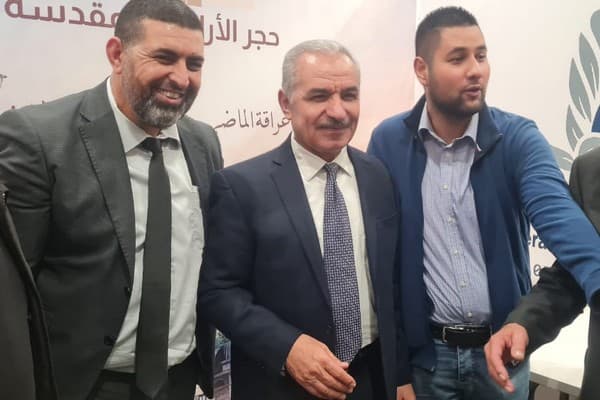
But the Palestinian Federation of Industries fair that The Jewish Independent visited late last month in the occupied West Bank town of al-Bireh had none of these. In fact, there was no heavy industry there at all, only a dozen or so small companies: among them shoemakers from Hebron, a stone and marble supplier from Nablus and a Palestinian nutritional food producer from Shiyukh, near Hebron, looking to grow her family business.
“No way,” Muyaser Halayka, the owner and driving force of Al-Maysara for Nutrition Products reprimanded me when asked if she adds sugar to her best-selling product, grape syrup. “It’s all natural. I give from my heart and I view the customers as my children.
“It’s healthy and it’s our Palestinian heritage. It’s not Israeli,” she added.
Indeed, much of the rationale for holding the annual private sector fair is to encourage Palestinian consumers to be patriotic and buy local products rather than imports from Turkey and China that are cheaper and sometimes better quality.
"Food insecurity is increasing. You need to feed your kids so you look for a cheaper price, not patriotism."
RABEH MORRAR, Palestine Economic Policy Institute
But with the economy in deep crisis, that message is a hard sell. “Food insecurity is increasing,” explained Rabeh Morrar, director of research at the Ramallah-based MAS, the Palestine Economic Policy Research Institute. “You need to feed your kids so you look for a cheaper price, not patriotism.” Still, the minority who get high salaries are generally willing, he said, to pay more for a Palestinian product.