Aa
  • Read, Watch, Listen
  • TJI Series
  • Community Action
  • Events
  • Zedi
Follow us and continue the conversation
  • LinkedIn
  • Instagram
  • FaceBook
  • X
  • YouTube
Test yourself with the TJI Quiz!

Adjust size of text

Aa

Follow us and continue the conversation

  • LinkedIn
  • Instagram
  • FaceBook
  • X
  • YouTube

Your saved articles

You haven't saved any articles

What are you looking for?

Original reporting, insightful analysis and diverse views, delivered straight to your inbox

  • LinkedIn
  • Instagram
  • FaceBook
  • X
  • YouTube
Your support fuels our mission to inform, entertain and inspire.

The Jewish Independent is bound by the Standards of Practice of the Australian Press Council. If you believe the Standards may have been breached, you may approach The Jewish Independent or make a complaint to the Australian Press Council in writing at www.presscouncil.org.au. The Council may also be contacted on 1800 025 712.

  • Our Story
  • Contact us
  • Our Team
  • Support us
  • Guidelines
  • Pitch your idea
  • Republishing us
  • Community Action
  • Our Awards
  • LinkedIn
  • Instagram
  • FaceBook
  • X
  • YouTube
Aboriginal FlagTorres Strait Islanders Flag

The Jewish Independent acknowledges Aboriginal and Torres Strait Islander peoples as the Traditional Owners and Custodians of Country throughout Australia. We pay our respects to Elders past and present, and strive to honour their rich history of storytelling in our work and mission.

© The Jewish Independent 2026All Rights Reserved
Website design and development by Your Creative, MelbourneTerms & ConditionsPrivacy Policy
HomeRead, Watch, ListenIsrael
Israel Hamas WarAnalysisIsrael

Doha air strike sabotages potential ceasefire with Hamas

The unprecedented attack in Qatar is likely to prolong the war of attrition rather than deliver a hammer blow to Hamas’s existence.
Dror Doron
Print this
Israeli Doha airstrike

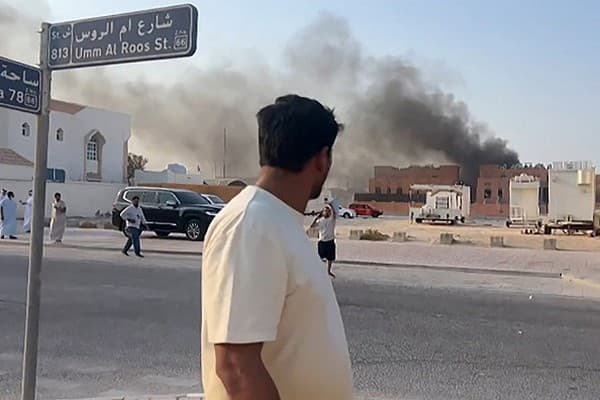
A man looks at smoke billowing after explosions in Doha on September 9, 2025 (Jacqueline Penney/AFPTV/AFP/Getty).

Published: 11 September 2025

Last updated: 11 September 2025

The Israeli air strike on Hamas leadership headquarters in Doha is a direct manifestation of Israel’s declared intention to go after the terrorists who orchestrated October 7, regardless of where they find shelter.

In the past two years, Hamas leaders, and the Iranian officers who assisted them in planning and training for October 7, have already been hit in the capitals of Lebanon, Syria and Iran. In this respect, the strike in Qatar could be seen as part of “more of the same” strategy implemented by Israel.

It should also be remembered that Israel used its air force to target Palestinian terrorists abroad already back 1985, when the PLO headquarters in Tunisia was hit in retaliation to a string of terror attacks against Israeli targets.

Why this strike is different

Nevertheless, the current strike holds a few critical distinctions from all others such attacks in the past. This is not because of the target hit, but due to its location. After all, Qatar is not an enemy state, and even though there is no formal peace treaty signed between Doha and Jerusalem, the two countries have conducted a long-lasting bilateral relationship. Israeli businessmen frequently visit Qatar and Israeli companies are even permitted to sell their cyber-defence technologies and other security capabilities to Doha.

In the past months Qatar has played an important role in the negotiations for the release of the remaining 48 hostages still held by Hamas in Gaza. In the years leading up to October 7, Qatar answered an Israeli request and delivered millions of dollars to Gaza, as part of Israel’s misguided policy of “buying” Hamas’s restraint with Qatari money.

Concurrently, Qatar is a major US ally, hosting the largest American airbase in the Middle East, with massive interests and investments in Washington. The luxurious Boeing 747 passenger jet that Qatar gifted a few months back to President Trump may be seen as a symbol of this close relationship. President Trump’s immediate attempts to distance the US from the Israeli strike and his public promise to the Qataris that “such a thing will not happen again” are a clear reflection of the administration's annoyance at the strike.

Qatar described it as a “terrorist attack” and an "Israeli betrayal” and vowed it will not go unpunished. It is yet to be seen how Qatar will use its diplomatic and economic tools to do so. At this stage, Israel is already facing wide international condemnation, from both Western and Arab countries, for violating Qatar’s sovereignty and the special convention of the UN security council will reinforce those voices.

Israeli decision-makers would surely have anticipated these negative reactions in response to a high impact airstrike on a Western allied country, especially when Israel’s international standing is at its lowest point in years due to the war in Gaza.

Why strike now?

The question that needs to be asked is: why now and why like that? After all, Israel has had knowledge of Hamas’s leadership residing in Qatar for years. Traditionally Israel has preferred the use of low-key operations based on Mossad’s covert capabilities to target terrorists in countries with which it has diplomatic relations.

The Israeli explanations that “an operational opportunity” presented itself and led to the strike, or that it was a swift retaliation to the terror attack in Jerusalem a day earlier, are far from being convincing. Such an airstrike, some 1800 km from Israel’s borders, demands careful and lengthy planning, which means the attack was a calculated move, with Israel willing to face its consequences.

The decision appears to serve a hidden agenda - to sabotage the possibility of a negotiated ceasefire with Hamas. This would enable Netanyahu and his extreme right-wing coalition partners to prolong the war in Gaza, hopefully force Hamas toward an unconditional surrender, and implement full Israeli control over the Gaza strip.

Strategic quandary

If the events of the past two years have taught us anything, it is that Israel has failed in translating its tactical military successes into a strategic victory. Thus, after striking Iran’s nuclear and missile capabilities and dramatically weakening Hezbollah and Hamas, Israel still finds itself at an historical diplomatic low point, antisemitism is raging in the diaspora, and 48 hostages are still being held in Gaza.

It is yet to be seen whether the attempt of eliminating Hamas’s top officials will yield the positive cost-benefit result that Israel hopes will enable it to achieve its declared goals in the war against Hamas: releasing the remaining 48 hostages while gaining a “decisive win” over the terrorist organisation in Gaza.

In the aftermath of the strike in Qatar, immediate concerns have been raised about the possibility that Hamas terrorists in Gaza will take revenge by executing some of the 20 living hostages. Looking further ahead, it is highly questionable whether the strike in Qatar will cause a moral breakdown in Hamas’s cadres and lead it to surrender and lay down its arms in Gaza.

It is much more likely that the unprecedented attack in Qatar will be just another moment in the prolonged war of attrition against the radical Hamas rather than the final blow to its existence.

You might also like
  • New evidence Netanyahu was warned about October 7
    Shahar Burla
  • Who is Ofer Winter and could he upset Netanyahu’s election?
    Shahar Burla
  • Palestinians disillusioned with Hamas and armed struggle: new survey
    Shahar Burla
logomark.67a07ee3
We believe in the free flow of information

Republish our articles for free, online or in print, by using our Creative Commons licence

You might also like

    Rozana Beit Oula
    PeacebuildingOpinionIsrael

    Peacebuilding through the eyes of a sceptic

    Ron Finkel
    altalena
    Israel Votes 2026OpinionIsrael

    The Altalena should be a warning, not a political weapon

    Shahar Burla 1
    Erdogan Turkey
    AnalysisIsrael

    Turkey emerges as military threat to Israel

    Dror Doron

About the author

Dror Doron

Dror Doron

Dror Doron is a senior political analyst specialising in the Middle East, and is a senior adviser at United Against Nuclear Iran (UANI) focusing on Hezbollah and Lebanon.

More from the author

AnalysisIsrael

Turkey emerges as military threat to Israel

AnalysisWorld

New Saudi-Pakistan-Turkey alliance driven by failure of US to subdue Iran

AnalysisIsrael

Trump’s Hamas disarmament deal a mirage that’s quickly faded

AnalysisIsrael

Syria reimagined: From military threat to geostrategic competitor

Comments

No comments on this article yet. Be the first to add your thoughts.