Aa
  • Read, Watch, Listen
  • TJI Series
  • Community Action
  • Events
  • Zedi
Follow us and continue the conversation
  • LinkedIn
  • Instagram
  • FaceBook
  • X
  • YouTube
Test yourself with the TJI Quiz!

Adjust size of text

Aa

Follow us and continue the conversation

  • LinkedIn
  • Instagram
  • FaceBook
  • X
  • YouTube

Your saved articles

You haven't saved any articles

What are you looking for?

Original reporting, insightful analysis and diverse views, delivered straight to your inbox

  • LinkedIn
  • Instagram
  • FaceBook
  • X
  • YouTube
Your support fuels our mission to inform, entertain and inspire.

The Jewish Independent is bound by the Standards of Practice of the Australian Press Council. If you believe the Standards may have been breached, you may approach The Jewish Independent or make a complaint to the Australian Press Council in writing at www.presscouncil.org.au. The Council may also be contacted on 1800 025 712.

  • Our Story
  • Contact us
  • Our Team
  • Support us
  • Guidelines
  • Pitch your idea
  • Republishing us
  • Community Action
  • Our Awards
  • LinkedIn
  • Instagram
  • FaceBook
  • X
  • YouTube
Aboriginal FlagTorres Strait Islanders Flag

The Jewish Independent acknowledges Aboriginal and Torres Strait Islander peoples as the Traditional Owners and Custodians of Country throughout Australia. We pay our respects to Elders past and present, and strive to honour their rich history of storytelling in our work and mission.

© The Jewish Independent 2026All Rights Reserved
Website design and development by Your Creative, MelbourneTerms & ConditionsPrivacy Policy
HomeRead, Watch, ListenIsrael
FeatureIsrael

‘Everyone wants to work here’: Foreign workers still flock to war-torn Israel

Despite deaths, kidnappings and a country still in the pulse of war, Israel has welcomed 35,000 new legal foreign workers since October 7. So what makes a foreign worker choose Israel? Why not work in countries with more economic and regional security?
Hannah Moshinsky
Print this
Joyce (left) and Joy (right) are carers for Yehudit Perl (centre) in Petah Tikva (Image: supplied).

Joyce (left) and Joy (right), from the Philippines, are carers for Yehudit Perl in Petah Tikva (Image: supplied).

Published: 28 August 2025

Last updated: 28 August 2025

Foreign workers have long been part of Israel's story when it comes to supporting the country's labour shortages in times of crisis.

The first official recruitment of foreign workers to Israel occured in 1993, after the 1987 intifada created a labour vacuum from cancelled Palestinian worker permits. 

Today, the majority of the 195,000 legal foreign workers in Israel come from the Philippines, Thailand, China, India, Nepal and Sri Lanka, filling shortages in the caregiving, agriculture and construction sectors. For the home country of these workers, such deals are an important part of bilateral agreements and strengthening diplomatic relations.

Why Israel?

Israel's fair pay and worker protections have generated a positive reputation, making it an attractive destination for foreign workers. Upon arrival, foreign workers are automatically signed to Israel’s labour union (Histadrut) and employers are required to pay foreign workers equal to Israeli employees. 

But contributing to Israel's economy does not grant immunity from times of war. Tens of foreign workers were murdered or taken hostage on October 7, while thousands lived and worked in fear during the latest war with Iran, with some losing their homes.

Bipin Joshi, a 25-year-old Nepali student who studied agriculture in Israel, was taken hostage on October 7 and still remains in Gaza – his fate unknown. Only last month, Nattapong Pinta’s corpse, the last Thai worker kidnapped from Nir Oz to be accounted for, was recovered from the Gaza Strip. 

Despite these tragedies and a country still in the pulse of war, 35,000 new legal foreign workers have entered Israel since October 7. This takes into account the 24,000 workers who fled the country in the aftermath of the brutal terrorist attack, as recorded by the Israel Democracy Institute.

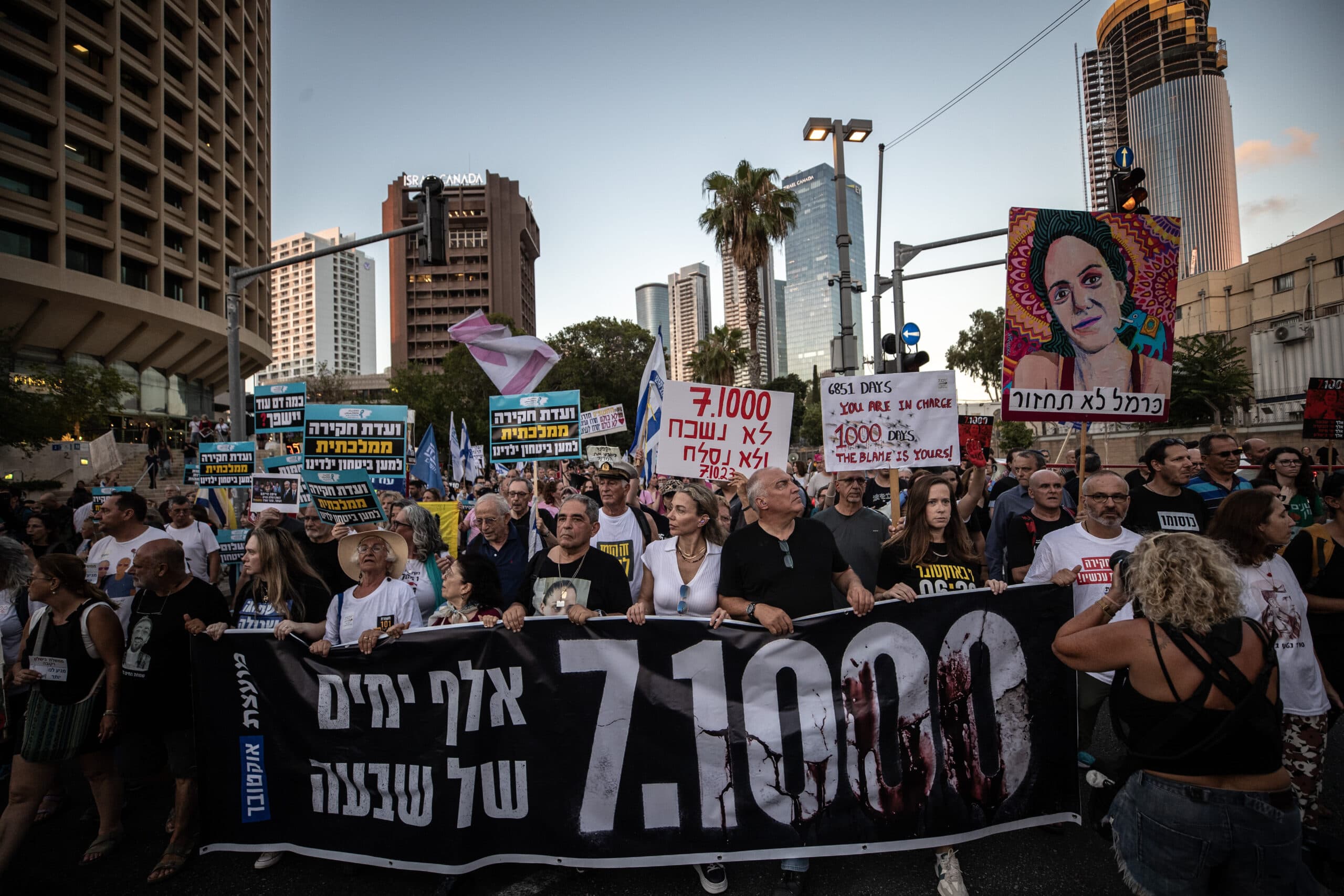
What makes a foreign worker stay in Israel and not take an emergency reparation flight? Why not work in countries with more economic and regional security such as Australia, Europe, the UAE or the USA? 

‘Israel is a holy land’

Joy and Joyce, friends in their early 30s from Pangasinan in the Philippines, are caretakers for an elderly woman in Petah Tikva. Their joy and love for Yehudit, aged 92, is contagious as soon as one walks into the room. 

Arriving in Israel in 2022, Joy and Joyce left behind potential careers in business management and social work, respectively, for the “experience of what life is like [in Israel] and abroad”. They said moving to Israel was “not easy at first, but little by little we enjoy it and adopt the culture here”, citing the language and food as the biggest hurdles.

There are approximately 30,000 Filipino workers in Israel, one of the largest of any foreign nationality. While Saudi Arabia, the UAE and Kuwait remain the leading destinations for Filipino workers, many like Joy and Joyce prefer Israel.

“We heard from our family friends and relatives that Israel is a holy land… they focus on the human rights of their foreign workers if you work here as a caregiver for an elderly or disabled person," they said, adding the warm weather, friendly people and their Christian faith as further motivating factors. 

But the effects of the ongoing war in Israel are impactful, especially for those who have not experienced such turmoil before.

“It’s hard, it’s new for us. In our country we don’t have this… we need to be strong and fight the fear so our family in the Philippines are not afraid. We are safe here, our employer is good to us, they give us everything, we have a shelter.” 

'We have a better quality of life'

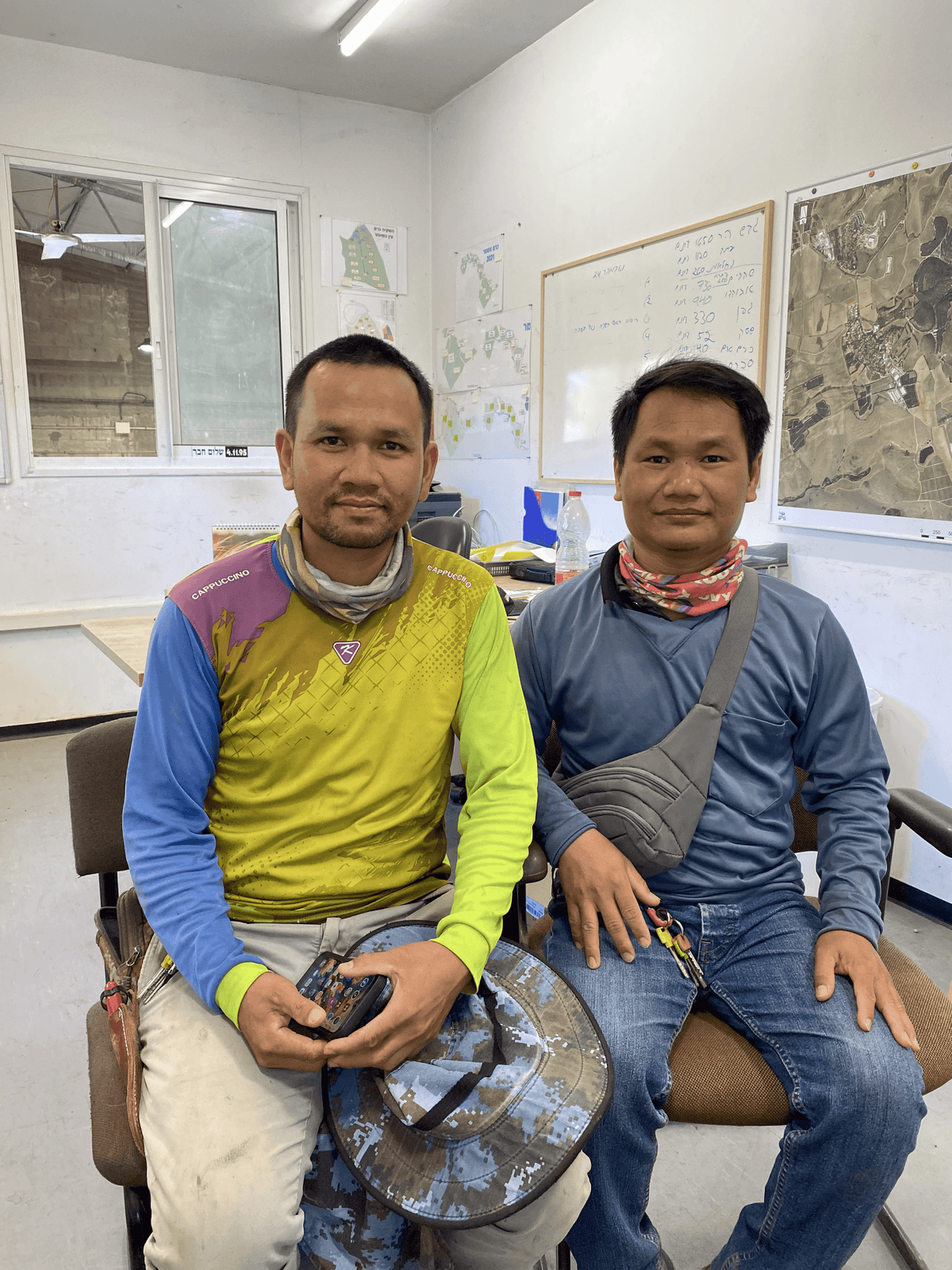
An hour north from Petah Tikva is Kibbutz Ein HaShofet, where two Thai workers, Sahadchai and Somchai, work long days in the cow shed (refet). 

Being in Israel for two and four years respectively, they say that “this place is like home. We have income, send money back home. We have a better quality of life, our work here is good and makes many people want to come back and work here again”. 

Sahadchai (left) and Somchai, after a days work on Ein HaShofet (Image: supplied). 

According to the Thai Foreign Ministry, Israel ranks in the top five countries for Thai foreign workers, with approximately 30,000 in the country today. While around 7,000 fled back to Thailand on emergency reparation flights in the aftermath of October 7, many returned months later.

When it comes to the war, Sahadchair and Somchai emphasise that they “had quite a bit of fear but we have good security and good alerts", and continue to recommend working in Israel to their friends back home.

“People are good and nice… we think we will be here for the rest of our contract, or maybe even longer.”

'I’ve been here 16 years and I’ve never been scared'

Solamu Sherpa, originally from Dholkha in Nepal, came to work in Israel in 2009 as a full-time caregiver. She's since become an Israeli citizen, calling the country home for over 16 years.

Solamu Sherpa at her restaurant Himalayan Kitchen in Tel Aviv (Image: supplied).

Speaking from Himalayan Kitchen, the restaurant she now manages in Tel Aviv, Sherpa says “to be a foreign worker in Israel is the best in all the world”.

"We have a good army, we have the Iron Dome… we are not scared. If there’s a siren, we’ll go to the shelter. I’ve been here 16 years and I’ve never been scared,” she said.

Sherpa knew many foreign workers who left Israel after October 7, but says "after two or three months they came back” because they just “needed time to calm down”.

Comparing salaries, worker rights and conditions to friends in America and Europe, she says “Israel is the best in this respect… in the United States and Canada, they work much harder and receive few rights”, while “here everyone is taken care of the same”. 

Noting a recent wave of workers from Nepal, Sherpa adds that despite the war, “everyone wants to work here, they [keep] coming”. 

You might also like
  • ‘Your help is extremely needed’: Jewish aid group on the ground after Nepal flood
    Peter Kohn
  • Jerusalemites through the lens
    Sharon Gabay
  • Peacebuilding through the eyes of a sceptic
    Ron Finkel
logomark.67a07ee3
We believe in the free flow of information

Republish our articles for free, online or in print, by using our Creative Commons licence

You might also like

    Yoav Segalovitz Mansour Abbas
    Israel Votes 2026OpinionIsrael

    Because of my Zionist values, I’m joining an Arab party

    Yoav Segalovitz 1
    Protest
    AnalysisIsrael

    Western ‘Palestinianism’ colonises everything – and hurts Palestinians

    Andres Spokoiny 5
    altalena
    Israel Votes 2026OpinionIsrael

    The Altalena should be a warning, not a political weapon

    Shahar Burla 1

About the author

Hannah Moshinsky

Hannah Moshinsky

author

Hannah Moshinsky completed a Bachelor of Arts in History and Politics at the University of Melbourne and was involved in various Melbourne-based community organisations, including Kehilat Kolenu and Habonim Dror. Hannah made aliyah at the start of 2024 and is currently the madricha (youth leader) of Habonim Dror Shnat.

More from the author

FeatureIsrael

Meet some young Aussies weathering war during their gap year

AnalysisIsrael

One in three Israelis does not have shelter from missiles

FeatureIsrael

When the party moves to the bomb shelter

OpinionAustralia

A Palestinian Solidarity Sukkot needs to invite Israelis

Comments2

  • Avatar of sahadchai

    sahadchai31 August at 03:52 pm

    Thank you on behalf of all Thai people. This house is the hope of many people. It was only for a short time, but it was good for many reasons. It was worth the time.

  • Avatar of Rachel Sussman

    Rachel Sussman28 August at 10:05 am

    Thank you for this article.
    It is not only foreign workers that love being in Israel, Israelis also love them and are very grateful for their contribution. Both my mother and auntie had amazing carers from the Philipines whilst my disablec nephew has a wonderful carer from India. I sincerely do not know what we would have done without them. I wish Australia could offer same, it would leave NH vacant and increase quality of life for both the elderly and people with a disability. Thank you for choosing Israel!