Aa
  • Read, Watch, Listen
  • TJI Series
  • Community Action
  • Events
  • Zedi
Follow us and continue the conversation
  • LinkedIn
  • Instagram
  • FaceBook
  • X
  • YouTube
Test yourself with the TJI Quiz!

Adjust size of text

Aa

Follow us and continue the conversation

  • LinkedIn
  • Instagram
  • FaceBook
  • X
  • YouTube

Your saved articles

You haven't saved any articles

What are you looking for?

Original reporting, insightful analysis and diverse views, delivered straight to your inbox

  • LinkedIn
  • Instagram
  • FaceBook
  • X
  • YouTube
Your support fuels our mission to inform, entertain and inspire.

The Jewish Independent is bound by the Standards of Practice of the Australian Press Council. If you believe the Standards may have been breached, you may approach The Jewish Independent or make a complaint to the Australian Press Council in writing at www.presscouncil.org.au. The Council may also be contacted on 1800 025 712.

  • Our Story
  • Contact us
  • Our Team
  • Support us
  • Guidelines
  • Pitch your idea
  • Republishing us
  • Community Action
  • Our Awards
  • LinkedIn
  • Instagram
  • FaceBook
  • X
  • YouTube
Aboriginal FlagTorres Strait Islanders Flag

The Jewish Independent acknowledges Aboriginal and Torres Strait Islander peoples as the Traditional Owners and Custodians of Country throughout Australia. We pay our respects to Elders past and present, and strive to honour their rich history of storytelling in our work and mission.

© The Jewish Independent 2026All Rights Reserved
Website design and development by Your Creative, MelbourneTerms & ConditionsPrivacy Policy
HomeRead, Watch, Listen
Feature

Exit King Bibi, untrustworthy leader with an inflated sense of his right to rule

Eetta Prince-Gibson
Print this

Published: 15 June 2021

Last updated: 4 March 2024

EETTA PRINCE-GIBSON: Despite the Abraham Accords, an economic boom and the vaccine rollout, he will be most remembered for subordinating the good of the country to his own political needs

FOR THE FIRST TIME in over 12 years, Benjamin ("Bibi") Netanyahu is no longer prime minister and he has taken his place in the rows of the opposition in Israel's Knesset.

His trajectory to power was short and his fall from power has been long and painful for him and the country. Netanyahu first became well-known on the Israeli domestic political scene in the late 1980s, and, by 1992, had become leader of the Likud Party.

He was young and bright, with a commanding, telegenic presence and keen political acumen.  His strategic policies were clearly articulated, and he dazzled with Churchillian, statesman-like ambitions.  By 1996, he was Israel's youngest-ever prime minister. 

Yet even in those early stages of his career, he showed some of the qualities that would make him one of Israel's most intriguing and polarising political figures.  At times, his brilliant political abilities seemed to produce little more than spin; too often, his strategy seemed to be based on cynicism rather than vision. He preferred the council of a small group of men, many of them American-born, to working with his own cabinet ministers and official advisers.

And in leading the opposition to the Oslo Accords in 1995, he showed that he was willing to cross previously respected red lines, putting his rhetorical skills in the service of incitement and polarisation if it suited his political needs.

By 2016, criminal investigations against Netanyahu for corruption had been made public, and in early 2020, Netanyahu became the first Israeli prime minister to face indictment while in office. In his public appearances, he became increasingly angry and at times depressed, and often, his sole strategy appeared to be survival. 

Nixon-like, he became self-centred and even paranoid, using his political abilities to create tactics to perpetuate his and his family's positions.

Nixon-like, he became self-centred and even paranoid, using his political abilities to create tactics to perpetuate his and his family's positions. He made promises to potential political allies, then broke them; he made executive decisions seemingly without concern for their long-term impact; he repeatedly sent the entire country into do-over elections rather than relinquish his power.

Yet, over the years, even his most fervent opponents begrudgingly acknowledge that Netanyahu also has accrued numerous achievements to his credit. Netanyahu himself has emphasised his successes in the areas of foreign policy, economics, and the handling of the corona pandemic.

His foreign policy achievements have been the most striking. Unlike his predecessors, he has stressed the importance of diplomacy and foreign relations.  First and foremost, Netanyahu can claim credit for the Abraham Accords, which have even weathered the most recent round of fighting between Israel and Hamas and the violence in Jerusalem.

These accords were the end result of Netanyahu's strategic understanding that, instead of depending on Western powers for support, Israel should create alliances with Arab countries in the Middle East in order to ward-off Islamic extremism and curb Iran in its efforts to become a dominant regional actor through its proxies, especially in Lebanon and Syria.

Netanyahu has consistently viewed Iran as the greatest existential threat to Israel's existence, and placed opposition to the 2015 nuclear deal with Iran, brokered by the Obama administration, as his primary goal.  To this effect, he was willing to break with Israel's previous policies of non-partisanship and allied himself, often provocatively, with the American Republican Party.

Netanyahu and Trump at the White House, January 2020

This paid off well when Donald Trump was elected President in 2017. In contrast to his contentious, unpleasant relationship with Obama, Netanyahu created a close, seemingly effortless relationship with Trump. As part of this alliance, Trump moved the US Embassy to Jerusalem and recognised Israeli sovereignty over the Golan Heights. 

Netanyahu thought other countries would also establish their embassies in Israel's capital but, to date, the only other embassy in Jerusalem is that of Kosovo. Moreover, like Trump, Netanyahu, too, acted as if he would never be replaced and as if the policies he set would remain in place for the foreseeable future, if not longer. 

Today, as Trump and his policies quickly disappear, the new US President Joe Biden, a Democrat, has already reversed the tone and some of the substance of these achievements - restoring relationships with the Palestinians, renewing aid to Palestinian refugees, reopening US consular offices in East Jerusalem, and reiterating US support for a two-state solution to the Israeli-Palestinian conflict.

As part of his alliance with Trump, Netanyahu allied himself with Trump's core support constituency, especially Evangelical Christians, often at the expense of the traditional support of some of the American Jewish community, which is overwhelmingly liberal and Democratic.

Netanyahu's firm assertion that diplomatic ties are built on common interests rather than ideology also led him to bypass Israel's traditional, liberal, western-oriented allies and tie Israel's standing in the world to  nationalist, populist leaders such Brazil's Javier Bolsonaro, India's Narendra Modi, and the Visegrad group of central European States, including Austria, Poland and Hungary – even though the prime minister of Hungary, Viktor Orban, has expressed admiration for his country’s wartime leader and Nazi collaborator, Admiral Horthy.

With regard to the Israeli-Palestinian conflict and Israel's occupation of the West Bank, and his brief ostensible support for a two-state solution notwithstanding, Netanyahu has long-believed that the conflict cannot be resolved and that the two-state solution would pose an existential threat to the State of Israel.

The focus on Iran and new relationships in the Middle East, Europe and Asia have allowed him to shift attention to the world arena, while slowly, often covertly, enabling the settler movement to expand on the ground and increasingly entrench itself in Israeli governmental institutions.

Throughout his tenures, he regularly undercut the ministry of foreign affairs; in most of his negotiations, including those leading to the Abraham Accords, he sidelined his own ministers.

Netanyahu has done all this, his critics accuse, almost solely on his own. Throughout his tenures, he regularly undercut the ministry of foreign affairs; for a long time, he refused to appoint a full-time foreign minister and, in most of his negotiations, including those leading to the Abraham Accords, he sidelined his own ministers, whom he regarded as his political rivals, as well as the professionals and government bureaucracies.

He has functioned, claims Ehud Eran of the Israeli Institute for Regional Foreign Policies as “a king-diplomat who controls the daily diplomatic agenda while bypassing the professionals and government bureaucracy", thus creating an image for himself as "an arch-diplomat whose incumbency is essential for the State of Israel".

Netanyahu has also prided himself on his economic achievements. As finance minister from 2003-05, he procured loan guarantees, made steep budget cuts, introduced pension reform, and invested in infrastructure.

Writing in The Marker in 2003, Guy Rolnik, later a severe critic of Netanyahu, noted that, "Netanyahu promoted all these plans, energetically, decisively, resolutely, and mainly with a sense of faith. Netanyahu believes in the free market. For Netanyahu it isn't just an economic program, it's an ideology."

Throughout Netanyahu's terms, Israel's macroeconomic numbers have largely remained excellent. The growth of Israel's GDP, along with its focus on high tech investments and exports, have made the country – and some Israelis – significantly richer. 

At the same time, Netanyahu cut the welfare system, weakened organised labour, and allowed some population groups, especially the ultra-Orthodox and some of the Arab sector, to maintain low-productivity levels. Social inequality in Israel is now one of the highest of any of the world's developed countries, as measured by the GINI index and other determinants.

Furthermore, in pursuit of his political needs, he has prevented the country from passing a national budget since 2018, which is a detriment to the stability of the economy and especially to the economically more vulnerable members of Israeli society.

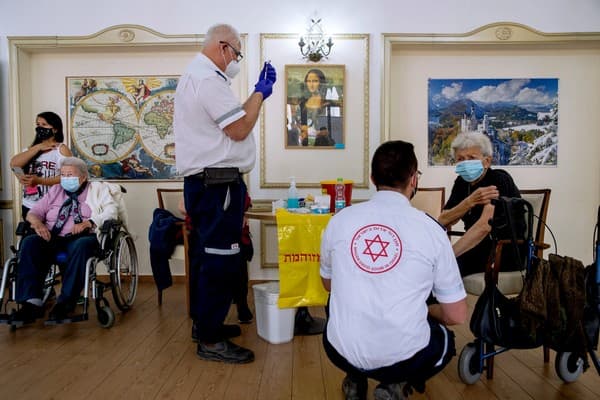
Netanyahu rightly claims credit for being among the first of the world's leaders to recognise the severity and implications of the COVID-19 pandemic. Early on, he acted quickly and decisively to close Israel's borders and limit contamination within the country.

An Israeli vaccine clinic, February 2021

As a result, by June 2020, Israel had emerged as one of the healthiest states in the world. He was also particularly proactive in procuring the vaccines, so that Israel was able to be among the first nations to emerge from the long crisis.

However, despite these achievements, it must be noted that Netanyahu ignored the advice of the consultants that he himself appointed, muddied professional recommendations with political considerations, and, concentrating power, mismanaged much of the effort, so that Israel faced severe second and third waves of the virus.

In the short run, Netanyahu will most be remembered for subordinating the good of the country to his own political needs. He has undermined Israeli governmental and other state structures through corruption and crude politicking, which have proliferated from his administration to most sectors of Israel's political, economic, and social institutions. 

Even as the new government was being sworn in, he was continuing to question the integrity of the elections and the legitimacy of the government.

Today, he is seen as an untrustworthy, scheming politician with an inflated sense of his innate and inherent right to rule. It is notable that leaders of five of the eight parties that make up the new government coalition were once loyal, even enthusiastic Netanyahu supporters and that, even as the new government was being sworn in, he was continuing to question the integrity of the elections and the legitimacy of the government.

Netanyahu has a committed core following to whom he has provided a deep sense of group identity and pride, based on populist anti-elitism and anti-intellectualism.  They frequent refer to him as King Bibi, and, for them, the deposing of this king will be a terrible collective, and even personal blow.

But throughout Jewish history, Israel's kings have not done well, and, in the long run, history has judged most of them unkindly.

READ MORE

READ MORE

Benjamin Netanyahu ruled Israel as a man of many faces (LA Times)

Netanyahu’s road through Israel’s history, in pictures (New York Times)

A photographic journey shows how ‘Bibi’ put his stamp on Israel — through his toughness and the search for security in an unstable region

Illustration: Avi Katz

You might also like
  • UK’s dramatic policy change on Israel-Palestine
    Colin Shindler
  • Fear of Netanyahu victory may drive big surge in Palestinian voter turnout
    Ben Lynfield
  • Who is Ofer Winter and could he upset Netanyahu’s election?
    Shahar Burla
logomark.67a07ee3
We believe in the free flow of information

Republish our articles for free, online or in print, by using our Creative Commons licence

You might also like

    Australia’s Prime Minister Albanese Speaks After Bondi Shootings
    News

    What PM, Premier, Police say about Bondi antisemitic attack

    The Jewish Independent 1
    Copy of Politica Podcast Social Tiles (600 x 400 px)
    Israel Iran WarPodcastIsrael

    Politica – Israeli Politics Explained

    The Jewish Independent 1
    Israel Hamas War

    IDF: Hamas will steal fuel for tunnel ventilation systems and rockets

    TJI Wrap

About the author

Eetta Prince-Gibson

Eetta Prince-Gibson, who lives in Jerusalem, was previously Editor-in-Chief of The Jerusalem Report, is the Israel Editor for Moment Magazine and a regular contributor to Haaretz, The Forward, PRI, and other Israeli and international publications.

More from the author

AnalysisIsrael

Segalovitz decision to join Arab party is a paradigm change for Israel

AnalysisIsrael

Netanyahu pre-election juggling act

AnalysisIsrael

Women disadvantaged by new powers for Israel’s religious courts

AnalysisArts & Culture

The Sea: deserving award-winning film or one-sided disgrace?