Aa
  • Read, Watch, Listen
  • TJI Series
  • Community Action
  • Events
  • Zedi
Follow us and continue the conversation
  • LinkedIn
  • Instagram
  • FaceBook
  • X
  • YouTube
Test yourself with the TJI Quiz!

Adjust size of text

Aa

Follow us and continue the conversation

  • LinkedIn
  • Instagram
  • FaceBook
  • X
  • YouTube

Your saved articles

You haven't saved any articles

What are you looking for?

Original reporting, insightful analysis and diverse views, delivered straight to your inbox

  • LinkedIn
  • Instagram
  • FaceBook
  • X
  • YouTube
Your support fuels our mission to inform, entertain and inspire.

The Jewish Independent is bound by the Standards of Practice of the Australian Press Council. If you believe the Standards may have been breached, you may approach The Jewish Independent or make a complaint to the Australian Press Council in writing at www.presscouncil.org.au. The Council may also be contacted on 1800 025 712.

  • Our Story
  • Contact us
  • Our Team
  • Support us
  • Guidelines
  • Pitch your idea
  • Republishing us
  • Community Action
  • Our Awards
  • LinkedIn
  • Instagram
  • FaceBook
  • X
  • YouTube
Aboriginal FlagTorres Strait Islanders Flag

The Jewish Independent acknowledges Aboriginal and Torres Strait Islander peoples as the Traditional Owners and Custodians of Country throughout Australia. We pay our respects to Elders past and present, and strive to honour their rich history of storytelling in our work and mission.

© The Jewish Independent 2026All Rights Reserved
Website design and development by Your Creative, MelbourneTerms & ConditionsPrivacy Policy
HomeRead, Watch, Listen
Feature

‘God is neither male nor female: each gender carries its unique power’

Ralph Genende
Print this

Published: 8 June 2021

Last updated: 4 March 2024

RABBI RALPH GENENDE: While we seem to be making little progress in the advancement of women within the Orthodox community, we may well be experiencing a sea change

IT WAS THE COMMENT by Rabbi Shlomo Ephraim of Lunshitz, the ‘’Kli Yakar," who lived in Poland and Prague in the 16th century, which caught my attention once again as I studied the recent Torah portion (Shlach, Numbers 14), about the 12 men sent to scout out the land of Israel before the Israelites entered it.

He suggests the mission failed because God had wanted women to be included but that Moses chose only men. As he puts it, God said, “From My perspective ... it would have been better to send the women, who love the land, and would not speak ill of it.”  

I was struck by the visionary nature of this comment. While I don’t know if Rabbi Shlomo ever envisaged a time like ours, I do know his words strike a particularly sharp chord for our age. It speaks to our time, and it speaks to the Jewish community in Melbourne and across Australia.


In June 2019, the Council of Jewish women launched a campaign called #Makespaceforher. This urged community organisations to sign a gender equality pledge to bring about parity at the highest levels of Jewish leadership. What emerged was that despite many organisations signing up, women were not equally recognised in schools and shuls.

This was confirmed by the 2020 investigation by Sophie Deutsch and Rebecca Davis that found that almost 40 per cent of women surveyed said they did not have the same access to the same opportunities enjoyed by men in community organisations. 

Our Orthodox shuls are still failing when it comes to the leadership of women. As far as I know (apart from the still-controversial Shira congregation) there is not one shul in Melbourne that has a woman as president.

I don’t know of any Orthodox congregation in Australia where a woman is spiritual leader of the congregation. Yes, there are now learned women who have the equivalent of a male Semicha or ordination, but they are working in other roles. There is also a recently formed chapter of JOFA, an Orthodox feminist alliance, but its viability is yet to be tested.  
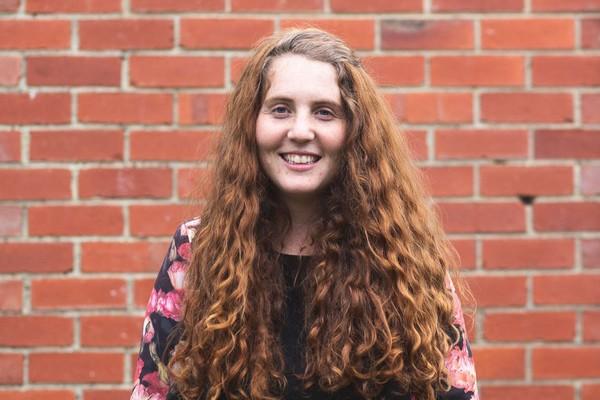
JOFA  president Nomi Kaltmann
JOFA president Nomi Kaltmann

So, on the one hand, we seem to be making little progress in the advancement of women within the Orthodox community. On the other hand, if I look back over 20 years, there has been movement and we may well be experiencing a sea change. Indeed, the pandemic has shifted many perceptions and it could well be changing the very direction of our community for the future.  

Some 23 years ago, shortly after arriving in Melbourne, I unwittingly found myself in the centre of a community storm which began when my small shul, Beit Aharon, introduced the passing of the Sefer Torah to the women of our congregation. The decision was in response to a request from several women in the congregation.

As far as I was concerned, there were precedents for this in the US and Israel and there was nothing Halachically unacceptable in the practice. After all, in many congregations across the world, including Beit Aharon, women were already dancing with the Torah on Simchat Torah. Following similar precedents, our congregation also introduced to Melbourne the idea that a Bat Mitzvah girl can give a Dvar Torah discourse in the main sanctuary of the synagogue.  

I should have been prepared for the storm that broke out across the Australian Orthodox Jewish community. After all, in my previous position in Auckland, I had promoted the right of a woman to be president of the board and encouraged the carrying of the Torah. It had generated much heat, debate and disagreement.

Nonetheless, I seem to have walked right into a minefield in Melbourne and was stunned by the outcome of what was considered a relatively modest, albeit novel, response to some women’s sense of exclusion in our community.

Surely, as I wrote the time, “it may be an unusual shul practice but we are living in an unusual age – a time different from any other in Jewish history. A time in which women are more knowledgeable and active in the public arena than ever before; a time in which the Jewish people are choosing to walk away from Judaism in unprecedented numbers.

Eve may have sprung from the side of Adam, but they both knew her side was of equal value.

“In short, a time that calls out for legitimate Halachic responses to the legitimate needs of all Jews, but in particular of our wives and our sisters, our mothers and our daughters. ”  

I was summoned to appear in front of the Rabbinical Council of Victoria. While it was ostensibly a “please explain” to a young newcomer, it felt more like an interrogation with shades of an inquisition. There was the underlying threat of sanctions, and I was publicly ridiculed by a senior rabbi as being an ignorant little “rebella”.

He declared that women should not touch the Torah as they were not always in a pure state, a dubious legal position that was challenged by some of his colleagues. He also threatened me with letters from rabbinic authorities.

Rabbi Ronald Lubofsky, the respected rabbi emeritus of St Kilda Synagogue, wrote an article at the time in the support of women and my position, and referred to the pressure as “sanctified intolerance”.

This little storm in a teacup preoccupied the Australian Jewish News for several weeks and I was left feeling bruised and battered. However, there was also an outpouring of support and expressions of relief. 

It certainly steeled me to fight the good fight, to promote what I believe is right and to strive to achieve a principled position! I like to think that I played a small part in advancing the inclusion of women in Orthodoxy in Melbourne. I feel vindicated by the advancement of women across the community, painfully slow as it is. 

I am heartened by the appointment of Rabbanit Shira Mirvis as spiritual leader of a religious congregation in the settlement of Efrat in the West Bank. This is what so many of us had been anxiously awaiting. This is not a woman partnering her rabbi husband, this is not a woman enabling her rabbi husband.

This is an entire Halachic community backed by the founding chief rabbi of Efrat, Rabbi Riskin (who has championed the learning and rights of Orthodox women for decades) saying to all of our young women: You too can have an equal access to Torah learning, an equal voice in speaking for the Torah, speaking for Judaism and at the very least for Modern Orthodoxy today. 

At the dawn of creation, men and women were recognised as equals. Eve may have sprung from the side of Adam, but they both knew her side was of equal value. The image of God does not distinguish between male and female. God is neither male nor female. Each gender carries its unique power and potency.

And when we put them together and work together, that power and influence increases exponentially. So let us send out men and women to champion for our Judaism, to scout out our future, to prepare us for the challenging age in which we live. 

Photo: Launch of the Jewish Orthodox Feminist Alliance in Melbourne in May (Facebook)

You might also like
  • So addicted, he gambled on Yom Kippur
    Jarod Rhine-Davis
  • The publishing house that Henry built
    Michael Visontay
  • Where are the women in this election campaign?
    Eetta Prince-Gibson
logomark.67a07ee3
We believe in the free flow of information

Republish our articles for free, online or in print, by using our Creative Commons licence

You might also like

    Funeral for top military commander of Hamas’ armed wing in Gaza
    Israel Hamas WarAnalysisIsrael

    Gaza ceasefire falters as Israel and Hamas prepare for next war

    Shahar Burla 1
    Jewish-diversity copy
    Feature

    The three questions that will define the Jewish future

    Shahar Burla 1
    Australia’s Prime Minister Albanese Speaks After Bondi Shootings
    News

    What PM, Premier, Police say about Bondi antisemitic attack

    The Jewish Independent 1

About the author

Ralph Genende

Ralph Genende

Rabbi Ralph Genende is the Interfaith and Community Liaison at the Australia Israel and Jewish Affairs Council. He is also Senior Rabbi to the Australian Defence Force and Rabbi of Kehilat Kesher Community.

More from the author

ReflectionWorld

A celebration of chutzpah, from Moses to modern times

AnalysisAustralia

Interfaith relations after Bondi 

DebateAustralia

Stopping the sacrifice of children on a new altar 

OpinionLifestyle

Forgiving our parents: a Yom Kippur challenge