Aa
  • Read, Watch, Listen
  • TJI Series
  • Community Action
  • Events
  • Zedi
Follow us and continue the conversation
  • LinkedIn
  • Instagram
  • FaceBook
  • X
  • YouTube
Test yourself with the TJI Quiz!

Adjust size of text

Aa

Follow us and continue the conversation

  • LinkedIn
  • Instagram
  • FaceBook
  • X
  • YouTube

Your saved articles

You haven't saved any articles

What are you looking for?

Original reporting, insightful analysis and diverse views, delivered straight to your inbox

  • LinkedIn
  • Instagram
  • FaceBook
  • X
  • YouTube
Your support fuels our mission to inform, entertain and inspire.

The Jewish Independent is bound by the Standards of Practice of the Australian Press Council. If you believe the Standards may have been breached, you may approach The Jewish Independent or make a complaint to the Australian Press Council in writing at www.presscouncil.org.au. The Council may also be contacted on 1800 025 712.

  • Our Story
  • Contact us
  • Our Team
  • Support us
  • Guidelines
  • Pitch your idea
  • Republishing us
  • Community Action
  • Our Awards
  • LinkedIn
  • Instagram
  • FaceBook
  • X
  • YouTube
Aboriginal FlagTorres Strait Islanders Flag

The Jewish Independent acknowledges Aboriginal and Torres Strait Islander peoples as the Traditional Owners and Custodians of Country throughout Australia. We pay our respects to Elders past and present, and strive to honour their rich history of storytelling in our work and mission.

© The Jewish Independent 2026All Rights Reserved
Website design and development by Your Creative, MelbourneTerms & ConditionsPrivacy Policy
HomeRead, Watch, ListenIsrael
Israel Hamas WarExplainerIsrael

US-backed Gaza plan requires Hamas disarmament for lasting ceasefire

Hamas is expected to respond in coming days to a proposal to disarm in a phased process, with Israeli forces withdrawing and a new Palestinian administration taking over governance. But the plan faces political, legal and funding obstacles.
Shahar Burla
Print this
PALESTINIAN-ISRAEL-CONFLICT-HOSTAGES

Palestinian Hamas fighters carry their guns in Nuseirat in the central Gaza Strip, February 2025. (Bashar TALEB/AFP/ via Getty Images)

Published: 25 March 2026

Last updated: 25 March 2026

A new US-backed push to secure a lasting ceasefire in Gaza has placed a stark demand at its centre: Hamas must disarm. The proposal, developed by President Trump's Board of Peace, sets out a phased plan under which Hamas would relinquish its weapons, Israeli forces would withdraw, and a new Palestinian administration would take over governance of the territory.

First reported by The New York Times, the plan reflects mounting international pressure to turn a fragile truce into a longer-term political settlement, even as global attention shifts to the escalating conflict with Iran. In a post on X, the Board’s Gaza envoy, Nickolay Mladenov, suggested a proposal was “on the table” that could unlock reconstruction, but only if Hamas and other armed groups fully decommission their weapons.

Yet despite its scope and detail, the framework faces a fundamental question: whether Hamas is willing, or able, to accept it.

How would the plan reshape Gaza’s control?

At the core of the proposal is a transition of power inside Gaza. Hamas would be required to hand over governance to a newly established Palestinian technocratic body - the National Committee for the Administration of Gaza. This body, formed earlier this year, would take responsibility for civilian life, including hospitals, schools and basic services. Alongside it, a new Palestinian police force would be deployed across the territory.

The plan envisions a staged approach: as areas are cleared of weapons, Palestinian police, backed by an international stabilisation force, would replace Israeli troops. In parallel, humanitarian aid and commercial goods would begin flowing more freely into Gaza.
Crucially, the proposal attempts to sequence political, military and humanitarian steps together. Disarmament is not just a security measure; it is tied directly to reconstruction, governance and aid.

What does “disarmament” actually mean?

The proposal sets out a two-phase disarmament process. In the first 90 days, Hamas would be required to hand over its heavy weapons, including rockets, missile launchers and parts of its tunnel infrastructure, as well as provide detailed maps of its underground network.

The second phase would involve the gradual surrender of lighter weapons, such as assault rifles. This process would begin in southern Gaza and move northwards, with each cleared zone transitioning to Palestinian and international control.

A “buy-back” scheme is also under consideration, offering financial incentives and employment opportunities to militants who give up their personal weapons. Altogether, the process could take up to eight months, a significant departure from Israel’s longstanding demand for immediate, total disarmament. According to officials cited by The New York Times, this phased approach reflects pressure from mediators who see an all-at-once model as unrealistic.

What are the main obstacles?

Despite the structure of the plan, several major challenges remain. First, there is the question of political will. Sources cited by Haaretz suggest that key regional actors, including Qatar and Turkey, are not exerting sufficient pressure on Hamas. Without credible consequences for rejection, the proposal may lack leverage.

Second, there are legal and institutional uncertainties. Critics argue that the plan does not clearly align with existing Palestinian Authority legal frameworks, raising questions about the legitimacy of the new governing bodies and police force. Others counter that international backing, including reference to a UN Security Council resolution, provides sufficient legal grounding.

Third, there is the issue of funding. While US President Donald Trump has spoken of mobilising billions for Gaza’s reconstruction, officials say the technocratic committee currently lacks the resources to begin meaningful work. Donor countries appear reluctant to release funds until Hamas is fully disarmed, creating a Catch-22 dynamic.

Finally, the timeline itself introduces risk. Over eight months, political realities could shift, including the elections in Israel or changes in regional dynamics, undermining the plan’s assumptions.

Will Hamas agree?

This remains the central question and the answer, for now, appears doubtful. Hamas has reportedly shown some openness to relinquishing heavy weapons in talks with Arab mediators. However, it has insisted on retaining lighter arms, arguing they are necessary for self-defence and internal security.

More fundamentally, disarmament strikes at the heart of Hamas’s identity. As a movement built around armed resistance to Israel, giving up its weapons would represent a profound transformation, if not an existential shift.

As Palestinian analyst Akram Atallah told The New York Times, the proposal effectively “calls for the end of Hamas as we know it”. From Hamas’s perspective, it offers disarmament without a clear pathway to a Palestinian state, a trade-off many within the group are unlikely to accept.

Instead, analysts expect Hamas to respond with a counterproposal designed to delay or dilute the terms, while avoiding a return to full-scale war.

What do Gazans want?

For civilians inside Gaza, the picture is more complex. Many residents reportedly support a deal that would enable reconstruction and stabilisation, even if it involves Hamas stepping back. The promise of increased aid, functioning services and reduced violence carries significant weight after months of devastation.

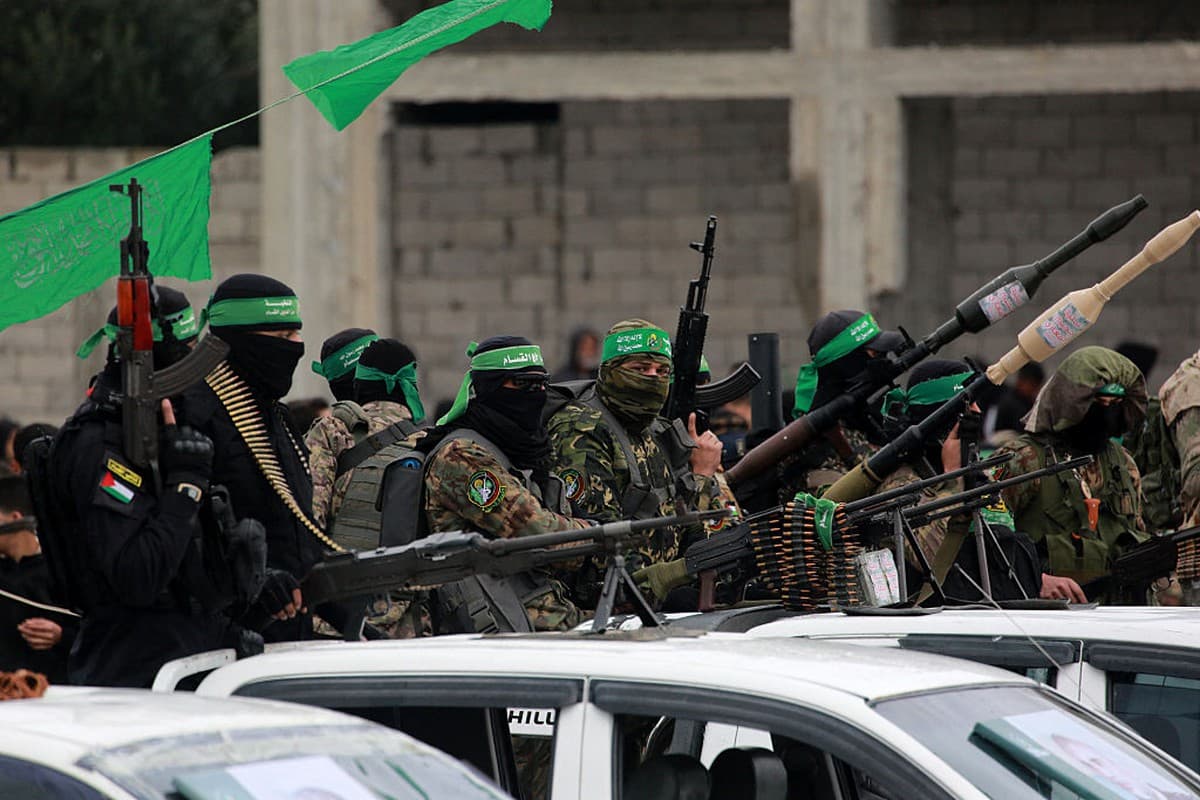
At the same time, there are signs that little has changed on the ground. Armed Hamas personnel remain visible across Gaza, reinforcing perceptions that the group is not preparing to relinquish control.

This gap between diplomatic negotiations and lived reality highlights a broader tension: while international actors are focused on long-term frameworks, conditions on the ground remain fragile and volatile.

A plan with ambition but limited momentum

The Board of Peace proposal represents one of the most detailed attempts yet to link ceasefire, governance and reconstruction in Gaza. It reflects a growing consensus among international mediators that any lasting solution must address not just security, but also political authority and economic recovery.

Yet the plan’s success depends on factors that remain unresolved: Hamas’s willingness to fundamentally change its role, sustained pressure from regional actors, and credible guarantees of reconstruction funding.

For now, the proposal sits in a familiar space, ambitious in design, but uncertain in execution.

READ MORE 

Hamas Considering Disarmament Plan From Trump’s Board of Peace, Officials Say (Paywall, The New York Times) 

Gaza Board of Peace, mediators, submit to Hamas proposal for gradual disarmament (Haaretz) 

Hamas given proposal for gradual weapon handover in months-long process — officials (Times of Israel) 

You might also like
  • New evidence Netanyahu was warned about October 7
    Shahar Burla
  • Turkey emerges as military threat to Israel
    Dror Doron
  • Who is Ofer Winter and could he upset Netanyahu’s election?
    Shahar Burla
logomark.67a07ee3
We believe in the free flow of information

Republish our articles for free, online or in print, by using our Creative Commons licence

You might also like

    Yoav Segalovitz Mansour Abbas
    Israel Votes 2026OpinionIsrael

    Because of my Zionist values, I’m joining an Arab party

    Yoav Segalovitz 1
    ISRAEL-LGBTQ-PRIDE-PARADE-PALESTINIAN-CONFLICT-HOSTAGES
    NewsIsrael

    LGBT asylum seekers caught between Palestinian violence and Israeli bureaucracy

    Jarod Rhine-Davis
    settler outpost west bank
    NewsIsrael

    Israel is cementing its control over the West Bank and East Jerusalem while the world is distracted

    Martin Kear

About the author

Shahar Burla

Shahar Burla

Dr Shahar Burla is a Sydney-based researcher, lecturer and Contributing Editor of TJI. Shahar holds a Master’s degree in political science from Hebrew University and a PhD in political science from Bar-Ilan University. He is the author of Political Imagination in the Diaspora: The Construction of a Pro-Israeli Narrative (2013) and co-editor of Australia and Israel: A Diasporic, Cultural and Political Relationship (2015).

More from the author

FeatureIsrael

New evidence Netanyahu was warned about October 7

OpinionIsrael

The Altalena should be a warning, not a political weapon

AnalysisIsrael

Who is Ofer Winter and could he upset Netanyahu’s election?

AnalysisIsrael

Bennett’s balancing act: can he win over the right without losing the centre?

Comments1

  • Avatar of David Schulberg

    David Schulberg27 March at 02:35 am

    The trouble is that Hamas doesn’t want to disarm and give up on its quest to destroy Israel.
    A senior Hamas official in Turkey, Bassem Naim, who is an official in Hamas’s political wing, has assailed the Board of Peace envoy Mladenov for conditioning reconstruction on disarmament.
    In the terror group’s first response to Mladenov’s revelation of the principles in the disarmament proposal that mediators submitted to Hamas earlier this month, Naim claims that this conditionality goes against previous understandings.
    Trump’s plan made disarmament a requirement of any plans to reconstruct Gaza. If Hamas doesn’t agree then military force will be necessary and unfortunately Israel is the only nation willing to do what’s necessary.