Aa
  • Read, Watch, Listen
  • TJI Series
  • Community Action
  • Events
  • Zedi
Follow us and continue the conversation
  • LinkedIn
  • Instagram
  • FaceBook
  • X
  • YouTube
Test yourself with the TJI Quiz!

Adjust size of text

Aa

Follow us and continue the conversation

  • LinkedIn
  • Instagram
  • FaceBook
  • X
  • YouTube

Your saved articles

You haven't saved any articles

What are you looking for?

Original reporting, insightful analysis and diverse views, delivered straight to your inbox

  • LinkedIn
  • Instagram
  • FaceBook
  • X
  • YouTube
Your support fuels our mission to inform, entertain and inspire.

The Jewish Independent is bound by the Standards of Practice of the Australian Press Council. If you believe the Standards may have been breached, you may approach The Jewish Independent or make a complaint to the Australian Press Council in writing at www.presscouncil.org.au. The Council may also be contacted on 1800 025 712.

  • Our Story
  • Contact us
  • Our Team
  • Support us
  • Guidelines
  • Pitch your idea
  • Republishing us
  • Community Action
  • Our Awards
  • LinkedIn
  • Instagram
  • FaceBook
  • X
  • YouTube
Aboriginal FlagTorres Strait Islanders Flag

The Jewish Independent acknowledges Aboriginal and Torres Strait Islander peoples as the Traditional Owners and Custodians of Country throughout Australia. We pay our respects to Elders past and present, and strive to honour their rich history of storytelling in our work and mission.

© The Jewish Independent 2026All Rights Reserved
Website design and development by Your Creative, MelbourneTerms & ConditionsPrivacy Policy
HomeRead, Watch, ListenIsrael
Israel Votes 2026OpinionIsrael

Because of my Zionist values, I’m joining an Arab party

In a decision that reframes ideologies and resets coalition possibilities, Yoav Segalovitz has become the first Jewish Israeli to join an Arab party. This is why.
Yoav Segalovitz
Print this
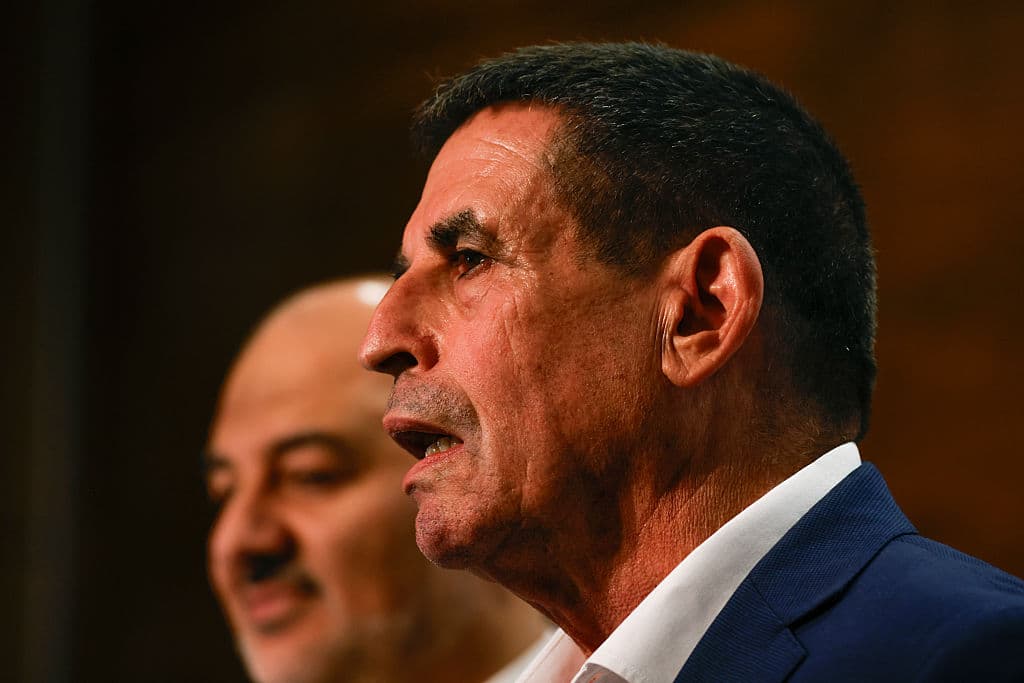
Yoav Segalovitz Mansour Abbas

Israeli politician Yoav Segalovitz (R) and leader of the Arab Israeli party Ra’am (United Arab List) Mansour Abbas (back) attend a news conference in Nazareth on August 31, 2026. (Jalaa MAREY / AFP via Getty Images)

Published: 2 September 2026

Last updated: 2 September 2026

I am a Jew, a Zionist, secular, an officer in the IDF, and a former Assistant Commissioner in the Israel Police. 

Mansour Abbas is an Arab, a religious Muslim, a conservative. 

What connects us both is that we are all Israelis, and this is our shared identity. The luster of the term "Israeli" has faded, and we spend all our time dealing with divisive ethnic expressions instead of what we have in common. 

The Arab population in Israel constitutes 21 percent; it is active and productive—in industry, the economy, culture, education, and medicine. It is a engine of economic and social growth. 

Yes, there are differences between us; there is a complex history between Arabs and Jews in this land. 

But there is a shared future.  That shared future exists in all walks of life. 

The future model for the State of Israel that I envision is the model familiar to anyone who steps through the doors of a hospital in Israel. There, one sheds narratives and identities; there, above all else, human beings meet. 

Patients, doctors, nurses, administrative staff, families—everyone is equal. That is the place where we are all human beings, and that is where we will start. 
That is also how I view the future of the State of Israel, a future I draw clearly for myself. 

What drives me is the Zionist, Jewish, value-based vision from which I draw my principles. The Declaration of Independence is a compass, not just text written on a wall. 

The Declaration of Independence states: "The State of Israel will be open for Jewish immigration and for the Ingathering of the Exiles; it will foster the development of the country for the benefit of all its inhabitants; it will be based on freedom, justice and peace as envisioned by the prophets of Israel; it will ensure complete equality of social and political rights to all its inhabitants irrespective of religion, race or sex; it will guarantee freedom of religion, conscience, language, education and culture; it will safeguard the Holy Places of all religions; and it will be faithful to the principles of the Charter of the United Nations."  

For me, these are the principles in which I believe and with which I arrive. 

Can all the parties calling themselves Zionist sign this declaration today? I am not at all certain. 

Is it possible to create political cooperation between such different people? I believe so. 

I do not intend to change Mansour or Ra'am, and they will not change me. However, it is possible to cooperate politically on the basis of trust, recognition of differences, and commitment to joint action. 

The current government has brought the State of Israel to unbearable places in all areas of life: Rampant crime, a lack of personal security for all citizens, and certainly for the Arab citizens of the country, in whom the government has no interest whatsoever. 

As someone who acted in the previous government in the fight against crime, I know that things can be done differently through cooperation between all state authorities and local governments. But the prerequisite for this is to genuinely care. 

Education has hit rock bottom, with an emphasis on Arab society. The same goes for welfare, health, employment, transportation, and more. 

A repair in this country cannot be led without connection, including political connection. 

The boundary lines set in political discourse are unacceptable to us. They were established through exclusion, incitement, and racism. 

The common assertion that after October 7th political partnership with Arab parties is impossible is absurd and false. 

Israeli Arabs experienced the war; in the terrible attack on October 7th, over 34 members of Arab society were killed, and Arab citizens were also kidnapped to Gaza—six Bedouin residents of the Negev. Throughout the war, we all sat together, Arabs and Jews, in shelters during the missile attacks from Iran and Hezbollah; residents were evacuated from their homes, and Arab citizens were also killed and injured. 

The political boundary lines were drawn by extremists and became an accepted political norm across all parties. I do not accept this premise. 

The time for repairing the country is also internal and social. 

21 percent of the citizens are part of this repair. Arab society, in all its diversity and nuance, is an economic, social, and cultural growth engine for the State of Israel. It is not a threat; it is an opportunity for the State of Israel and a bridge to its neighbors. 

We are currently in an election period, but my intention in connecting with Ra'am goes far beyond an election campaign. Politics is a tool for change. 

I want to build a real political bridge. Even if there are problems—and there will be; even if there are difficulties, and even if it (the bridge) is shaky or unsteady, it will be laid and serve as a foundation for a political future that I hope many good people, Jews and Arabs alike, will continue. There are past grievances, a bloody history in the relationships within this land, and different narratives—that is the past belonging to all of us. 

We cannot change the past because it is an established fact. The State of Israel is a Jewish and democratic state, and it is our duty to look to the future, paint it in color, and mark its paths. Everyone can hold their own position regarding the past; the obligation is to create a shared future. It is not enough to draw and talk; one must act. 

The role of leadership is to change reality and create a better future. 

Two central feelings drive human action: the first is fear, and the second is hope. 

The political system uses fear to unite audiences; we want to offer hope. 

We just need to lift our heads and look—it exists. 

We decided to take action, even if it is difficult and invites criticism from many directions. Our progress comes from understanding our differences, not from imagination or identicalness. Yet there is a central shared goal: the advancement of Israeli society, repair, and change in all areas of life—combating crime, health, welfare, planning and construction, and all the fields upon which we agree. 

The partnership is built on trust and an understanding of our differences. They are not ignored, but the past cannot be allowed to dictate the future. 

Yes, I explicitly want to break the paradigm of boundary lines and discourse limits. Yes, I also want to break the paradigm of how political partnerships are created. I am not joining Ra'am's list with a parliamentary faction; I am personally joining Ra'am. Some may say this shows political weakness, but for me, there is far greater strength and power here. 

I call upon Jews, Arabs, Muslims, Christians, and Druze to place their trust in this move and join us. 

I thank my friend Mansour Abbas for opening the door to Ra'am for me to be part of its list for the upcoming Knesset. 

In the poem "A Locked Garden" by the poet Rachel—which is a deeply personal poem—there is a line that has echoed in my mind many times in various contexts. This line echoed once again during the long months I deliberated over the step we are completing today: 

"Who are you? Why does an outstretched hand not meet a sisterly hand?" 

This is an AI translation of Segalovitz's speech. The original is available in Hebrew here.

You might also like
  • Western ‘Palestinianism’ colonises everything – and hurts Palestinians
    Andres Spokoiny
  • Israel is cementing its control over the West Bank and East Jerusalem while the world is distracted
    Martin Kear
  • Abuse by IDF soldiers humiliates Muslim Palestinians
    Ben Lynfield
logomark.67a07ee3
We believe in the free flow of information

Republish our articles for free, online or in print, by using our Creative Commons licence

You might also like

    US President Donald Trump greets Israeli Prime Minister Benjamin Netanyahu
    Israel Hamas WarAnalysisIsrael

    Netanyahu rejects Trump’s Gaza plan, testing US influence in the region

    Shahar Burla 2
    Ofer Winter
    Israel Votes 2026AnalysisIsrael

    Who is Ofer Winter and could he upset Netanyahu’s election?

    Shahar Burla
    ISRAEL-TRANSPORT-AVIATION-STRIKE
    Israel Votes 2026AnalysisIsrael

    Bennett’s balancing act: can he win over the right without losing the centre?

    Shahar Burla 1

About the author

Yoav Segalovitz

Yoav Segalovitz

Yoav Segalovitz is an Israeli politician who was an MK for Yesh Atid from 2019 until 2026, and Deputy Minister of National Security from 2021-22.

Comments

No comments on this article yet. Be the first to add your thoughts.