Aa
  • Read, Watch, Listen
  • TJI Series
  • Community Action
  • Events
  • Zedi
Follow us and continue the conversation
  • LinkedIn
  • Instagram
  • FaceBook
  • X
  • YouTube
Test yourself with the TJI Quiz!

Adjust size of text

Aa

Follow us and continue the conversation

  • LinkedIn
  • Instagram
  • FaceBook
  • X
  • YouTube

Your saved articles

You haven't saved any articles

What are you looking for?

Original reporting, insightful analysis and diverse views, delivered straight to your inbox

  • LinkedIn
  • Instagram
  • FaceBook
  • X
  • YouTube
Your support fuels our mission to inform, entertain and inspire.

The Jewish Independent is bound by the Standards of Practice of the Australian Press Council. If you believe the Standards may have been breached, you may approach The Jewish Independent or make a complaint to the Australian Press Council in writing at www.presscouncil.org.au. The Council may also be contacted on 1800 025 712.

  • Our Story
  • Contact us
  • Our Team
  • Support us
  • Guidelines
  • Pitch your idea
  • Republishing us
  • Community Action
  • Our Awards
  • LinkedIn
  • Instagram
  • FaceBook
  • X
  • YouTube
Aboriginal FlagTorres Strait Islanders Flag

The Jewish Independent acknowledges Aboriginal and Torres Strait Islander peoples as the Traditional Owners and Custodians of Country throughout Australia. We pay our respects to Elders past and present, and strive to honour their rich history of storytelling in our work and mission.

© The Jewish Independent 2026All Rights Reserved
Website design and development by Your Creative, MelbourneTerms & ConditionsPrivacy Policy
HomeRead, Watch, ListenIsrael
Israel Hamas WarAnalysisIsrael

Hostage release as Trump heads to Middle East: A turning point?

Hostage Edan Alexander has been released by Hamas, sparking hopes that Trump's trip could lead to other breakthroughs.
TJI Wrap
Print this
Two young men embracing as older man and older woman watch

Released hostage Edan Alexander greets his brother Roy as parents Yael adn Adi look on (Prime Minister’s Office)

Published: 13 May 2025

Last updated: 13 May 2025

The last American-Israeli hostage Edan Alexander held captive by Hamas in Gaza since Oct. 7, 2023 has been released.

Alesander was released on Monday after successful negotiations between the US and the terrorist organisation, as President Donald Trump embarked on the first major international trip of his second term to Riyadh, Saudi Arabia, Doha, Qatar, and Abu Dhabi, United Arab Emirates.

The president’s top priority this week is to procure “economic agreements” with Saudi Arabia, Qatar, and the United Arab Emirates that would enhance their investments in America. Trump is aiming to return to the US on Thursday with $1 trillion worth of deals and investment pledges. “His regional agenda is business, business, and business,” one Arab official told Axios.

Beyond economic agreements, the trip has the potential for major shifts on two regional security issues: Gaza and Iran.
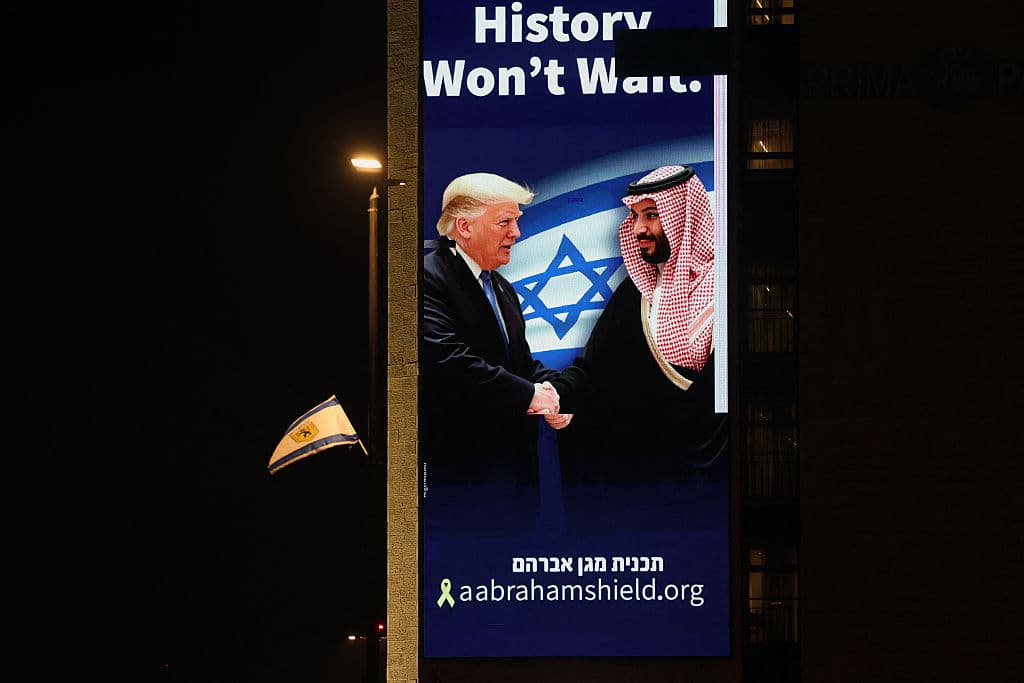
A billboard in Jerusalem this week promoting normalising relations with Saudi Arabia (AHMAD GHARABLI/AFP via Getty Images)

Ending the war in Gaza

The US-Hamas deal that led to the release of Edan Alexander, might signal a dramatic shift in his position on ending the war. “Until last night (Monday), Trump spoke vaguely about the need to release the hostages and took pride in the return of some of them immediately after his return to the White House, as part of the January 2025 ceasefire deal. But never before had he linked a deal to end the war with the release of all the hostages—until now,” Amir Tibon writes in Haaretz.
This is consistent with what the Arab governments hosting Trump would like to see: an agreement that ends the ongoing war in Gaza and a deal with Iran to remove the threat of a new conflict in the Gulf. The Saudis and the Qataris, who don’t always see eye to eye on regional issues, are in full agreement when it comes to these two situations and will surely encourage Trump to prioritise diplomacy over continued warfare Writes Amir Tibon in Haaretz.

The position Trump expressed—and repeated later in the statement with a call to "end this brutal conflict"—also aligns with the demand of most hostages' families and the majority of the Israeli public: to prioritise the hostages' release over continuing Israel's war in Gaza.

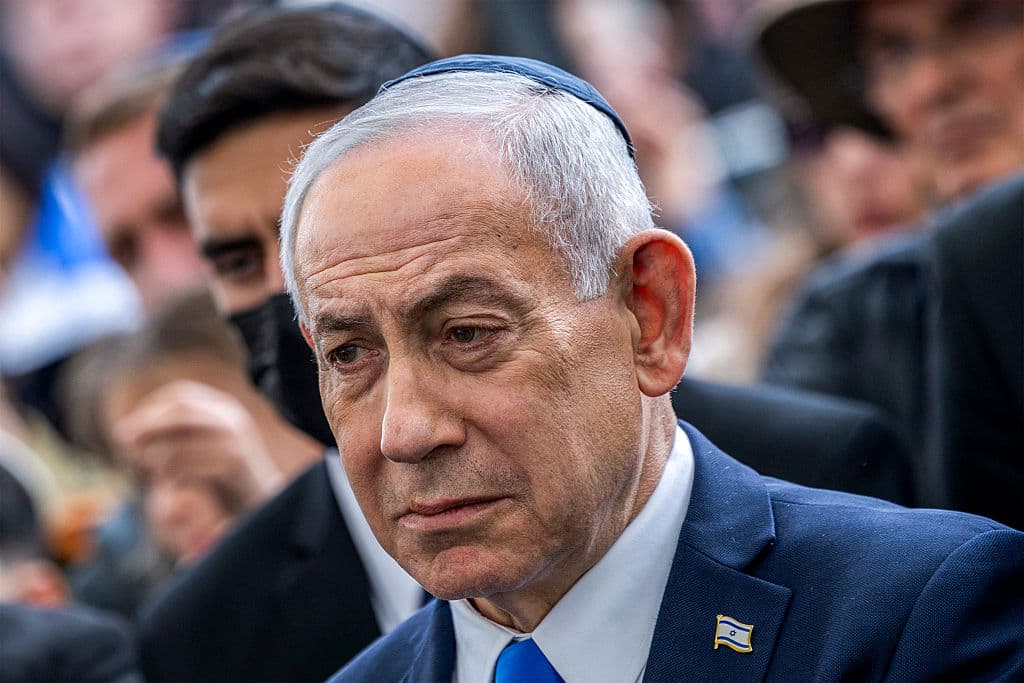
By calling for an end to the "brutal war" and expressing hope for "that day of celebration", Trump has set new terms for negotiations between Israel and Hamas. While Netanyahu has only agreed to a partial ceasefire and hostage deal—one that would leave many hostages behind and allow Israel to continue fighting for months—Trump has now made it clear he wants the war's end to be part of a broader deal to free them all. This also reflects growing frustration with Netanyahu and his extremist government among the Gulf monarchies, who view the continued war in Gaza and the threat of war with Iran as dangers to regional stability.

Until now, Netanyahu's strategy was to present demands he knew Hamas would reject, enabling him to blame the group for blowing up the negotiations. However, Alexander's release signals that Qatar and the US are now aligned, and Netanyahu's tactic may no longer work, notes Chaim Levinson in Haaretz. A source in the Gulf told Haaretz, "Everyone understands that the negotiations in Doha will be very short, and the Americans will apply pressure to reach an agreement. No one wants to be the party that the US accuses of violating the deal." An Israeli delegation is expected to leave for Doha today (Tuesday). Netanyahu claimed that he "instructed" the delegation's departure, but “as usual, that's not entirely accurate. Witkoff gave the order, and Netanyahu merely agreed,” Levinson writes.

Will their anger toward the Israeli Prime Minister and his messianic coalition be enough to push Trump in the direction of ending the war in Gaza? It's too early to say, and anyone who claims otherwise is bluffing.

Deal with Iran

The trip comes at a critical moment for US nuclear talks with Iran, led by Trump’s envoy to the Middle East, Steve Witkoff. The fourth round of nuclear negotiations between Iran and the US  began Sunday afternoon in Muscat, Oman, with deep divisions looming over the scope and goals of a potential agreement. At the heart of the disagreement is whether any new deal would merely limit Iran’s nuclear program or require the complete dismantling of its uranium enrichment capabilities.

A senior US official described the talks as “encouraging” and said there were plans to “move forward” on technical aspects of the negotiations. “Gulf states are cautiously supportive of the administration’s Iran nuclear talks, in part because they fear they’d be the first victims of a war with Iran,” said Alterman.

Trump has warned there will be consequences for Iran if a deal is not reached. However, he is also likely to be pressed by Saudi Arabia, Qatar, and the UAE on the substance of any deal.

“There are two critical questions that we don’t have great clarity about—and that I suspect our Gulf partners are going to press the administration for more clarity on. The first issue is: What would a nuclear deal look like? Would the administration accept a deal that allows for some domestic enrichment, or would it insist on complete dismantling of Iran’s domestic enrichment capabilities?” said Nathan Sales, a distinguished fellow at the Atlantic Council’s Middle East Programs.

Trump said on Wednesday that a decision on whether Iran can have a nuclear enrichment program has not been made. “We haven’t made that decision yet. We will, but we haven’t made that decision yet,” he told reporters in the Oval Office.

Sales, Trump’s coordinator for counterterrorism during his first term, added: “My second question is: Would the administration accept an agreement that is limited specifically to the nuclear file, or will it also insist on addressing Iran’s support for regional terrorism—such as its ballistic missile program and other malign behaviour with which the region is, unfortunately, all too familiar?”

READ MORE

Trump is Middle East-bound for his first major international trip of his second term. Here’s what to watch (CNN)

Trump aims to unveil plan to end Gaza war in Qatar, ordering Netanyahu to fall in line (Haaretz, Chaim Levinson)

Trump's trillion-dollar trip (Axios, Bark Ravid)

Forget the frantic rumors. here's what really matters ahead of Trump's Mideast trip (Haaretz, Amir Tibon)

How Trump's Gulf tour and release of Edan Alexander expose rift with Netanyahu (Al-Monitor, Paywall)

Iran calls latest nuclear talks with US ‘difficult’ but both sides agree negotiations will continue (CNN)

You might also like
  • UK’s dramatic policy change on Israel-Palestine
    Colin Shindler
  • New evidence Netanyahu was warned about October 7
    Shahar Burla
  • Fear of Netanyahu victory may drive big surge in Palestinian voter turnout
    Ben Lynfield
logomark.67a07ee3
We believe in the free flow of information

Republish our articles for free, online or in print, by using our Creative Commons licence

You might also like

    Woman with land and houses behind her
    NewsAustralia

    Australia to increase sanctions against West Bank settlements

    Deborah Stone
    Rozana Beit Oula
    PeacebuildingOpinionIsrael

    Peacebuilding through the eyes of a sceptic

    Ron Finkel
    Erdogan Turkey
    AnalysisIsrael

    Turkey emerges as military threat to Israel

    Dror Doron

About the author

TJI Wrap

TJI Wrap

TJI wraps consolidate essential news and analysis from multiple sources into digestable summaries.

More from the author

NewsAustralia

War crimes allegations against Australian IDF soldier

NewsWorld

Wave of attacks on Jewish sites sparks international alarm

AnalysisIsrael

Gaza, Lebanon, Syria, Iran: Israel’s tense security landscape

AnalysisIsrael

Middle East on edge as Iran and Israel inch closer to another war

Comments

No comments on this article yet. Be the first to add your thoughts.