Aa
  • Read, Watch, Listen
  • TJI Series
  • Community Action
  • Events
  • Zedi
Follow us and continue the conversation
  • LinkedIn
  • Instagram
  • FaceBook
  • X
  • YouTube
Test yourself with the TJI Quiz!

Adjust size of text

Aa

Follow us and continue the conversation

  • LinkedIn
  • Instagram
  • FaceBook
  • X
  • YouTube

Your saved articles

You haven't saved any articles

What are you looking for?

Original reporting, insightful analysis and diverse views, delivered straight to your inbox

  • LinkedIn
  • Instagram
  • FaceBook
  • X
  • YouTube
Your support fuels our mission to inform, entertain and inspire.

The Jewish Independent is bound by the Standards of Practice of the Australian Press Council. If you believe the Standards may have been breached, you may approach The Jewish Independent or make a complaint to the Australian Press Council in writing at www.presscouncil.org.au. The Council may also be contacted on 1800 025 712.

  • Our Story
  • Contact us
  • Our Team
  • Support us
  • Guidelines
  • Pitch your idea
  • Republishing us
  • Community Action
  • Our Awards
  • LinkedIn
  • Instagram
  • FaceBook
  • X
  • YouTube
Aboriginal FlagTorres Strait Islanders Flag

The Jewish Independent acknowledges Aboriginal and Torres Strait Islander peoples as the Traditional Owners and Custodians of Country throughout Australia. We pay our respects to Elders past and present, and strive to honour their rich history of storytelling in our work and mission.

© The Jewish Independent 2026All Rights Reserved
Website design and development by Your Creative, MelbourneTerms & ConditionsPrivacy Policy
HomeRead, Watch, ListenIsrael
Israel Iran WarFeatureIsrael

As Iranian missiles land, Israeli judges order new round of Palestinian evictions

With the media spotlight diverted, the Supreme Court ruled for the immediate eviction of Palestinian families, amid heightened settler violence.
Ben Lynfield
Print this
Woman in headscarf crying

A woman cries after taking the last look at the body of Mohammad Al-Naji, who according to the Palestinian Health Ministry was one of three Palestinians killed after Jewish settlers stormed the West Bank village of Kafr Malik during their funerals, Thursday, June 26, 2025 (AP Photo/Nasser Nasser).

Published: 1 July 2025

Last updated: 2 July 2025

Most Israelis associate the recent Iranian war with terrifying missile barrages that caused damage across the country. In occupied East Jerusalem, low-income Palestinian residents of the Silwan neighbourhood suffered a different but familiar type of trauma during the conflict — an onslaught inflicted not by a distant enemy, but rather by the justices of Israel’s Supreme Court.

Drawing on a legal system that favours Jews rather than treating all residents as equal, the Court issued two separate rulings that enabled the immediate eviction of six Palestinian families in Silwan’s Batin al-Hawa area so that settlers of the Ateret Cohanim organisation could take their place.

Meanwhile, in the Masafer Yatta area of the West Bank, destitute Palestinians also faced a heightened threat of eviction during the war, this time from the IDF. At the same time, settler violence surged, expanding from Bedouin encampments to established villages, and even boiling over into an army base.

Video of street confrontation between settlers and Palestinians (Supplied by Zuheir Rajabi):

Rioting by settlers

In the deadliest incident last Wednesday, three Palestinians were killed by troops in Kufr Malik near Ramallah after rioting by settlers, according to Haaretz. The army said troops had come under fire from inside the village, but Palestinian residents denied this.

All in all, there was no letup in Israel’s project of dispossessing Palestinians whether through the courts, the army or the settlers whose very presence in occupied territory violates the Fourth Geneva Convention. Meanwhile, the nearly two-year-old war in Gaza, triggered by Hamas’s brutal attack on October 7, is now punctuated by the IDF’s alleged killings of starving Palestinian civilians at aid collection sites.

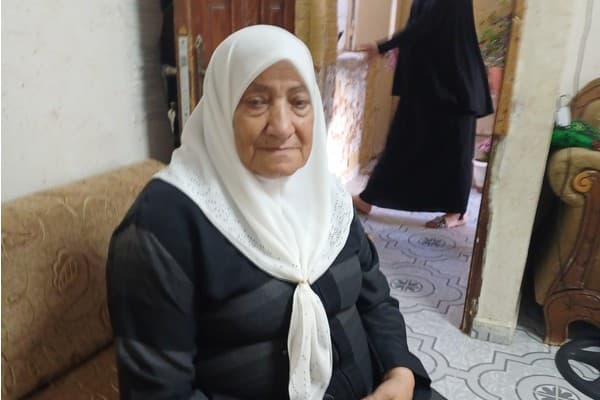
Eviction victim Hani Shuweiki (Image: supplied)

In Silwan, eviction victim Hani Shuweiki sat in his house, situated at the bottom of steep flights of uneven steps, on Sunday and pondered a future blown to bits by Israel’s judges. “I don’t know what to do, I don’t know where to go. The future is destroyed. It doesn’t exist,” he told The Jewish Independent.

A garbage collector for the Jerusalem municipality, Shuweiki, 42, said he does not have money for another house and has no one to help him. Seventeen relatives live in the house, including his four children.

Everyone in the family goes to sleep in fear that a knock on the door to remove them will come in the middle of the night, said Hani’s 87-year-old mother, Ismihan. “The children are afraid. I tell them, ‘don’t worry, we’ll stay’.

“I’ve lived in this house for 55 years. All my children’s memories are here,” she added.

Discriminatory laws

Ateret Cohanim director Daniel Luria told TJI that he hopes there will be further such supreme court eviction rulings, which are based on a law allowing Jews to “reclaim” property in East Jerusalem that was in Jewish hands before 1948 – regardless of Palestinians having lived there subsequently.

“It’s clear to me that the Jews, who are the Indigenous people of this land, have a natural, historic, legal and moral right to live in safety in any place in Israel and especially in the historic heart of Jerusalem,” Luria said.

In what human rights groups regard as blatant discrimination, another Israeli law prohibits Palestinians from similarly recovering properties they owned that became part of Jewish neighbourhoods of West Jerusalem after 1948.

The settler penetration has more than personal implications. Attenuating the Palestinian hold on sensitive areas of East Jerusalem harms already dim prospects for Palestinian statehood and a two-state solution that Israel’s far-right government has ruled out.

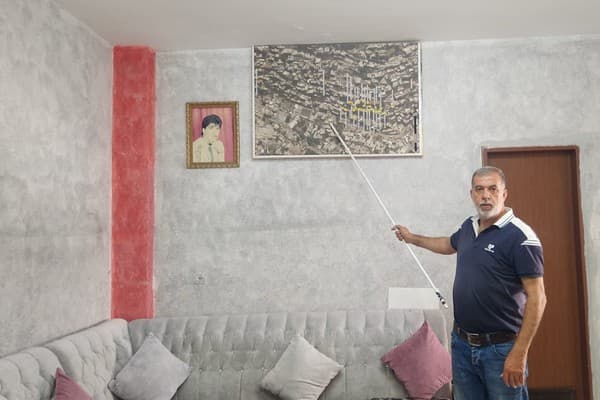
Palestinian activist Zuheir Rajabi (Image: supplied).

Zuheir Rajabi, a Palestinian activist fighting to stave off settler gains in Silwan, said it was no accident that the eviction rulings were issued during the war with Iran.

“They think that war is the time to inflict strong blows against us. They know that during a time of emergency, we aren’t able to bring Europeans and [Israeli] leftists here. They feel that they can throw people out of their homes while the journalists’ eyes are on the war.

“I think we will see the evictions in the next few days while people are still thinking about the war,” he said.

Disabled Palestinians facing eviction

It is easy to understand why Israel would want the evictions to pass under the radar. They are simply too cruel to be explained away, even by the best public relations.

In one of the homes facing eviction lives a paralysed man, Awad Rajabi, 29, a relative of Zuheir, who is dependent on elaborate support equipment, and his sister Manal, 24, who has been physically impaired since she was a girl. “Their father needs to find a suitable place for them and this is hard in Jerusalem,” Zuheir Rajabi said.

Meanwhile in Masafer Yatta’s 14 communities in southern West Bank, the war also ratcheted up fears of eviction. The communities, home to more than a thousand people, are situated in what the army declared during the 1980s as “Firing Zone 918”, to be used for troop training.

After a protracted legal battle, the Supreme Court ruled in 2022 that the Palestinians have no tie to the area and can be expelled.

On June 18, Israeli authorities announced they were rejecting all Palestinian planning requests for the area because of what they described as a “security need” to train troops there. The army then specified in a brief to the Court that the buildings of the Palestinians, deemed illegal by Israel, have to be removed so that the area becomes “sterilised,” Haaretz reported. Settler outposts that have been established in the firing zone were not mentioned in the army statement.                                                         

B'tselem alleges ethnic cleansing

As fears rose in the communities, human rights group B’tselem alleged that Israel was using “the cover of war to finalise the ethnic cleansing of all 14 Palestinian communities”. It called for emergency intervention by European Union countries, local council leader Nidal Younes told TJI.

“The extremist government is breaking all norms and laws. They don’t consider the Palestinians as people but rather as animals. They say the area is for training, so why do they keep the settler outposts there?”

Ismihan Shuweiki from Silwan in East Jerusalem (Image: supplied).

There are other signs of human rights deterioration during the war. Rabbi Arik Ascherman, head of the Torat Tzedek (Torah of Justice) NGO, who travels frequently to the West Bank as a protective presence for Palestinians, told TJI that in recent weeks, settler violence has been spreading from attacks on shepherds and Bedouin areas to incursions against established villages.

He named Kufr Malik, Taibe and Mukhmas villages as recent targets of violent settlers. But he added: “I have no way of showing that this was linked to the war.”  

Ascherman said he and two volunteers were attacked by masked settlers adjacent to Mukhmas on June 11. He was clubbed and hit by a rifle butt, resulting in wounds to his back and a large gash on his head. The IDF said in a statement that a report had been received that Palestinians had thrown stones at an Israeli shepherd.

The army added that “violent friction developed” between Palestinians escorted by Israeli citizens and other Israelis, and that an Israeli citizen accompanying the Palestinians was “lightly injured” and treated on the spot.

However, Ascherman alleged that “the army and police did nothing when I was bleeding profusely. At first, they didn’t help.” His wounds required hospitalisation.

You might also like
  • ‘Israel is systemically eliminating Palestinian collective life’:  B’Tselem
    Deborah Stone
  • Australia to increase sanctions against West Bank settlements
    Deborah Stone
  • LGBT asylum seekers caught between Palestinian violence and Israeli bureaucracy
    Jarod Rhine-Davis
logomark.67a07ee3
We believe in the free flow of information

Republish our articles for free, online or in print, by using our Creative Commons licence

You might also like

    altalena
    Israel Votes 2026OpinionIsrael

    The Altalena should be a warning, not a political weapon

    Shahar Burla 1
    Ofer_Winter_2026
    Israel Votes 2026AnalysisIsrael

    Who is Ofer Winter and could he upset Netanyahu’s election?

    Shahar Burla
    Netanyahu
    Israel Hamas WarFeatureIsrael

    New evidence Netanyahu was warned about October 7

    Shahar Burla 2

About the author

Ben Lynfield

Ben Lynfield

Ben Lynfield covered Israeli and Palestinian politics for The Independent and served as Middle Eastern affairs correspondent at The Jerusalem Post. He writes for publications in the region and has contributed to the Christian Science Monitor, Foreign Policy and the New Statesman.

More from the author

FeatureIsrael

Fear of Netanyahu victory may drive big surge in Palestinian voter turnout

NewsIsrael

Abuse by IDF soldiers humiliates Muslim Palestinians

OpinionIsrael

Qusra siege exposes shared agenda of IDF and settler extremists

AnalysisIsrael

IDF ordered to evict West Bank camp in election show of strength

Comments2

  • Avatar of Rachel Sussman

    Rachel Sussman6 July at 08:48 am

    It is indeed worrisome that since the like of Smotrich and Ben Gvir and the more extreme right became part of the Israeli Government, there has been a swing of injustice and inappropriate behavior. I believe it is up to us Jews in the diaspora to express dismay but we must ensure our information is correct and we also must do so through the proper channels.
    This means to first learn all there is about any particular situation and not necessarily take it on ‘face level’. Sometimes, what looks like one thing, is more complex and involved.
    But then, if the case requires we must object directly to the Israeli Government and express dismay coupled with the clear understanding that while the Jewish community will always support Israel, it will not support inappropriate actions. Jewish communities can even choose to divert finances collected by them for Israel, to compensate Palestinian communities that may have been treated. We are not powerless…

  • Avatar of Wesley Parish

    Wesley Parish1 July at 07:27 am

    I must take issue with this claim: ““It’s clear to me that the Jews, who are the Indigenous people of this land, have a natural, historic, legal and moral right to live in safety in any place in Israel and especially in the historic heart of Jerusalem,” Luria said.”
    Judging from my knowledge of the world’s Jewish communities, most of them were made up from the original missionary or trader, his family and servants, and a community of converts. It’s also significant that in the Yemen-Ethiopia region, the Jewish communities sprang up at the ends of trade routes; as it is also significant that the original Sephardim sprang up at the western end of the Phoenician trading empire; and the origins of Ashkenazim are in the Rhineland, the border and trading “emporium” between the Roman Empire and the Germanic tribes.
    And also, the Palestinians are most likely to be the original inhabitants of the land – the Roman Empire never expelled anyone they didn’t need to – empires need taxes, and letting a province sit fallow for several years or decades until enough people replace the original set, is one quick way to bankruptcy for an empire. The fact there are still two Samaritan villages backs up this argument. Plus the Christian church was active in the days of the Great Revolt, and after, and after the Bar Kokhba revolt, changing religion so you could simply get on with your life, would’ve been compelling.