Published: 22 February 2022
Last updated: 4 March 2024
ITTAY FLESCHER reports on an event hosted by NGO Combatants for Peace, which discussed how water allocation is used against villages in the West Bank
WHEN MOST PEOPLE think of the key issues that need to be solved to achieve peace between Israelis and Palestinians, the first to come up are security, borders, land, Jerusalem, refugees and Jerusalem.
But in a Zoom event hosted by Combatants for Peace earlier this month about Israeli policy towards Palestinians in Area C of the West Bank, the issue of water allocation took centre stage.
Combatants for Peace is an Israeli-Palestinian NGO committed to non-violent action against the “Israeli occupation and all forms of violence” in Israel and the Palestinian territories.
Avner Vishnitzer, a founding member, began the session (attended by 169 people) by saying that “denial of water is worst kind of institutional violence,” later showing a short video of Israeli forces demolishing a water cistern in the South Hebron Hills, nearby the settlement of Avigail which has no shortage of water.
He claimed that the denial of water to what Israel considers to be illegal Palestinian villages in Area C is a brutal tool used by the “occupation forces” to compel Palestinians to leave their land.
He added that while many settlers are allocated 70-80 litres of water per day per person, in some Palestinians villages in the South Hebron Hills, the water allocation is just 23-28 litres pe day, which is well below the recommendations of the WHO.
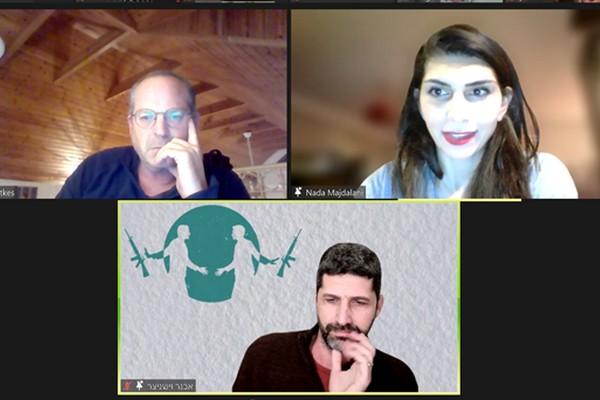
The second speaker, Nada Majdalani, Director of the Palestine office of EcoPeace Middle East, told the forum that climate change is exacerbating existing tensions and conflicts in the region.