Published: 28 October 2024
Last updated: 28 October 2024
This story was originally published in the Forward. Click here to get the Forward's free email newsletters delivered to your inbox.
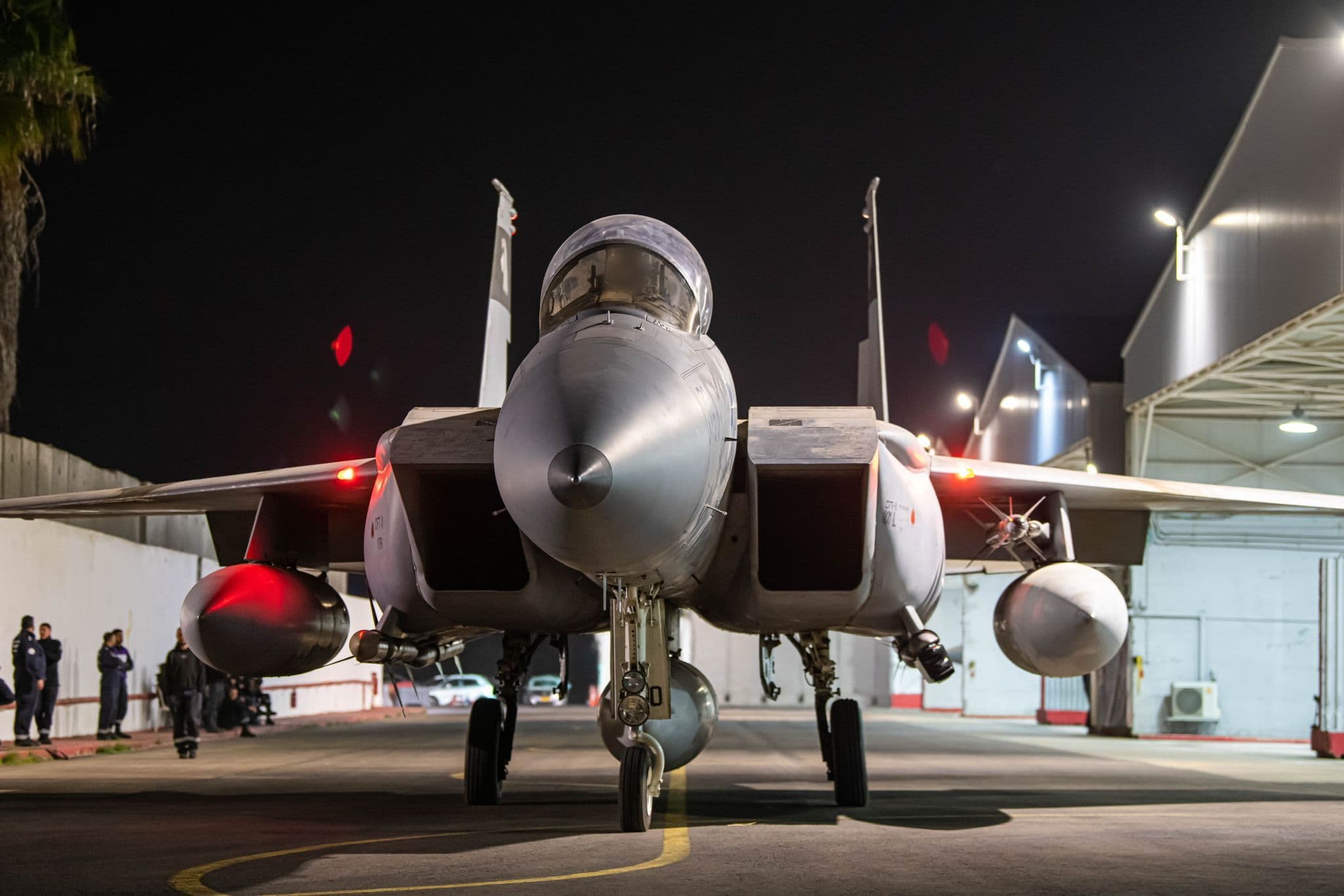
In the early hours of Saturday, explosions jolted several areas near Tehran, as Israeli Defense Forces conducted a series of strikes on sites connected to Iran’s missile and weapons infrastructure. Israel’s targeted operation was significant in its precision and restraint, considering that it was a response to the largest one-day ballistic missile attack in history.
The response to Iran’s Oct.1 attack showcased Israel’s ability to strike deep into Iranian territory based on precise intelligence, without crossing the threshold into a larger conflict. The precision strikes, with no losses on the Israeli side, also highlighted Iran’s weak air defenses.
The nature of the action also was very likely a concession to the Biden Administration, which had clearly pressured Israel to not risk a conflagration which might endanger Vice President Kamala Harris in her knife’s-edge campaign in the critical states of Michigan, where Muslim voters are a factor, and Pennsylvania, where Jewish voters are a factor.
Many in Israel had been calling on the government to use the pretext handed it by Iran to strike at installations relevant to Iran’s drive to become a nuclear weapons threshold state. Indeed, there are growing indications that Israel now possesses homemade bunker-busting munitions that are needed for such an assault — and which appear to have been used in the assassination last month of Hezbollah leader Hassan Nasrallah. Relevant here is former Prime Minister Naftali Bennett’s call on Israel to do just that — Bennett would know the capabilities.
But for Israel to have staged a more impactful attack on Iranian nuclear facilities or oil installations would have badly rattled the already brittle relations with the U.S. administration. Iran’s aggression left Israel no choice but to respond, but the choice of target — a tactical strike on military infrastructure — allowed Iran a measure of deniability, limiting the immediate risk of an escalatory response.
The pinpoint nature of the attack — with few casualties and none of them civilian — allows Iran to stand down, having received the message. That, indeed, is where Tehran seems headed for the moment.
The restraint shown in this recent strike signals a deeper strategic hope — that after Nov. 5, the U.S. administration will take a harder line on Iran. Israel is hoping that whoever takes office next year in the United States adopts a more assertive policy that curtails Iran’s aggressive regional ambitions.
Iran’s sustained support for proxy groups and its nuclear ambitions pose serious risks not only to Israel but to broader Middle Eastern stability. Following the election, U.S. policy on Iran may shift, focusing on Tehran’s ongoing support for terrorism, its meddling in regional conflicts, and its nuclear program. The idea would be to leverage the Islamic theocracy’s internal weakness and to present it with an ultimatum backed by the credible threat of the use of Western force, demanding an end to its engineering of proxy armies in Lebanon (Hezbollah), Yemen (the Houthis), Iraq (various militias that have made a mockery of the halting effort at democracy there), Syria (where Iran has kept the dictator Bashar Assad in power) and Jordan (where Iran is fomenting instability against the Hashemite regime).
It would be a move from short-term containment and a paradigm shift in how the international community addresses Iran’s destabilizing actions.
That said, while this calculated strike in Iran is significant, Israel’s most immediate challenge remains Gaza. The current situation there is dangerously close to turning into a quagmire, with some voices within Israel’s Likud party advocating for reestablishing control in the territory, including reintroducing Jewish settlements. This would be a disaster, diverting Israel’s resources and international goodwill while further inflaming Palestinian sentiment and deepening international isolation of Israel.
A more sustainable approach would involve reinstating a Palestinian Authority-based government capable of maintaining autonomy within Gaza. Entering negotiations on a demilitarized Palestinian state would bolster Israel’s efforts to secure a normalization deal with Saudi Arabia. By demonstrating a commitment to a stable and fair resolution with Gaza, Israel would strengthen its regional standing, enhancing the likelihood of cooperation with key players. Saudi Arabia has signaled interest in normalization, and an agreement with Israel could bring strategic benefits, including a united front, with Western backing, against Iran.
The key moments will occur following the U.S. election, when Israel and its allies will have an opportunity to push for a Western-backed security umbrella that includes strategic partnerships with countries like Saudi Arabia and Jordan. In such a dramatic environment, Israel could demand Western assistance for the Lebanese government to reestablish control over its territory at the expense of Hezbollah.
All of this can only happen within the context of a move to end the war in Gaza. And none of it can happen with Netanyahu’s current government, which is dependent on fanatics who dream of expelling the Palestinians from Gaza and incorporating it into Israel.
There is a real victory scenario for Israel and for the West. And there is an Israeli ruling coalition standing in the way. That is the frustrating and tragic strategic equation.
The views and opinions expressed in this article are the author’s own and do not necessarily reflect those of the Forward. Discover more perspectives in Opinion. To contact Opinion authors, email opinion@forward.com.