Published: 23 July 2018
Last updated: 5 March 2024
Coming from a community that had no black hats, let along shtreimels, I was fascinated by the spectacle of Orthodox Jews making their way home from shul dressed for a Polish winter while I perspired in a singlet and shorts. I marked out a route that took me along the knitted kippah environs of Mizrachi, past the sheitels and kappotes of Yeshiva to the highlights of huge fur crowns and long payas streaming out of Adass Israel. It was as good as a movie.
Well, not a good movie. When I go to a film I expect more than a well-fitted out cage for an anthropological zoo. Unfortunately, too often when ultra-Orthodoxy is portrayed on screen we don't get past surface fascination with difference. Disobedience is a case in point.
Based on the novel by Naomi Ragen, Disobedience is a story of star-crossed lovers in a contemporary shtetl. Ronit, daughter of a British rabbi, has escaped the confines of her community for life as a photographer in New York following a scandalous lesbian love affair. When she returns in the wake of her father’s death, her presence challenges her former lover Esti and threatens Esti’s husband, Ronit’s old friend Dovid. The women are forced to choose between following the strict conventions of the Orthodox world and surrendering to forbidden love.
It’s little wonder that film directors are drawn to setting work in ultra-Orthodox communities. The visual impact of a monochrome palette of arcane costume would be temptation enough. But these outer garments are code for difference that has a much stronger psychological appeal.
The world of Haredim is by its nature closed and codified, heightening potential drama and sources of conflict. Stories set in Haredi communities – like period dramas – are able to set the characters up against a clear set of restrictions that sharpen their dilemmas.
Potentially, that’s good cinema but in the case of Disobedience – and other such films – it’s not. When we see Haredim only in terms of the rules they accept or break, we reduce them to cartoons. The characters in Disobedience are all “in” or “out”. Esti’s dilemma is one of absolute subservience to a system that gives her little or complete breakage but (apart from a brief reference to the teaching job she enjoyed) we get no sense of why she might want to be frum.
Beyond habit and upbringing, there are reasons to be attracted to Orthodox life and if we see none of its beauties or compensations, we miss the opportunity of art to truly understand another’s perspective.
I hope I was polite enough not to stare openly in the days when I toured the neighbourhood but the truth is I was motivated by a kind of voyeurism that only comes when one is wholly an outsider looking in. In time I met some ultra-Orthodox people. Some I liked, some I did not. I came to see them as individuals, not specimens in amber.
I carry no candle for ultra-Orthodoxy. I disagree with it on almost every ideological axis. But I do carry a candle for art and I want a film to give me more than black-and- white characters whatever the cinematographic canvas. I also don’t like seeing Jews stereotyped – even those Jews I’m tempted to simplify myself.
Ragen is herself Orthodox but her novels paint with a very broad brush; they are (certainly needed) campaigns for change within Orthodoxy but they are not successful in sharing the fullness of that world with outsiders. In bringing Disobedience to the screen, director Sebastián Lelio, who is not Jewish, has not risen to the challenge of making a film that brings us inside.
Instead of heading out to the cinema to see Disobedience, I recommend getting hold of a copy of the 2012 film Fill the Void.
The story of Shira, an 18-year-old girl pressured to marry her sister’s widower, after the sister dies in childbirth is a sensitive human tale set in a skilfully evoked community of complex alliances and difficult truths.
Although the Tel Aviv Haredi community in which it is set is even more extreme and unfamiliar than the British ultra-Orthodox setting of Disobedience, we are more able to find our way in. Fill the Void is a human story set in a Haredi community not a stage for staring at strangers.
Director Rama Burshtein, widely described as the first Haredi woman director, gives us the tools to identify with those who live in this strange world and the fullness of their lives, however different from our own. Being a guest feels much better than being a voyeur.
WATCH THE TRAILER FOR DISOBEDIENCE
WATCH THE TRAILER FOR FILL THE VOID
Disobedience is showing at Palace and Dendy cinemas
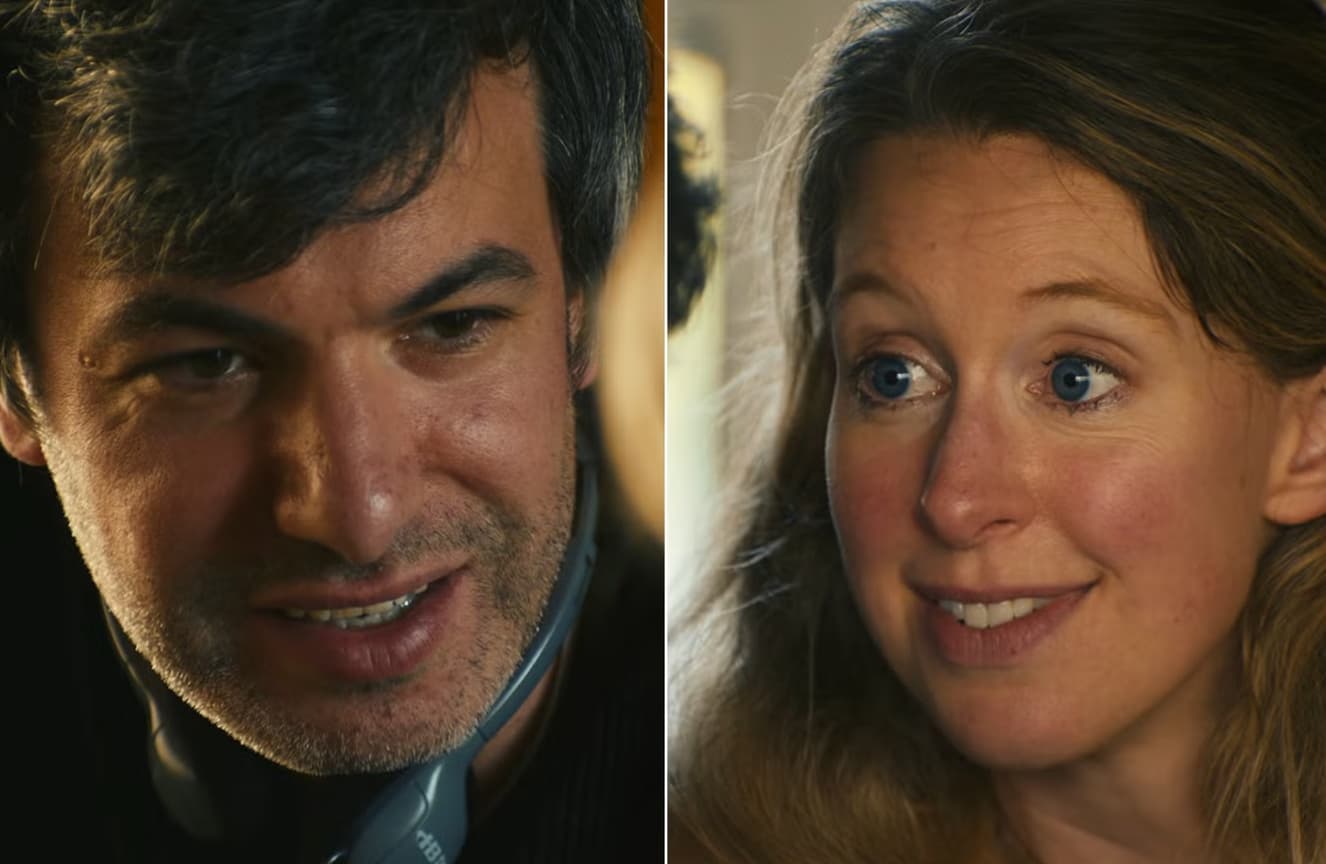
Photo: Image from Disobedience