Aa
  • Read, Watch, Listen
  • TJI Series
  • Community Action
  • Events
  • Zedi
Follow us and continue the conversation
  • LinkedIn
  • Instagram
  • FaceBook
  • X
  • YouTube
Test yourself with the TJI Quiz!

Adjust size of text

Aa

Follow us and continue the conversation

  • LinkedIn
  • Instagram
  • FaceBook
  • X
  • YouTube

Your saved articles

You haven't saved any articles

What are you looking for?

Original reporting, insightful analysis and diverse views, delivered straight to your inbox

  • LinkedIn
  • Instagram
  • FaceBook
  • X
  • YouTube
Your support fuels our mission to inform, entertain and inspire.

The Jewish Independent is bound by the Standards of Practice of the Australian Press Council. If you believe the Standards may have been breached, you may approach The Jewish Independent or make a complaint to the Australian Press Council in writing at www.presscouncil.org.au. The Council may also be contacted on 1800 025 712.

  • Our Story
  • Contact us
  • Our Team
  • Support us
  • Guidelines
  • Pitch your idea
  • Republishing us
  • Community Action
  • Our Awards
  • LinkedIn
  • Instagram
  • FaceBook
  • X
  • YouTube
Aboriginal FlagTorres Strait Islanders Flag

The Jewish Independent acknowledges Aboriginal and Torres Strait Islander peoples as the Traditional Owners and Custodians of Country throughout Australia. We pay our respects to Elders past and present, and strive to honour their rich history of storytelling in our work and mission.

© The Jewish Independent 2026All Rights Reserved
Website design and development by Your Creative, MelbourneTerms & ConditionsPrivacy Policy
HomeRead, Watch, ListenAustralia
Australia

Melbourne school fee subsidy program aims to stem drift to public sector

Nomi Kaltmann
Print this
scopus home image

Published: 25 July 2023

Last updated: 5 March 2024

NOMI KALTMANN explores a pilot program to enable Jewish school parents to apply for fee discounts through an independent fee assessment board, without having to approach their school directly.

By any metric, 20-year-old Noah Loven is exceptional. An Arts/Law student at Monash University in Melbourne, he is also the Public Affairs Coordinator of the Australian Union of Jewish Students (AUJS), a BBYO Associate Regional Adviser, as well as a Hineni Youth and Welfare madrich. Loven is also the United Jewish Education Board’s Bar Mitzvah Coordinator. With such a stellar resume, any Jewish school would be proud to brag about Loven.

However, Loven is a product of Victoria’s public school system, graduating in 2020 from Glen Eira College, where he also served as school captain.

“I went to CJC [Caulfield Junior College, a local public school] for primary and Glen Eira College for high school,” says Loven.  Throughout his schooling, he had a mix of Jewish and non-Jewish friends. “I was probably closer with my Jewish friends at secondary school due to our shared experiences. We would say Shabbat shalom [to each other] on Friday. We would coalesce around Jewish holidays.”

If current demographics continue, Victoria’s public school system is likely to birth many other stellar Jewish leaders of Loven’s calibre in the future. In data compiled by Gen17, one of the largest surveys on Jewish life in Australia, an increasing proportion of Jewish children were recorded as attending public schools. The increase is particularly evident at the primary school level. From 2006-16, the proportion of Jewish children aged 5-11 attending a government school increased from 30% to 38%; and at high school for children aged 12-18, it rose from 20% in 2006 to 24% in 2016.

In both cases, that is an increase of 20%.

If the applicant says they have a disability or is caring for elderly parents, then the board can increase their discount.

Nechama Bendet, Fee Assessment Board

For Loven, one of the advantages of public school was being in a multicultural environment which closely mirrors the communities that most Australians live in. “In Jewish day schools you don’t get many kids from Indian or Chinese or Vietnamese or Somalian backgrounds. [Going to school with kids] from all backgrounds really broadens your horizons and your world view,” he says, noting, “parents are choosing and opting to go to non-Jewish school because it reflects the real world”.

While Melbourne’s 10 Jewish day schools are the pride and joy of the community, producing exceptional Year 12 results, and famous high-achieving alumni, they are also notoriously expensive. In 2023, some Jewish schools are already charging in excess of $40,000 for Year 12, making Jewish day schools more unaffordable than ever. In a climate of rising inflation and increasing cost of living pressures, the number of Jewish students attending public schools is likely to continue its upward climb.  

However, if a new initiative in Melbourne’s Jewish community takes off, Jewish families who would have sent their children to a public school due to financial constraints may be able to access private Jewish day schools.

Since 2022, Alan Schwartz AO and the Jewish Education Foundation have been implementing a two-year community pilot operating an independent fee assessment board. Community stalwart Nechama Bendet heads the Board's Secretariat. The independent fee assessment board helps match families that could not otherwise afford to attend a Jewish school with unfilled vacancies at Jewish day schools for a discounted rate.

For many families, the independent fee assessment board is revolutionary because although families can always approach Jewish day schools directly for financial assistance, the independent fee assessment board process is different.

“It’s all very confidential. Families can come to the independent fee assessment board [without going to the school]. Their discount is assessed using an economic model that was created by an economist,” explains Bendet. “If the family has special circumstances, there is an allowance in the model and if the applicant says they have a disability, or is caring for elderly parents, then the fee assessment board can increase their discount,” she says.

Discounts vary according to individual circumstances of the families applying and range from nothing for high income families up to 90% for very low-income families.

The discount would apply for the duration of the applicant’s enrolment, with annual reviews. Discounts vary according to individual circumstances of the families applying, and range from nothing for high income families up to 90% for very low-income families. One family who applied told The Jewish Independent the amount offered was affordable and took into account their financial situation, which includes renting. “My husband and I are both working close to full time. [The proposed amount from the fee assessment board] was definitely affordable for us," one woman said.

“Ultimately this is a model that seeks not to just throw money at Jewish schools but seeks solutions. By filling vacancies, we can bring in additional income from state and federal funding as well as fees. This benefits all schools and then all students benefit. And of course, more Jewish students can then go to Jewish school,” says Bendet.

With all major Jewish day schools in Melbourne signing up to the two-year pilot, any vacancies that are filled represent potentially hundreds of thousands of dollars in extra funding for Jewish schools for little incremental cost. “Most costs involved with a school are fixed,” says Bendet. “There is an existing school, with an existing class and an existing teacher with an existing cleaner,” she says. “Adding extra students does not increase these costs.”

Bendet understands that not all Jewish children want or can be in a Jewish school. “Of the children in non-Jewish schools, we understand and respect that not all of them want to be in Jewish schools. And that’s absolutely fine. There are some families who are happy in government schools and we completely respect that. We [the fee assessment board] are there for families where fees are barriers,” she says.

So far, she says the reception has been positive. “The biggest question we get is ‘why come to us when families can go to the schools directly?’ But our process is online. It's independent. It's certain. It's dignified and it's confidential and simple for the applicant to complete.”

In 2022, the fee board received 120 applications and 28 children enrolled, representing about 24% of applicants.

In 2022, the fee board received 120 applications and 28 children enrolled, representing about 24% of applicants. In 2023, the Fee assessment board changed the process to provide parents with an indication of the fee discount they would receive before they formally applied. This increased the percentage of children who proceeded to enrolment to over 50% of applicants (in February, the board received 40 applications and 21 children enrolled) and has just closed its final round for 2023 with 45 applicants, with enrolment discussions ongoing.

To date, the fee assessment board also works with philanthropists in Melbourne’s Jewish community to ensure the sustainability of the pilot.

“We have philanthropists who ensure that schools receive minimum fee contributions. The beauty of this is a partnership approach. The schools do their bit by forgoing some of their fees. The donors prop up the fees of low-income families. And parents are doing what they can and together, we leverage off state and federal funding for schools,” says Bendet.

For now, with the fee assessment board is uncertain about how long it will it exist, families that accept an offer can be confident that the offer will remain in place. “We are going to meet with schools and philanthropists [at the end of the pilot] and decide whether we should continue. No decision on that has been made yet. Regardless of whether we continue or not, any children that enrolled will continue on,” says Bendet.

Although the indications are positive, fees are only one reason why Melbourne’s Jewish parents have been switching to public schools. It remains to be seen whether the fee assessment board’s assistance will be enough to stem or reverse the trend. 

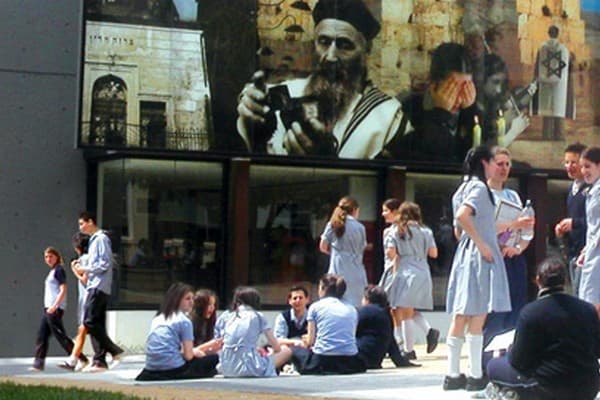
Photo: Students at Mount Scopus College

You might also like
  • When the state faltered, civil society and Diaspora Jewry stepped up
    Shahar Burla
  • The case for leaving graffiti up for a while
    Adam Slonim
  • ‘To bring joy where there is no joy’: the show goes on for a lost composer
    Zeddy Lawrence
logomark.67a07ee3
We believe in the free flow of information

Republish our articles for free, online or in print, by using our Creative Commons licence

You might also like

    Joni Fleischer
    Generation ChangeInterviewAustralia

    Joni Fleischer: Connecting charities with tech talent

    Gideon Cohen
    Junior high age boy being bullied at school.
    FeatureAustralia

    ‘Our children already belong’: Petition calls Jewish schools to cooperate for disabled support

    Gideon Cohen
    csg security
    FeatureAustralia

    When security clashes with hospitality

    Jarod Rhine-Davis

About the author

Nomi Kaltmann

Nomi Kaltmann

Nomi Kaltmann is an Australian lawyer and journalist. Her writing has appeared in major Australian and international publications including Crikey, Griffith Review, Mamamia, Tablet Magazine, The Australian Financial Review, The Daily Beast, The Forward, The Guardian, The Jewish Telegraphic Agency and The Spectator. She regularly appears on radio and podcasts to discuss Australia’s Jewish community, including NPR (USA), CBC (Canada), LBC (London), Call Me Back, Unholy: Two Jews on the News, SBS and The Times of Israel. An influential Orthodox feminist leader and founding president of the Jewish Orthodox Feminist Alliance (JOFA Australia), she is a sought-after speaker on religion, interfaith and contemporary Jewish life.

More from the author

OpinionAustralia

Cancellation backfires but we are at it again

OpinionWorld

From NY to Melbourne, local politicians are whipping up hate 

ReflectionAustralia

I have lost faith in our multicultural institutions 

InterviewIsrael

Dreams, nightmares and realities from a bereaved mother