Aa
  • Read, Watch, Listen
  • TJI Series
  • Community Action
  • Events
  • Zedi
Follow us and continue the conversation
  • LinkedIn
  • Instagram
  • FaceBook
  • X
  • YouTube
Test yourself with the TJI Quiz!

Adjust size of text

Aa

Follow us and continue the conversation

  • LinkedIn
  • Instagram
  • FaceBook
  • X
  • YouTube

Your saved articles

You haven't saved any articles

What are you looking for?

Original reporting, insightful analysis and diverse views, delivered straight to your inbox

  • LinkedIn
  • Instagram
  • FaceBook
  • X
  • YouTube
Your support fuels our mission to inform, entertain and inspire.

The Jewish Independent is bound by the Standards of Practice of the Australian Press Council. If you believe the Standards may have been breached, you may approach The Jewish Independent or make a complaint to the Australian Press Council in writing at www.presscouncil.org.au. The Council may also be contacted on 1800 025 712.

  • Our Story
  • Contact us
  • Our Team
  • Support us
  • Guidelines
  • Pitch your idea
  • Republishing us
  • Community Action
  • Our Awards
  • LinkedIn
  • Instagram
  • FaceBook
  • X
  • YouTube
Aboriginal FlagTorres Strait Islanders Flag

The Jewish Independent acknowledges Aboriginal and Torres Strait Islander peoples as the Traditional Owners and Custodians of Country throughout Australia. We pay our respects to Elders past and present, and strive to honour their rich history of storytelling in our work and mission.

© The Jewish Independent 2026All Rights Reserved
Website design and development by Your Creative, MelbourneTerms & ConditionsPrivacy Policy
HomeRead, Watch, ListenIsrael
Israel Hamas WarNewsIsrael

Gaza ceasefire wobbles as Hamas and Israel clash again

Hamas shot an Israeli soldier, sparking airstrikes that killed at least 104 Gazans, but the US says the ceasefire is holding.
TJI Wrap
Print this
ISRAEL-PALESTINIAN-CONFLICT-FUNERAL

Israeli soldiers carry the coffin of Yona Efraim Feldbaum, a 37-year-old reservist who was killed in Rafah in the southern Gaza Strip on October 29, 2025, sparking renewed fighting (FADEL SENNA / AFP via Getty Images)

Published: 30 October 2025

Last updated: 30 October 2025

The two week ceasefire between Hamas and Israel has already shown that hopes for a lasting peace were likely premature. On Tuesday, the IDF reported that Hamas militants fired anti-tank missiles and carried out sniper fire against Israeli forces in Rafah, in southern Gaza. One Israeli soldier, Master Sergeant (Res.) Yona Efraim Feldbaum, was killed in the attack.

While most of Rafah remains under IDF control, Hamas fighters are still believed to be operating through tunnel networks in the area.

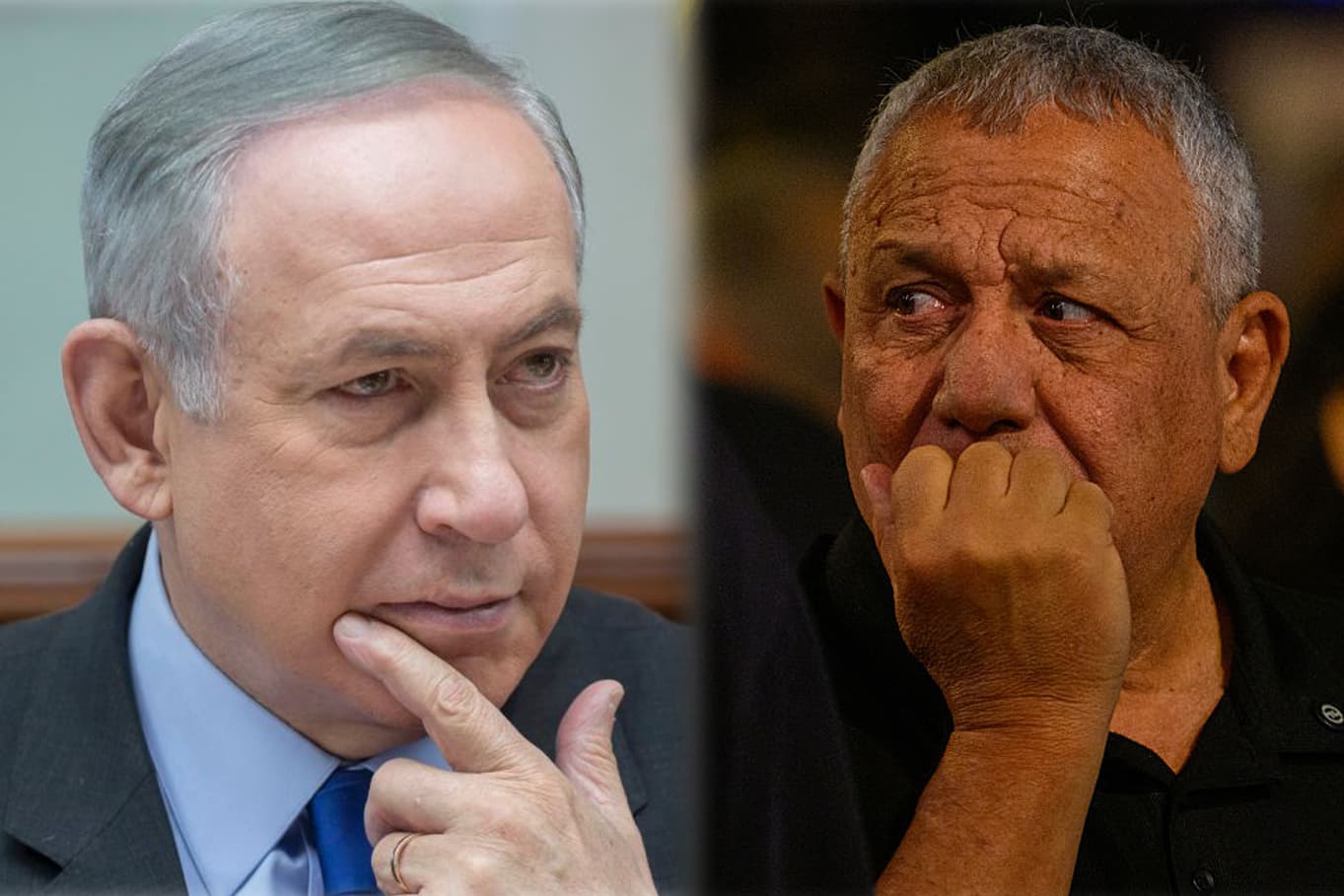
Following the attack, Israeli Prime Minister Benjamin Netanyahu instructed the military to strike Hamas targets in the Gaza Strip. A statement from his office said that “at the conclusion of security consultations, the Prime Minister directed the military leadership to carry out powerful strikes in the Gaza Strip immediately.” According to the Gaza Health Ministry, at least 104 people, including 46 children, were killed during Israeli airstrikes that followed the clashes.

In response, Hamas’ military wing announced it would postpone the handover of the body of a deceased Israeli hostage it had recovered earlier that day. The group warned that any escalation would “hinder the search, excavation and recovery of bodies,” delaying Israel’s retrieval efforts. Hamas later appealed to ceasefire mediators to pressure Israel to halt its strikes and uphold the agreement.

On Wednesday morning, the IDF stated that, at the direction of senior military leadership, it had begun re-implementing the terms of the ceasefire. Israel now expects that Hamas will resume the transfer of the remains of two deceased Israeli hostages, after previously announcing that their bodies had been located.
US downplays the flareup

US Vice President J.D. Vance told reporters that the Gaza ceasefire is holding despite Tuesday’s exchange of fire between Israeli forces and militants. “The ceasefire is holding. That doesn’t mean that there aren’t going to be little skirmishes here and there,” he said during a visit to Israel, adding that while an IDF soldier had been attacked, Washington expected Israel to respond — but that the broader peace effort would remain intact.

President Donald Trump likewise rejected the notion that the recent clashes threatened the truce or his 20-point plan, saying Israel was justified in defending itself. Speaking aboard Air Force One en route to Seoul, he insisted “nothing is going to jeopardise” the ceasefire, while also saying Hamas “killed an Israeli soldier. So the Israelis hit back. And they should hit back,” and warning that if Hamas “doesn’t behave properly, it will be eliminated.”

Trump is ‘Bibi-sitting’

Even before the Rafah incident, Netanyahu had been consulting with senior military officials on possible renewed action in Gaza, citing alleged ceasefire violations by Hamas over the return of deceased hostages. Israeli officials told Axios that Netanyahu had attempted to contact President Trump, who is currently travelling in East Asia, to seek approval for a military response. However, the developments in Rafah appear to have shifted his approach, and there is no indication the two leaders spoke before Netanyahu announced the new strikes.

Earlier on Tuesday, prior to the attack, Israel shared footage with the White House and CIA that it claimed demonstrated a breach of the ceasefire agreement, saying it would have to respond. According to US officials, senior members of the Trump administration told Netanyahu’s advisers that they did not view the footage as a material violation and urged Israel to avoid actions that could push the ceasefire to collapse. Netanyahu then convened an emergency meeting with the IDF, where military leadership presented several response options, including resuming airstrikes and expanding occupied zones within Gaza. The meeting ended without a final decision, with Netanyahu reportedly noting that coordination with Washington would be essential before taking further steps.

Despite US pressure for restraint, Netanyahu is facing mounting political strain at home. Coalition partners have accused him of responding too weakly, and opposition figures are preparing to use the issue as a key point of criticism ahead of upcoming elections. A forceful stance against Hamas remains one of the few positions with broad public support across Israel’s political spectrum.

In the days prior to the flare-up, US envoys Steve Witkoff and Jared Kushner, Vice President J.D. Vance, and Secretary of State Marco Rubio all visited Israel, urging Netanyahu to maintain the ceasefire and proceed with the second phase of President Trump’s 20-point plan. Israeli media jokingly referred to the intensive engagement as “Bibi-sitting”: close monitoring to prevent Netanyahu or his right-wing allies from destabilising the agreement or announcing further annexation moves in the West Bank. Netanyahu pushed back strongly at the characterisation, telling his cabinet: “Israel is an independent country, and the United States is an independent country. The relationship between us is one of partners — nothing more, nothing less.

PA succession moves

Much of the international community hopes the Palestinian Authority will play a role in post-war Gaza. Under significant pressure from Arab states and Western governments, Palestinian President Mahmoud Abbas, now in his late eighties, announced on Sunday that his deputy would temporarily assume leadership of the Palestinian Authority should he die or step down.

He promoted PLO Executive Committee Secretary-General Hussein al-Sheikh to the role of vice-president.
Under the new constitutional declaration, al-Sheikh would serve as president for up to 90 days if Abbas becomes unable to fulfil his duties, with the possibility of a one-time extension if elections cannot be held in time. However, Palestinian leaders, including Abbas, have repeatedly promised national elections since 2006, yet none have taken place. Many fear little will change even after Abbas leaves the scene.

Abbas’ announcement also came amid reconciliation talks in Cairo involving Hamas, Islamic Jihad and other factions, including representatives of exiled Fatah leader Mohammad Dahlan. Hussein al-Sheikh and Palestinian intelligence chief Majed Faraj are also participating. Despite mounting Egyptian pressure, the talks have not produced agreement on a clear political framework. As one senior Palestinian official put it: “The car is running, but it’s in neutral — a lot of meetings and discussions, but nothing concrete.”

Hamas seized full control of Gaza from the PA in 2007, and the two sides have remained deeply divided. The PA says it hopes to eventually regain authority in Gaza as part of a pathway towards an independent Palestinian state, a prospect Israel opposes. European allies have urged Abbas to overhaul PA governance, hold democratic elections and end payments to families of Palestinians imprisoned by Israel, including for violent attacks. The PA announced in February that these payments would be phased out, though Israeli officials question whether this will occur in practice.

READ MORE

Chronicle of violations: Trump's test, Israel's breaking point and the US plan to strip Hamas of territory (Ynetnews)

The only thing that can keep the peace in Gaza (Paywall, The New York Times)

 Israel would love to blow up the Gaza ceasefire, but Trump promised Arab states otherwise (Haaretz)

Trump’s men come to Israel with plenty to say. But they’re silent on any real future for Gaza (The Guardian)

Abbas signals retirement, but vies to keep Fatah in control of the Palestinian Authority (Haaretz)

You might also like
  • The leadership a wounded society needs
    Esther Takac
  • Fauda and the illusion of vengeance
    Ittay Flescher
  • Israel election explainer: the main parties
    Shahar Burla
logomark.67a07ee3
We believe in the free flow of information

Republish our articles for free, online or in print, by using our Creative Commons licence

You might also like

    altalena
    Israel Votes 2026OpinionIsrael

    The Altalena should be a warning, not a political weapon

    Shahar Burla 1
    Btselem
    NewsIsrael

    ‘Israel is systemically eliminating Palestinian collective life’:  Israeli human rights report

    Deborah Stone 1
    Arab Israeli Palestinian election vote
    Israel Votes 2026FeatureIsrael

    Fear of Netanyahu victory may drive big surge in Palestinian voter turnout

    Ben Lynfield

About the author

TJI Wrap

TJI Wrap

TJI wraps consolidate essential news and analysis from multiple sources into digestable summaries.

More from the author

NewsAustralia

War crimes allegations against Australian IDF soldier

NewsWorld

Wave of attacks on Jewish sites sparks international alarm

AnalysisIsrael

Gaza, Lebanon, Syria, Iran: Israel’s tense security landscape

AnalysisIsrael

Middle East on edge as Iran and Israel inch closer to another war

Comments

No comments on this article yet. Be the first to add your thoughts.