Aa
  • Read, Watch, Listen
  • TJI Series
  • Community Action
  • Events
  • Zedi
Follow us and continue the conversation
  • LinkedIn
  • Instagram
  • FaceBook
  • X
  • YouTube
Test yourself with the TJI Quiz!

Adjust size of text

Aa

Follow us and continue the conversation

  • LinkedIn
  • Instagram
  • FaceBook
  • X
  • YouTube

Your saved articles

You haven't saved any articles

What are you looking for?

Original reporting, insightful analysis and diverse views, delivered straight to your inbox

  • LinkedIn
  • Instagram
  • FaceBook
  • X
  • YouTube
Your support fuels our mission to inform, entertain and inspire.

The Jewish Independent is bound by the Standards of Practice of the Australian Press Council. If you believe the Standards may have been breached, you may approach The Jewish Independent or make a complaint to the Australian Press Council in writing at www.presscouncil.org.au. The Council may also be contacted on 1800 025 712.

  • Our Story
  • Contact us
  • Our Team
  • Support us
  • Guidelines
  • Pitch your idea
  • Republishing us
  • Community Action
  • Our Awards
  • LinkedIn
  • Instagram
  • FaceBook
  • X
  • YouTube
Aboriginal FlagTorres Strait Islanders Flag

The Jewish Independent acknowledges Aboriginal and Torres Strait Islander peoples as the Traditional Owners and Custodians of Country throughout Australia. We pay our respects to Elders past and present, and strive to honour their rich history of storytelling in our work and mission.

© The Jewish Independent 2026All Rights Reserved
Website design and development by Your Creative, MelbourneTerms & ConditionsPrivacy Policy
HomeRead, Watch, ListenIsrael
Israel Hamas WarAnalysisIsrael

Nothing to lose: why the Houthi are such a difficult enemy

Yemen's radical Iran-backed group has launched more than 350 rockets at Israel since October 7. Now it's threatening Haifa.
Dror Doron
Print this
Houthis Ben Gurion X

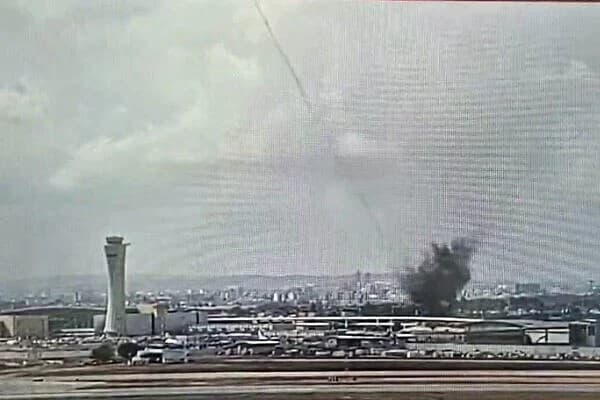
Houthis ballistic missile hits Ben Gurion airport in May (X)

Published: 11 June 2025

Last updated: 11 June 2025

Despite no shared border between Israel and Yemen, and more than 2000 km between them, a radical terrorist group in Yemen has become a major challenge to Israel.

Shortly after the October 7 Hamas attack on Israel, the Houthi rebels declared their commitment to stand by Hamas in its war against Israel.

During the year and a half that has passed since, they have launched more than 350 attacks using ballistic missiles and UAVs (unmanned aerial vehicles) that have paralysed the southern seaport of Eilat, Israel’s main gateway to the Asia and the far east, and have literally brought it to the verge of bankruptcy. Last week the Houthi spokesperson threatened that Israel’s sea port of Haifa on the Mediterranean coast will be their next target.

In addition, the Houthis’ attacks have been causing major disturbances to Israel’s main international airport. The images of a massive crater caused by a ballistic missile strike on Ben Gurion airport last month had a major disturbing effect.

According to Israeli officials, 41 international airlines were operating flights to Israel on routine days, but now only 27 do so. Companies such as Lufthansa, Ryanair and ITA Airways, Italy’s flag carrier, are still hesitant to resume their services to Israel. The accumulated damages to Israel’s economy by these attacks have been estimated at billions of dollars. 

Israel has retaliated with several long-range aerial attacks on different targets in Yemen, causing devastating damage to infrastructures. However, the effect on the Houthis’ motivations or capabilities seems to be limited at best.

Radical Shiite Islamism

To better appreciate the challenge presented by the Houthis and the difficulty in countering it, some background is needed. They are a radical Shiite Islamist group who toppled the official Yemeni government back in 2014 and took over large parts of Yemen. Thanks to a massive backing by Iran’s Shiite regime, over the years the Houthis have been equipped with sophisticated Iranian-made weapon systems including ballistic missiles, cruise missiles and UAVs.

Iran was also responsible for the training of the Houthis’ militia forces as well as provision of intelligence and technical information that have enabled this local group to become a major threat to global freedom of navigation in the Red Sea.

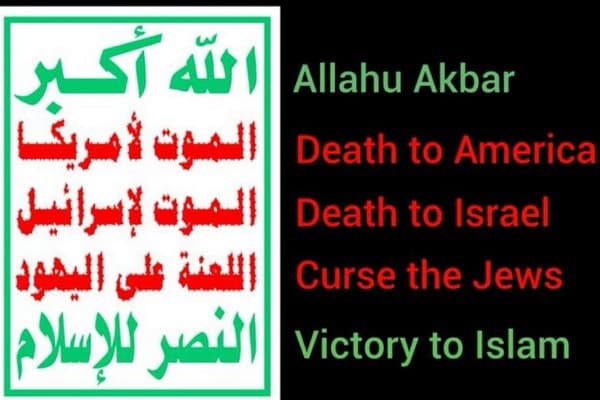
On an ideological level, the Houthis hold a deep religious animosity towards the West in general, and Israel specifically. This is expressed clearly on their banner that reads: “Allah is great, death to America, death to Israel, curse upon the Jews, victory to Islam.”

The Houthis flag and credo

The combination of religious extremism and advanced weapon capabilities through the patronage of Iran has turned the Houthis into a regional actor that is hard to defeat. In addition, their leadership shows little concern at casualties or the price being paid by the population under its control. The devastating humanitarian situation caused by the Yemen civil war, that was initiated by the Houthis, has had no effect on the movement’s leadership, which refused any political compromise.

The Houthis’ extremism, together with their lack of regard towards the appalling humanitarian conditions in the area under their control, has put them in a “nothing to lose” state of mind, in which typical rational thinking fails to function. Over the years they have had to face far superior military rivals, starting with the Saudi and UAE armed forces a decade ago and ending with US-led coalition in the past few months.

Not deterred by casualties

Nevertheless, the clear military superiority of the Houthis’ enemies was ineffective in deterring them, eventually leading their rivals to disengage altogether. The recent Trump administration announcement of “victory” over the Houthis after two months of a massive aerial campaign, did end their attacks on US navy in the Red Sea, but their almost daily attacks on Israel continue as before.

Israel is now left alone to deal with the Houthi challenge that has already been proven to be especially resilient to military pressure, and it seems that only ending the war against Hamas in Gaza will lead the Houthis to cease their attacks altogether. The Houthis have made this declaration a number of times. In addition, during the ceasefire between Israel and Hamas few months ago, they stopped their fire and restarted only after Israel resumed its attacks on Hamas.

Some have suggested an alternative approach, which is for Israel to retaliate against Iran, the Houthis’ sponsor and main supplier of arms. But with Washington currently negotiating a new nuclear agreement with Tehran, such a move would set Israel on a direct collision course with Trump. This could be highly risky in a time when Israel has become an international pariah and its dependence on the US support is greater than ever.

Under these conditions it seems Israel’s citizens will need to get used to living with daily bomb sirens due to the Houthis ballistic threat. They will be forced to hope that Israel’s advanced air defence systems will intercept the incoming missiles and that in the statistically inevitable case of a missed interception, the physical damage will be limited. But the absurd economic fallout of this situation will continue as long as the Israeli government refuses to end the war against Hamas.

You might also like
  • Hate preachers, polarised debate, counter-terrorism
    Peter Kohn
  • Netanyahu rejects Trump’s Gaza plan, testing US influence in the region
    Shahar Burla
  • New Saudi-Pakistan-Turkey alliance driven by failure of US to subdue Iran
    Dror Doron
logomark.67a07ee3
We believe in the free flow of information

Republish our articles for free, online or in print, by using our Creative Commons licence

You might also like

    Knesset divided
    Israel Votes 2026ExplainerIsrael

    Israel election explainer: the main parties

    Shahar Burla 2
    Netanyahu
    Israel Hamas WarFeatureIsrael

    New evidence Netanyahu was warned about October 7

    Shahar Burla 2
    Arab Israeli Palestinian election vote
    Israel Votes 2026FeatureIsrael

    Fear of Netanyahu victory may drive big surge in Palestinian voter turnout

    Ben Lynfield

About the author

Dror Doron

Dror Doron

Dror Doron is a senior political analyst specialising in the Middle East, and is a senior adviser at United Against Nuclear Iran (UANI) focusing on Hezbollah and Lebanon.

More from the author

AnalysisIsrael

Turkey emerges as military threat to Israel

AnalysisWorld

New Saudi-Pakistan-Turkey alliance driven by failure of US to subdue Iran

AnalysisIsrael

Trump’s Hamas disarmament deal a mirage that’s quickly faded

AnalysisIsrael

Syria reimagined: From military threat to geostrategic competitor

Comments2

  • Avatar of Ian Grinblat

    Ian Grinblat14 June at 09:47 pm

    Good to know that you have a ‘direct line’, Charles.

  • Avatar of Charles St. Pierre

    Charles St. Pierre13 June at 01:22 am

    If the Houthis can figure out how to make Hajj, and then march on to Gaza, to the relief of their brothers in Islam, the Middle East will change.
    Israel is not living up to its promise. Must G-d kick them out? Again?
    Those who forget the why of their history are doomed to relive it.