Published: 29 July 2020
Last updated: 5 March 2024
LEGEND HAS IT that my maternal grandfather Pinchas Koplowizc, after surviving the Holocaust, chose to restart his life in Australia because the queue was shorter and he wanted to get as far away from Germany as possible. His two surviving sisters had different plans. Ida sailed with her husband Izak to Montreal where she would reside for the rest of life, while youngest sister Suzie travelled to Palestine with her husband Mottle and 12 years later ended up in Brooklyn, New York.
From the three siblings there would be seven children, seven first cousins living in different countries. The North Americans would share holidays and bar mitzvahs but for my mother and her sister who grew up in Adelaide, the idea of cousins, aunts and uncles was something you observed and coveted in other families. Surrogate relatives were created and cherished but kith and kin, flesh and blood lived far away. War separates family, a truth that continues to pervade family trees worldwide.
Pandemics are mysterious not just for the way they scientifically baffle us but so too for the way they reorganise our value system. Unwillingly, we are shuddered into a state of panic and worry, not dissimilar to wartime. Unknowns become the norm, time becomes more malleable and the meaning of life yet again rolls under the microscope.
After months of living through Covid and perfecting my Zoom skills, I decided to reunite my maternal grandfather's family online. Having travelled extensively in my twenties and thirties, I have been fortunate to meet cousins all over the world.
Throw in email, messenger, Facebook, and every other virtual way of staying connected, I have kept up with most of them and in a way, been the common thread gradually sewing the family back together.
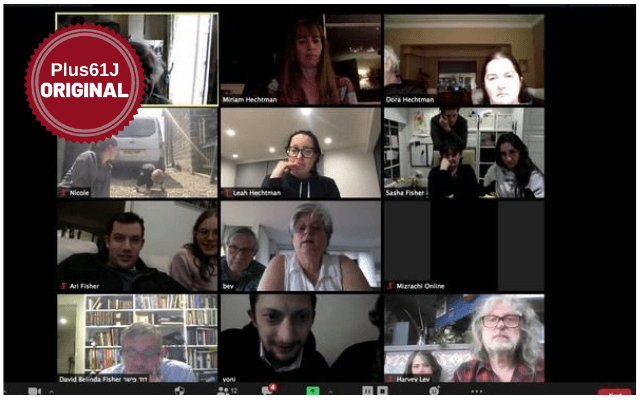
On July 12, at 10pm AEST, 8am EST, 9am ADT and 1pm BST, calling in from Leeds, Montreal, Nova Scotia, Melbourne, Sydney and the Blue Mountains, two big branches of the Koplowicz family hung out all together for the first time. Ever. Some have met over the years, some not.
In strange times, times that require us to retreat, take stock, stay home, we look for connection. For some this might mean school reunions. Old flames. Childhood best friends. Keepsakes are unpacked.
My aunt, my mum and their three Canadian first cousins have never all been together in one conversation. Dorothy in Leeds hasn’t seen my mum or aunt since mum’s wedding in Melbourne in 1973 where they met in person for the first and only time. Bev in Montreal and Dorothy have never met my sister Leah.
Harvey, now in Nova Scotia, met my aunt Belinda once, in 1982, but never met her four children who all zoomed in from their respective homes in Sydney and Melbourne. My cousin’s new girlfriend has now met family that long-standing partners haven’t met in 15 years.
The conversation carried on for over three hours. No one really wanted to go. From Covid-life comparisons to revelations about the family history and childhood memories to how Ida used to set her breakfast table the night before and questioning if anyone continued that tradition, the banter flowed.
No uncomfortable silences and surprisingly no one dominated, something that might have happened with the older, now passed, generation present. There was an ease you only get with family. A silent identification of shared genetics, shared bloodlines, shared histories that surface when encountered, even virtually.
I know this from having travelled with my two young daughters and having witnessed them meet cousins for the first time. It’s an instant recognition.
So why now? Why after all these years should we all decide to reunite?
Communication technology has been available for years. Some of us have stayed in touch. But this idea that we can all be in the same “room” in one conversation – why now? I begrudgingly credit Covid.
In strange times, times that require us to retreat, take stock, stay home, we look for connection. For some this might mean school reunions. Old flames. Childhood best friends. Keepsakes are unpacked. My mum just handed me cuttings of The Muppets wallpaper circa 1978. Many of us have more time, especially the baby boomers, some of whom have no choice but to stay home and avoid the disease.
We have time but so, too, time is running out. If we don’t connect now, then when? My grandparents and their generation are, for the most part, no longer. Their stories, their wisdom, their pre-war lives are part of an oral history. It is family who want to hear the stories. It is family who will listen.
Sibling relationships are often too close for the stories to be shared without pain or anxiety arising. Cousins can provide that extra cushioning to allow for stories from the vault to be imparted.
Dorothy, our unsung family genealogist, has been diligently rebuilding the family tree for years. Since the Zoom call and my subsequent Facebook post about it I am now in touch with family in Venezuela who found Dorothy through a genealogy site last year.
I tagged Dorothy in the post and this new cousin asked, is this my family too? Now I have a whole new branch to unearth. For a post-war family this is remarkable. Records, photos and evidence are hard to come by.
And now I have my father’s maternal South African family requesting a Zoom. They want a piece of the action, too. As will others, I’m sure. If my grandfather were alive, he would be “hucking” me to make these Zoom meetings weekly.
“Nu, when are we meeting? I’ll set my alarm. It doesn’t matter if it’s at 5am, I’ll be there.” I imagine his tears seeing his whole family together on one screen. All those faces. All those voices. Never did he have this. But we do. (I guess that’s it.)