Cultural change, not just law reform, needed to end antisemitism scourge
Education, outreach and an emphasis on shared values are needed to accompany legislative responses to transform Australian society, the Commission was told this week
Peter Kohn
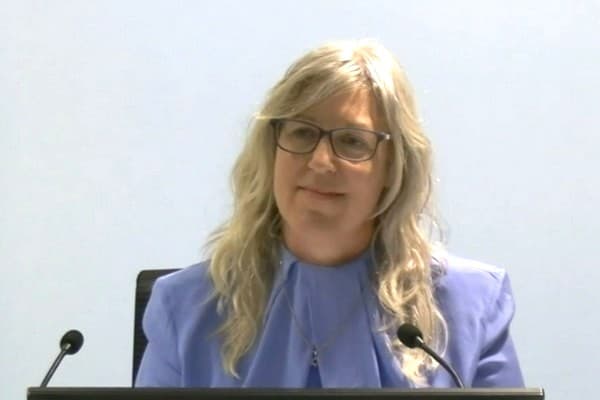
Natalie James, former Department of Employment and Workplace Relations secretary and former Fair Work Ombudsman
Published: 30 July 2026
Last updated: 30 July 2026
Cultural change is the only way Australia can shake off its antisemitism affliction, the Royal Commission (RC) was repeatedly told this week, with education, outreach and an emphasis on shared values needed to accompany legislative rigour to transform Australian society.
Taking testimonies on the most effective strategies for responding to antisemitism in Australia, the RC examined guidance, training and frameworks, including procedures with which government agencies and institutions can counteract and prevent antisemitism.
Zelie Heger SC, counsel assisting, said proactive thinking along the lines of “cultural change” is needed, a sentiment echoed by Rabbi Mendel Kastel, CEO of Sydney communal support centre Jewish House. “We’re not going to be able to legislate ourselves out of this. It’s about culture,” he testified.
The rabbi said Jewish people’s interactions with workplaces, education services and health care have been impacted by negative experiences and fears, worsening significantly since October 7, 2023, and December 14.
Rabbi Kastel called for the Fair Work Commission and the Australian Human Rights Commission to develop workplace guidelines on religious discrimination.
He also called for cross-cultural teacher training, saying Jewish House has received a spate of reports about Jewish students experiencing antisemitism on school buses and from teachers in classrooms.
Combatting antisemitism in health care
After the 2025 Bankstown Hospital nurses incident, Rabbi Kastel, a chaplain with NSW Health, heard of Jewish patients asking to have their religious identities deleted from hospital records, and patients with Israeli accents fearing interactions with medical staff.
There were reports from NSW hospitals of Jewish doctors being excluded from online medical chat groups and patients refusing treatment from Jewish doctors, including one who slurred a treating doctor as a “Zionist pig”.
However, after the nurses' incident, the rabbi was invited to Bankstown Hospital and was greeted with “warmth and kindness”, he said. He later collaborated with Muslim chaplain Mohammed el Shaffe to produce a supportive video for the South-Western Sydney Local Health District, reassuring Jewish patients that they did not need to fear the medical system.
Australian Jewish Medical Federation (AJMF) president Dr Jack Green, appearing with AJMF Victorian branch president Dr Adam Gordon, called for the national expansion of Victoria’s prohibition on political symbols in clinical settings.
Green cited cases such as a doctor with a keffiyeh-style lanyard treating an Israeli-born patient in a Northern Territory hospital. On the other hand, Gordon said Jewish doctors wearing a religious Star of David chain virtually held out “an invitation for discussion, confrontation about conflict … and people are afraid”.
Social services clients haven’t been spared. JewishCare NSW CEO Lawson Broad said some vulnerable clients have reduced their Jewish profiles by giving false addresses to ride-share drivers taking them to Jewish events.
Dr Ben Bolot, JewishCare NSW president, called for Jewish community trauma to be recognised as a distinct trauma category. Jewish victims “should not be required to educate the systems they turn to for support,” he said, adding that they should have a single point of testimony so they do not need to relive their anguish for multiple agencies.
Dr Zhaoli Dai, an honorary senior lecturer at the University of Sydney’s School of Pharmacy, recommended initiatives such as placing Jewish cultural symbols on display and providing kosher food in hospitals so patients feel included and safe.
Tim Duck, director of the National Health Secretariat, which represents Australia’s health ministers, said a 2025 policy directive on racism and discrimination requires practitioners to undergo education and training in that area. The directive included antisemitism but did not define antisemitism. The Australian Health Practitioner Regulation Agency (AHPRA) has since adopted the IHRA definition, but national practitioner boards are not required to apply it, he said.
Deepening an understanding of Jewish history
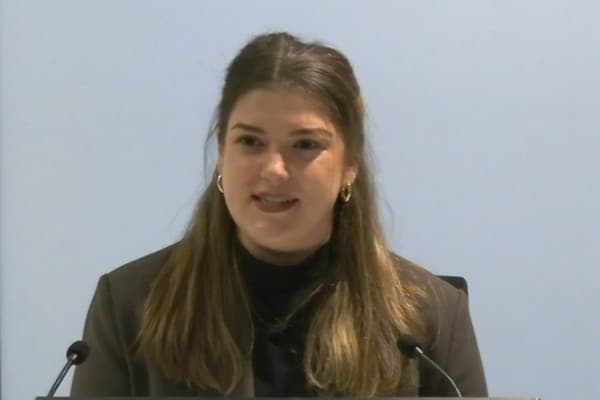
Dr Breeann Fallon
Dr Breeann Fallon, CEO of the Melbourne Holocaust Museum (MHM), described Holocaust education as “preventative”, imparting “skills that help us in the present”. Some 30,000 students visited the MHM last year. She said independent quantitative and qualitative evidence on these visits indicated 95 per cent of students “said they would positively change their behaviour after visiting our museum”.
Fallon recalled a Year 6 student enthusing to her teacher at the end of her MHM excursion that every Victorian should experience visiting the museum. But that young person’s opinion isn’t universal. Fallon cautioned that the intent behind Holocaust teaching has increasingly become the subject of suspicion.
When asked about her occupation, she used to say she worked for a Holocaust museum. When non-Jewish people hear about her involvement in a Holocaust museum, sometimes “there’s a weighty pause” – and if the conversation continues, there’s often an undertone. People conflate Holocaust education with other narratives and perceived political agendas. Now, when asked what she does, Fallon just mentions “a museum” and awaits the reaction first.
‘You’re Jewish – why don’t you tell us what Israel’s doing?’
John Hamey, a former principal of Sydney’s Moriah College, who is Roman Catholic, said antisemitism has “profoundly shaped” his sense of social cohesion in Australia.
Hamey testified about frequent antisemitic harassment of the college’s pupils when they visited or were visited by students from other schools. He witnessed swastikas drawn on Jewish students’ property and coins thrown at Jewish students.
He said attempts to raise misconduct with other schools mostly resulted in attempts by senior managing staff to minimise the offences and shift blame onto the Jewish students, for example, claiming they were drawing attention to themselves by wearing religious attire such as kippot.
Shortly after beginning at Moriah, Hamey said he learned that the stringent security measures at the school were widespread across the Jewish community and were accepted as a normal part of life by the school.
As CEO of the NSW Board of Jewish Education, Hamey also heard reports of antisemitism experienced by Jewish students in NSW public schools. Conditions in classrooms were dire, he said, with Jewish secondary school students often “called to account for the actions of the State of Israel”.
“On two occasions that have been reported to me, a teacher has simply referred to a student and said, ‘You’re Jewish. Why don’t you tell us why Israel is doing what it’s doing?’” he said.
Hamey said “intermediate interventions” produce formalised apologies, but don’t delve into why a student behaved offensively or help students develop a deeper understanding of and respect for other people’s religions and cultures. He called for formalised structures that routinely bring Jewish religious leaders into schools to educate teaching staff.
‘Netanyahu is not going to see this graffiti’
Conflation of events in the Middle East and Jews living in Australia was an issue that lived-experience witness Natalie James took up. The former senior Australian public servant said antisemitism in the public service and in the wider community isn’t “embedded” but “coded and covert” and is often concealed behind the word “Zionist”.
James, granddaughter of a Jewish refugee from Nazi Germany, embraced Judaism as an adult. The former Department of Employment and Workplace Relations secretary and former Fair Work Ombudsman said a lot of graffiti in her residential street uses the term “Zionist” as a cloak for “Jew”.
“I was thinking people are really angry and I understand why. What’s going on, on the other side of the world, is awful. But who do they mean? And suddenly it occurred to me that they meant me … Benjamin Netanyahu is not going to see this graffiti. But I’m seeing it every day that I walk up to my local high street.”
James was a departmental secretary in 2024 when an open letter signed by more than 2,000 public servants called for an immediate end to Australian military exports to Israel.
“I had a very strong reaction at the time,” she recalled, describing the letter as a breach of public service impartiality by advocating for contested ideas on issues involving the government. She described it as “a failure of public service ‘101’.” Concerned that her response might be affected by her being Jewish, she stepped down as departmental secretary.
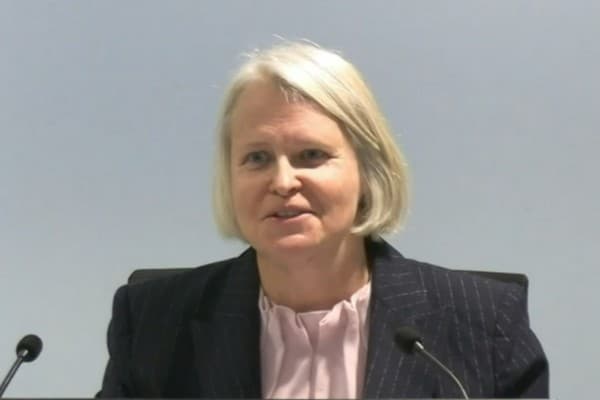
Joanne Talbot
Grilled about the open letter, Joanne Talbot, acting deputy commissioner of the Australian Public Service Commission, testified that an email was distributed afterwards, detailing unacceptable conduct relating to personal advocacy by public servants. But challenged on whether there was any assessment of the email’s impact, she said there was not. A circular sent out later set out the advocacy rules more broadly.
James said Jewish identity is not picked up by the public service’s identity points in its Culturally and Linguistically Diverse (CALD) strategy. While overt antisemitism in the public service workplace is generally considered beyond the pale, she said, without specific education, the line between traditional antisemitism and the tropes used against Israel is often not recognised. “We really need to lean into some of the ideas we might have about Jews,” she said.
In her testimony, Talbot could not gauge the number of federal public service members who have undergone its antisemitism training. She also conceded that a new training module developed with the Special Envoy on Antisemitism (Jillian Segal), due to begin in August, will not be compulsory.
Challenged on why communication to NSW public servants after the Bankstown nurses incident did not specifically reference antisemitism, Kathrina Lo, the NSW Public Service Commissioner, said that if such advice went out today, “we would frame it differently”. Lo said that despite logistical challenges, in-person antisemitism training for NSW public servants is being examined, following discussions she held with Jewish House’s Rabbi Kastel.
Better screening of visa applications
Turning to overseas visitors purveying hate speech, the RC heard from Clare Sharp, head of immigration in the Department of Home Affairs, that monitoring the sheer volume of posts on multiple social media platforms that an individual visa applicant may have made is challenging, particularly in compiling a consequential, evidence-based case against granting a visa.
She said the High Court decision enabling the department to lower the legislative threshold on individuals “vilifying” or “inciting discord” against sections of the community has been helpful. (The legislation’s wording has changed from “would” to “might”).
Sharp confirmed that staff at the department involved in visa application assessments are set to begin a pilot training scheme on understanding antisemitism, developed by the Special Envoy and the Sydney Jewish Museum.
Pressed in cross-examination by Michael Borksy KC (representing various Jewish bodies) on whether more advanced modules of the program will be rolled out to all staff working in application assessment, not just selected staff, she said advanced training for all staff is an option, but no decision has been made.
Screening visa applications for visiting Israelis also got an airing this week. In Hearing Block 5, Robert Gregory, president of right-wing communal organisation, the Australian Jewish Association (AJA), claimed the Australian government’s cancellations of visas for former Netanyahu government minister Ayelet Shaked, right-wing activist Hillel Fuld and far-right MK Simcha Rothman, caused deep concern.
Hearing Block 5, the security phase of the RC, ended on Monday this week. Late last week, the Commission heard gripping testimony from federal MP Julian Leeser about the impact of the Bondi Beach attack on his young son.
As news of the shootings spread to a Chanukah celebration in St Ives on the North Shore, the Liberal MP for Berowra, who is Jewish, said his son, aged seven at the time, began crying profusely. It was a “cry that you see where a child is in deep pain,” he testified.
Leeser’s son subsequently developed a fear of taking part in synagogue activities and outdoor Jewish community events, the MP stated. “What sort of Australia are we setting up where an eight-year-old child doesn't feel safe going to a place of worship? That's not the Australia I know and love and that's not the Australia I want for my children, or anyone's children.”
Beyond ‘security theatre’
The security phase sessions included expert witness Gavriel Schneider, director of risk consultancy Risk2 Solutions Group, who told Commissioner Bell that in the early 2020s a troubling trend emerged – collaboration between criminal syndicates and terrorist groups.
The era also saw a shift in motivation – ideology was not always the motivator of violence, said Schneider. Sometimes individuals sought out ideologies that could provide an outlet for their violent tendencies.
Schneider said much of conventional security protection revolves around what he termed “security theatre”, a checklist of arrangements, including physical icons such as bollards and CCTV cameras that, once completed, provide a false sense of security. He said strategic thinking has to move beyond box-ticking to next-level strategies and lateral thinking.
That reasoning was expanded on by another expert witness who said that under a new UK law, the Bondi Beach Chanukah celebration would have been legally required to have a counter-terrorism plan. Scott Wilson, director of Crisis Management Solutions, said the UK’s Terrorism Protection of Premises Act, known as Martin’s Law in memory of a victim of the 2017 Manchester Arena bombing, will be enforced in the UK from April 2027. It requires a counter-terrorism plan for any event of more than 800 attendees that is ticketed, barriered and publicly advertised.
Alan Hasson, CEO of Sydney’s Jewish Communal Appeal (JCA), called for standing grants to communities with an assessed security need. He said that since the October 7 attacks, security funding had become the JCA’s over-arching priority. But this has put pressure on other communal resourcing, he noted, saying, “If we don’t fund our other communal services, there will be nothing left to protect.”
The AJA’s Robert Gregory cited what he saw as unsatisfactory levels of protection. He detailed a joint AJA event with Iranian nationals in Australia, claiming police refused to commit to a presence and CSG declined to patrol the event. The local council refused to allow the posting of armed commercial security guards on its premises as a matter of policy.
Assistant Commissioner Joanne McCabe of WA Police said that after Bondi, WA Police heightened its security presence around Jewish communal sites and introduced high-powered long arms for officers on foot patrols.
McCabe, who is in charge of specialist operations, also spoke of a framework established last year around new WA and federal laws, focusing on reporting and investigating procedures, as well as support regimes for individuals and communities who have been targeted. Additionally, police have established close consulting ties with a Perth rabbi, she said.
About the author
Peter Kohn is an Australian journalist who began his career at the Herald & Weekly Times. For 43 years, he was associated with The Australian Jewish News. For the past decade, he held the title of Senior Journalist at the newspaper. He is the author of two novels. Rachel’s Chance is the story of his family’s experiences as Jewish refugees in Shanghai during World War II, and View From A Sandcastle is based on his own story, growing up in Melbourne suburbia during the 1960s and 1970s.