Aa
  • Read, Watch, Listen
  • TJI Series
  • Community Action
  • Events
  • Zedi
Follow us and continue the conversation
  • LinkedIn
  • Instagram
  • FaceBook
  • X
  • YouTube
Test yourself with the TJI Quiz!

Adjust size of text

Aa

Follow us and continue the conversation

  • LinkedIn
  • Instagram
  • FaceBook
  • X
  • YouTube

Your saved articles

You haven't saved any articles

What are you looking for?

Original reporting, insightful analysis and diverse views, delivered straight to your inbox

  • LinkedIn
  • Instagram
  • FaceBook
  • X
  • YouTube
Your support fuels our mission to inform, entertain and inspire.

The Jewish Independent is bound by the Standards of Practice of the Australian Press Council. If you believe the Standards may have been breached, you may approach The Jewish Independent or make a complaint to the Australian Press Council in writing at www.presscouncil.org.au. The Council may also be contacted on 1800 025 712.

  • Our Story
  • Contact us
  • Our Team
  • Support us
  • Guidelines
  • Pitch your idea
  • Republishing us
  • Community Action
  • Our Awards
  • LinkedIn
  • Instagram
  • FaceBook
  • X
  • YouTube
Aboriginal FlagTorres Strait Islanders Flag

The Jewish Independent acknowledges Aboriginal and Torres Strait Islander peoples as the Traditional Owners and Custodians of Country throughout Australia. We pay our respects to Elders past and present, and strive to honour their rich history of storytelling in our work and mission.

© The Jewish Independent 2026All Rights Reserved
Website design and development by Your Creative, MelbourneTerms & ConditionsPrivacy Policy
HomeRead, Watch, ListenIsrael
AnalysisIsrael

Short-term relief, long-term chaos

The ceasefire is delivering relief for both Israel and Gaza but Trump's intervention exposed the complete lack of viable long-term planning.
TJI Wrap
Print this
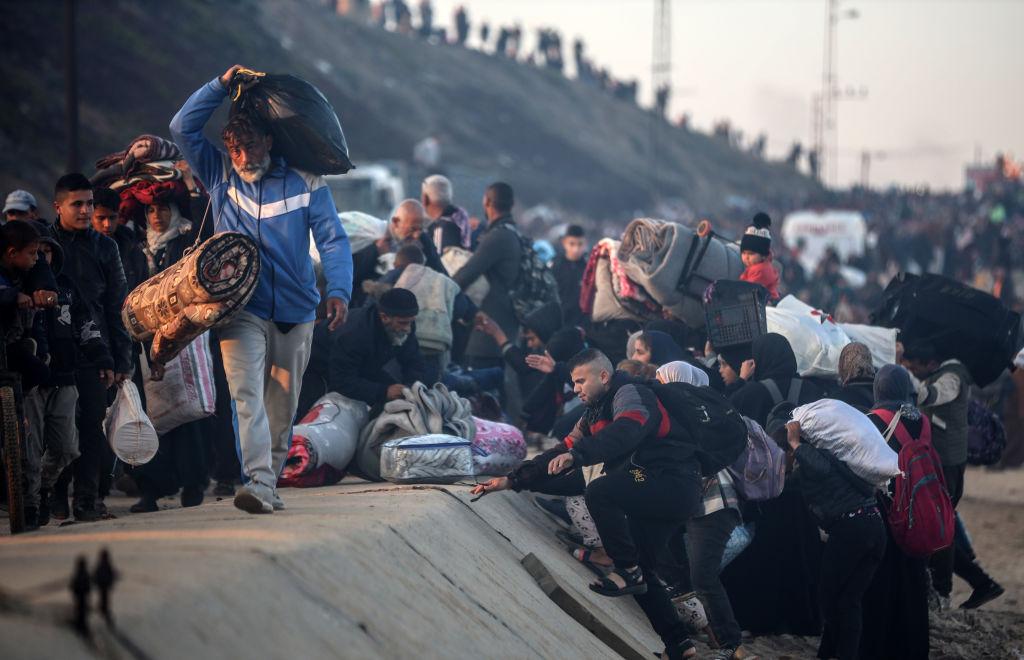
Gaza refugees returning home

Palestinians, displaced to the south order during the war make their way back to their homes (Majdi Fathi/NurPhoto via Getty Images)

Published: 30 January 2025

Last updated: 30 January 2025

President Donald Trump's plan to relocate Gazans to surrounding Arab nations has sent shockwaves through the region and emphasised the lack of preparation for Gaza after the war.

Trump indicated on Saturday that he had spoken with the King of Jordan about potentially building housing and relocating one and a half million Palestinians from Gaza to neighbouring countries to “clean out that whole thing.”

He added that relocating Palestinian civilians to “some of the Arab nations, and build[ing] housing in a different location, where they can maybe live in peace for a change” could be “done temporarily or could be long term.”

The statement prompted national trauma among Palestinians, Egyptians, and Jordanians. The idea has been widely criticised across the region as a potential “second Nakba,” and Palestinian politicians have decried it as a plan to ethnically cleanse Gazans from their land.

In Egypt, as in Jordan, the question of a Palestinian transfer is stirring up national sentiment, demanding the establishment of an independent Palestinian state, as well as raising security and economic fears.

Egypt, continuing its total war against Islamist terrorist groups in Sinai, does not want one million more Palestinians who, even if stopped in Sinai, could establish bases for terrorist activity—not only against Israel but also against Egypt itself.

Egypt and Jordan are by no means interested in accepting even a single Palestinian refugee, not permanently nor temporarily.

For Jordan, which is already home to millions of Palestinians, an altered demographic would threaten the stability of the kingdom. For decades, Jordan has been concerned about Israeli discourse surrounding the establishment of an alternative Palestinian homeland, and each time has required all-clear statements from Israeli leaders to indicate that Israel does not intend to dissolve the kingdom's demographic identity. When, during the war in Gaza, the suggestion was again made, Jordan received Israeli assurances that there was no intention to transfer Palestinians from Gaza.
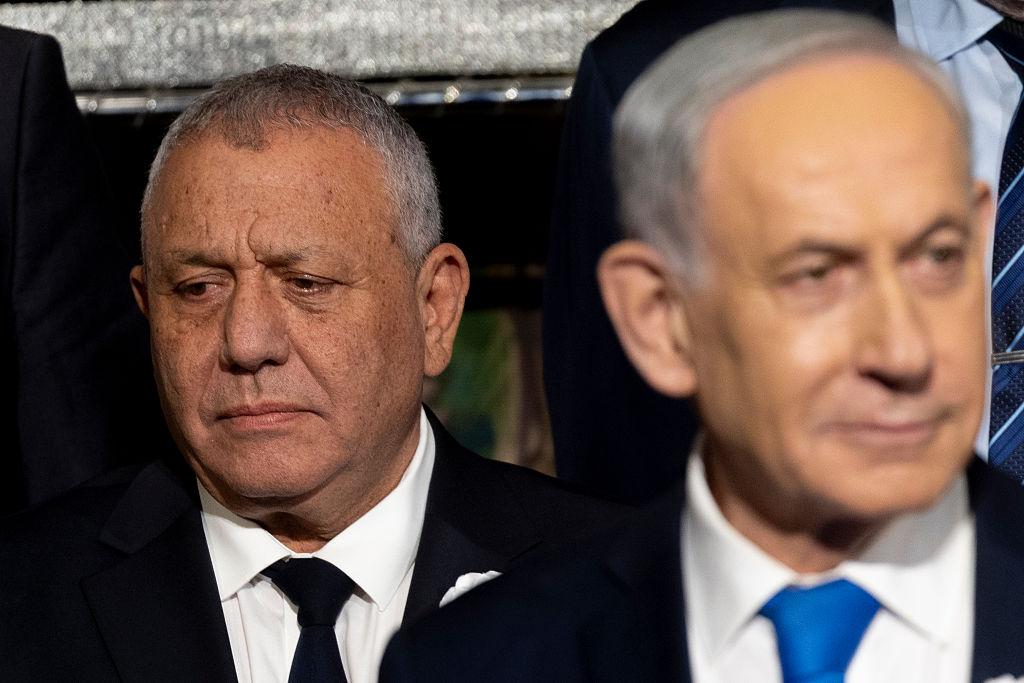

For Israel’s far right, Trump’s comments are music to their ears and may be intended primarily to help Prime Minister Netanyahu keep his coalition partners on board. The Israeli prime minister, due to meet Trump as soon as next week, has spurned plans for “the day after” in Gaza, largely because he has sought to defer such a day.

Trump’s plan is completely unrealistic, wrote Chaim Levinson in Haaretz. "This is the vision of an experienced real estate tycoon, and no such concrete plan of action exists. In any case, Egypt and Jordan are by no means interested in accepting even a single Palestinian refugee, not permanently nor temporarily. The people residing in the Gaza Strip are considered lepers amongst their friends from other Islamic nations. Everyone is talking about their suffering, from the emir of Qatar to the president of Egypt, who are willing to send them money – but accepting people? There's a limit, and they will determinedly keep to it."

Trump's plan may be a pipe dream but he did raise a valid concern about the magnitude of the devastation in Gaza and the lack of preparation for “the day after.” “It's literally a demolition site,” the president commented. “Almost everything is demolished, and people are dying there.”

Another sign of the challenges in implementing the full ceasefire agreement and the lack of preparation for “the day after” is the standoff over the future of UNRWA between Israel and the UN.

A new Israeli law ending all cooperation with the agency is due to come into force today, just as desperately needed aid is finally surging into Gaza. Aid experts say no other entity has the capacity to provide residents with the long-term support they need.

Hostages releases

In the short term, however, the ceasefire is providing some relief to both Israelis and Palestinians.

Four female Israeli soldiers were freed on 25 January: Karina Ariev, Daniella Gilboa, Naama Levy, and Liri Albag, all of whom were in a stable condition. “After 477 days, I am finally home. I am secure and protected, and surrounded by family and friends,” Naama Levy posted on Instagram on Tuesday. Levy, 20, added that she feels “better with each day that passes.”

On Monday, after a 24-hour delay, Hamas handed over to Israel its long-awaited list of hostages slated to be released over the next five weeks, claiming that 18 remain alive while eight have perished. Of the 26 hostages still to be released in phase one, 21 are men, three are women, and two are children, ranging in age from two years old to 86 years old.

Today Thursday, three more Israeli and five Thai hostages are set to be released. The list of names received from Hamas today includes Arbel Yehoud (29 years old), Agam Berger (19), and Gadi Moses (80). The names of the five Thai citizens to be freed have not been made public.

Five additional Israeli hostages are set to be freed on Saturday. Israeli authorities expected to release 110 Palestinian prisoners on Thursday. Of those, 32 were sentenced to life imprisonment, and another 30 are children, according to Hamas.

Displaced Gazans begin return home

As a result of the list’s submission and the first sign of life from hostage Arbel Yehoud, Israel allowed residents of the northern Gaza Strip to return home on Monday. Under the terms of the ceasefire agreement, Palestinians were permitted to travel north of the Netzarim Corridor, a seven-kilometre strip of land controlled by Israel that cuts off northern Gaza from the rest of the territory.

On Monday, Hamas released a statement claiming that “more than 300,000 displaced Palestinians returned today… to the governorates of the north of Gaza.” The United Nations confirmed that more than 200,000 people were observed moving north on Monday morning.

Many of those heading north knew they would be returning to little more than ruins but wanted to pitch tents on their own land after long months spent shifting between crowded displacement camps in the south of the Strip.

 The Guardian quoted Osama, a 50-year-old public servant and father of five, as he arrived in the city “My heart is beating. I thought I would never come back,” he said. “Whether the ceasefire succeeds or not, we will never leave Gaza City and the north again, even if Israel sends a tank for each one of us. No more displacement.”

READ MORE

Donald Trump’s suggestion of ‘clearing out’ Gaza adds another risk to an already fragile ceasefire (The Conversation)

Trump's dreams of relocating Gazans clash with regional realities (Haaretz)

Trump wants to ‘clean out’ Gaza. Here’s what this could mean for the Middle East (CNN)

The problems, perils and precedent of ‘cleaning out’ Gaza (The Guardian)

'Half our house is gone': Palestinians face worst fears in north Gaza (BBC)

You might also like
  • Netanyahu pushed Shin Bet head to spread racist misinformation at election
    Eetta Prince-Gibson
  • The Israelis who flew home to vote
    Gideon Cohen
  • Iran conflict hinges on Trump’s nuclear nerve
    Dror Doron
logomark.67a07ee3
We believe in the free flow of information

Republish our articles for free, online or in print, by using our Creative Commons licence

You might also like

    Eisenkot Netanyahu
    AnalysisAustralia

    Could the West be regained by an Eisenkot coalition?

    Dean Sherr 2
    Haredi United Torah Judaism
    Israel Votes 2026AnalysisIsrael

    Haredi party may change sides, enabling Eisenkot to form new government

    Shahar Burla
    bulldozer construction settlements west bank
    ExplainerIsrael

    Australia’s latest sanctions raise the stakes, but stay on track

    Deborah Stone

About the author

TJI Wrap

TJI Wrap

TJI wraps consolidate essential news and analysis from multiple sources into digestable summaries.

More from the author

NewsAustralia

War crimes allegations against Australian IDF soldier

NewsWorld

Wave of attacks on Jewish sites sparks international alarm

AnalysisIsrael

Gaza, Lebanon, Syria, Iran: Israel’s tense security landscape

AnalysisIsrael

Middle East on edge as Iran and Israel inch closer to another war