Aa
  • Read, Watch, Listen
  • TJI Series
  • Community Action
  • Events
  • Zedi
Follow us and continue the conversation
  • LinkedIn
  • Instagram
  • FaceBook
  • X
  • YouTube
Test yourself with the TJI Quiz!

Adjust size of text

Aa

Follow us and continue the conversation

  • LinkedIn
  • Instagram
  • FaceBook
  • X
  • YouTube

Your saved articles

You haven't saved any articles

What are you looking for?

Original reporting, insightful analysis and diverse views, delivered straight to your inbox

  • LinkedIn
  • Instagram
  • FaceBook
  • X
  • YouTube
Your support fuels our mission to inform, entertain and inspire.

The Jewish Independent is bound by the Standards of Practice of the Australian Press Council. If you believe the Standards may have been breached, you may approach The Jewish Independent or make a complaint to the Australian Press Council in writing at www.presscouncil.org.au. The Council may also be contacted on 1800 025 712.

  • Our Story
  • Contact us
  • Our Team
  • Support us
  • Guidelines
  • Pitch your idea
  • Republishing us
  • Community Action
  • Our Awards
  • LinkedIn
  • Instagram
  • FaceBook
  • X
  • YouTube
Aboriginal FlagTorres Strait Islanders Flag

The Jewish Independent acknowledges Aboriginal and Torres Strait Islander peoples as the Traditional Owners and Custodians of Country throughout Australia. We pay our respects to Elders past and present, and strive to honour their rich history of storytelling in our work and mission.

© The Jewish Independent 2026All Rights Reserved
Website design and development by Your Creative, MelbourneTerms & ConditionsPrivacy Policy
HomeRead, Watch, Listen
Feature

‘We don’t know if this government leads to paralysis or initiative; paralysis is more likely’

Ben Lynfield
Print this

Published: 25 June 2021

Last updated: 4 March 2024

In the Gaza Strip and the West Bank, BEN LYNFIELD finds pessimism abounds about what lies ahead from the strange coalition that has replaced Netanyahu

IN THE GAZA Strip and the West Bank, the long-awaited ouster of the reviled Benjamin Netanyahu is not evoking cheers, Instead, pessimism abounds about what lies ahead from the strange brew of a government that has replaced him.

The one possible exception to this is the role of the first Arab coalition party, the United Arab List (Ra’am), which is raising eyebrows and evoking interest, not all of it negative in the West Bank.

Labor and Meretz are on the left side of the government, joined by centrist Yesh Atid and Blue White and two hard right parties and Yamina headed by ultranationalist prime minister Naftali Bennett,

For many Israelis this amalgamation that gained power only by a 60-59 Knesset majority arouses curious anticipation and a wait and see approach.

But for Palestinians subjected to occupation, settlement encroachment and harsh measures since 1967, and the failure of nominal self-rule to end Israeli control, it is hard to see things changing for the better.

Indeed, the Bennett government is already prompting even greater despair in Gaza, according to analysts from the crowded and battered coastal enclave ruled by the militant Hamas movement.

"It was better under Netanyahu. Things are going from bad to worse," says Mkhaimar Abusada, a political scientist at al-Azhar University in Gaza City.

In Gaza, ravaged by Israeli bombardment last month in response to Hamas’s indiscriminate firing of missiles into Israel, the Bennett government is further devastating the economy by allowing in only humanitarian supplies, namely food and medicine, and not raw materials or products which were permitted before the war, Abusada says.

"Some factories were hit in the war, others have no raw materials," he added, noting that a Pepsi factory employing 300 workers had to close this past week because it did not have the components for making its bottles.

"This Israeli government is promoting more unemployment and more poverty," Abusada says.

Israel says the added restrictions are aimed at pressing Hamas to advance the release of the remains of soldiers Hadar Goldin and Oron Shaul, who fell in the 2014 Gaza war, and two civilian hostages Avera Mengistu and Hisham al-Sayed.

This government is a copy of its predecessor and I don't expect anything good to come of it.

The Bennett government is also not allowing infusions of Qatari money that were allowed before the war. An estimated 75,000 families were given $US100 a month of this money, Abusada says. Even fuel for the power station that is paid by Qatar has not been allowed.

Talal Awkal, a Gaza-based columnist for the al-Ayyam newspaper, which is affiliated with the Palestinian Authority, is certain the Bennett government will not ease up on the near hermetic Gaza border restrictions. "This government will be attacked as failures and traitors by Benjamin Netanyahu if they do that," he says.

"[It] will not last a long time because of its contradictions and Netanyahu doing his best to topple it," Awkal predicts.

In Awkal's view, Yesh Atid leader and Foreign Minister Yair Lapid, who will take over the premiership in two years if the government survives, will not emerge as a moderating force. "He is not a centrist; he is a right winger."

In the West Bank, negative expectations also abound, although some faint glimmers of hope for positive change are also visible to the discerning eye. No one expects a breakthrough regarding the two-state solution under Bennett but at least one analyst, Ashraf Ajrami, pins hopes on Ra’am, Labor and Meretz to force the right-wing coalition members into humanitarian compromises.

Another commentator, Khalil Shikaki, says the presence of Ra’am, Meretz and Labor in the cabinet could discourage the government from opting for another war in Gaza.

Among the pessimist majority, former PA Planning Minister Samir Abdullah stands out. He was a key moderate and negotiator in the period after the 1993 Oslo agreement, but its failure to materialise into statehood and a less servile relationship with Israel has left him - and his generation of the West Bank elite - bitter.

"This government is a copy of its predecessor and I don't expect anything good to come of it," he says. "It is composed of very reactionary individuals.

"Even Yair Lapid in the middle has no peace plan. What he is interested in is making better living conditions for the middle class. They will boost settlements, take steps against our Jerusalemites and demolish more houses."

Asked whether Labor and Meretz would not try to put the brakes on this, he shot back that "the peace camp in Israel is powerless."

Nor was he enthusiastic about Ra’am being in the coalition. It won't make much difference in the larger picture, he predicts. "They take an opportunistic approach and no, they are definitely not a step towards equality. One cannot speak of equality without removing the Nation State law (which advantages Jews over Arabs) and other discriminatory legislation."

He predicts Ra’am would slow plans to displace Bedouin from unrecognised villages in the Negev and not be able to do much else. "Their voters will realise the price paid for destroying the unity of Arab parties was not worth it." he says.

The only positive thing to come out of Bennett and Lapid's success, Abdullah says, "is that it lets criminal law be implemented and that Netanyahu will go to prison".

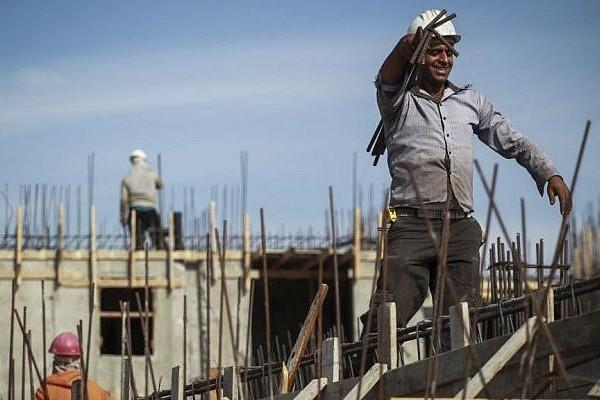
Palestinian worker
Palestinian worker

By sharp contrast, Ashraf Ajrami, former PA minister of prisoners affairs, takes a far brighter view of Ra’am's role in the coalition. "Ra’am can push the coalition to compromise on various issues," he says.

As an example, he cites the party's helping to force negotiations on the current barring of West Bank and Gaza spouses of Arab citizens from living in Israel with rights. Ra’am is pushing to loosen this ban.

I don't know if Ra'am can change things in a dramatic way but they can improve something.

"This coalition is better than Netanyahu's because Meretz, Labor and Raam favour two states and oppose settlement,"Ajrami says.

“Ra’am will oppose the aggression of Israel in the Gaza Strip and against Palestinians in East Jerusalem and the West Bank," he adds. "They somehow can do something. I don't know if they can change things in a dramatic way but they can improve something."

Ra’am's participation in the coalition, says Khalil Shikaki, director of the Ramallah-based Palestinian Centre for Policy and Survey Research, might help heal wounds inside Israel from the Arab-Jewish violence in mixed Israeli cities that accompanied the fighting in May.

Ra’am, Meretz and Labor "will have influence", Shikaki adds, and may even be able to help prevent the next Gaza war by threatening to break up the coalition.

But, he adds: "I don't think we should expect the occupation to be scaled down." And Shikaki agrees with Abusada, the Gaza analyst, that conditions in Gaza will get even worse.

Having said that, Shikaki stresses that predictions about the government should be made with caution since Israel has never before had anything like it. "We don't know how stable the government will be," he says.

"This government is Israel in all its dimensions - former Likudniks, extreme rightists, the center, the left, and Israel's Arabs. We don't know if this leads to paralysis or initiative. Paralysis is more likely, but we could be surprised."

READ MORE

Breaking silence, Abbas says willing to work with new Israeli government, but… (Times of Israel)

‘We will deal with whoever the Israeli people choose,’ says Abbas, before adding that relations must be based on Israel stopping its ‘aggression’

Abbas welcomes Bennett's win, urges solutions on long-lasting issues (Ynet)

Palestinian President Mahmoud Abbas vows to work with those who have been elected by the Israeli people; says Palestinian Authority only legitimate body that can oversee transfer of aid funds to Gaza following 11-day war with Israel

Photo: Gaza City street scene (DYKT Mohigan)

You might also like
  • Unlikely bedfellows: How Arab parties could deliver Israel’s next government
    Ben Lynfield
  • A moment of unity as rare as a minyan in Brisbane
    Rapha Manajem
  • My vision for Palestinian cancer patients
    David Adler
logomark.67a07ee3
We believe in the free flow of information

Republish our articles for free, online or in print, by using our Creative Commons licence

You might also like

    Jewish-diversity copy
    Feature

    The three questions that will define the Jewish future

    Shahar Burla 1
    tame kostakidis west
    AnalysisAustralia

    How not to apologise

    Zac Klugman
    Feature

    Israel bows to pressure by restoring water flow, ICC investigates both sides

    TJI Wrap

About the author

Ben Lynfield

Ben Lynfield

Ben Lynfield covered Israeli and Palestinian politics for The Independent and served as Middle Eastern affairs correspondent at The Jerusalem Post. He writes for publications in the region and has contributed to the Christian Science Monitor, Foreign Policy and the New Statesman.

More from the author

AnalysisIsrael

Widespread destruction as IDF carries out large-scale operation in Hebron

AnalysisIsrael

Historic step forward for Arab Israelis

Israel

Record spike in settler violence ahead of election

FeatureIsrael

Security fears and incitement drive young voters toward far-right