Aa
  • Read, Watch, Listen
  • TJI Series
  • Community Action
  • Events
  • Zedi
Follow us and continue the conversation
  • LinkedIn
  • Instagram
  • FaceBook
  • X
  • YouTube
Test yourself with the TJI Quiz!

Adjust size of text

Aa

Follow us and continue the conversation

  • LinkedIn
  • Instagram
  • FaceBook
  • X
  • YouTube

Your saved articles

You haven't saved any articles

What are you looking for?

Original reporting, insightful analysis and diverse views, delivered straight to your inbox

  • LinkedIn
  • Instagram
  • FaceBook
  • X
  • YouTube
Your support fuels our mission to inform, entertain and inspire.

The Jewish Independent is bound by the Standards of Practice of the Australian Press Council. If you believe the Standards may have been breached, you may approach The Jewish Independent or make a complaint to the Australian Press Council in writing at www.presscouncil.org.au. The Council may also be contacted on 1800 025 712.

  • Our Story
  • Contact us
  • Our Team
  • Support us
  • Guidelines
  • Pitch your idea
  • Republishing us
  • Community Action
  • Our Awards
  • LinkedIn
  • Instagram
  • FaceBook
  • X
  • YouTube
Aboriginal FlagTorres Strait Islanders Flag

The Jewish Independent acknowledges Aboriginal and Torres Strait Islander peoples as the Traditional Owners and Custodians of Country throughout Australia. We pay our respects to Elders past and present, and strive to honour their rich history of storytelling in our work and mission.

© The Jewish Independent 2026All Rights Reserved
Website design and development by Your Creative, MelbourneTerms & ConditionsPrivacy Policy
HomeRead, Watch, ListenIsrael
Israel Hamas WarAnalysisIsrael

Trauma: a nation still suffocating in grief

Most Israelis are broken on some level – depending on how far they are from the concentric circles of death and destruction on October 7.
Esther Takac
Print this
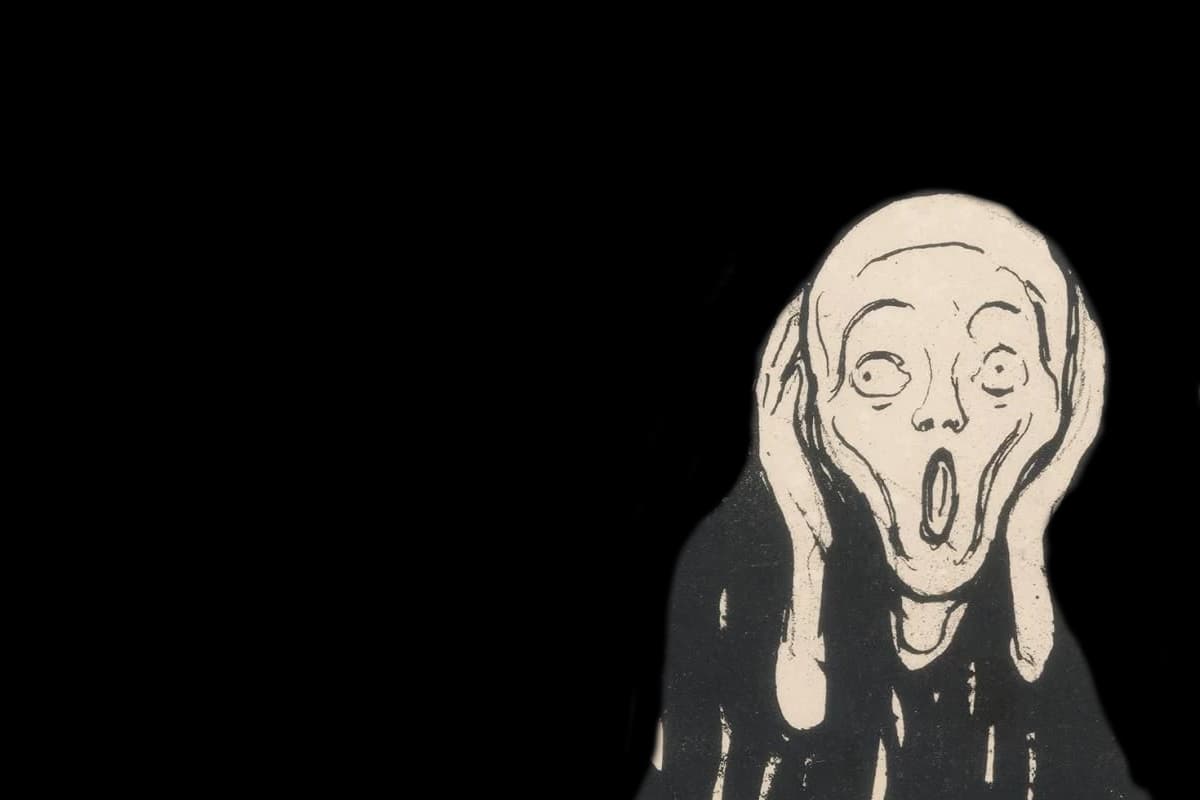
trauma scream

Published: 1 October 2024

Last updated: 1 October 2024

“What happened on October 7 is a major ultimate traumatic event – the brutal invasion of homes, the violence, the sadism, the presence of death everywhere. Nothing could meet the criteria of ‘traumatic’ more than this" — Dr Danny Horesh, Head of Trauma Research Lab, Bar-Ilan University.

The effects of this trauma in Israel, and its associated grief, loss and pain are everywhere and ever-present. Palpable and multilayered.

It would be hubris to think that I, writing in Melbourne, can express this pain adequately. As such, this article includes the words of many Israelis – psychologists, psychiatrists, lawyers, writers, a former Defence Minister and IDF Chief of Staff – whose words go some distance in conveying the trauma in Israel since October 7.

“The days are sad and the nights are sad. Grief has settled in the land. These are terrible days, without forgiveness and without mercy” — Michael Sfard, human rights lawyer.

It is there in the public spaces all over the country – Hostage Square, the Jerusalem midrachov, Dizengoff Square – which have been turned into enormous memorials spontaneously created by those who lost loved ones. Posters of the hostages are everywhere, yellow ribbons strung around shops and buildings, and empty chairs with their faces.

Stickers everywhere are dedicated to the young people murdered on October 7, and to the young soldiers who have died – each one with a beautiful face smiling at us; birth and death dates with far too little a time period between; and a brief heartbreaking quote like “keep dancing up there above”.

It is there in the calendar – the changed marking of Jewish and Israeli national days and holidays.

At Pesach, many hostage families and others could not bring themselves to hold a Seder celebrating freedom when their loved ones were still captive in unbearable conditions.

Five decades of never-ending war, terror attacks and conflict have forced Israel to acknowledge that a huge number of its citizens and former soldiers live with PTSD.

Everyone agreed this year’s Yom Hazikaron (Memorial Day) was the hardest the country has ever experienced. Not only because so many more families have joined the circle of bereaved, but also because of the fear of more dead hostages and soldiers.

It is there in the media, the non-stop coverage in the newspapers and TV.

“Hours in front of the television are like a transfusion of grief that is constantly flowing into our body, dripping and dripping and it's impossible to stop consuming it because our brothers and sisters are among the murdered, the fallen and those suffering in the darkness of hell” — Michael Sfard.

It is there in social media as Israelis share heartbreaking images and stories with each other. Research has shown that people are developing PTSD due to the intense, addicted viewing of these images. But Israelis feel compelled to watch – it’s an expression of solidarity, the price they need to pay, a way of bearing witness. “These terrible things happened, and I wasn’t there for them.” A strong sense of survivor guilt hovers. 

There is collective trauma and individual trauma. Most Israelis are broken on some level – depending on how far they are from the concentric circles of death and destruction on October 7 and the ensuing damage.

On a societal level, the use of prescription drugs to treat depression, anxiety and trauma has soared since that day, according to Israel's health insurance companies. The number of soldiers requesting mental health care has risen dramatically, according to the Natal Israel Trauma and Resiliency Centre.

Numbers of those struggling with PTSD range wildly between tens of thousands to a million Israelis. Five decades of never-ending war, terror attacks and conflict have forced Israel to acknowledge that a huge number of its citizens and former soldiers live with PTSD.

“I've tried to decipher the hollow despair and the sense of being in a fight for survival: the persistent wondering if this is all really happening. And I say this as someone enduring only the collective trauma, someone not among the multitudes who have suffered a personal catastrophe” — Amir Mandel, psychiatrist and psychotherapist.

“No one in the country is sleeping, and when they do sleep, they wake up with nightmares” — Galit Feldman, therapist.

“We are scared, anxious, profoundly sad, and unfocused. We are shocked, grieving, outraged, and exhausted. We are edgy and overwhelmed, and we cry, sometimes many times a day. It is hard to have hope for the future” — Shira Pasternak Be'eri, editor and translator.

It is hard to fathom the full extent of the trauma for people who were directly affected. Adina Moshe, taken hostage by Hamas from Kibbutz Nir Oz and later released, explained: “I don't know how I can get out of there. I'm there all the time – every day, every hour, and every night. It doesn't leave”.

Many survivors of the Nova massacre have been hospitalised in psychiatric institutions. Some have committed suicide.

There is an acute awareness of the impact particularly on the younger generation. In what kind of world is it almost normal to see grooms with one leg or where there is a constant stream of widows in their twenties?

Various mental health experts are trying to comprehend the depth and breadth of the national trauma. Many, including Dr Danny Horesh, understand it in the context of the months of protests before October 7 against the government’s attempted judicial coup, and the low level of trust many citizens have of the government. “These are factors that weakened Israeli’s social resilience – we arrived at the event already wounded.”

The most destructive aspect of October 7 seems to be a feeling of betrayal by the state: the cries for help and the desperate messages from Israelis on the verge of death. A large swath of Israel was abandoned for excruciatingly long hours with no aid from the government or the security forces, as thousands of defenceless Israelis were slaughtered. It was as if there was no Jewish state. Then came the silence of the government, which many feel has utterly failed to show any kind of leadership.

In the relationship between citizen and state, this experience is akin to being abandoned by a parent in a time of danger. The one who was supposed to be there, to defend and rescue the vulnerable, is absent in the hour of greatest need. 

Prof Nathaniel Laor, emeritus professor at both Tel Aviv University and Yale, a psychiatrist and psychotherapist with vast experience dealing with collective trauma, uses a stark image to describe this sense of abandonment and trauma.

“The psychoanalyst Donald Winnicott described how a mother holds the head of her infant during breast-feeding, so that it won’t fall – that would be a traumatic experience. What has been happening to us in the past year can be encapsulated in that image of the falling head. Many felt they were falling for some time, and on October 7 it’s as if we finally hit the ground.”

Dr Horesh tells of his 11-year-old daughter, who hardly leaves the house anymore because she’s afraid someone will grab her and abduct her to Gaza. The protection that the state is supposed to provide has disappeared from her field of vision.

Tragically at this time Israel is a polarised society beset by ruinous internal conflict... Many believe that until the war has ended and the hostages returned, Israel cannot even begin to heal.

And there is concern for the soul of Israeli society.

“Who will we be after the savage events of October 7? How will this barbarous incursion affect our souls?” — Shira Pasternak Be’eri.

There is an acute awareness of the impact particularly on the younger generation. In what kind of world is it almost normal to see grooms with one leg or where there is a constant stream of widows in their twenties? 

There are concerns about the effects of the brutal war in Gaza on Israel’s soul.

“What will be the image of a society that … killed tens of thousands, most of them children, women and the elderly? Indeed, they were killed in the aftermath of a horrifying and unforgivable crime. And yet... What will become of a society whose media outlets censor the pictures of the dead children and the weeping mothers? The Israeli TV channels are shaping our collective perceptions not only by means of what they show, but also, and perhaps mainly, by means of what they're hiding from us” — Michael Sfard.

Sfard quotes his Holocaust survivor grandmother: “The greatest challenge in the face of the extreme inhumanity was to maintain humanity”.

It is patently clear that the people of Gaza are struggling with enormous, almost incomprehensible trauma. The deaths of tens of thousands, the destruction of 80 per cent of buildings in the strip. For Gazans, nowhere is safe. There is a sense that their own leaders don’t care about their lives and are content to use them as human shields and sacrifice them for “the cause”. 

Trauma experts also worry about the future. Prof Laor explains that trauma involving person to person atrocities bears more long-lasting effects because it causes a serious loss of faith in humanity. “The terrorists want to lead us down a slope into material randomness – they jettisoned humanity."

He suggests that the way to treat this trauma at the national level is to “restore our embracing spirit, to reinstate the spiritual dimension as a central axis for meaning in our lives. Not necessarily spirit in the sense of religion, but humanity at its highest level”.

Prof Laor refers to the protest movement before October 7 and the amazing enlistment and generosity of civil society after October 7 as examples.

It is not yet clear how Israel will recover from this trauma. But many people I spoke to in my recent time there stressed the importance of moving forward as a caring and generous society.

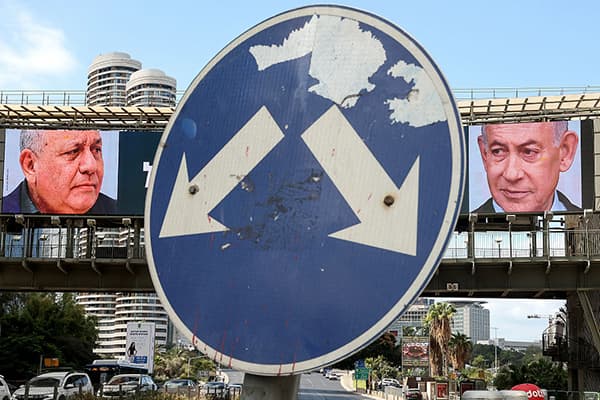
Many agree that Prime Minister Netanyahu and the current government are not contributing to resilience. Rather, the opposite: “The conduct of this government… is an open wound in Israeli society,” said Moshe Ya’alon, Former Defence Minister and IDF Chief of Staff.

“This government can’t lead the people in a process of healing – there’s a sense of closedness to the pain, agendas with personal interests and violent discourse” — Ayellet Cohen Wider, trauma psychologist.

"We urgently need a new, legitimate and sane government. A government that will immediately begin repairing" — Yuval Diskin, Former Head of Shin Bet, Israeli Security Services.

Tragically at this time Israel is a polarised society beset by ruinous internal conflict. Mental health experts agree it is hard to heal from trauma in a toxic environment. And the trauma in Israel is continuing, with the war and enemy threats ongoing, hostages and soldiers dying. Many believe that until the war has ended and the hostages returned, Israel cannot even begin to heal.

Of course, trauma and pain are not the whole story of Israel at this time. There was amazing heroism on October 7 and every day since. There is a defiant quest for normalcy as people fill restaurants and bars, and go to concerts with joyful resistance. There is a surreal normalcy to the streets of Tel Aviv, Jerusalem and beyond that belies a country at war.

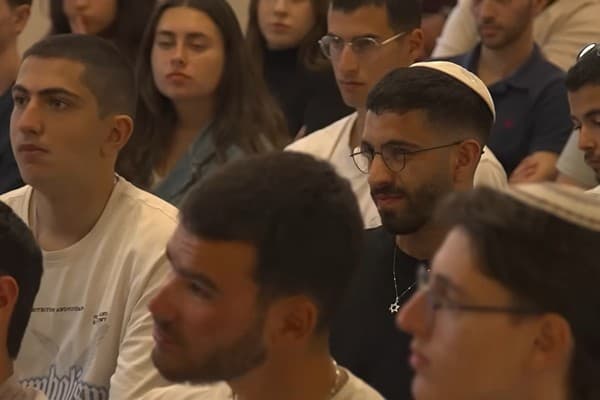
Various Israeli mental health experts I interviewed recently for a film I'm working on stressed that it is important not to be alone in trauma. Isolation is poison for trauma. They explained how significant it is when Jews from around the world visit Israel and show their support at this difficult time. 

It is not yet clear how Israel will recover from this trauma. But many people I spoke to in my recent time there stressed the importance of moving forward as a caring and generous society.

"You can’t have healing without a more spiritual dimension, without connection and respect and compassion" — Ayellet Cohen Wider.

"It is crucial so it will be possible for this event to be transformed into a seminal moment where we haven’t only undergone a trauma but were able to develop as individuals and as a society" — Prof Nathaniel Laor.

Although October 7 is the worst trauma Israel has experienced, it is hoped that the amazing initiatives of giving and love that have flowed from civil society after the tragedy will illuminate a path forward.

You might also like
  • ‘Israel is systemically eliminating Palestinian collective life’:  B’Tselem
    Deborah Stone
  • Tame apologises – but with little grace
    Deborah Stone
  • Confronting Richard Flanagan and the myth of the Israel lobby
    Mary Garden
logomark.67a07ee3
We believe in the free flow of information

Republish our articles for free, online or in print, by using our Creative Commons licence

You might also like

    altalena
    Israel Votes 2026OpinionIsrael

    The Altalena should be a warning, not a political weapon

    Shahar Burla 1
    Arab Israeli Palestinian election vote
    Israel Votes 2026FeatureIsrael

    Fear of Netanyahu victory may drive big surge in Palestinian voter turnout

    Ben Lynfield
    Erdogan Turkey
    AnalysisIsrael

    Turkey emerges as military threat to Israel

    Dror Doron

Comments

No comments on this article yet. Be the first to add your thoughts.

About the author

Esther Takac

Esther Takac

Esther Takac is an award-winning filmmaker and author, and a child and adult psychologist. Her recent film The Narrow Bridge screened at more than 35 international film festivals and on TV stations in Europe, Australia and New Zealand. Her upcoming film Rising tells the stories of the courageous Israelis rising beyond trauma to fight for democracy, healing and their homeland’s soul. Esther is a delegate with Hatikvah Australia for the upcoming World Zionist Congress, advocating for a strong, democratic, pluralistic, inclusive, and socially just Israel, with a commitment to directing funds toward rebuilding communities in the South and North.

More from the author

OpinionAustralia

The failure of the Australian Human Rights Commission’s racism project

OpinionIsrael

The question is not whether we support Israel, but which Israel?

ReflectionLifestyle

Trauma, triggers and our need to remember