Aa
  • Read, Watch, Listen
  • TJI Series
  • Community Action
  • Events
  • Zedi
Follow us and continue the conversation
  • LinkedIn
  • Instagram
  • FaceBook
  • X
  • YouTube
Test yourself with the TJI Quiz!

Adjust size of text

Aa

Follow us and continue the conversation

  • LinkedIn
  • Instagram
  • FaceBook
  • X
  • YouTube

Your saved articles

You haven't saved any articles

What are you looking for?

Original reporting, insightful analysis and diverse views, delivered straight to your inbox

  • LinkedIn
  • Instagram
  • FaceBook
  • X
  • YouTube
Your support fuels our mission to inform, entertain and inspire.

The Jewish Independent is bound by the Standards of Practice of the Australian Press Council. If you believe the Standards may have been breached, you may approach The Jewish Independent or make a complaint to the Australian Press Council in writing at www.presscouncil.org.au. The Council may also be contacted on 1800 025 712.

  • Our Story
  • Contact us
  • Our Team
  • Support us
  • Guidelines
  • Pitch your idea
  • Republishing us
  • Community Action
  • Our Awards
  • LinkedIn
  • Instagram
  • FaceBook
  • X
  • YouTube
Aboriginal FlagTorres Strait Islanders Flag

The Jewish Independent acknowledges Aboriginal and Torres Strait Islander peoples as the Traditional Owners and Custodians of Country throughout Australia. We pay our respects to Elders past and present, and strive to honour their rich history of storytelling in our work and mission.

© The Jewish Independent 2026All Rights Reserved
Website design and development by Your Creative, MelbourneTerms & ConditionsPrivacy Policy
HomeRead, Watch, ListenIsrael
PeacebuildingFeatureIsrael

Artists pursue coexistence in the shadow of Gaza

After three months in residency together, 10 Arab and Jewish artists reflect on co-existence, creativity and artistic freedom.
Ben Lynfield
Print this
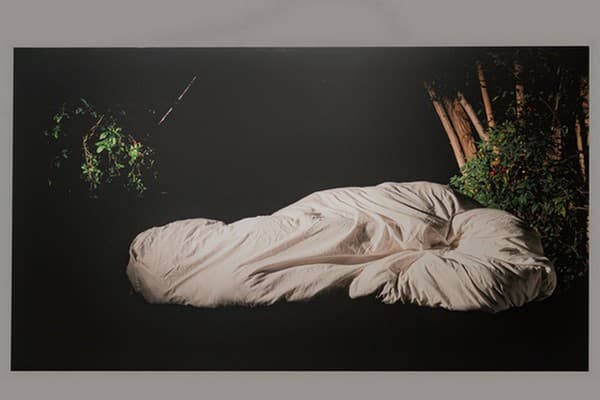
Weighted Blanket (Shira Yermiyahu)

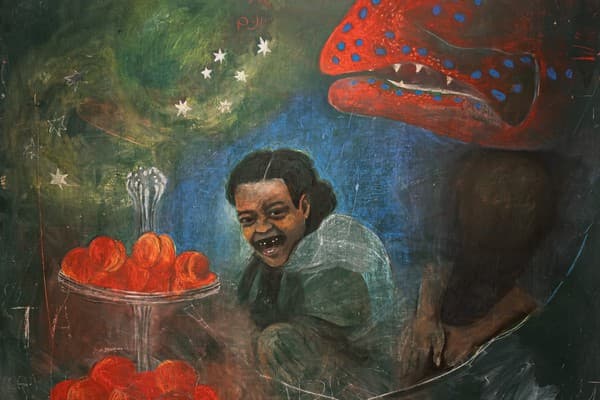
Weighted Blanket by Shira Yermiyahu, one of the pieces produced in a the shared residency at Givat Haviva

Published: 22 May 2025

Last updated: 23 May 2025

Since October 7, 2023, when Hamas’s brutal attack triggered Israel’s devastating military campaign in Gaza, some Jewish-Arab coexistence projects have come under severe strain, with participants dropping out, tensions simmering and a sense of irrelevance threatening their good intentions.

This was not the case at the Artists in Residence Program at Givat Haviva where five Jewish-Israeli and five Palestinian-Israeli artists lived together and created side by side for three months, culminating in an exhibit of their works that is stimulating and evocative. It runs until June 7.

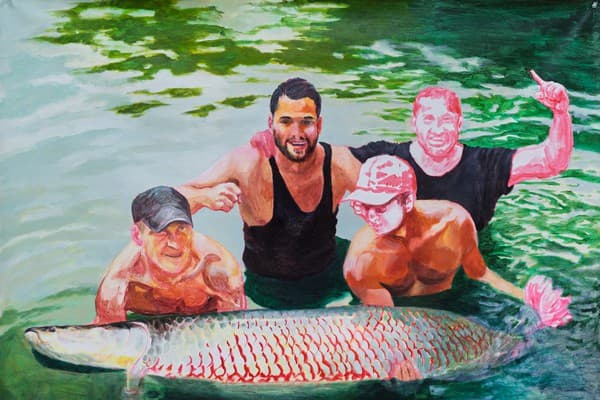
The works touch with varying degrees of intensity on diverse themes and symbols, including censorship, individuation from family, memory, the deeper meaning of fishing and what would strike some Jews as an explosive verse by Palestinian national poet Mahmoud Darwish.

To their credit, the curators enabled artistic freedom in an environment in which the far-right government of Benjamin Netanyahu is accused of stifling expression, especially among Palestinian-Israelis.

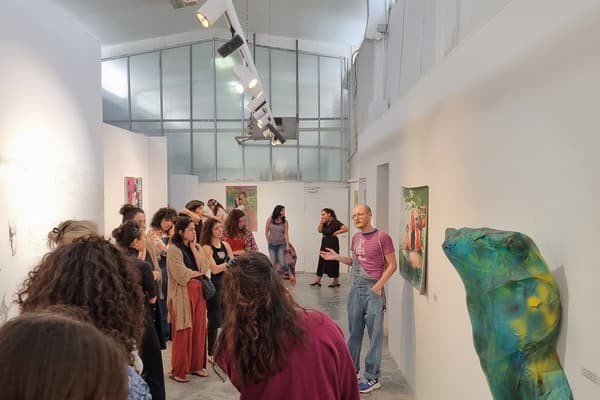
Residency Program Coordinator Orit Reingewertz said the participants had Arab and Jewish mentors and worked in a shared studio “so that they see each other and hear each other all the time.” Every week they met as a group to discuss what they had experienced. The Jewish artists studied Arabic.

One of the reasons the residency did not become fraught, despite the war, was that “the emphasis of the program wasn’t on ‘let’s talk about coexistence’, but rather on artistic practice itself - to learn about art in Israel and to experience working together,” said Darya Efrat, who returned to Israel following the start of the war after 12 years in the US, Portugal and Sweden. She saw the program both as a way to meet other artists and a chance to get more involved in Jewish-Palestinian coexistence.
Efrat created windows inside and outside the gallery that invite interaction and use unconventional materials, vary perspectives and offer liminal spaces between interior and exterior. “As a migrant and someone who lives between cultures, I often have a sensation of being in between, of not really having space or the opportunity to create space,” she explained.

The work also reflects a desire to meet, which is characteristic of coexistence, she added. “I did come out with a sense of friendship and collegial connections.”

Fishing Vacations, by Ronnie Pixler
A wave of Hello, by Odeya Silber

With that, Efrat and other artists interviewed for this article said they had hoped the program would entail a more open discussion about the war and its meanings for them.

Some had thought of screening a film that would pave the way for this type of discussion, but others were opposed to this idea and it was rejected, participants in the program said. “I think the film had the potential to open up something deeper in terms of talking about the war, the conflict and unpleasant feelings that were avoided,” Efrat said.

The art centre hosted an event this month on the role of art in “extreme situations” during which two of the residency artists are scheduled to speak.

Samer Salama, originally from Yarka village and now coordinator of the collection at the City Museum in Tel Aviv, also would have wanted a public discussion of the war: “It was kind of disappointing for the people who did want to talk politics,” he said.

For him, the residency was “an intense experience. It was three months of living together, working together, being in each other’s private space. But it was mostly positive.”

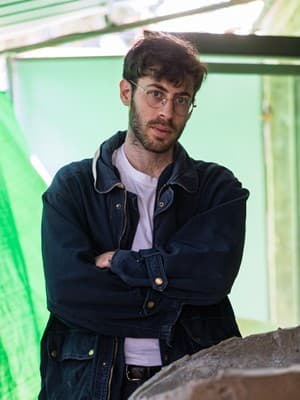
Rotem Saraf
Rotem Saraf
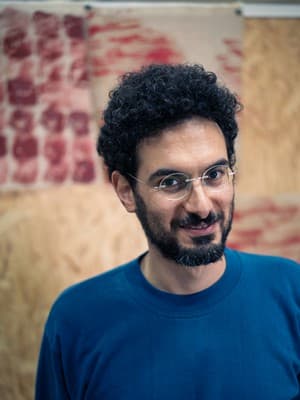
Samer Salama
Samer Salama
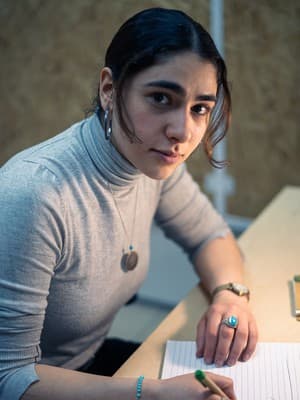
Asalah Hassan
Asalah Hassan

Salama’s art at the gallery is potentially unsettling for some Israeli Jewish viewers, though painfully true and resonant for Palestinians. It points up what Salama sees as the genocide in Gaza and other atrocities by referencing the Mahmoud Darwish poem The Red Indian’s Penultimate Speech to the White Man.

Salama does not fashion the actual letters of the poem’s words, just the dots that in Arabic distinguish between the letters, giving a sense that the subject was eradicated and that the dots are the only remnants.

“I was absolutely influenced by the Gaza war,” Salama said. “It feels that not only the last two years but the last as much as I can remember were surrounded by death, how many people were killed, how many people were starving. It’s the life we have here and it’s in my consciousness.”

Of the work, he says: “Absolutely it’s about genocide. It’s about colonialsm, it’s about how the Islamic country grew - which is also colonialism. It’s like we all live in this history of conquering and killing. It’s happening now in an extreme way so it definitely influenced me.”

The Jewish Independent

Salama says he is concerned for children of all backgrounds. “No child should go through this. It doesn’t matter if they are Jewish or Muslim. It all affects me, even children in Yemen. Where they are doesn’t matter. The problem is when people say, if it’s a Palestinian child, it’s ok. If it’s an Israeli child, it’s ok. Since when is this ok?”

Rotem Saraf’s work also referred to a charged symbol, the swastika, although he chose not to actually display it. Saraf, from Haifa, makes the Nazi symbol the subject of a conversation he invents and amplifies. The work is a semi-parody of a real 2015 exchange between then minister of culture Miri Regev, a right-winger, and artist Uri Katzenstein, who had created a swastika on a chair for a retrospective exhibit.

Regev said the art offended the sensibilities of Holocaust survivors. But instead of ending with censorship and recriminations, the two agreed that the chair would remain on display with an explanatory plaque added. “It is so absurd and hard to imagine people deviating from their roles and what is expected of them. It can be moving and also pathetic that it is moving,” Saraf says.

He said the war, and comparisons of Hamas to the Nazis, prompted him to give more thought to swastikas. “If you say that Hamas are the Nazis, you are again using this tool when it suits you and when it fits the narrative you want to fashion. One of the things that interested me is that you can be panicked by the swastika and also on the other hand, use it to put a new tag on the big story. In the end it also turns into a tool.”

Saraf said learning Arabic and being around Arabic speakers was a central part of his residency. “We got used to Arabic being around us and learning it and it changes something in your ear. We are in a period when the Arabic language is identified with traumas. There are some very complicated things. My grandmother lives in the Gaza envelope. It’s a process to get used to simple communication again.”

Asalah Hassan, a video and sculpture artist from Mashad village, constructed an overlapping conversation on screens featuring three voices: the seeker, the protector and the fearful. She highlighted the inability to recall certain memories and the relationship of this to identity. “But what if I wake up one day and don’t recall who I am?” asks the fearful voice.

Hassan says she found the residency fulfilling and that she is keeping in touch with all the participants.

But, she added, the world outside Givat Haviva is less than friendly to Palestinian-Israeli artists. The sense among her friends is that they are not free to express themselves, she stressed. “A good artist is someone who expresses his view through his art. But some people are doing things that are not as the artist [in them] wants.”

You might also like
  • Tame apologises – but with little grace
    Deborah Stone
  • Confronting Richard Flanagan and the myth of the Israel lobby
    Mary Garden
  • UK’s dramatic policy change on Israel-Palestine
    Colin Shindler
logomark.67a07ee3
We believe in the free flow of information

Republish our articles for free, online or in print, by using our Creative Commons licence

You might also like

    Woman with land and houses behind her
    NewsAustralia

    Australia to increase sanctions against West Bank settlements

    Deborah Stone
    Netanyahu
    Israel Hamas WarFeatureIsrael

    New evidence Netanyahu was warned about October 7

    Shahar Burla 2
    Arab Israeli Palestinian election vote
    Israel Votes 2026FeatureIsrael

    Fear of Netanyahu victory may drive big surge in Palestinian voter turnout

    Ben Lynfield

About the author

Ben Lynfield

Ben Lynfield

Ben Lynfield covered Israeli and Palestinian politics for The Independent and served as Middle Eastern affairs correspondent at The Jerusalem Post. He writes for publications in the region and has contributed to the Christian Science Monitor, Foreign Policy and the New Statesman.

More from the author

FeatureIsrael

Fear of Netanyahu victory may drive big surge in Palestinian voter turnout

NewsIsrael

Abuse by IDF soldiers humiliates Muslim Palestinians

OpinionIsrael

Qusra siege exposes shared agenda of IDF and settler extremists

AnalysisIsrael

IDF ordered to evict West Bank camp in election show of strength

Comments

No comments on this article yet. Be the first to add your thoughts.