Aa
  • Read, Watch, Listen
  • TJI Series
  • Community Action
  • Events
  • Zedi
Follow us and continue the conversation
  • LinkedIn
  • Instagram
  • FaceBook
  • X
  • YouTube
Test yourself with the TJI Quiz!

Adjust size of text

Aa

Follow us and continue the conversation

  • LinkedIn
  • Instagram
  • FaceBook
  • X
  • YouTube

Your saved articles

You haven't saved any articles

What are you looking for?

Original reporting, insightful analysis and diverse views, delivered straight to your inbox

  • LinkedIn
  • Instagram
  • FaceBook
  • X
  • YouTube
Your support fuels our mission to inform, entertain and inspire.

The Jewish Independent is bound by the Standards of Practice of the Australian Press Council. If you believe the Standards may have been breached, you may approach The Jewish Independent or make a complaint to the Australian Press Council in writing at www.presscouncil.org.au. The Council may also be contacted on 1800 025 712.

  • Our Story
  • Contact us
  • Our Team
  • Support us
  • Guidelines
  • Pitch your idea
  • Republishing us
  • Community Action
  • Our Awards
  • LinkedIn
  • Instagram
  • FaceBook
  • X
  • YouTube
Aboriginal FlagTorres Strait Islanders Flag

The Jewish Independent acknowledges Aboriginal and Torres Strait Islander peoples as the Traditional Owners and Custodians of Country throughout Australia. We pay our respects to Elders past and present, and strive to honour their rich history of storytelling in our work and mission.

© The Jewish Independent 2026All Rights Reserved
Website design and development by Your Creative, MelbourneTerms & ConditionsPrivacy Policy
HomeRead, Watch, ListenAustralia
Australia

Australians embrace message of hope and reconciliation

Sharon Berger
Print this
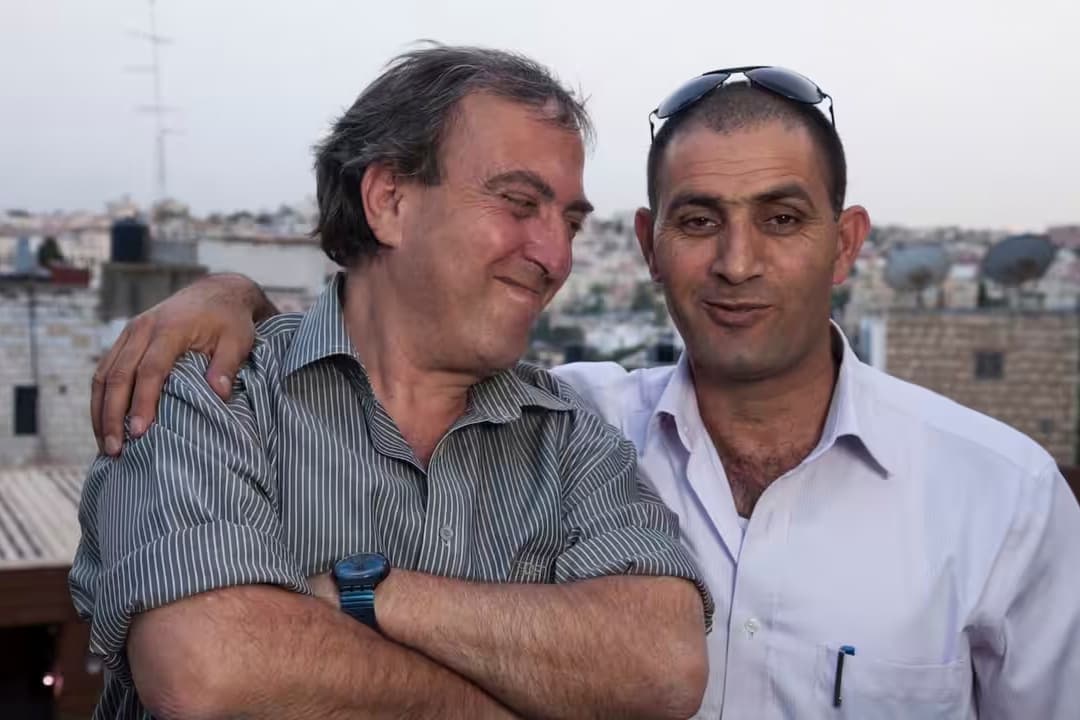
rami and bassam

Rami Elhanan (left) and Bassam Aramim (supplied)

Published: 28 May 2023

Last updated: 13 November 2025

Call to end the Occupation resonates with audiences

After a sold out screening of The Narrow Bridge at the Classic Cinema in Elsternwick you could hear a pin drop while Rami and Bassam spoke with film director Esther Takac and moderator Julie Szego about choosing to talk rather than continue the endless cycles of violence.

In the evening they also spoke to students from the University of Melbourne AUJS as well as a brunch for The Jewish Independent supporters and writers. Bassam shared his story of becoming a peace activist and the need to resolve conflict through non-violent means.

“Our blood is exactly the same colour, our pain is exactly the same. Our tears are just as bitter. If we who have paid the highest price, we who have every reason on earth to want to kill each other, if we can call each other brother, anyone can. Everyone should.” - Rami Elhanan

The Jewish Independent
You might also like
  • From Bondi to the Tree of Life
    Gideon Cohen
  • One year after the ceasefire, Gaza remains in ruins with no solution in sight
    Shahar Burla
  • Three years after Oct 7: an anniversary of reckoning
    The Jewish Independent
logomark.67a07ee3
We believe in the free flow of information

Republish our articles for free, online or in print, by using our Creative Commons licence

You might also like

    antisemitism online
    NewsAustralia

    Proposed digital care law to offer protection against online antisemitism

    Deborah Stone
    Nadia
    ReflectionAustralia

    Between communities: finding Jewish belonging after migration

    Florencia Tuchin
    tame kostakidis west
    AnalysisAustralia

    How not to apologise

    Zac Klugman

About the author

Sharon Berger

Sharon Berger

Sharon Berger is the Events & Partnerships Manager at TJI. Sharon is a former journalist for The Jerusalem Post, Reuters, the Economist Intelligence Unit and the Australian Jewish News.

More from the author

ReflectionAustralia

No, I am not okay

NewsAustralia

TJI launches media internship in memory of Andrew Casey

NewsArts & Culture

Writer awards celebrate talent in face of discrimination

InterviewIsrael

Yair Golan on Netanyahu, Israel’s ‘tribalism’ and believing in a two-state solution