Aa
  • Read, Watch, Listen
  • TJI Series
  • Community Action
  • Events
  • Zedi
Follow us and continue the conversation
  • LinkedIn
  • Instagram
  • FaceBook
  • X
  • YouTube
Test yourself with the TJI Quiz!

Adjust size of text

Aa

Follow us and continue the conversation

  • LinkedIn
  • Instagram
  • FaceBook
  • X
  • YouTube

Your saved articles

You haven't saved any articles

What are you looking for?

Original reporting, insightful analysis and diverse views, delivered straight to your inbox

  • LinkedIn
  • Instagram
  • FaceBook
  • X
  • YouTube
Your support fuels our mission to inform, entertain and inspire.

The Jewish Independent is bound by the Standards of Practice of the Australian Press Council. If you believe the Standards may have been breached, you may approach The Jewish Independent or make a complaint to the Australian Press Council in writing at www.presscouncil.org.au. The Council may also be contacted on 1800 025 712.

  • Our Story
  • Contact us
  • Our Team
  • Support us
  • Guidelines
  • Pitch your idea
  • Republishing us
  • Community Action
  • Our Awards
  • LinkedIn
  • Instagram
  • FaceBook
  • X
  • YouTube
Aboriginal FlagTorres Strait Islanders Flag

The Jewish Independent acknowledges Aboriginal and Torres Strait Islander peoples as the Traditional Owners and Custodians of Country throughout Australia. We pay our respects to Elders past and present, and strive to honour their rich history of storytelling in our work and mission.

© The Jewish Independent 2026All Rights Reserved
Website design and development by Your Creative, MelbourneTerms & ConditionsPrivacy Policy
HomeRead, Watch, ListenIsrael
FeatureIsrael

International protest stalls Israeli government attempt to penalise not-for-profits

Ben Lynfield
Print this

Published: 30 May 2023

Last updated: 5 March 2024

The bill would impose a 65 per cent tax on public advocacy groups that receive foreign government funding, typically left-wing civil society organisations.

International pressure has forced Israeli Prime Minister Benjamin Netanyahu to stall a bill aimed at crippling Israeli left-wing organisations that challenge the legality and morality of army and settler practices in the occupied West Bank.

The bill would have imposed financial penalties on public advocacy by non-profit groups that receive donations from foreign governments, removing tax deductibility and hitting them with 65 per cent income tax.

An outcry from foreign governments including the US, France and Germany prompted the government to shelve the bill on Saturday night.

But leaders of these human rights groups believe the suspension of the plan to dry up most of their funding from Western governments marks only a tactical retreat. The cabinet’s aim, they say, remains to hinder them or eliminate them to remove an obstacle to the annexation project in the West Bank.

Ziv Stahl, head of Yesh Din, Israel’s leading watchdog group against settler violence, told The Jewish Independent that the decision is scant cause for relief. “We still have a lot to worry about. I’m not at all sure this has been taken off the agenda. It all depends on the international community,” she said.

“We firmly believe that civil society should have the opportunity and space to operate and raise resources around the world.”

US State Department response

She said if a similar bill were to pass, Yesh Din might be forced to close.

Supporters of weakening the NGOs say this is necessary to thwart foreign interference in Israeli democratic prerogatives. In remarks to The Jewish Independent, Amnon Lord, a right-wing columnist for Yisrael Hayom daily, charged that some of the NGOs are fomenting anti-Israel and antisemitic sentiment abroad and even providing justification for terrorist acts against Israel.
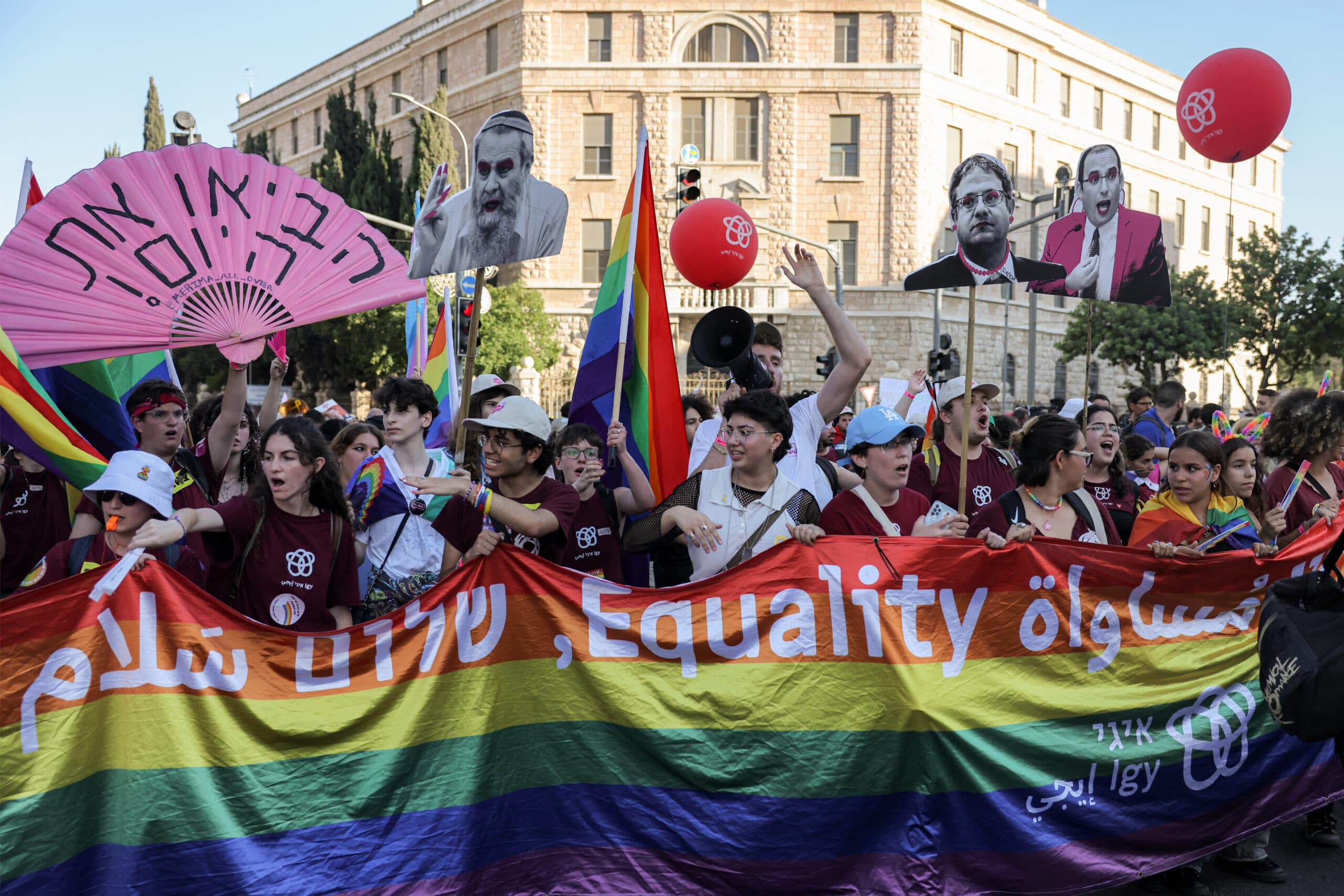
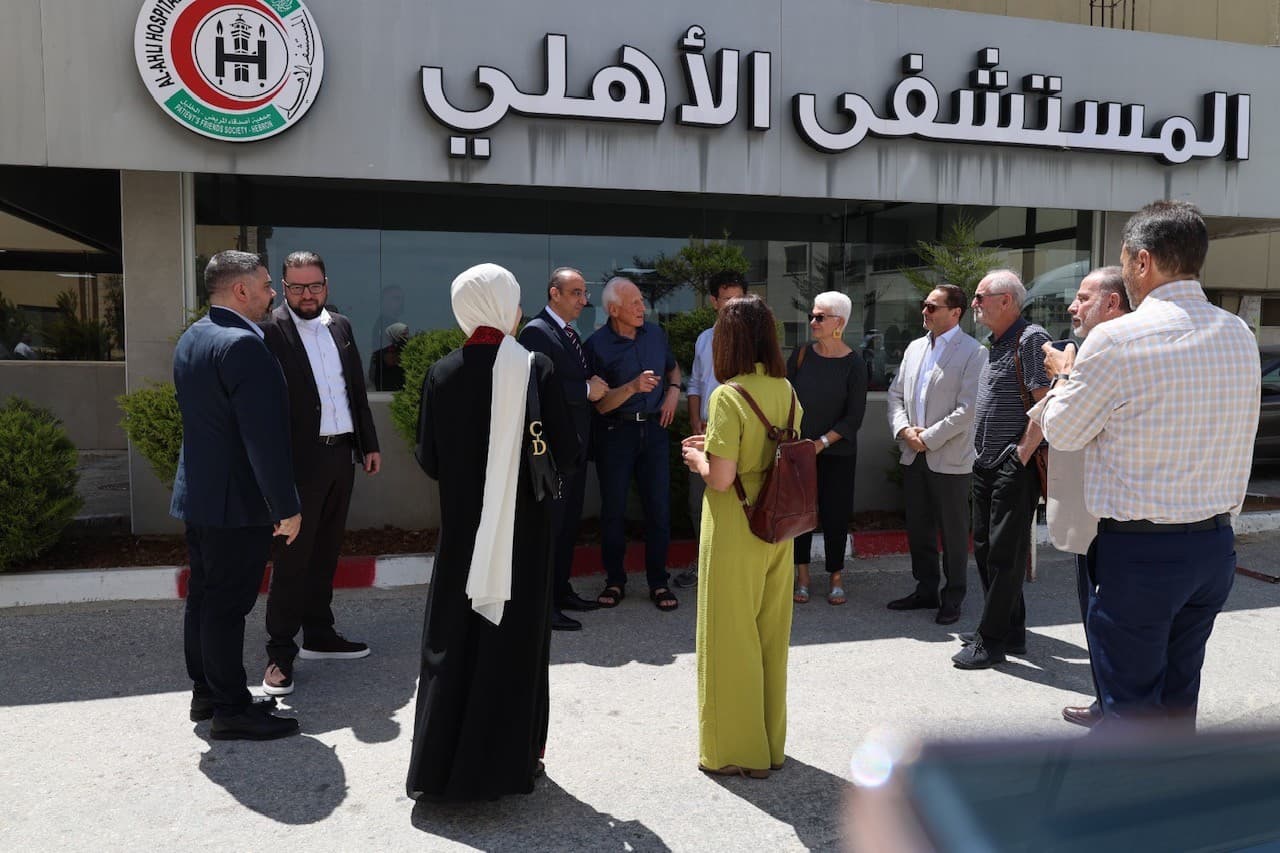
But Israel’s closest allies in Washington and European capitals view public advocacy organisations as essential for democracy. “We firmly believe that civil society should have the opportunity and space to operate and raise resources around the world,” state department spokesman Matthew Miller said last week.

The bill, proposed by Likud MK Ariel Kallner, punishes organisations that receive money from foreign governments, which are mostly left-wing, but not those that receive private foreign funding, more typically right-wing.

“The bottom line is that the Israeli government wants to cripple organisations that challenge its policy in the occupied territory. ”

Yehuda Shaul, Breaking the Silence

Kallner’s explanatory notes say foreign government money has been used “to flood the courts with legal processes with political characteristics.”

The foreign government money “attempts to change the policy of the government and local authorities. It constitutes harm to the basic characteristics of Israel as an independent state and harm to the sovereignty of its citizens.”

With the dramatic decline of left-wing political parties, the rights groups are perhaps the last bastion of left-wing humanism in Israel. They scrutinise every aspect of Israel’s authoritarian regime in the West Bank, ranging from land theft and illegal settlement activity to the open fire practices of the army to home demolitions.

“The main battle the human rights organisations are waging is against Jewish supremacism,” says Jessica Montell, director of East Jerusalem-based HaMoked, which is one of the most active groups in working the court system to combat abuses and infringements. “Settlers get preferential treatment, resources are used for settlers, not the Palestinians, Palestinians in Israel are discriminated against. The government is going after these organisations because they want to continue that [supremacist]agenda unhindered.”

Montell says the targeting of the human rights groups and the Netanyahu government’s controversial bid to weaken Israel’s judiciary are complementary and that both aim to enable “annexation and entrenching the occupation.”

“They don’t want criticism of their discriminatory, racist, annexationist policies,” she said.

Montell predicts that the government might now ratchet up its efforts to neuter NGOs in piecemeal fashion. She notes that legislation has already been tabled that would outlaw filming of soldiers in the West Bank and separately, criminalising the provision of information to the International Criminal Court.

HaMoked gets 65 per cent of its budget from foreign governments, including Germany and France, two of the European countries that along with the US strongly pressured Israel not to advance the bill.

B’tselem, Israel’s best known human rights organisation, is also mostly funded by foreign governments, including Denmark, the Netherlands and Switzerland. Its director, Hagai Elad, expects it and others to continue to come under pressure by the government, despite the backward step. There have been previous legislative efforts to harm funding, most of public opinion is against the rights groups, and Israel’s motives to undermine them remain the same, Elad says.

“Israel is used to impunity and it is concerned that with the professional work of human rights groups that impunity might erode. Then it could be held accountable for war crimes since it has no intention of stopping its behaviour.

“This is a strategic goal of the government. It can’t argue on the facts, so it tries to silence the messenger,” Elad said, adding that the group, which has three Palestinian field workers in the Gaza Strip and eight in the West Bank and East Jerusalem, will not be deterred or silenced.

Elad says that during the past year B’tselem’s actions included writing to the International Criminal Court prosecutor in the Hague that Palestinian communities in Masafer Yatta in the southern West Bank, are in danger of the war crime of forcible transfer, showing that settler violence is actually state violence, and “playing a leading role in framing the reality here as one of apartheid.” Israel vehemently rejects that it engages in apartheid, which is a crime against humanity under international law.

Lord, the right-wing columnist, terms groups that make the apartheid charge “engines of hatred”.

“A large part of the antisemitism in Europe and the US and also in England is because of the activities of extreme Left organisations that present Israel as an apartheid state or as severely oppressing Arabs and homosexuals or that it is a country headed to dictatorship. They give legitimisation to the most anti-Israel organisations in Western countries.”

Referring to Israel’s policy of withholding tax revenues it collects on behalf of the Palestinian Authority because the money could be used as stipends for families of those who attack Israeli targets, Lord said: “Sometimes we try to prevent money going from the PA to terrorists’ families. These groups don’t pull the trigger, but they create the justification for terrorism against Israel.”

Yehuda Shaul, a founder of the anti-occupation veterans group Breaking the Silence and now co-director of Ofek, the Israel Center for Public Affairs, warns: “The bottom line is that the Israeli government wants to cripple organisations that challenge its policy in the occupied territory. The only question is whether the international community will allow it.

“The broader picture is that this is part of a greater move to delegitimise civil society,” he adds. “The way the bill is written now the net is cast very wide. It will also include women, shared society and LGBTQ groups.”

Palestinian activist Issa Amr, who heads a group opposing the expansion of the settler presence in Hebron, is worried for the future of Breaking the Silence, with which he partners in human rights work in the biblical city.

 “They want to shut off any voice telling the international community what is going on and they don’t want the Israeli public to know what is going on,” he said.

“The Israeli right-wing managed to destroy the Israeli peace partner and now they are working to destroy the Israeli human rights partner,” Amr said. “For sure this will affect my work. Everything we do on the ground we do together with Breaking the Silence.”

Image: A B'tselem campaign to support residents of the East Jerusalem suburb of Batan al-Hawa, whom it says are facing expulsion and police abuse.

RELATED STORIES

Why Netanyahu has put a halt to a handful of radical coalition measures – for now (Time of Israel)

A slew of contentious bills and a draft government resolution were all shelved, at least temporarily, on Sunday. Is Netanyahu’s desire for a White House invite the driving force?

Amid outcry, Israeli committee postpones discussing bill to ban Palestinian flags in universities (Haaretz)
The proposal aims to prohibit “support for terrorism,” which includes “waving the flag of an enemy state, terrorist organisation or of the Palestinian Authority,” and faced backlash from Israel's Attorney-General and university chiefs

Israel's Attorney-General opposes proposal for nation-state law (Haaretz)
Arab officials voiced concern over the proposal, fearing it would enshrine Jewish supremacy into state policy, while the ultra-Orthodox worried it would give IDF soldiers preference over those who haven't served.

Israel’s liberal cities vow to keep homophobic lawmaker’s curricula out of their schools (Haaretz)
Municipalities say they will “disconnect” from any state curricula that run contrary to their values, as the cabinet votes to give extremist Noam party head Avi Maoz a key role in Israel’s education system

You might also like
  • The leadership a wounded society needs
    Esther Takac
  • Yiddish poetry finds new audience through Bashevis Singers
    Miriam Hechtman
  • Fauda and the illusion of vengeance
    Ittay Flescher
logomark.67a07ee3
We believe in the free flow of information

Republish our articles for free, online or in print, by using our Creative Commons licence

You might also like

    ISRAEL-LGBTQ-PRIDE-PARADE-PALESTINIAN-CONFLICT-HOSTAGES
    NewsIsrael

    LGBT asylum seekers caught between Palestinian violence and Israeli bureaucracy

    Jarod Rhine-Davis
    Rozana Beit Oula
    PeacebuildingOpinionIsrael

    Peacebuilding through the eyes of a sceptic

    Ron Finkel
    Knesset divided
    Israel Votes 2026ExplainerIsrael

    Israel election explainer: the main parties

    Shahar Burla 2

About the author

Ben Lynfield

Ben Lynfield

Ben Lynfield covered Israeli and Palestinian politics for The Independent and served as Middle Eastern affairs correspondent at The Jerusalem Post. He writes for publications in the region and has contributed to the Christian Science Monitor, Foreign Policy and the New Statesman.

More from the author

FeatureIsrael

Fear of Netanyahu victory may drive big surge in Palestinian voter turnout

NewsIsrael

Abuse by IDF soldiers humiliates Muslim Palestinians

OpinionIsrael

Qusra siege exposes shared agenda of IDF and settler extremists

AnalysisIsrael

IDF ordered to evict West Bank camp in election show of strength