Everything you need to know about President Herzog’s visit to Australia
President Isaac Herzog is variously seen as a ceremonial head of state offering unity after Bondi, and a controversial representative of a problematic Israel.
Shahar Burla
President of Israel Isaac Herzog (Antonio Masiello/Getty Images)
Published: 3 February 2026
Last updated: 5 February 2026
Israeli President Isaac Herzog’s will arrive in Australia on Sunday, on an official visit initiated by the Federal Government as an act of solidarity with Australia’s Jewish community following the Bondi terror attack.
The visit is strongly supported by federal and state leaders and Jewish community leadership, who argue it provides comfort and acknowledges the validity of the community's deep connection to Israel. But it has drawn criticism from anti-Israel activists and some politicians, and protests are expected.
At the centre of the controversy are competing views of Herzog’s role: as a largely ceremonial head of state representing national unity, and as a senior Israeli figure whose statements during the Gaza war have attracted international scrutiny.
What does the visit mean for Australian Jews?
The Zionist Federation of Australia and Executive Council of Australian Jewry are leading an enthusiastic welcome from many Australian Jews, who see the visit as a sign of solidarity and an acknowledgement of the community after Bondi.
Writing for the ABC, ZFA president Jeremy Leibler said the community was “honoured to welcome President Herzog at a moment of deep significance”, describing the visit as an affirmation of the bonds between Australia and Israel. Responding to protesters, Leibler argues the visit is “not a threat to social cohesion, but a measure of our commitment to it” and warns that treating Jewish connections to Israel as uniquely illegitimate can fuel antisemitism.
New Israel Fund Australia noted the conflicting emotions for some Australian Jews. It said the visit comes amid heightened grief and anxiety following the Bondi attack and a global rise in antisemitism, but also deep concern over Gaza’s humanitarian toll, violence in the West Bank and democratic backsliding in Israel. NIF stressed that many Australian Jews feel a strong connection to Israel while condemning rhetoric, including statements made after 7 October, that appear to assign collective blame to Palestinian civilians.
The Jewish Independent has several articles platforming the mixed responses to the visit from within the Australian Jewish community.
Politics academic and critic of Israel Professor Dennis Altman considers the visit potentially useful for a very different reason. He hopes President Herzog might learn from Australia's evolving place for Indigenous people and bring back lessons for a fairer Israel.
How are Israel critics responding?
Herzog’s visit has prompted a polarised response in Australia, drawing criticism from parts of the political left, legal advocacy groups and civil society. Protests opposing the visit have already taken place in Sydney, Melbourne and Perth, with organisers promising further demonstrations unless the invitation is withdrawn.
Former Human Rights Commissioner Chris Sidoti is one of the loudest voices, accusing Herzog of inciting genocide and calling on the Government to cancel the visit.
The Labor Friends of Palestine group has urged Home Affairs Minister Tony Burke to refuse Herzog a visa on character grounds, arguing the visit undermines commitments to social cohesion. Independent MP Sophie Scamps described Herzog as a “divisive figure”, warning the visit risks deepening tensions at a sensitive moment.
Several activist and legal groups have called on the Australian Federal Police to investigate Herzog for alleged incitement related to the Gaza war.
A legal complaint to have Herzog arrested or barred from entering Australia has been lodged by the Jewish Council of Australia, the Australian National Imams Council (ANIC), and the Hind Rajab Foundation (HRF), a group dedicated to pursuing legal action against those responsible for violence against Palestinians.
Is Herzog implicated in targeting civilians in Gaza?
The International Criminal Court has issued arrest warrants against the Prime Minister Benjamin Netanyahu and Former Defence Minister Yoav Gallant, alleging of war crimes and crimes against humanity.
There is no accusation against Herzog, who as a sitting head of state and apolitical figure has immunity.
Herzog has rejected the allegation, saying his remarks were taken out of context and pointing to statements affirming Israel’s obligation to international law and the protection of civilians. His defenders point to the full context of his remarks (transcript here), during which a journalist asked if his comment meant he held the citizens of Gaza responsible for not removing Hamas and therefore, by implication, that they were legitimate targets, and he clarified that he did not, emphasising that all operations would be reviewed for compliance with international law.
How is the Australian government responding?
Prime Minister Anthony Albanese has firmly defended the government’s decision to invite Herzog, while urging protesters to exercise restraint and emphasising the visit’s commemorative focus.
Albanese said Australians have a democratic right to protest, but stressed that Herzog’s trip is centred on engaging with a grieving Jewish community following the Bondi Junction attack. “President Herzog is coming particularly to engage with members of the Jewish community who are grieving the loss of 15 innocent lives,” he said. “That is the particular focus of this visit.”
He also warned against importing overseas conflicts into Australia’s domestic space, saying Australia is not in a position to resolve Middle East conflicts and that Australians do not want those divisions replicated locally. Albanese called on the public to recognise the “solemn nature” of Herzog’s engagement with the Bondi community in their response to the visit.
NSW Premier Chris Minns backed the Prime Minister’s stance, warning that while protest is lawful, demonstrators would not be given “free run” of the state. Minns said authorities would take whatever steps were necessary to protect Herzog and ensure public safety.
What’s planned for the visit?
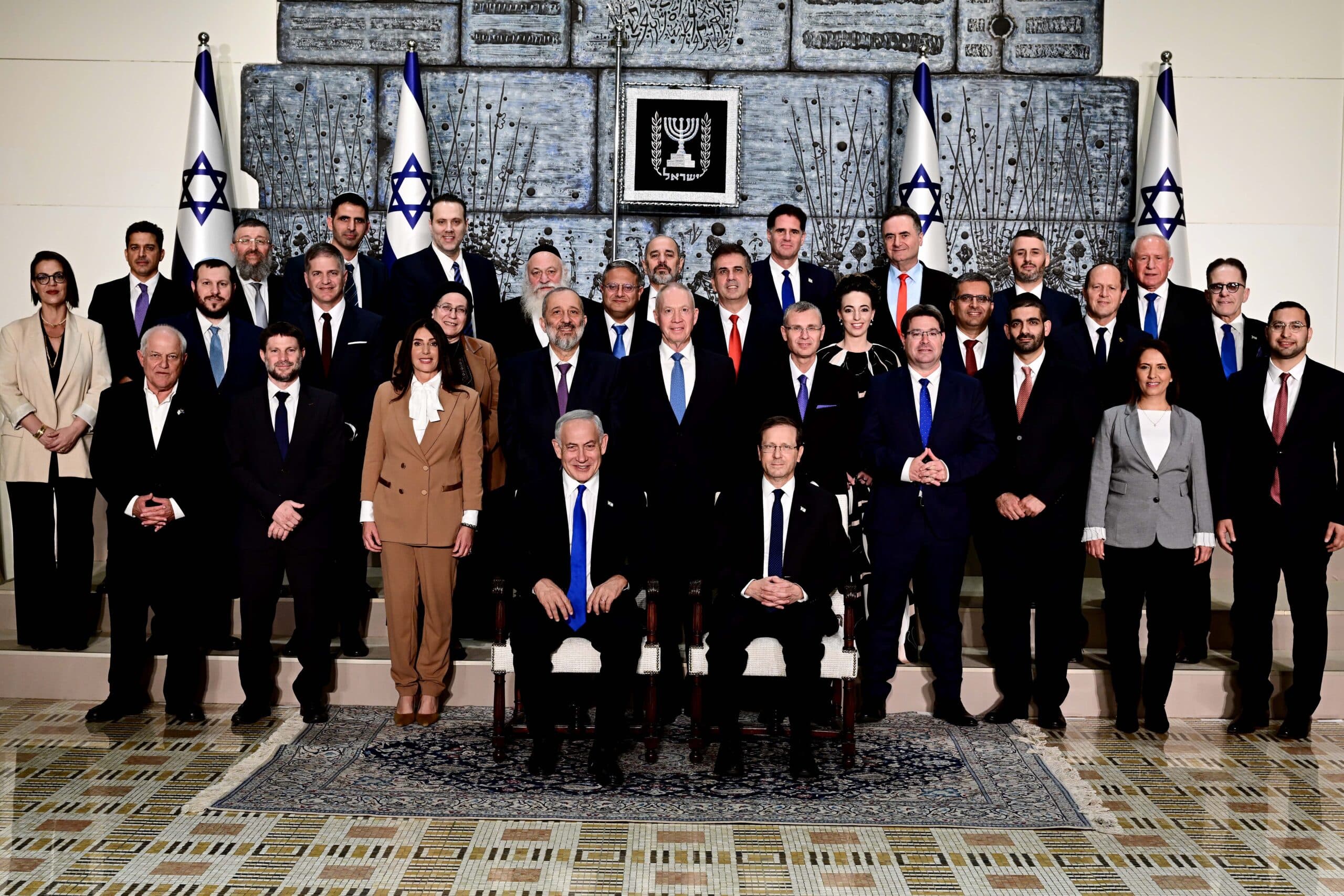
President Isaac Herzog is scheduled to visit Australia from Sunday 8 February to Thursday 12 February 2026, following an official invitation from the Governor-General, the Prime Minister and the Australian Jewish community. The visit comes in the wake of the deadly attack at a Jewish community Chanukah event at Bondi Beach and is framed primarily as an act of solidarity.
Herzog will be accompanied by a delegation from Israel’s national institutions, including the chair of the World Zionist Organization, Yaakov Hagoel, and the chair of the Jewish Agency, Doron Almog. During the visit, the President is expected to meet with bereaved families of the Bondi victims, as well as survivors and their relatives.
The program also includes official meetings with senior Australian leaders, including the Governor-General and the Prime Minister, alongside discussions with political figures across the spectrum. Herzog is expected to conduct media interviews during his stay.
In parallel, the Zionist Federation of Australia has announced community gatherings with Herzog in Sydney, Melbourne and Perth. ZFA president Jeremy Leibler said the visit offers an opportunity for the community to gather “in unity, resilience and shared purpose” at a moment of deep significance.
Who is President Isaac “Bougie” Herzog?
Isaac Herzog, widely known by his nickname “Bougie”, is Israel’s 11th president and one of its most recognisable political figures. He assumed the presidency in 2021 after more than three decades in public life spanning party politics, government and national institutions.
Born in 1960, Herzog served as a member of the Knesset for 15 years and held several senior ministerial portfolios, including welfare, housing and construction, tourism and diaspora affairs. From 2013 to 2018 he led Israel’s Labor Party and headed the Zionist Camp alliance, serving as leader of the opposition during a period of intense political polarisation. Earlier, he worked as a close adviser to Labor leaders Yitzhak Rabin and Shimon Peres, and later as cabinet secretary under Prime Minister Ehud Barak.
Herzog comes from one of Israel’s most prominent public families. He is the son of Chaim Herzog, Israel’s sixth president, who served from 1983 to 1993 and visited Australia in 1986. His grandfather, Yitzhak Isaac Halevi Herzog, was Israel’s first Ashkenazi chief rabbi and played a formative role during the establishment of the state. His brother, Michael Herzog, served as Israel’s ambassador to the United States from 2021 to 2025.
Herzog was elected president by an overwhelming Knesset majority of 87 votes, reinforcing his image at the time as a consensus figure above partisan politics.
Why has Herzog become an unpopular president?
Despite the traditionally unifying nature of Israel’s presidency, Herzog’s public standing has weakened significantly during the current political crisis and war. This week, he broke with long-standing convention by not attending the Knesset’s anniversary celebrations on Tu B’Shvat, a move widely interpreted as a muted protest against the governing coalition’s boycott of Supreme Court President Yitzhak Amit.
The decision was notable because Herzog has generally avoided public confrontation with the government. During the judicial overhaul, tensions between the executive and the courts, disputes involving the Shin Bet head, and repeated controversies surrounding Prime Minister Benjamin Netanyahu and his advisers, Herzog largely confined himself to behind-the-scenes mediation and carefully worded appeals for unity.
The contrast with his predecessor, Reuven Rivlin, has been frequently noted. Rivlin openly challenged the government over the 2018 Nation-State Law, warning in a rare real-time Knesset intervention that it could harm Israeli democracy and Jewish unity worldwide. Although he ultimately signed the law, he did so in Hebrew and Arabic as a symbolic act of protest.
Herzog’s restraint has left him squeezed from both sides. Many opposition supporters argue he failed to act decisively in defence of democratic institutions or to publicly pressure the government over the fate of Israeli hostages. On the right, even limited departures from strict neutrality have prompted fierce criticism.
A Channel 12 poll published in July found 57 per cent of Israelis dissatisfied with Herzog’s performance, compared with 30 per cent satisfied, unusually low figures for a largely ceremonial head of state, particularly during wartime.
DEBATE: Is President Herzog's visit good for Australian Jews?
About the author
Dr Shahar Burla is a Sydney-based researcher, lecturer and Contributing Editor of TJI. Shahar holds a Master’s degree in political science from Hebrew University and a PhD in political science from Bar-Ilan University. He is the author of Political Imagination in the Diaspora: The Construction of a Pro-Israeli Narrative (2013) and co-editor of Australia and Israel: A Diasporic, Cultural and Political Relationship (2015).