Published: 10 March 2023
Last updated: 5 March 2024
Army veterans, rights groups and Palestinians say the protection and blind-eye support offered by the IDF has enabled the spread of settler violence against West Bank towns.
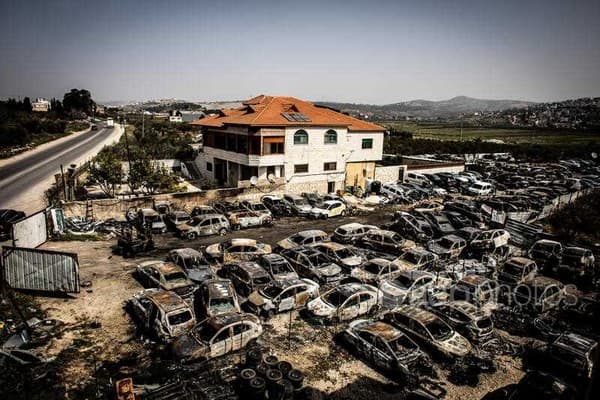
The recent settler rampages in the West Bank villages of Huwara, Burin and Zaatara, with their images of flames of houses rising up to the night-time sky, elicited shock, dismay and denunciations abroad and from many Israelis.
But somewhat grotesquely, settlers were back in Huwara dancing in the street with IDF soldiers Monday in honour of the Purim holiday. Palestinians that day in Huwara again came under violent settler attack in which four people were injured.
Settlers also returned to Burin, pelting a house with stones as soldiers nearby did nothing to stop them, as was documented in a video. It was hard to escape the conclusion that despite tough pronouncements and vows to investigate, the IDF has learned little from the mass assault.
Although the scale and support for the onslaught from coalition figures like Bezalel Smotrich are worrying new developments, the underlying problem of settler violence is not new at all.
Indeed, the outburst can be seen as a continuation of the trend in recent years of increasing attacks in number and severity. The causes are much deeper than the killing of the two brothers from Har Bracha, Hillel and Yagel Yaniv, in Huwara hours before the eruption. The shooting of the brothers itself came after the IDF killed 11 Palestinians during a raid in Nablus.
While IDF officials say that troops are charged with upholding the law for both settlers and Palestinians, in the eyes of Palestinian civilians and Israeli rights groups the settlers and army are on the same side, serving the same function: coercing Palestinians in order to make them leave their lands.
"The soldiers protect the settlers. They are like two fingers on the same hand."
Lafee Shalaby, mayor of Turmus Ayya