Aa
  • Read, Watch, Listen
  • TJI Series
  • Community Action
  • Events
  • Zedi
Follow us and continue the conversation
  • LinkedIn
  • Instagram
  • FaceBook
  • X
  • YouTube
Test yourself with the TJI Quiz!

Adjust size of text

Aa

Follow us and continue the conversation

  • LinkedIn
  • Instagram
  • FaceBook
  • X
  • YouTube

Your saved articles

You haven't saved any articles

What are you looking for?

Original reporting, insightful analysis and diverse views, delivered straight to your inbox

  • LinkedIn
  • Instagram
  • FaceBook
  • X
  • YouTube
Your support fuels our mission to inform, entertain and inspire.

The Jewish Independent is bound by the Standards of Practice of the Australian Press Council. If you believe the Standards may have been breached, you may approach The Jewish Independent or make a complaint to the Australian Press Council in writing at www.presscouncil.org.au. The Council may also be contacted on 1800 025 712.

  • Our Story
  • Contact us
  • Our Team
  • Support us
  • Guidelines
  • Pitch your idea
  • Republishing us
  • Community Action
  • Our Awards
  • LinkedIn
  • Instagram
  • FaceBook
  • X
  • YouTube
Aboriginal FlagTorres Strait Islanders Flag

The Jewish Independent acknowledges Aboriginal and Torres Strait Islander peoples as the Traditional Owners and Custodians of Country throughout Australia. We pay our respects to Elders past and present, and strive to honour their rich history of storytelling in our work and mission.

© The Jewish Independent 2026All Rights Reserved
Website design and development by Your Creative, MelbourneTerms & ConditionsPrivacy Policy
HomeRead, Watch, ListenIsrael
FeatureIsrael

Archaeology used as a weapon in West Bank land grabs

Palestinian towns like Sebastia are under threat from archaeology projects focused on Jewish heritage and settler enterprises
Ben Lynfield
Print this
star david sebastia

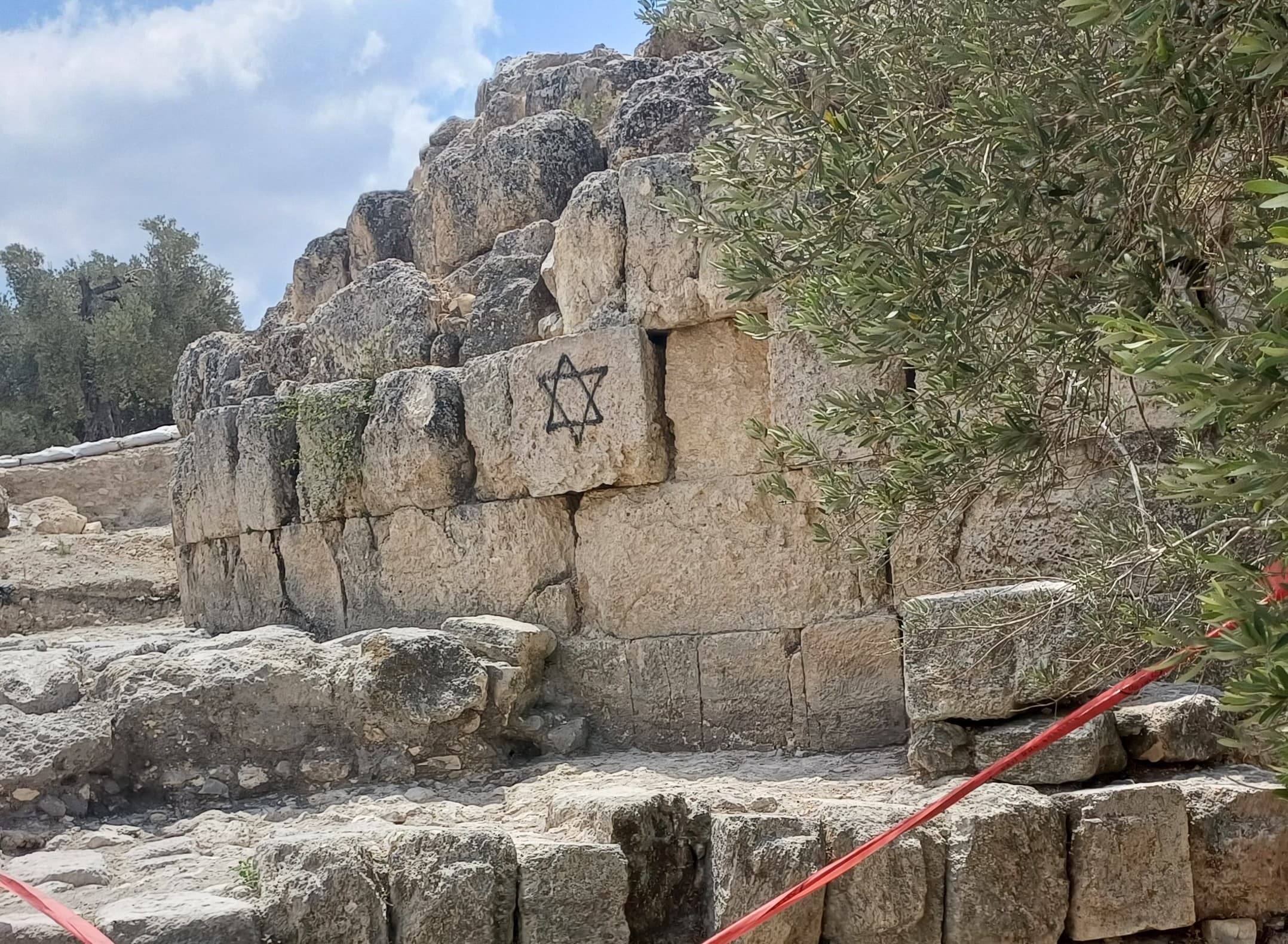
A Star of David painted onto an ancient wall at the disputed Sebastia archeological site (Ben Lynfield)

Published: 9 July 2026

Last updated: 9 July 2026

Sebastia, West Bank

In a different part of the world, a town coming up for a vote on becoming a World Heritage site might be upbeat with anticipation and buzzing with tourists.

But Sebastia, in the northern part of the West Bank, is experiencing the exact opposite as it moves towards UNESCO’s fateful decision on the state of Palestine’s application to recognise it as being of “outstanding universal value”. The vote will be held at the organisation’s July 20-29 conference in Korea.

It could be the town’s last stand. Sebastia’s shops are shuttered; fading signs point to restaurants that no longer exist. Its residents are depressed and close to destitute, victims of the economic collapse after October 7, 2023. The only outsiders to come these days are IDF soldiers and settlers.

The death warrant for the Palestinian town’s hope of economic revival from tourism is massive Israeli land expropriation for development of a settler-run national park announced in February. Municipality officials say the park would separate Sebastia from the antiquities on its doorstep and destroy access to most of its olive trees.

The park is the sixth largest Israeli expropriation in the West Bank since 1967, further fragmenting the area earmarked by much of the international community as the heartland of a future Palestinian state.

“People are in shock. This property supported a third of the town. Our people always wait for the olive harvest,” a resident told The Jewish Independent. “Israelis can come and visit, no problem,” he added.” But this is our land. We have all the documents to prove it, documents from before Israel existed.”
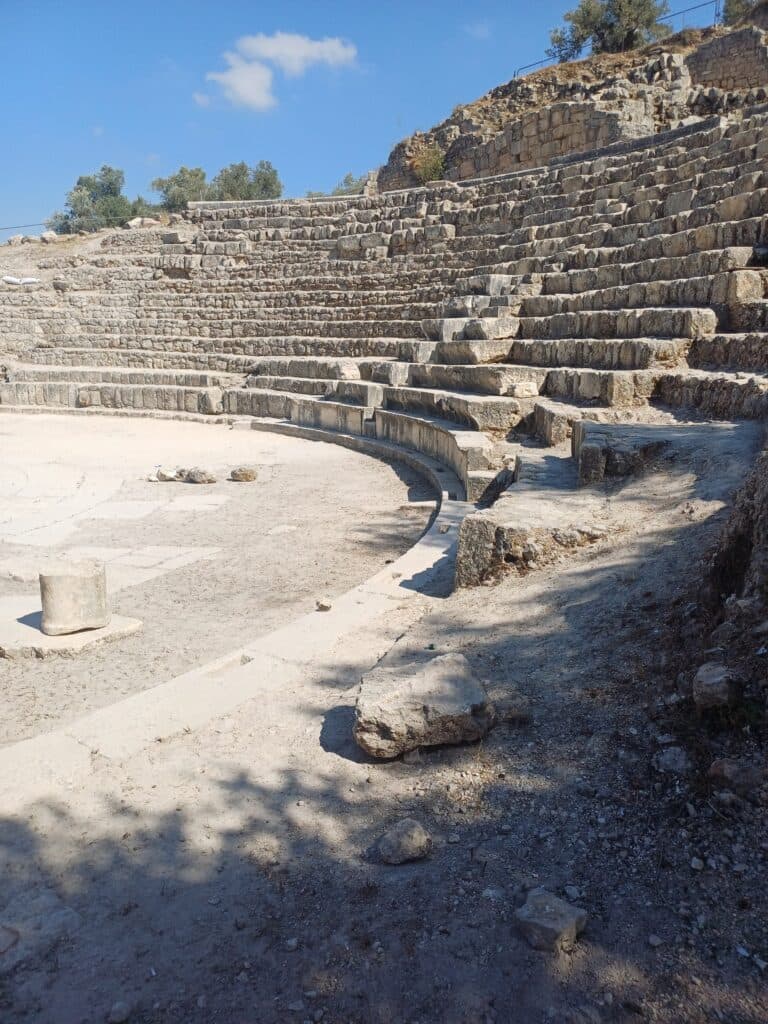
A Roman amphitheatre in the Sebastia archaeological region

Archaeology for land grabs

Sebastia is just one example of the intensifying use of archaeology as a tool for settlement expansion and Palestinian dispossession across the West Bank.

“For sure, now we are seeing the largest scale effort ever to use archaeology for annexation,” says Alon Arad, director of Emek Shaveh, an Israeli NGO working to prevent the politicisation of archaeology.

The momentum stems from plans made when the coalition took power in 2022, now coming to fruition, and a sense among right-wing parties that promoting Jewish heritage is a way to impress voters for upcoming elections, he says.

In recent months, Israeli authorities have ordered expropriations well beyond the antiquities areas at Herodion, near Bethlehem and Nebi Samwil, near Jerusalem, as well as in Sebastia.

New funding for protection, upkeep and development of sites was approved in March when the Israeli cabinet allocated 250 million shekels ($A119 million) to strengthen “the connection of the Israeli public to the historic heritage sites of the Jewish people in the land held by its forefathers” – the phrase used by Benjamin Netanyahu on social media when he announced the funding.

Critics say these archaeological projects poach land from Palestinian towns and villages, altering the identity of locales to accentuate a Jewish tie, and building “touristic settlements” that are run by settlers and spread settler narratives, critics say.

Two digs are already underway in Sebastia, however, the civil administration, an arm of the military that oversees archaeology in the West Bank, among other things, did not respond to written queries about them.

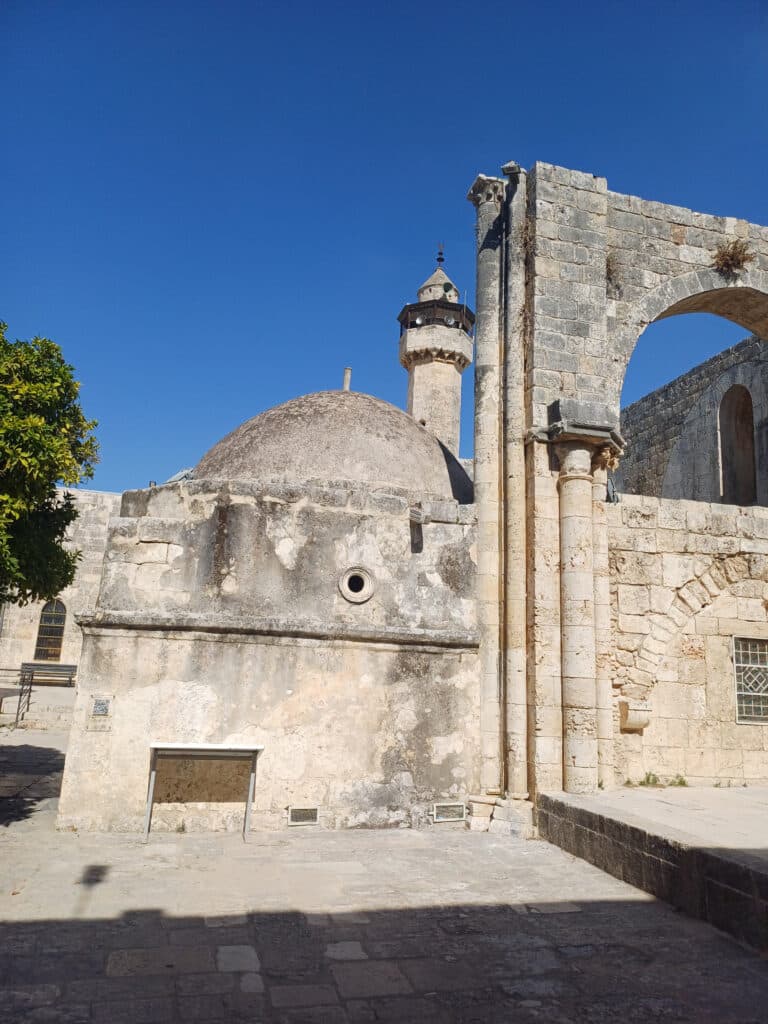
A mosque that was formerly a church in Sebastia

Vandalism and violence

Settler leaders argue that upgrading the sites is necessary to protect them from what they allege is pervasive looting and damage by Palestinians, including at Sebastia.

Palestinians say they do their best to protect sites, but that Israel is responsible for security at sites located in areas it controls according to self-rule agreements and Israel does not allow Palestinian Authority police to operate there.

Emek Shaveh says that Israeli allegations of deliberate and widespread damage by the Palestinian Authority to antiquities are used as a pretext for seizing Palestinian sites, with settler violence aggravating the pressure.

Arad cites a February “pogrom” that included bulldozing homes of Palestinians living at the Hasmonean Palaces site near Jericho. While Palestinians still live there in the ruins of their homes, the site is now in the process of becoming a settler-run national park.

Dror Etkes, a West Bank land policy expert who heads the left-wing Kerem Navot NGO, says the settlers have a very pragmatic motive in Sebastia: expansion in an area that has traditionally been relatively thin of settlers. He foresees the national park becoming a “regional centre for a bloc in the area” including established settlements and outposts.

The cost for Palestinians

In Sebastia, whose population numbers about 4,000, the sense among residents is that the expropriation’s fallout for an estimated 6,000 olive trees will hurt everyone, not just landowners. Ayman Shaer, 50, a father of three who is a chicken butcher, said, “I have a very bad feeling. People are going to lose their economic sustenance. It’s going to harm me. When farmers lose income, they can’t buy chicken.”

Shaer became a butcher after tourism collapsed. Previously, he had given tourists rides on a camel. He frets that the town of Sebastia has already lost its tie to the antiquities, which are just inside area C, territory under Israeli military and civil control according to self-rule agreements.

 “You can’t get there by car because groups of settlers or Israelis with military vehicles will stop you,” he says. “They burn the land on the outskirts of the village and they threaten people if they come to their land.”

Mayor Mohammed Azem is pinning his hopes on the international community. He helped lead a tour by diplomats on June 29 to muster support for the UNESCO bid. The tour route had to be modified because Israeli soldiers and settlers took over an area near the antiquities, deputy mayor Nizar Kayed said. The IDF spokesman’s office did not respond to a query about the incident despite being sent footage of it.

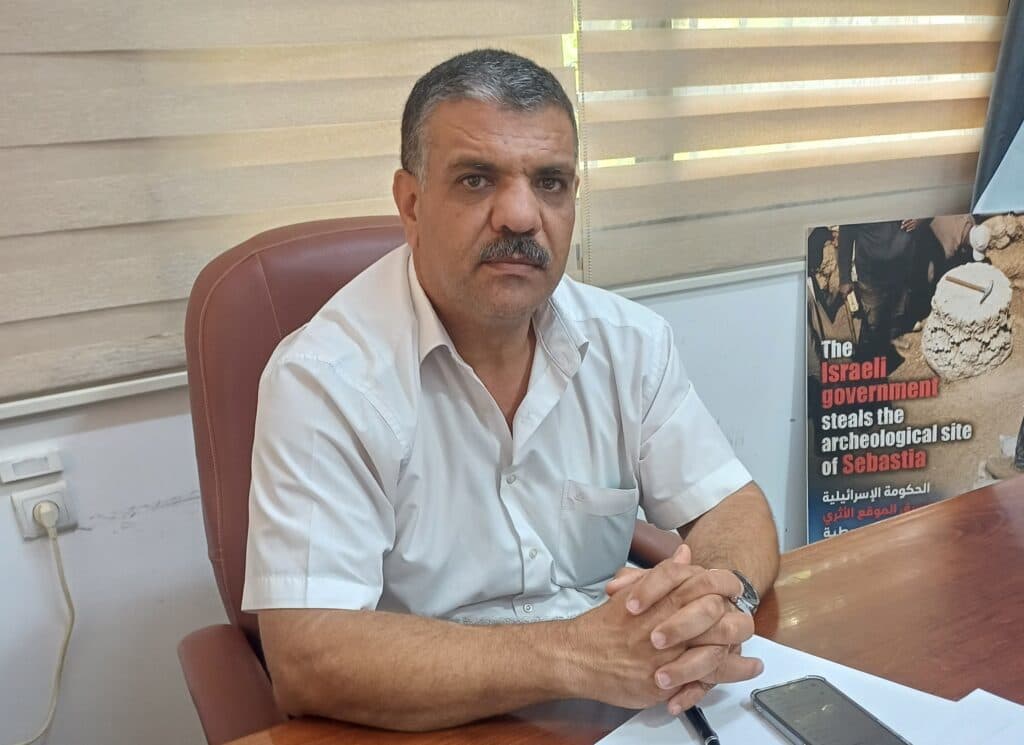
Speaking in his office adorned with portraits of Mahmoud Abbas and Yasser Arafat, Azem said, “I wouldn’t say we are in a state of emergency, but there’s fear among people over the future, the future is unclear and unknown. If the international community doesn’t intervene against the Israelisation and Judaisation by the settlers, then the situation will be more difficult and dangerous.”

Sebastia Mayor Mohammed Azem

Debate over archaeological significance

Widely considered the site of Israelite King Omri’s capital in the ninth century BC, Sebastia was later captured by the Assyrians, Persians, and Greeks and made a Roman colony under Herod the Great. The Byzantines, Crusaders, Ottomans, British and Jordanians were here.

A compound with a crusader cathedral turned mosque is considered by some to be the burial place of John the Baptist, although a man heading into mosque prayers strenuously denied this. Inside, a large display of the 99 names of Allah adorns a wall near Gothic-style arches.

Samaria Regional Council spokesperson Esther Aloush describes the site as “one of the most important heritage sites of the Jewish people”.

 “Ancient Samaria National Park has the only remnant from the ancient kingdom of Israel, which is the palace of the kings of Israel that can be found there,” she told The Jewish Independent.

On the other hand, Azem flatly rejects any Israeli or Jewish historical tie to the Sebastia antiquities. “An Israeli connection to Sebastia has never been proven. Even though there were Jews in Palestine, it’s like a Muslim, Palestinian or Arab in America. If he goes to work in America, it doesn’t mean he owns the land,” he said.

Emek Shaveh stresses that any salvage excavations that do not benefit the occupied population, namely the Palestinians, are a violation of international law.

“If Israel is using the site to prove biblical stories or cast into the site Jewish heritage, while erasing any other heritage, that is unethical and illegal,” said Arad.

You might also like
  • Western ‘Palestinianism’ colonises everything – and hurts Palestinians
    Andres Spokoiny
  • Israel is cementing its control over the West Bank and East Jerusalem while the world is distracted
    Martin Kear
  • Abuse by IDF soldiers humiliates Muslim Palestinians
    Ben Lynfield
logomark.67a07ee3
We believe in the free flow of information

Republish our articles for free, online or in print, by using our Creative Commons licence

You might also like

    fly to vote
    Israel Votes 2026OpinionIsrael

    Flying to vote is an act of love, not impudence

    Shahar Burla
    altalena
    Israel Votes 2026OpinionIsrael

    The Altalena should be a warning, not a political weapon

    Shahar Burla
    Segalovitz Abbas
    Israel Votes 2026AnalysisIsrael

    Segalovitz decision to join Arab party is a paradigm change for Israel

    Eetta Prince-Gibson

About the author

Ben Lynfield

Ben Lynfield

Ben Lynfield covered Israeli and Palestinian politics for The Independent and served as Middle Eastern affairs correspondent at The Jerusalem Post. He writes for publications in the region and has contributed to the Christian Science Monitor, Foreign Policy and the New Statesman.

More from the author

NewsIsrael

Abuse by IDF soldiers humiliates Muslim Palestinians

OpinionIsrael

Qusra siege exposes shared agenda of IDF and settler extremists

AnalysisIsrael

IDF ordered to evict West Bank camp in election show of strength

FeatureIsrael

Abuse of Palestinian detainees a ‘systemic issue’, say Israeli doctors

Comments

No comments on this article yet. Be the first to add your thoughts.