Published: 26 August 2024
Last updated: 26 August 2024
This story was originally published in the Forward. Click here to get the Forward's free email newsletters delivered to your inbox.
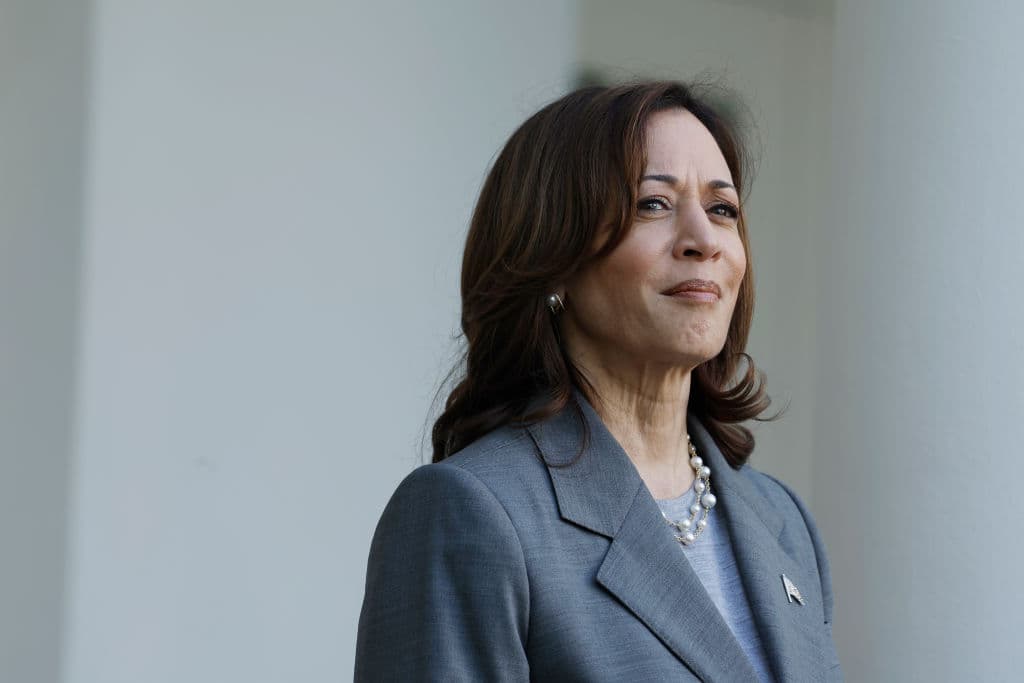
Vice President Kamala Harris, the Democratic Party’s nominee for president, has largely avoided policy discussions in her successful reframing of the election — so her strong statements on Israel at the Democratic National Convention are getting attention.
And if she’s to be believed, Harris is going to be the continuity candidate on the Middle East: Committed to continuing U.S. support of Israel, including through financial assistance for the military, but at loggerheads with Benjamin Netanyahu’s right-wing project of suppressing the Palestinians.
"Let me be clear, I will always stand up for Israel’s right to defend itself and I will always ensure Israel has the ability to defend itself," she said in a Thursday address, adding that Israelis should "never again" experience "unspeakable" attacks like those of Oct. 7. Jewish voters — and the American center that still supports Israel — should rest easy.
"At the same time, what has happened in Gaza in the past 10 months is devastating," she added. "The scale of suffering is heartbreaking." That’s a nod to the party’s progressive wing, who tend to view Israel in the context of a global struggle for the rights of indigenous peoples — the Palestinians, in their narrative — against oppressors and colonizers, which includes the Jewish return to Zion. (That stance conveniently ignores strong arguments that Jews are also indigenous to Israel.)
Harris is trying to have it both ways, which is fair in a tough election — but it’s also fair to wonder how much of her current stance is about American politics, and whether it would continue once elected. To be blunt, to win, she needs the support of both the Jewish community in Pennsylvania and the Muslims in Michigan — two battleground states which would, if somehow secured together, probably send her to the White House.
Since the pandering is so clear, one need not be overly cynical to question what kind of policies she’d actually implement as president.
The biggest clue on that front is what she said next: that the fighting in Gaza must end, so "Palestinian people can realize their right to dignity, security, freedom and self-determination." This is the heart of the matter. Because if Harris insists on this point, she’ll find herself in significant conflict with Israel.
The current Israeli prime minister has made it his life’s work to prevent the Palestinians from achieving statehood and independence — "self-determination" in the words of Harris.
The Netanyahu government is odious, and three-quarters of Israelis want it gone. Netanyahu is, currently, widely understood to be trying to prolong the ruinous Gaza war in order to cling to power. In a variety of ways, he is leading Israel to doom.
But his opposition to Palestinian statehood has considerable support in Israel, for a number of reasons. At a basic level, many Israelis reject the idea that the Palestinians are a separate people — distinct, let us say, from the Sunni Muslims of Lebanon a few miles to the north. They argue that many other peoples — for example, the more numerous and more distinctive Kurds — should be accommodated more urgently. And they have a reasonable point.
They also note that Palestinians have failed to build a functional state-in-waiting, as the Zionist movement did in the years leading up to independence in 1948. Their autonomy government, the West-Bank based Palestinian Authority, is cartoonishly corrupt and widely hated; they have repeatedly refused reasonable proposals on establishing a state, preferring to stick to maximalist demands; they have proven hapless before the violent, theocratic rejectionists of Hamas; and these rejectionists continue to enjoy shocking levels of popular support.
That last issue relates to the heart of the matter — security.
The West Bank, which is defined by the ceasefire lines of 1949 and has been occupied by Israel since 1967, surrounds Jerusalem on three sides, comes within 20 miles of Tel Aviv, and leaves Israel only 12 miles wide at its narrowest point. For Israel to pull out would require putting tremendous faith in the idea that Palestinians will not use the West Bank as a base to carry out further attacks.
It’s unlikely that faith will manifest. Israel’s unilateral pullout from the Gaza Strip in 2005 was a test case that the Palestinians failed miserably. Less than two years later, Hamas terrorists expelled the Palestinian Authority from the strip, took over and began the project of amassing weapons and indoctrinating the population with the hateful beliefs that led to the Oct. 7 massacre.
Polls suggest Israelis mostly oppose the incompetent, reckless and shameless Netanyahu government — but that does not mean they support repeating the Gaza experiment in the far more strategic West Bank. Recent polls suggest perhaps a third would agree to that at present in the context of a "two state-solution" — about half the level of support in the past — mainly because of widespread distrust of the Palestinians.
So if Harris intends as president to pressure Israel in this direction, she will face serious pushback not only from Netanyahu, but from much of the Israeli public — even many in the liberal, moderate, secular and modern wings of society. Moreover, she would risk strengthening Netanyahu, who would be able to portray himself as standing up to international pressure, a stance he’s used to his favor in the past.
This is not to say that eternal occupation — or worse, enhanced Jewish settlement — of the West Bank is a better idea. That would consign Jews to the status of a minority in the territory Israel controls. Not thinking through the consequences of such a change is the fundamental folly of the Israeli right.
But Israeli’s reasonable fears do need to be addressed. There are ways to do that, including by compelling the Palestinians to agree to total demilitarization and by deploying an international peacekeeping force in the Palestinian territories for a time after the end of this present war. Harris would do well to acknowledge the validity of Israelis’ concerns and think creatively in this direction.
Meanwhile, Donald Trump reacted to Harris’ statements exactly as one would expect, declaring in capital letters that "SHE HATES ISRAEL."
That’s a predictable response from Trump, who is a menace to the world in many ways, not least of which is his automatic support for would-be authoritarians like Netanyahu. Of course, to him, calling into question some Israeli priorities is tantamount to hating the country.
But his stance is not a greater favor to Israel than Harris’ — in fact, it’s the opposite. If reelected, he would bolster the Israeli right, which is dragging the country toward oblivion — a far more sure doom than that Israelis fear might result from the creation of a Palestinian state.>
This story was originally published on the Forward.



Comments1
Gumby27 August at 01:35 pm
is this an article about Camela Haris’s position on the Israel/Gaza Conflict? it seems more of an opinion piece by the writer. many judgemental comments by the writer about Israel’s leadership and uqualified statements on the views of the people in Israel. This publication claims to be independant but I dont see it in this article.