Aa
  • Read, Watch, Listen
  • TJI Series
  • Community Action
  • Events
  • Zedi
Follow us and continue the conversation
  • LinkedIn
  • Instagram
  • FaceBook
  • X
  • YouTube
Test yourself with the TJI Quiz!

Adjust size of text

Aa

Follow us and continue the conversation

  • LinkedIn
  • Instagram
  • FaceBook
  • X
  • YouTube

Your saved articles

You haven't saved any articles

What are you looking for?

Original reporting, insightful analysis and diverse views, delivered straight to your inbox

  • LinkedIn
  • Instagram
  • FaceBook
  • X
  • YouTube
Your support fuels our mission to inform, entertain and inspire.

The Jewish Independent is bound by the Standards of Practice of the Australian Press Council. If you believe the Standards may have been breached, you may approach The Jewish Independent or make a complaint to the Australian Press Council in writing at www.presscouncil.org.au. The Council may also be contacted on 1800 025 712.

  • Our Story
  • Contact us
  • Our Team
  • Support us
  • Guidelines
  • Pitch your idea
  • Republishing us
  • Community Action
  • Our Awards
  • LinkedIn
  • Instagram
  • FaceBook
  • X
  • YouTube
Aboriginal FlagTorres Strait Islanders Flag

The Jewish Independent acknowledges Aboriginal and Torres Strait Islander peoples as the Traditional Owners and Custodians of Country throughout Australia. We pay our respects to Elders past and present, and strive to honour their rich history of storytelling in our work and mission.

© The Jewish Independent 2026All Rights Reserved
Website design and development by Your Creative, MelbourneTerms & ConditionsPrivacy Policy
HomeRead, Watch, ListenArts & Culture
Israel Hamas WarReviewArts & CultureIsrael

Kidnapped: Raw, visceral memoir of an October 7 hostage

Eli Sharabi was held by Hamas for 491 days. His memoir conveys – like no other so far – the trauma and will to survive of those taken hostage in Gaza.
Nomi Kaltmann
Print this
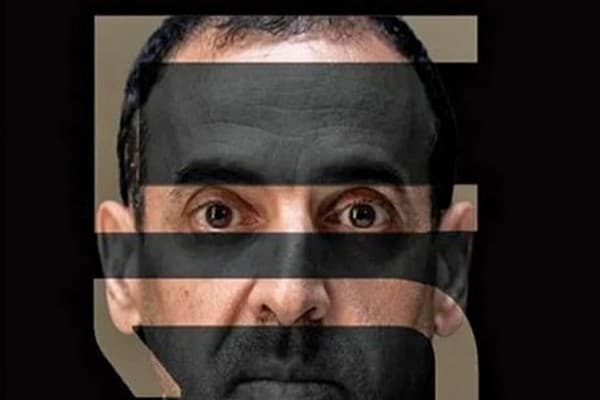
Cover of Eli Sharabi’s memoir Kidnapped

Cover of Eli Sharabi’s memoir Kidnapped, Hebrew edition (Image: supplied).

Published: 27 August 2025

Last updated: 27 August 2025

In years to come, when the events of 7 October 2023 are studied, it is likely that Eli Sharabi’s memoir, Chatuf (Hebrew for “kidnapped”), will be essential reading. Released in June, it is the first book written and published by a returned Israeli hostage and has become Israel’s fastest ever selling book.

A resident of Kibbutz Be’eri, Sharabi was taken hostage at the age of 51 and held in Gaza for 491 days. During his captivity, unknown to him, his wife Liane and teenage daughters, Noya and Yahel, were murdered by Hamas on October 7. His brother Yossi, another resident of Be’eri, was also kidnapped and killed in captivity. His body is still being held by Hamas.

Sharabi’s book, written in Hebrew, is due to be released in English on October 7 this year, on the second anniversary of the massacre. He will visit Australia next month for a speaking tour.

Although my Hebrew is decent, I don’t usually choose to read Hebrew books. I barely noticed Sharabi’s book was in a different language, the descriptions were so visceral, so soul-baring, that it was entirely engrossing. I wasn’t just reading Chatuf, I was in the tunnel with Sharabi. I could smell the earth, feel the fear and the desire to survive, despite the harsh conditions and the odds.

Chatuf is not an easy read. Chapter by chapter, in raw and straightforward language, Sharabi walks us through what it meant to be taken from his home, driven to Gaza, and held first with a Thai farmworker named Kon, then deep in the earth in Hamas’s tunnels for over a year. He endures abuse and extreme starvation, but maintains a fierce desire to survive.

The power of this memoir lies not only in what it recounts, but in how freshly and nakedly the trauma is conveyed. “I am afraid,” Sharabi writes, remembering the moment he is forced to descend into Gaza’s tunnel network for the first time. “This is all my nightmares, all my fears, all my imagination, everything is going into the tunnels with me, step by step on the ladder.” You feel the weight of every footfall. His fear is unvarnished and human.
The majority of Sharabi’s captivity was spent with three younger men, all of whom were kidnapped from the Nova music festival: Or Levy, Eliyah Cohen, and Alon Ohel. While Levy and Cohen were eventually released alongside Sharabi earlier this year, Ohel still remains in captivity in Gaza, more than 600 days and counting.

Decades older than these three other captives, Sharabi became a father figure to them, especially to Ohel. “Alon tells me all his dreams, and I tell him about my dreams,” he writes. “I understand that he is a young man, gentle and intelligent, who is still in trauma from what he endured [while being kidnapped]... I attempt to take him away from [this trauma]. Imploring him to tell me something good about his life.”

Through Sharabi’s writing, you feel his responsibility to provide support to these young hostages, despite all of them enduring unimaginable conditions.

In the tunnels of Hamas, comfort is rare and Sharabi makes the reader feel the uncertainty of his survival. In one harrowing passage, he describes the few days he spent with three other hostages, Hersh Goldberg-Polin, Ori Danino, and Almog Sarusi.

He writes of Goldberg-Polin’s enduring influence, asking each of them to consider what their "why" is for surviving the tunnels. “When you have your why, you can overcome any how,” Goldberg-Polin tells the group, quoting Viktor Frankl’s Man’s Search for Meaning. It’s a line that helps Sharabi survive and, after the execution of Goldberg-Polin and five other hostages by Hamas in a tunnel in Rafah in 2024, has since become a source of strength to his grieving family, and now, to anyone who reads this book.

"In another life, we could have been good friends. Apart from the fact that he's a terrorist, he's a calm and good-natured person."

Eli Sharabi

There are many moments in Chatuf where the reader feels that for Sharabi, survival itself is a form of resistance. The three hostages who shared a tunnel with Sharabi had all been taken from a roadside bomb shelter after fleeing the Nova festival. They spent hours discussing the story of another Israeli, someone they didn’t know, who had been on the same truck as them but chose to run and was killed by Hamas.

They wonder, was it better to choose death than endure captivity? Sharabi, always wise and always insightful, offers his answer to the three: “Do you understand that there is always a choice? Always, always there is a choice. Feel this choice and draw power from it.”

In this bleak, underground world, Sharabi writes movingly about moments of absurdity. He spends a chapter describing why he and the other hostages gave each of their many captors nicknames, from "the Nightingale" for his melodic call to prayer to "Smiley" for his ever-present grin.

When the four hostages move from their first tunnel to another one, a space even more rudimentary with no running water, no electricity, just raw earth, they find a single bottle of Fanta. They pass it between themselves and drink in silence.

“The taste of Fanta is heavenly,” Sharabi writes. “Not just because we were thirsty from the long journey [to the new tunnel] and our fears. Also, because it was something sweet... something sweet to drink underground, filled with fear and terror. Something sweet that reminded us of the outside, of home, and of simpler days.”

When one of the captors accuses them of drinking it, they all deny it, holding their breath. When no punishment comes, they quietly savour the small victory of getting away with it.

"We gaze at each other, and we begin to see... the extreme hunger, that is turning into a pressing need, and our fat which is gradually disappearing."

Eli Sharabi

Sharabi notes how the older Hamas captors, many of whom had once worked in Israel before the 2005 withdrawal from Gaza, act differently from the younger ones, who have never met Israelis and are hardened and brutal.

As Sharabi writes, “I think to myself, that if [my captors] had been born in Jaffa, and grew up next to me, in another life, we could have been good friends. Apart from the fact that he's a terrorist, he's a calm and good-natured person.”

For the duration of their captivity, Sharabi and his fellow hostages are chained by the feet and have no shoes. He writes with clarity about how the conditions worsened significantly after Israeli National Security Minister Itamar Ben-Gvir restricted food access to Palestinian prisoners in Israeli jails.

In response, the captors in Gaza reduce the hostages' meagre rations to just a single meal per day. “As the days pass, we identify the deficiency in food on our bodies. We gaze at each other, and we begin to see... the extreme hunger, that is turning into a pressing need, and our fat which is gradually disappearing.”

What’s most extraordinary is that in the pit of darkness, Sharabi does not abandon light. Even at his lowest, he insists on the possibility of life. The final chapter of the book, after his return to Israel, is set in the cemetery where he goes for the first time to visit his wife and two daughters who have been buried there for over a year.

“After 40 minutes I say to Osnat [my older sister], ‘Let’s go.’ She looks at me quizzically. ‘It’s OK,’ I tell her. ‘Let’s go.’ I tell everyone, enough. It’s finished. I gather myself and I begin to step slowly to the direction of the exit of the cemetery. This is rock bottom. I saw them, I touched them. Now, it’s life.”

That last sentence landed like a punch in my chest. Rock bottom is behind him. Now, it’s life.

Chatuf is not a polished memoir, but it doesn’t try to be. Its power lies in its immediacy, its urgency for people to understand the dire situation that the remaining hostages in Gaza are enduring based on the testimony of someone who, against all odds, survived.

It is the most important book I’ve read this year. And when the English edition is released this October, it will undoubtedly become one of the most important books of our time.

Eli Sharabi will speak in Sydney on September 2, Melbourne on September 4, and Perth on September 7. Find out more and buy tickets online.

You might also like
  • New evidence Netanyahu was warned about October 7
    Shahar Burla
  • Who is Ofer Winter and could he upset Netanyahu’s election?
    Shahar Burla
  • Palestinians disillusioned with Hamas and armed struggle: new survey
    Shahar Burla
logomark.67a07ee3
We believe in the free flow of information

Republish our articles for free, online or in print, by using our Creative Commons licence

You might also like

    Eden Bahar
    InterviewArts & Culture

    ‘L’chaim for the next 1,500’: Israeli drummer celebrates Cirque Du Soleil milestone

    Gideon Cohen
    Woman with land and houses behind her
    NewsAustralia

    Australia to increase sanctions against West Bank settlements

    Deborah Stone 2
    ISRAEL-LGBTQ-PRIDE-PARADE-PALESTINIAN-CONFLICT-HOSTAGES
    NewsIsrael

    LGBT asylum seekers caught between Palestinian violence and Israeli bureaucracy

    Jarod Rhine-Davis

About the author

Nomi Kaltmann

Nomi Kaltmann

Nomi Kaltmann is an Australian lawyer and journalist. Her writing has appeared in major Australian and international publications including Crikey, Griffith Review, Mamamia, Tablet Magazine, The Australian Financial Review, The Daily Beast, The Forward, The Guardian, The Jewish Telegraphic Agency and The Spectator. She regularly appears on radio and podcasts to discuss Australia’s Jewish community, including NPR (USA), CBC (Canada), LBC (London), Call Me Back, Unholy: Two Jews on the News, SBS and The Times of Israel. An influential Orthodox feminist leader and founding president of the Jewish Orthodox Feminist Alliance (JOFA Australia), she is a sought-after speaker on religion, interfaith and contemporary Jewish life.

More from the author

OpinionAustralia

Cancellation backfires but we are at it again

OpinionWorld

From NY to Melbourne, local politicians are whipping up hate 

ReflectionAustralia

I have lost faith in our multicultural institutions 

InterviewIsrael

Dreams, nightmares and realities from a bereaved mother 

Comments1

  • Avatar of Hilary

    Hilary29 August at 01:40 am

    Sounds like a harrowing read, documenting the unimaginable. I appreciate your thoughtful and careful review Nomi.