Aa
  • Read, Watch, Listen
  • TJI Series
  • Community Action
  • Events
  • Zedi
Follow us and continue the conversation
  • LinkedIn
  • Instagram
  • FaceBook
  • X
  • YouTube
Test yourself with the TJI Quiz!

Adjust size of text

Aa

Follow us and continue the conversation

  • LinkedIn
  • Instagram
  • FaceBook
  • X
  • YouTube

Your saved articles

You haven't saved any articles

What are you looking for?

Original reporting, insightful analysis and diverse views, delivered straight to your inbox

  • LinkedIn
  • Instagram
  • FaceBook
  • X
  • YouTube
Your support fuels our mission to inform, entertain and inspire.

The Jewish Independent is bound by the Standards of Practice of the Australian Press Council. If you believe the Standards may have been breached, you may approach The Jewish Independent or make a complaint to the Australian Press Council in writing at www.presscouncil.org.au. The Council may also be contacted on 1800 025 712.

  • Our Story
  • Contact us
  • Our Team
  • Support us
  • Guidelines
  • Pitch your idea
  • Republishing us
  • Community Action
  • Our Awards
  • LinkedIn
  • Instagram
  • FaceBook
  • X
  • YouTube
Aboriginal FlagTorres Strait Islanders Flag

The Jewish Independent acknowledges Aboriginal and Torres Strait Islander peoples as the Traditional Owners and Custodians of Country throughout Australia. We pay our respects to Elders past and present, and strive to honour their rich history of storytelling in our work and mission.

© The Jewish Independent 2026All Rights Reserved
Website design and development by Your Creative, MelbourneTerms & ConditionsPrivacy Policy
HomeRead, Watch, ListenIsrael
Israel

Leaked diary exposes intrigue behind Netanyahu’s most famous speech

Elhanan Miller
Print this

Published: 18 October 2022

Last updated: 5 March 2024

Benjamin Netanyahu's former media adviser has turned state's witness against his ex-boss. His diary records how the then PM manipulated ministers and solidified his leadership.

Former Israeli prime minister Benjamin Netanyahu struggled to muster support in his cabinet for a historic 2009 speech recognising Palestinian statehood, the leaked diary of his spokesman-turned-state-witness has revealed.

Nir Hefetz, who served as Netanyahu’s media adviser from June 2009 to December 2010, has become a state witness, testifying against his former boss in December 2021. His testimony is considered key in substantiating Cases 2000 and 4000, in which Netanyahu is accused of offering regulatory favours to media tycoons in return for positive coverage.

Hefetz documented his interactions with Netanyahu in real time on small notes, which he typed into a computer document following his retirement. The “Hefetz diary” was used as evidence in Netanyahu’s ongoing trial, and was obtained by leading Israeli Channel 13 journalist Raviv Drucker.

Hefetz received a revised version of the speech from Netanyahu, who informed him that most changes were made by his wife Sara, whom Netanyahu said was 'his best adviser on texts'.

“This is one of the most incredible documents I’ve ever read,” Drucker wrote on his blog on October 16. “It’s not meant for the general public. It’s full of details, names, facts, matters that took place 12 and 13 years ago. But for those immersed in the details, it’s an amazing document featuring the triangle of policy, politics and the media.”

Upon taking office, Hefetz immediately began working on Netanyahu’s most famous policy speech, delivered on June 14, 2009, at Bar Ilan University. The speech was meant as a response to President Barack Obama’s famous “Cairo Speech” delivered ten days earlier.

“I told him: the most important thing for me is that, following the speech, the people of Israel tell themselves: ‘We have a leader’,” Hefetz wrote in his diary on June 5.

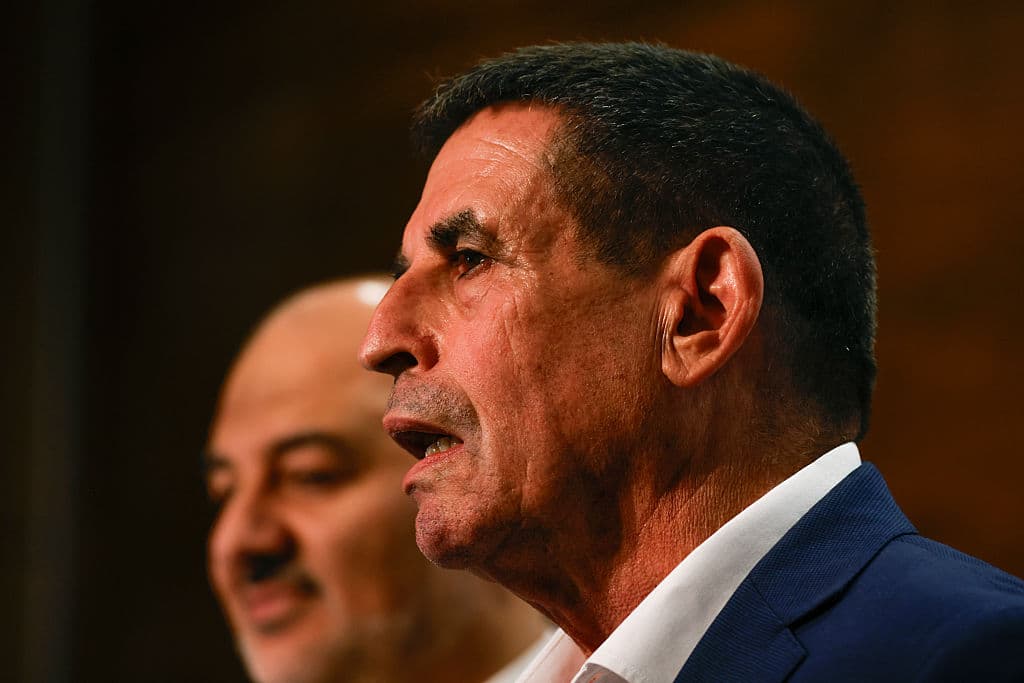
Netanyahu prepared the speech meticulously, sending draft after draft to his confidants. Hefetz reports long nights of editing at the Netanyahu residence, from which he would return home at 1am.

On June 11, Hefetz received a revised version of the speech from Netanyahu, who informed him that most changes were made by his wife Sara, whom Netanyahu said was “his best adviser on texts.”

Sara had advised Netanyahu to “hug the right and the settlers”, and meet with them in advance of the speech, but that idea was abandoned for fear that the contents of the speech would leak.

“I must note that the lady’s comments upgraded the speech; made it more positive, ringing more like a peace speech,” Hefetz wrote. The editing process then continued under former Israeli ambassador to the US Ron Dermer, attorney Yitzhak Molcho, and American corporate adviser Gary Ginsberg.

According to Drucker, Ginsberg’s fee for advising Netanyahu was paid for by Israeli-American businessman and Hollywood tycoon Arnon Milchan, who is said to have provided personal gifts to the Netanyahus valued at hundreds of thousands of dollars.

Hefetz had hoped that key members of Netanyahu’s Likud party would endorse the speech on TV, but was disappointed. Moshe Ya’alon, who was appointed as Netanyahu’s deputy and minister for strategic affairs, told Hefetz he wouldn’t appear on TV as the only cabinet minister ahead of the speech.

Later, his spokesman told Hefetz the minister was stopped at the gates of Channel 2 news and decided to turn back.

Benny Begin, then a Likud MK and son of former prime minister Menachem Begin, said he opposed a Palestinian state but would not quit the government over the speech.

"You’ve entrapped me," an angry Sa’ar told Hefetz after reading the highlighted sentences calling for a Palestinian state. "How can I now refuse the prime minister?"

Former Education Minister Gideon Sa’ar, summoned urgently to the prime minister’s residence from his education ministry, was also unnerved by the speech, but ended up defending it on Channel 10. “You’ve entrapped me,” an angry Sa’ar told Hefetz after reading the highlighted sentences calling for a Palestinian state. “How can I now refuse the prime minister?”

The hesitancy toward the speech within the cabinet was compensated for on the lecture hall floor. Netanyahu’s Chief of Staff Gil Sheffer carried a copy of the speech with intervals for applause, having hired designated “clappers” in the audience to applaud at strategic moments.

In his briefings to journalists, Hefetz repeated his branding of the speech as “a very bold speech” and a “leadership move”. Later, he noted with satisfaction that the phrase “bold move” caught on in the media.

Netanyahu never seriously followed up with the vision put forward in that speech, to establish a demilitarised Palestinian state alongside Israel. In his current political campaign, ahead of national elections set for November 1, Netanyahu’s main promise is stability: a government to survive for four years. What that government will actually do remains a matter of speculation.    

Photo: Nir Hefetz, sitting in the dock in court (Flash90)

You might also like
  • Who is Ofer Winter and could he upset Netanyahu’s election?
    Shahar Burla
  • Diaspora leadership must be candid about its disillusion with Netanyahu
    Colin Shindler
  • What ‘Zionism’ means in Israel:  it’s not what you think
    Ittay Flescher
logomark.67a07ee3
We believe in the free flow of information

Republish our articles for free, online or in print, by using our Creative Commons licence

You might also like

    Rozana Beit Oula
    PeacebuildingOpinionIsrael

    Peacebuilding through the eyes of a sceptic

    Ron Finkel
    Yoav Segalovitz Mansour Abbas
    Israel Votes 2026OpinionIsrael

    Because of my Zionist values, I’m joining an Arab party

    Yoav Segalovitz 1
    Protest
    AnalysisIsrael

    Western ‘Palestinianism’ colonises everything – and hurts Palestinians

    Andres Spokoiny 5

About the author

Elhanan Miller

Elhanan Miller

Elhanan Miller is a Jerusalem-based journalist and teacher.

More from the author

AnalysisIsrael

The future: three options remain after a year of fighting

AnalysisIsrael

Israel’s UNRWA dilemma: who else will provide aid to the Palestinians?

World

A new Yiddish musical speaks to the sorrow of our time

Israel

A draining duty: explaining the Israeli side to Arab media