Aa
  • Read, Watch, Listen
  • TJI Series
  • Community Action
  • Events
  • Zedi
Follow us and continue the conversation
  • LinkedIn
  • Instagram
  • FaceBook
  • X
  • YouTube
Test yourself with the TJI Quiz!

Adjust size of text

Aa

Follow us and continue the conversation

  • LinkedIn
  • Instagram
  • FaceBook
  • X
  • YouTube

Your saved articles

You haven't saved any articles

What are you looking for?

Original reporting, insightful analysis and diverse views, delivered straight to your inbox

  • LinkedIn
  • Instagram
  • FaceBook
  • X
  • YouTube
Your support fuels our mission to inform, entertain and inspire.

The Jewish Independent is bound by the Standards of Practice of the Australian Press Council. If you believe the Standards may have been breached, you may approach The Jewish Independent or make a complaint to the Australian Press Council in writing at www.presscouncil.org.au. The Council may also be contacted on 1800 025 712.

  • Our Story
  • Contact us
  • Our Team
  • Support us
  • Guidelines
  • Pitch your idea
  • Republishing us
  • Community Action
  • Our Awards
  • LinkedIn
  • Instagram
  • FaceBook
  • X
  • YouTube
Aboriginal FlagTorres Strait Islanders Flag

The Jewish Independent acknowledges Aboriginal and Torres Strait Islander peoples as the Traditional Owners and Custodians of Country throughout Australia. We pay our respects to Elders past and present, and strive to honour their rich history of storytelling in our work and mission.

© The Jewish Independent 2026All Rights Reserved
Website design and development by Your Creative, MelbourneTerms & ConditionsPrivacy Policy
HomeRead, Watch, ListenIsrael
Israel Hamas WarExplainerIsrael

IDF faces crisis of accountability after soldier assault video leak

The controversy over leaked security-camera footage of soldiers assaulting a Palestinian detainee has exposed a struggle over who controls the boundaries of military conduct in wartime.
Shahar Burla
Print this
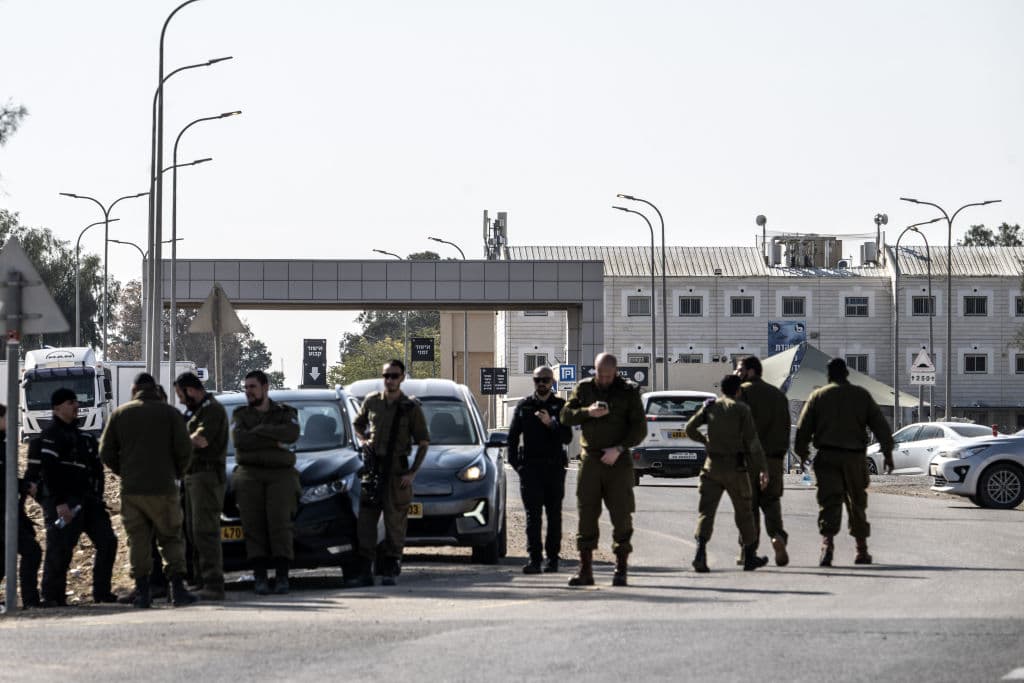
Israel soldiers patrol outside Sde Teiman military detention facility,

Israel soldiers patrol outside Sde Teiman military detention facility, the scene of the controversial leaked video (Mostafa Alkharouf/Anadolu via Getty Images)

Published: 6 November 2025

Last updated: 6 November 2025

It is more than a year since leaked security-camera footage from the Sde Teiman military detention facility exposed five IDF reservists who violently assaulted a Palestinian security detainee in July 2024.

But the case has sparked new controversy in Israel after former IDF Military Advocate General, Maj. Gen. Yifat Tomer-Yerushalmi admitted last week that she had authorised the release of the video.

Five soldiers have been charged over the assault. The indictment states that the detainee was severely beaten shortly after being brought to the facility on 5 July 2024. He reportedly sustained broken ribs and an internal tear in his rectum. The IDF confirmed that the charges were based on a Military Police investigation drawing on medical records and “authentic visual documentation” from the detention facility’s cameras.

But this week's controversy centres not on the soldiers' alleged offence but on the way the public learned about it. Leaking material from an active investigation is illegal under IDF regulations. After the footage aired on Channel 12 news, the army launched an internal inquiry into the source of the leak. That probe, ironically, was overseen by the military prosecution service — the same office implicated in the leak.

The most serious allegation relates not only to the leak itself but to the subsequent statements made to Israel’s High Court of Justice. Prosecutors, allegedly with Tomer-Yerushalmi’s approval, submitted an affidavit claiming they could not identify the source of the leak. That declaration is now believed to have been knowingly false.

Tomer-Yerushalmi was arrested on Monday. Her detention was extended until Friday on the grounds that there was a risk she could interfere with evidence. Former chief military prosecutor Col. Matan Solomesh, also alleged to have been involved, was released to house arrest on Wednesday pending further proceedings.

“An attempt to counter false propaganda”

The Jewish Independent editorialised shortly after the footage aired that “many Israelis, absorbed by their own fear and trauma, are prepared to turn a blind eye to the worst excesses of their army and politicians.” Tomer-Yerushalmi has now confirmed that she approved the leak to “counter the false propaganda directed against the military law enforcement authorities,” noting that she bore “full responsibility for any material that was released to the media from within the unit.”

The material was leaked at a moment of intense political pressure to “turn a blind eye”. Right-wing activists and politicians had accused military prosecutors of fabricating allegations of abuse — claims described as a modern-day “blood libel.” These accusations began circulating even before the investigation commenced. “To portray this as a fabricated ‘antisemitic blood libel’ is false,” wrote security analyst Ron Ben-Yishai in Ynetnews. “The investigation and charges were based on real, documented abuse.” He argued that the “blood libel” narrative was a political tool used by religious-nationalist factions to intimidate prosecutors and judges into dropping the case.

 Former IDF Military Advocate General, Maj. Gen. Yifat Tomer-Yerushalmi has been arrested after admitting to authorising the release of the video (IDF)
Former IDF Military Advocate General, Maj. Gen. Yifat Tomer-Yerushalmi has been arrested after admitting to authorising the release of the video (IDF)

Escalation and intimidation

Political pressure from the government to prevent investigations against IDF soldiers, particularly those stationed at Sde Teiman, was intense and at times violent. As reported by Ben Lynfield in The Jewish Independent, prisoner abuse, which rights groups say has occurred persistently since the start of the war, came into sharp focus when far-right activists, joined by coalition MKs, forced their way into the Sde Teiman facility to block Military Police from arresting reservists suspected in a sexual assault that left a Palestinian detainee seriously injured. National Security Minister Itamar Ben-Gvir publicly defended the suspects, calling them “the finest of our heroes.”

According to reporting in Haaretz, senior reserve officers and investigators said Tomer-Yerushalmi felt personally threatened by the scale of incitement directed at her. Anonymous sources described an atmosphere in which the IDF’s top legal officer became hesitant to advance sensitive investigations — including cases involving civilian casualties, blockade policies and strikes on medical and academic institutions.

“There was talk that threats reached her private home,” one source said. “She was paralysed by the incitement and social media discourse. She was simply afraid to open investigations.”

Growing politicisation of the military

The affair highlights a broader trend: the growing politicisation of the Israeli military. Ben-Yishai argues that ideological politics are increasingly influencing command decisions at every level. In the West Bank, some reservists have been filmed standing aside as extremist settlers attack Palestinians, or even participating, sometimes while armed. The government’s permissive approach, encouraged by Ben-Gvir and Smotrich, has led to what many Israeli and international observers describe as near-total impunity. This shift, analysts warn, is undermining Israel’s legitimacy abroad, particularly in Europe and North America.

War on the “deep state”

Prime Minister Netanyahu and senior ministers have used the scandal to renew attacks on Israel’s judicial institutions. Finance Minister Smotrich claimed the leak was “just the tip of the iceberg” of alleged corruption in the justice system, while Ben-Gvir argued it proved the need for sweeping reform.

Justice Minister Yariv Levin framed Tomer-Yerushalmi’s downfall as vindication of his efforts to curtail judicial power. “The system of lies that has been built here for years, trampling on the rights of entire communities and harming the security of the state and IDF soldiers, is crumbling,” he wrote on Facebook.

On Tuesday, Levin announced he had appointed retired judge Asher Kula to lead an inquiry into the leak,  despite the firm objection of Attorney-General Gali Baharav-Miara, who said Levin had no legal authority to make the appointment. Senior legal experts criticised the move as an attempt to bypass the attorney-general and politicise the investigation. “The justice minister isn’t interested in the investigation — only in firing the attorney-general,” one expert told Ynetnews. “He is acting without authority and contaminating the probe while it’s ongoing.”

In Haaretz, military analyst Amos Harel argued that the government is using the affair to intimidate “gatekeepers” — the legal, security and civil-society actors who serve as constraints on executive power. “The intent is to sow fear ahead of elections,” he wrote. “There are bigger targets than the Military Advocate General. The real goal is the attorney-general herself.”

A crisis of accountability

The Sde Teiman affair is not only about one video or one senior officer. It exposes a struggle over who controls the boundaries of military conduct in wartime and whether independent oversight can survive political pressure.

For some Israelis, the footage confirms longstanding concerns raised by human rights groups regarding detainee treatment during the Gaza war and in the West Bank. For others, the affair is perceived not as evidence of abuse but as proof of a “deep state” conspiracy designed to sabotage the army and weaken national morale.

Tomer-Yerushalmi’s decision to leak the footage was, she maintains, an attempt to restore trust in the rule of law. Yet the episode has instead deepened mistrust  within the military, across the political system, and among the public. As investigations continue, Israel now faces not only the question of what happened inside Sde Teiman — but whether its institutions still have the authority, independence and courage to enforce accountability at all.

READ MORE

Sde Teiman affair: the price of the IDF’s politicization (Ron Ben-Yishai, Ynetnews)

How a leaked video of a notorious IDF detention center could help Netanyahu take down Israel's democracy (Amir Tibon, Haaretz)

Back with a vengeance: Netanyahu's revived judicial coup seeks to terrify Israel's gatekeepers (Amos Harel, Haaretz)

Timeline of a scandal: The 17 months of the Sde Teiman abuse and video leak affair (Times of Israel)

Editorial: standing with Israel does not mean endorsing Israelis’ worst behaviour (The Jewish Independent)

You might also like
  • New evidence Netanyahu was warned about October 7
    Shahar Burla
  • Who is Ofer Winter and could he upset Netanyahu’s election?
    Shahar Burla
  • Abuse by IDF soldiers humiliates Muslim Palestinians
    Ben Lynfield
logomark.67a07ee3
We believe in the free flow of information

Republish our articles for free, online or in print, by using our Creative Commons licence

You might also like

    Woman with land and houses behind her
    NewsAustralia

    Australia to increase sanctions against West Bank settlements

    Deborah Stone 2
    Rozana Beit Oula
    PeacebuildingOpinionIsrael

    Peacebuilding through the eyes of a sceptic

    Ron Finkel
    Segalovitz Abbas
    Israel Votes 2026AnalysisIsrael

    Segalovitz decision to join Arab party is a paradigm change for Israel

    Eetta Prince-Gibson

About the author

Shahar Burla

Shahar Burla

Dr Shahar Burla is a Sydney-based researcher, lecturer and Contributing Editor of TJI. Shahar holds a Master’s degree in political science from Hebrew University and a PhD in political science from Bar-Ilan University. He is the author of Political Imagination in the Diaspora: The Construction of a Pro-Israeli Narrative (2013) and co-editor of Australia and Israel: A Diasporic, Cultural and Political Relationship (2015).

More from the author

FeatureIsrael

New evidence Netanyahu was warned about October 7

OpinionIsrael

The Altalena should be a warning, not a political weapon

AnalysisIsrael

Who is Ofer Winter and could he upset Netanyahu’s election?

AnalysisIsrael

Bennett’s balancing act: can he win over the right without losing the centre?

Comments

No comments on this article yet. Be the first to add your thoughts.