Aa
  • Read, Watch, Listen
  • TJI Series
  • Community Action
  • Events
  • Zedi
Follow us and continue the conversation
  • LinkedIn
  • Instagram
  • FaceBook
  • X
  • YouTube
Test yourself with the TJI Quiz!

Adjust size of text

Aa

Follow us and continue the conversation

  • LinkedIn
  • Instagram
  • FaceBook
  • X
  • YouTube

Your saved articles

You haven't saved any articles

What are you looking for?

Original reporting, insightful analysis and diverse views, delivered straight to your inbox

  • LinkedIn
  • Instagram
  • FaceBook
  • X
  • YouTube
Your support fuels our mission to inform, entertain and inspire.

The Jewish Independent is bound by the Standards of Practice of the Australian Press Council. If you believe the Standards may have been breached, you may approach The Jewish Independent or make a complaint to the Australian Press Council in writing at www.presscouncil.org.au. The Council may also be contacted on 1800 025 712.

  • Our Story
  • Contact us
  • Our Team
  • Support us
  • Guidelines
  • Pitch your idea
  • Republishing us
  • Community Action
  • Our Awards
  • LinkedIn
  • Instagram
  • FaceBook
  • X
  • YouTube
Aboriginal FlagTorres Strait Islanders Flag

The Jewish Independent acknowledges Aboriginal and Torres Strait Islander peoples as the Traditional Owners and Custodians of Country throughout Australia. We pay our respects to Elders past and present, and strive to honour their rich history of storytelling in our work and mission.

© The Jewish Independent 2026All Rights Reserved
Website design and development by Your Creative, MelbourneTerms & ConditionsPrivacy Policy
HomeRead, Watch, ListenAustralia
FeatureAustraliaIsrael

The Australian families sending their kids to high school in Israel

A small but growing number of Australian families are taking up an Israeli government-funded program offering free high schooling in Israel.
Nomi Kaltmann
Print this
Feldman family

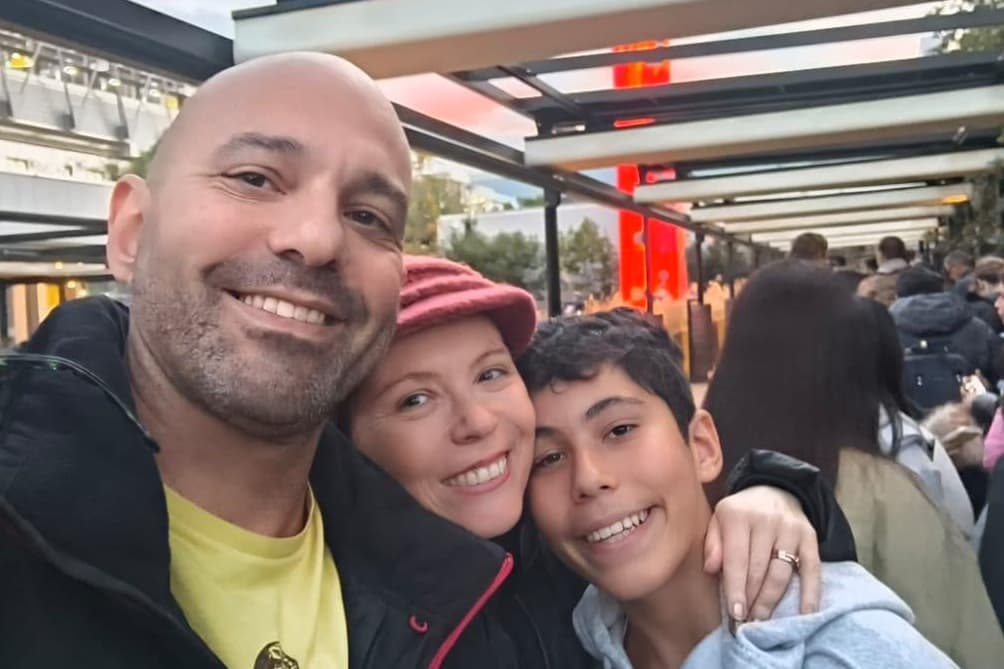
Anna Feldman with her son Kiva Solomon and husband Asher Solomon. (Image: provided)

Published: 13 May 2026

Last updated: 19 May 2026

By Year 12, Jewish school fees in Australia can exceed $40,000 a year per child, which, for many families, is simply not affordable.

In this context, an international program called Naale Elite Academy offering Australian teenagers the opportunity to complete high school in Israel from Year 9 to Year 12 at no cost is becoming increasingly attractive to some parents.

The program offers a high school education from Year 9-12, fully subsidised by the Jewish Agency and Ministry of Education in Israel. 

Naale was founded in the 1990s, originally to help teenagers from the former USSR integrate into Israeli society ahead of their parents making aliyah, and it later expanded to students from around the world. An Australia–New Zealand office opened just before the pandemic.

Last year regional manager Anat Aloni placed five Australians in the program but this year she already has 15 enquiries.  

My child gets to experience Israel in a way that is beyond a holiday as an adult or a bar mitzvah trip

Naale parent Aviva from Sydney

Naale affiliates with more than a dozen schools across Israel, including religious, secular, Modern Orthodox and Chabad schools. Students are placed in on-campus boarding schools alongside teenagers from more than 70 countries, including other English-speaking countries from the US, UK, South Africa and Canada, as well as their Israeli counterparts. Students complete the Israeli Bagrut high school certificate, which is internationally recognised and can be used to apply to Australian universities. 

Australian applicants who attend the Naale program come from across Australia, including regional and rural areas, and from families with very different levels of religious observance. 
I don’t see a hugely great future for Jewish people in Australia

Naale parent Anna Feldman, from Coffs

Interested teenagers attend a full day of assessments, which includes group dynamics activities settings, written psychological tests and an evaluation by a team of Israeli clinical psychologists who fly in specifically for the process. Families must provide medical histories, family background, information about Jewish status, and students are interviewed to assess emotional readiness, academic potential and compatibility to the unique program settings. 

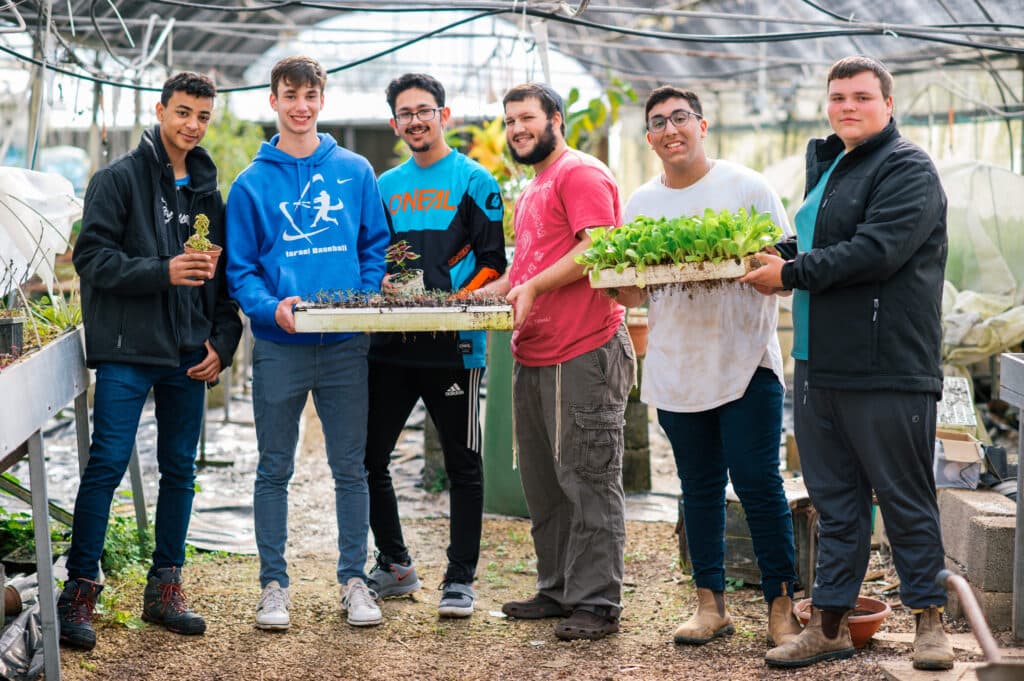
Students from one of Naale Elite Academy's affiliated schools (Image: provided)

“The transition can be so challenging and overwhelming we must do everything we can so that the child has a good experience, so it is a very strict and thorough process,” said Aloni. 

Once accepted, students spend their high school years on an Israeli student visa. Their initial flight to Israel is covered and they live in supervised dormitories with madrichim (program leaders), receive pocket money, and take part in after school activities and trips. Hebrew is not required on entry, and most Year 9 students spend much of their first year in intensive ulpan (Hebrew study), to bring their language skills up to speed. Upon completion of high school, there is no obligation to remain in Israel, and students are free to return to their home countries.  

A way to feel connected

Anna Feldman lives on the Coffs Coast, several hours north of Sydney, with her husband and son, who currently attends a local Anglican private school. With no Jewish school nearby, she began researching alternatives and came across Naale while searching online. Her son is currently applying to the program and hopes to be accepted to Naale this upcoming September.  

“We are very Jewish spiritually and culturally, and we identify very strongly with Israel,” she says. “Obviously being so far away, the question is always, how can we find a way to be connected to our Judaism and for [our son] to be connected,” she says. 

Feldman’s son had his bar mitzvah last year but does not speak Hebrew, and has very few Jewish friends locally, but sending him to Israel, despite the distance from their home, is still attractive. 

“We really want to give [our son] an experience and Jewish identity that you only get in Israel,” she says, adding that she and her husband are considering spending time in Israel themselves to see whether relocation could work for the whole family. “And if we can coordinate ourselves to get a sublet in Israel, to spend time there, we will work out if we want to go more permanently.” 

For Feldman, the cost of schooling was not the driving factor, but rather rising antisemitism contributed to her desire to send her son on the program. 

“I don’t see a hugely great future for Jewish people in Australia,” says Feldman. “It would need to radically turn around for things and for me to feel like I would want to stay. I would want to feel that my grandkids would thrive here. Unfortunately, I just don’t have that confidence.” 

Life experience

Melburnian Liat Liderman recently sent her 15-year-old daughter to Israel through Naale. Her daughter had been attending a local Melbourne Jewish school but wanted to experience life and school in Israel and was accepted into a culturally Jewish school affiliated with Naale. Liderman and her husband are Israeli and migrated to Australia more than 30 years ago. 

“My daughter is having fun. For her, it’s the best thing, she’s very mature, she knows what she’s doing. For her it has been an amazing experience, alongside 50 other kids from around the world,” she says. 

While the burden of Jewish school fees was not the deciding factor, the financial relief is real. 

“The toll of Jewish school, while it wasn’t a factor in our decision, it’s a big relief. It’s so expensive,” she says. 

For Aviva, a Sydney parent who asked me to withhold her last name to protect her child’s privacy, the benefit of Naale is also expressed by the experience her child is receiving.

“My child gets to experience Israel in a way that is beyond a holiday as an adult or a bar mitzvah trip holiday. My child gets to connect with the country in a deeper way to experience what it is to be an Israeli,” she says. 

She has also seen rapid personal growth. 

“My child has matured a lot in the last few months and loves the independence. It is clear this program excels the rates of independence and the sense of autonomy. That’s a good thing.” 

A religious peer group

Odeya White, a Chabad Rebbetzin in Perth, is currently applying to send her third daughter to Naale. A mum of eight, all of her children have attended the Carmel School until Year 8, the only Jewish school in Perth. However, when they begin upper secondary, she wants them in a more Orthodox environment with peers who share similar values. 

“Carmel is a great school, and in primary school they don’t really see a difference [between their peers]. But as they get older, they see a bigger gap, so it’s hard, its challenging. My kids want to be amongst friends like them, plus I can’t raise them Chabad here. It's a completely different social environment,” White says. 

When asked why she did not send her children to Melbourne or Sydney where there are Chabad schools instead, she was clear. 

“There's no dormitory. I want them to be under supervision, and I want to know what they are up to. Plus, I’m Israeli, Israel is my home and my heart. It’s important for them to be with family, so I’d rather they be in Israel,” she says. 

You might also like
  • ‘Israel is systemically eliminating Palestinian collective life’:  B’Tselem
    Deborah Stone
  • Tame apologises – but with little grace
    Deborah Stone
  • Confronting Richard Flanagan and the myth of the Israel lobby
    Mary Garden
logomark.67a07ee3
We believe in the free flow of information

Republish our articles for free, online or in print, by using our Creative Commons licence

You might also like

    neo-nazis white supremacists corowaTEST
    Royal CommissionOpinionAustralia

    Antisemitism, homophobia and a radical response to both

    Dennis Altman
    Woman with land and houses behind her
    NewsAustralia

    Australia to increase sanctions against West Bank settlements

    Deborah Stone 2
    Rozana Beit Oula
    PeacebuildingOpinionIsrael

    Peacebuilding through the eyes of a sceptic

    Ron Finkel

About the author

Nomi Kaltmann

Nomi Kaltmann

Nomi Kaltmann is an Australian lawyer and journalist. Her writing has appeared in major Australian and international publications including Crikey, Griffith Review, Mamamia, Tablet Magazine, The Australian Financial Review, The Daily Beast, The Forward, The Guardian, The Jewish Telegraphic Agency and The Spectator. She regularly appears on radio and podcasts to discuss Australia’s Jewish community, including NPR (USA), CBC (Canada), LBC (London), Call Me Back, Unholy: Two Jews on the News, SBS and The Times of Israel. An influential Orthodox feminist leader and founding president of the Jewish Orthodox Feminist Alliance (JOFA Australia), she is a sought-after speaker on religion, interfaith and contemporary Jewish life.

More from the author

OpinionAustralia

Cancellation backfires but we are at it again

OpinionWorld

From NY to Melbourne, local politicians are whipping up hate 

ReflectionAustralia

I have lost faith in our multicultural institutions 

InterviewIsrael

Dreams, nightmares and realities from a bereaved mother 

Comments

No comments on this article yet. Be the first to add your thoughts.