Aa
  • Read, Watch, Listen
  • TJI Series
  • Community Action
  • Events
  • Zedi
Follow us and continue the conversation
  • LinkedIn
  • Instagram
  • FaceBook
  • X
  • YouTube
Test yourself with the TJI Quiz!

Adjust size of text

Aa

Follow us and continue the conversation

  • LinkedIn
  • Instagram
  • FaceBook
  • X
  • YouTube

Your saved articles

You haven't saved any articles

What are you looking for?

Original reporting, insightful analysis and diverse views, delivered straight to your inbox

  • LinkedIn
  • Instagram
  • FaceBook
  • X
  • YouTube
Your support fuels our mission to inform, entertain and inspire.

The Jewish Independent is bound by the Standards of Practice of the Australian Press Council. If you believe the Standards may have been breached, you may approach The Jewish Independent or make a complaint to the Australian Press Council in writing at www.presscouncil.org.au. The Council may also be contacted on 1800 025 712.

  • Our Story
  • Contact us
  • Our Team
  • Support us
  • Guidelines
  • Pitch your idea
  • Republishing us
  • Community Action
  • Our Awards
  • LinkedIn
  • Instagram
  • FaceBook
  • X
  • YouTube
Aboriginal FlagTorres Strait Islanders Flag

The Jewish Independent acknowledges Aboriginal and Torres Strait Islander peoples as the Traditional Owners and Custodians of Country throughout Australia. We pay our respects to Elders past and present, and strive to honour their rich history of storytelling in our work and mission.

© The Jewish Independent 2026All Rights Reserved
Website design and development by Your Creative, MelbourneTerms & ConditionsPrivacy Policy
HomeRead, Watch, ListenIsrael
Israel Votes 2026FeatureIsrael

Netanyahu’s lightning UN visit reveals his growing isolation

Israel's PM will arrive in New York to widespread opposition from Jewish and Israeli groups as well as pro-Palestinian and anti-Zionist activists.
Shahar Burla
Print this
UN Netanyahu

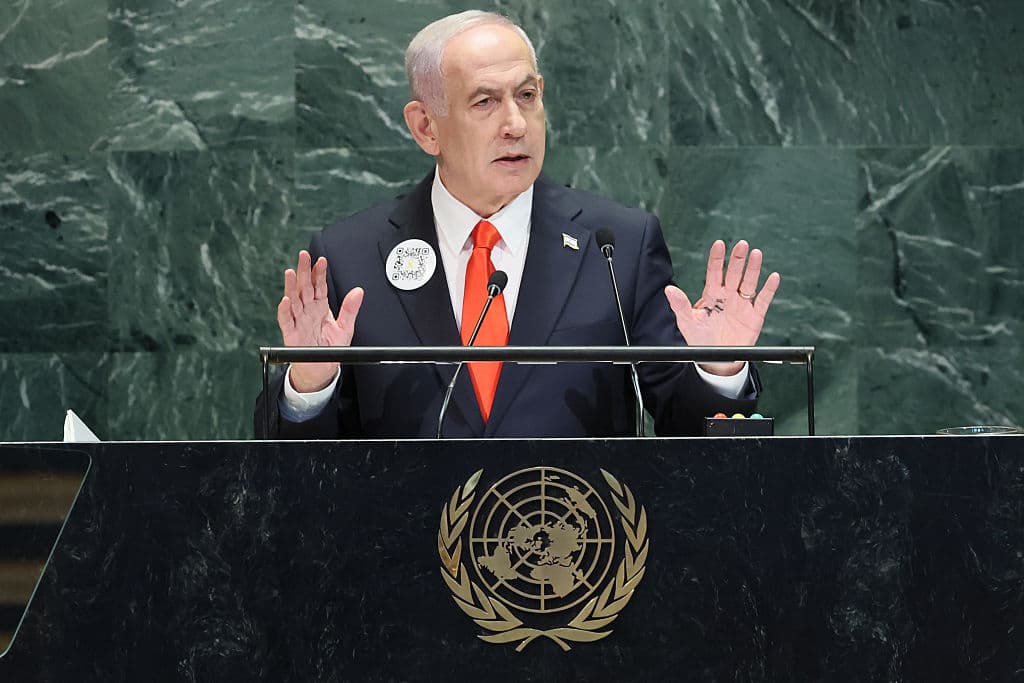
Netanyahu addresses the United Nations General Assembly on a previous visit in January 2026 (Michael M. Santiago/Getty Images)

Published: 24 September 2026

Last updated: 24 September 2026

Prime Minister Benjamin Netanyahu will arrive in New York on Thursday (US time) for an unusually brief visit, delivering an address to the United Nations General Assembly before returning to Israel the same day.

The visit is expected to last only a matter of hours. Unlike previous trips to New York, Netanyahu has no announced program of diplomatic meetings surrounding his UN appearance, and, most significantly, no meeting scheduled with US President Donald Trump.

The compressed itinerary reflects Netanyahu’s growing international isolation, including the cooling of his once-close relationship with Trump. It also comes at a politically sensitive moment, with Israel facing mounting international pressure and its election scheduled for October 27.

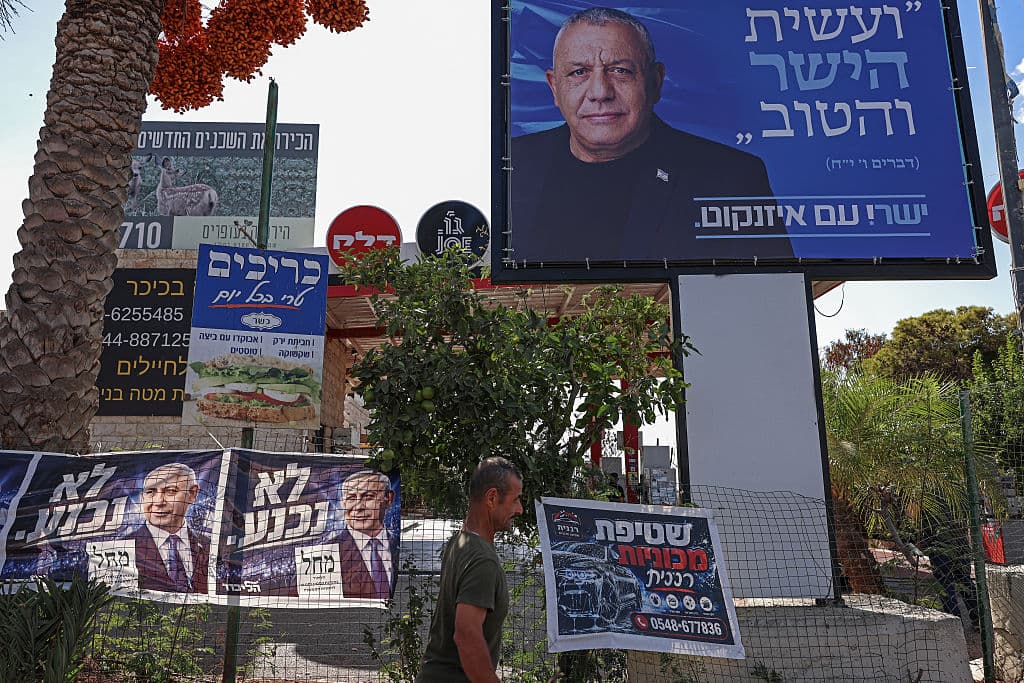
Trump was once among Netanyahu’s most valuable electoral assets. Ahead of Israel’s 2019 election, giant billboards showed the two leaders shaking hands under the slogan “Netanyahu: Another League”. Now, Netanyahu is visiting the United States without a presidential meeting and is expected to leave immediately after his speech to resume campaigning at home.

Netanyahu arrives in a city where opposition to him is widespread and where Jewish and Israeli groups, alongside pro-Palestinian and anti-Zionist activists, have announced protests.

UnXeptable, a grassroots movement movement launched by Israeli expats in support of a democratic Israel, is planning a protest in Union Square ahead of his speech. Its founder, Offir Gutelzon, said Netanyahu caused harm to Israel “wherever he is”. Jewish organisations supportive of the prime minister are also expected to mobilise.

Trump’s regional agenda does not always align with Netanyahu’s political needs, while Trump’s standing among Israelis has declined amid frustration over his initiatives in Gaza, Lebanon and Syria.

The competing demonstrations reflect New York’s deeply divided politics over Israel, Gaza, antisemitism and Netanyahu’s leadership. Yet the absence of substantial diplomatic engagements may say more than the protests themselves: Netanyahu is visiting America’s largest city, addressing the world’s most prominent diplomatic forum and departing without a meeting with a major US official.

A partnership losing its political value

The strategic relationship between Israel and the United States remains strong, but the personal relationship between Netanyahu and Trump has deteriorated since the initial euphoria surrounding their joint war against Iran, which began on February 28.

Washington continues to provide Israel with substantial military support. Trump recently announced plans to sell Israel a US$2.8 billion package of heavy munitions, including 2,000-pound bombs and bunker-penetrating warheads, although the sale still requires Senate approval.

But strategic cooperation has not prevented political differences from widening.

Seven months into the war, several of Netanyahu’s original objectives remain unrealised. Iran’s nuclear and ballistic missile capabilities have not been conclusively eliminated, Tehran retains the capacity to threaten neighbouring states and American assets, and the prospect of internal political change in Iran remains remote.

Trump’s frustration reportedly stems from the continuing military stalemate and the widening gap between American and Israeli priorities. The president is seeking agreements that could end Israel’s conflicts with Hamas and Hezbollah, allowing him to claim major foreign-policy achievements. He is also reportedly concerned that an open-ended war with Iran could become a liability for Republicans ahead of the US congressional elections.

Netanyahu has different political incentives. Military action remains popular among important sections of the Israeli electorate, while continuing conflict allows him to campaign as the indispensable guardian of Israel’s security. Agreements ending the wars could force public attention back towards October 7, the government’s failures and demands for accountability.

For Netanyahu, that confrontation has clear electoral value. Mamdani’s language is provocative and widely rejected in Israel, allowing Netanyahu to present himself as defending the country, and Jews in New York, against a hostile international campaign.

The Trump-Netanyahu relationship may therefore offer fewer benefits to either leader than it once did. Trump’s regional agenda does not always align with Netanyahu’s political needs, while Trump’s standing among Israelis has declined amid frustration over his initiatives in Gaza, Lebanon and Syria.
Netanyahu’s access to the president has also diminished since the November 2025 departure of his close confidant Ron Dermer, who had served as a crucial link to Washington.

Netanyahu will nevertheless emphasise his cooperation with Trump, particularly on Iran. With no presidential meeting to display, however, the rhetoric may only underscore how much the relationship has changed.

Mamdani offers Netanyahu a convenient enemy

In the absence of a White House meeting, New York Mayor Zohran Mamdani is expected to occupy a prominent place in Netanyahu’s visit and UN address.

Mamdani is deeply unpopular in Israel, making him a useful target for Netanyahu weeks before the election. By portraying the mayor’s positions as antisemitic and hostile to Israel, Netanyahu can shift attention from his diplomatic isolation and rally his political base against a recognisable external opponent.

Days before Netanyahu’s arrival, Mamdani renewed his attack on the Israeli leader, describing him as a “war criminal” and an architect of what he called a genocide against Palestinians. Israel strongly rejects allegations that its conduct in Gaza constitutes genocide.

Mamdani also repeated his position that the International Criminal Court’s arrest warrant for Netanyahu should be honoured, while acknowledging that New York City Hall lacks the legal authority to carry out the arrest he once promised during his campaign.

Netanyahu responded with a video accusing Mamdani of supporting Hamas and inciting violence against Jewish New Yorkers.

“Shame on you, Mr Mamdani,” Netanyahu said. “I am going to New York, and I am going to tell the truth about you.”

The Jewish Independent

The exchange is the latest episode in a months-long confrontation between the two leaders over Gaza, the October 7 attacks and the ICC warrant, which Netanyahu has dismissed as illegitimate.

For Netanyahu, that confrontation has clear electoral value. Mamdani’s language is provocative and widely rejected in Israel, allowing Netanyahu to present himself as defending the country, and Jews in New York, against a hostile international campaign.

It is a familiar political technique: replace uncomfortable questions about diplomatic isolation and responsibility for October 7 with a public battle against an unpopular adversary.

Netanyahu’s UN speech will therefore serve two audiences. To the world, he will portray Israel as a victorious regional power that has reshaped the Middle East. To Israeli voters, he will cast himself as the only leader capable of confronting Iran, defying international pressure and answering critics such as Mamdani.

Yet the unusual brevity of the visit may convey a different message. Netanyahu will fly into New York, deliver an election speech and leave without the diplomatic encounters that once demonstrated his international influence. The speech may be designed to project strength, but the schedule surrounding it reveals just how isolated he has become.

The Jewish Independent
You might also like
  • The leadership a wounded society needs
    Esther Takac
  • Fauda and the illusion of vengeance
    Ittay Flescher
  • Israel election explainer: the main parties
    Shahar Burla
logomark.67a07ee3
We believe in the free flow of information

Republish our articles for free, online or in print, by using our Creative Commons licence

You might also like

    Woman with land and houses behind her
    NewsAustralia

    Australia to increase sanctions against West Bank settlements

    Deborah Stone 2
    Rozana Beit Oula
    PeacebuildingOpinionIsrael

    Peacebuilding through the eyes of a sceptic

    Ron Finkel
    altalena
    Israel Votes 2026OpinionIsrael

    The Altalena should be a warning, not a political weapon

    Shahar Burla 1

About the author

Shahar Burla

Shahar Burla

Dr Shahar Burla is a Sydney-based researcher, lecturer and Contributing Editor of TJI. Shahar holds a Master’s degree in political science from Hebrew University and a PhD in political science from Bar-Ilan University. He is the author of Political Imagination in the Diaspora: The Construction of a Pro-Israeli Narrative (2013) and co-editor of Australia and Israel: A Diasporic, Cultural and Political Relationship (2015).

More from the author

ExplainerIsrael

Israel election explainer: the main parties

FeatureIsrael

New evidence Netanyahu was warned about October 7

OpinionIsrael

The Altalena should be a warning, not a political weapon

Comments

No comments on this article yet. Be the first to add your thoughts.