Aa
  • Read, Watch, Listen
  • TJI Series
  • Community Action
  • Events
  • Zedi
Follow us and continue the conversation
  • LinkedIn
  • Instagram
  • FaceBook
  • X
  • YouTube
Test yourself with the TJI Quiz!

Adjust size of text

Aa

Follow us and continue the conversation

  • LinkedIn
  • Instagram
  • FaceBook
  • X
  • YouTube

Your saved articles

You haven't saved any articles

What are you looking for?

Original reporting, insightful analysis and diverse views, delivered straight to your inbox

  • LinkedIn
  • Instagram
  • FaceBook
  • X
  • YouTube
Your support fuels our mission to inform, entertain and inspire.

The Jewish Independent is bound by the Standards of Practice of the Australian Press Council. If you believe the Standards may have been breached, you may approach The Jewish Independent or make a complaint to the Australian Press Council in writing at www.presscouncil.org.au. The Council may also be contacted on 1800 025 712.

  • Our Story
  • Contact us
  • Our Team
  • Support us
  • Guidelines
  • Pitch your idea
  • Republishing us
  • Community Action
  • Our Awards
  • LinkedIn
  • Instagram
  • FaceBook
  • X
  • YouTube
Aboriginal FlagTorres Strait Islanders Flag

The Jewish Independent acknowledges Aboriginal and Torres Strait Islander peoples as the Traditional Owners and Custodians of Country throughout Australia. We pay our respects to Elders past and present, and strive to honour their rich history of storytelling in our work and mission.

© The Jewish Independent 2026All Rights Reserved
Website design and development by Your Creative, MelbourneTerms & ConditionsPrivacy Policy
HomeRead, Watch, ListenIsrael
ExplainerIsrael

Explainer: What does Netanyahu’s extraordinary pardon request mean for Israel?

Israeli Prime Minister Benjamin Netanyahu wants a pardon from the president but critics say the request runs counter to democratic values and rule of law.
Shahar Burla
Print this
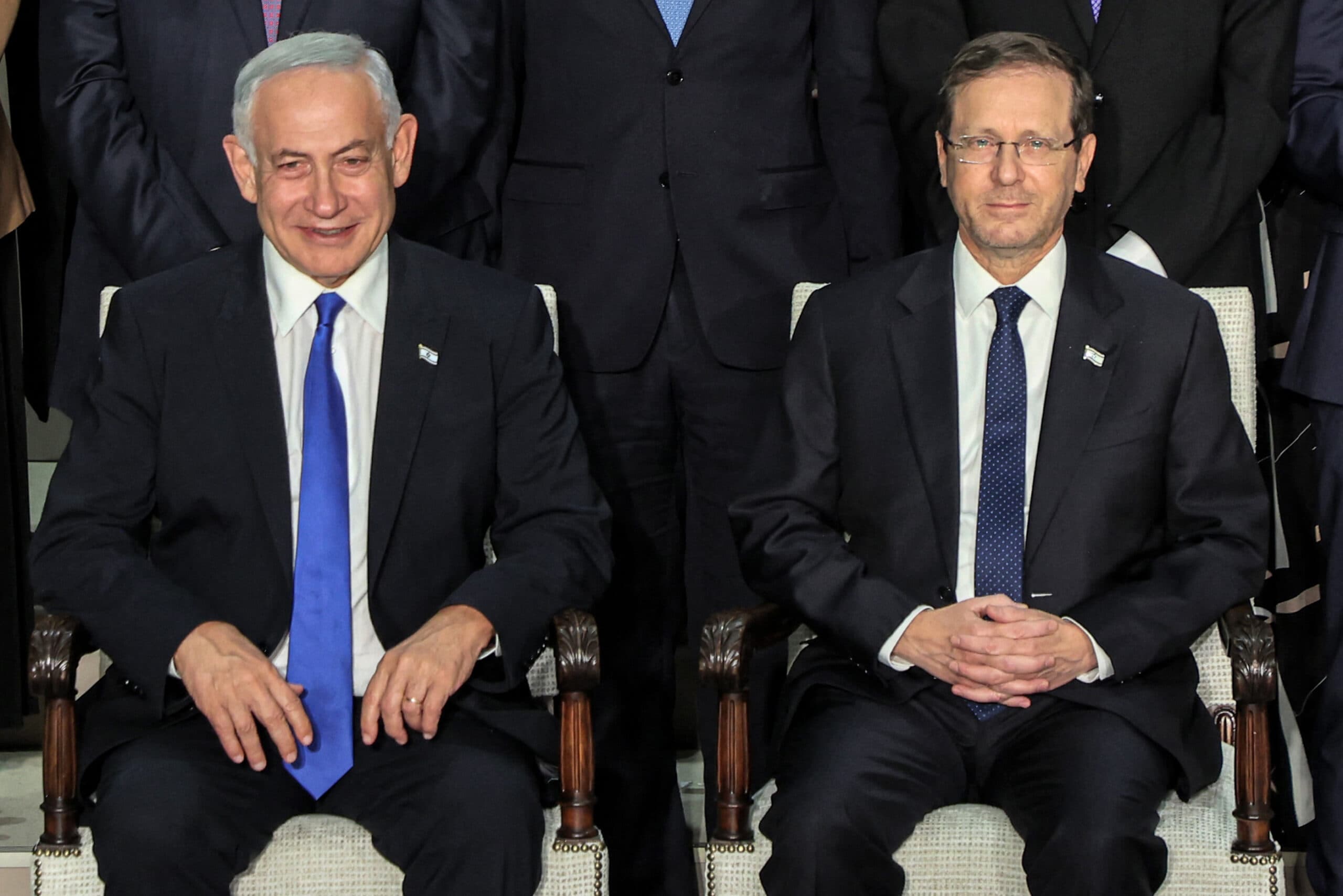
Two men in suits and ties in a formal pose.

Israel’s President Isaac Herzog and Prime Minister Benjamin Netanyahu pose for a picture after the swearing in of the current government in December 2022. (GIL COHEN-MAGEN/AFP via Getty Images)

Published: 4 December 2025

Last updated: 4 December 2025

Prime Minister Netanyahu has asked Israel’s president, Isaac Herzog, for a pardon which would cancel bribery and fraud charges against him ending his five-year corruption trial, arguing that doing so would be in the “national interest”.

This is what you need to know about this unprecedented and explosive situation:

What are the charges against Netanyahu?

Netanyahu was indicted in 2019 on charges of bribery, fraud and breach of trust, all of which he denies, in a trial that began in 2020 and spans three cases. Case 4000 alleges he granted Bezeq Telecom regulatory favours worth 1.8 billion shekels in exchange for positive media coverage. Case 1000 claims Netanyahu and his wife received nearly 700,000 shekels’ worth of gifts, including champagne and cigars, from Arnon Milchan and James Packer while Netanyahu allegedly assisted Milchan’s business interests; neither donor is charged. Case 2000 alleges he sought favourable coverage from newspaper owner Arnon Mozes in return for legislation targeting a rival paper, leading to charges of fraud and breach of trust.

Why does Netanyahu think he should be pardoned?

In Netanyahu's request for a pardon from President Isaac Herzog, the prime minister did not admit to any offences. Instead, he stressed his “broad public and moral responsibility” and argued that a pardon would allow him to focus on Israel’s security challenges and national unity after 7 October. He claimed the trial consumes time needed for strengthening the state, advancing judicial and media reforms, and pursuing “emerging understandings” with the US and Arab states. 
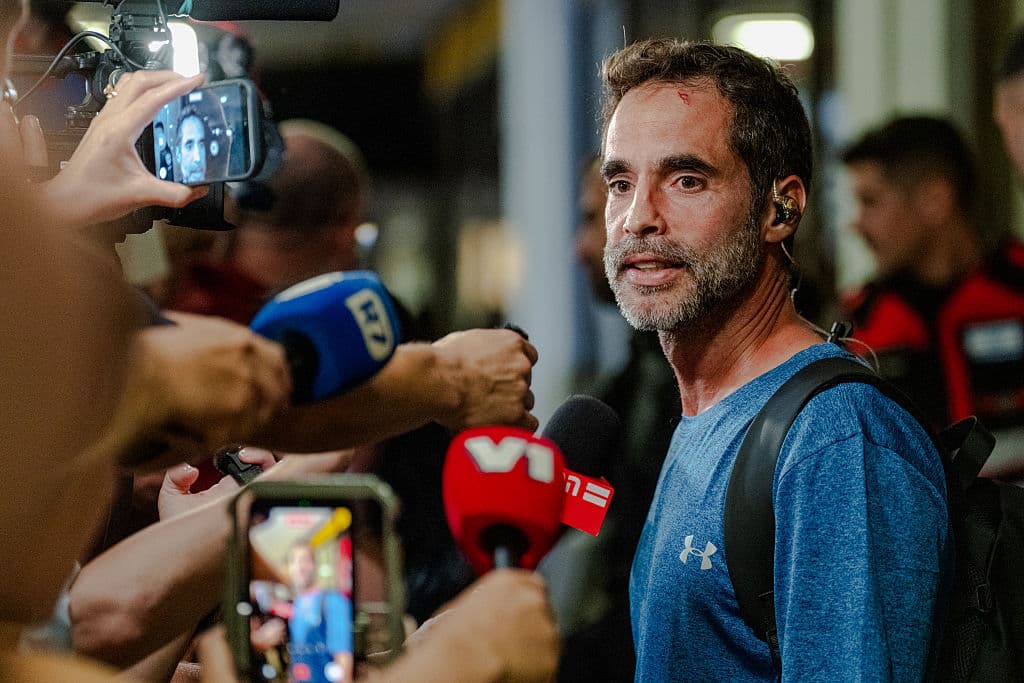
Netanyahu also claimed the investigations were irregular and aimed at incriminating him, and that ending the proceedings would help “heal rifts between different parts of the nation”. In a video message, he added that he would have preferred to complete the trial, but national interest “demanded otherwise”.

How has Herzog responded?

Herzog’s office has acknowledged receipt of the 111-page submission from the PM’s lawyer and confirmed it had been passed to the Pardons Department in the Ministry of Justice.

“The Office of the President is aware that this is an extraordinary request which carries significant implications. After receiving all relevant opinions, the President will responsibly and sincerely consider the request,” the statement said.

What do the critics say?

Opponents argue the request could weaken democratic institutions and signal that powerful figures are above the law. Yohanan Plesner, president of the Israel Democracy Institute, said Netanyahu’s framing, insisting he is innocent yet requesting a pardon for the country’s sake, sends a troubling message about public norms. Opposition leader Yair Lapid said a pardon cannot be granted “without an admission of guilt, an expression of remorse, and an immediate retirement from political life”.

Yossi Verter of Haaretz wrote that “every word and letter” of the request was “the complete opposite of what one would expect of a criminal seeking a pardon”, saying Netanyahu effectively warned that rejecting the request would leave Herzog responsible for ongoing national rifts and stalled reforms “only because the defendant has to show up in court three times a week”.

Does the president have the authority to pardon while the trial is continuing?

The president’s powers are outlined briefly in Basic Law: The President: “The President of the State has the power to pardon offenders and modify sentences.” While the law does not explicitly require a conviction or an admission of guilt, legal experts note that the term “offender” logically implies wrongdoing.

Traditionally, presidents intervene only after the legal process has concluded. A notable exception of the 1986 Kav (Bus) 300 affair, where Shin Bet members executed two Palestinian bus hijackers, immediately after a hostage crisis incident ended and they had been captured. The officers involved were pardoned by President Chaim Herzog but only after they admitted guilt and the Shin Bet chief agreed to resign. The Supreme Court upheld the pardon as a rare “safety valve” but emphasised its exceptional nature.

Following that case, Attorney-General guidelines established that presidents “as a rule” consider pardon requests only after conviction, with pre-conviction requests handled only in extraordinary circumstances.

How is the pardon process carried out?

The process begins with the submission of an application to the President’s Legal Office, which transfers it to the Pardons Department in the Ministry of Justice. The department gathers relevant materials, court files, police and prosecution assessments, prison-service opinions, medical records, and social reports and prepares a recommendation for the President. If the President approves, he signs the pardon, followed by a formal countersignature from the Minister of Justice.

How does Donald Trump fit into this?

Donald Trump, one of Netanyahu’s strongest international allies, sent President Herzog a formal letter on 12 November 2025 urging a full pardon, describing the case as a “political, unjustified prosecution” and praising Netanyahu as a “decisive wartime prime minister”. This followed an earlier Knesset speech in which Trump dismissed the allegations over “cigars and champagne”. Herzog’s office thanked Trump for his support for Israel but stressed that the justice system is independent and that pardons must follow formal procedures. Critics, including Lapid, accused Trump of inappropriate interference and warned that a politically motivated pardon would undermine the rule of law.

What happens now?

Netanyahu’s request is now with the Pardons Department, which will seek input from state bodies including the State Attorney’s Office and likely the Attorney-General, Gali Baharav-Miara. Its recommendation will pass to the justice minister, then to the president’s legal adviser, before reaching President Herzog. The process may take several weeks.

Experts believe the department is likely to recommend that Netanyahu must admit guilt, in line with the Kav 300 precedent. A full pardon without such an admission would almost certainly prompt High Court petitions and could trigger major public unrest.

Prof. Yedidia Stern, head of the Jewish People Policy Institute, warned that Netanyahu’s opponents would protest in the streets while supporters would claim vindication of their “deep state” narrative. Stern suggests Netanyahu’s legal team understands that a full pardon is unlikely and may be seeking a negotiated arrangement, possibly a conditional pardon requiring an admission of wrongdoing and a defined timeline for Netanyahu to exit political life.

While the Basic Law limits judicial review of presidential decisions, the High Court has intervened in rare cases, including the Kav 300 affair. Analysts say the court would likely step in if Herzog granted a full pardon without an admission of guilt. The legality of a conditional pardon is less clear and would depend on the exact terms. Some argue such a conditional arrangement could provide a compromise to ease the political and legal crisis, allowing all sides to claim a measure of resolution.

READ MORE

Without confession of guilt, Netanyahu’s pardon request a Hail Mary, experts say (Jeremy Sharon, Times of Israel) 

Benjamin Netanyahu asks Israel’s president for pardon in corruption case (The Guardian) 

Netanyahu didn't request a pardon; he is extorting Israel and its president through threats (Yossi Verter, Haaretz) 

Full text of Netanyahu's pardon request to President Herzog (Haaretz) 

You might also like
  • The Altalena should be a warning, not a political weapon
    Shahar Burla
  • Bennett’s balancing act: can he win over the right without losing the centre?
    Shahar Burla
  • Netanyahu rejects Trump’s Gaza plan, testing US influence in the region
    Shahar Burla
logomark.67a07ee3
We believe in the free flow of information

Republish our articles for free, online or in print, by using our Creative Commons licence

You might also like

    settler outpost west bank
    NewsIsrael

    Israel is cementing its control over the West Bank and East Jerusalem while the world is distracted

    Martin Kear
    Erdogan Turkey
    AnalysisIsrael

    Turkey emerges as military threat to Israel

    Dror Doron
    beautiful six hostages
    Israel Votes 2026OpinionIsrael

    The memory of the hostages should guide Israel’s choices for the future

    Nirit Eylon

About the author

Shahar Burla

Shahar Burla

Dr Shahar Burla is a Sydney-based researcher, lecturer and Contributing Editor of TJI. Shahar holds a Master’s degree in political science from Hebrew University and a PhD in political science from Bar-Ilan University. He is the author of Political Imagination in the Diaspora: The Construction of a Pro-Israeli Narrative (2013) and co-editor of Australia and Israel: A Diasporic, Cultural and Political Relationship (2015).

More from the author

OpinionIsrael

The Altalena should be a warning, not a political weapon

AnalysisIsrael

Who is Ofer Winter and could he upset Netanyahu’s election?

AnalysisIsrael

Bennett’s balancing act: can he win over the right without losing the centre?

OpinionIsrael

Flying to vote is an act of love, not impudence

Comments

No comments on this article yet. Be the first to add your thoughts.