Aa
  • Read, Watch, Listen
  • TJI Series
  • Community Action
  • Events
  • Zedi
Follow us and continue the conversation
  • LinkedIn
  • Instagram
  • FaceBook
  • X
  • YouTube
Test yourself with the TJI Quiz!

Adjust size of text

Aa

Follow us and continue the conversation

  • LinkedIn
  • Instagram
  • FaceBook
  • X
  • YouTube

Your saved articles

You haven't saved any articles

What are you looking for?

Original reporting, insightful analysis and diverse views, delivered straight to your inbox

  • LinkedIn
  • Instagram
  • FaceBook
  • X
  • YouTube
Your support fuels our mission to inform, entertain and inspire.

The Jewish Independent is bound by the Standards of Practice of the Australian Press Council. If you believe the Standards may have been breached, you may approach The Jewish Independent or make a complaint to the Australian Press Council in writing at www.presscouncil.org.au. The Council may also be contacted on 1800 025 712.

  • Our Story
  • Contact us
  • Our Team
  • Support us
  • Guidelines
  • Pitch your idea
  • Republishing us
  • Community Action
  • Our Awards
  • LinkedIn
  • Instagram
  • FaceBook
  • X
  • YouTube
Aboriginal FlagTorres Strait Islanders Flag

The Jewish Independent acknowledges Aboriginal and Torres Strait Islander peoples as the Traditional Owners and Custodians of Country throughout Australia. We pay our respects to Elders past and present, and strive to honour their rich history of storytelling in our work and mission.

© The Jewish Independent 2026All Rights Reserved
Website design and development by Your Creative, MelbourneTerms & ConditionsPrivacy Policy
HomeRead, Watch, ListenAustralia
NewsAustralia

‘Not perfect but good’: Jewish community backs new hate laws

Expanded hate laws are creating controversy but most Jewish leaders support the changes.
Michael Visontay
Print this
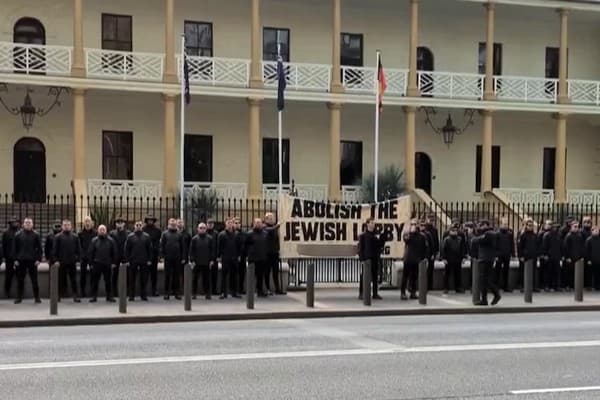
Neo Nazi rally Sydney X

Neo-Nazi rally outside NSW Parliament on November 8 (supplied: X)

Published: 15 January 2026

Last updated: 16 January 2026

The Federal Government’s draft bill on expanded hate speech laws will create serious offences for hate preachers, increase penalties for hate crimes, create a new racial vilification offence, introduce a new listing for prohibited hate groups at a lower threshold than the terror group listing, and establish the biggest gun buyback program since the Port Arthur massacre.

But support for the new laws is set to wedge the Jewish community against a broad range of free speech, civil liberties and religious groups, and even the Coalition, over concerns that it may limit free expression and questioning of multiculturalism, immigration and religion, and lead to self-censorship.

A key feature of the legislation is a new racial vilification offence, under which a prosecutor will now only need to prove that an accused person has knowingly promoted racial hatred, rather than be required to prove incitement of an audience.

The incitement threshold has previously stopped most prosecutions from succeeding “because of the of the impossibility of proving incitement beyond reasonable doubt”, the Executive Council of Australian Jewry said in a statement responding to the draft.

Jewish advocacy groups have in general welcomed the tougher provisions, in particular the broader definition for a new offence of serious vilification, but voiced reservations about bill’s exemptions for those who quote hate speech from religious texts.

ECAJ said it “welcomed, with qualifications,” the draft bill, calling it “a significant step in the right direction, but still suffers some significant shortcomings which will limit its effectiveness”.

The Online Hate Institute also gave cautious endorsement. "The provisions related to publicly promoting or inciting racial hatred look like they will be effective,’ CEO Andre Oboler told The Jewish Independent.


The Australia Israel and Jewish Affairs Council, commenting before it had seen the draft bill, said it wanted the hate laws to be tightened further. Among other changes, it called for the legislation to capture the use of the word Zionist in incitement provisions, and to address slogans “effectively calling for violence or terrorism against Jews or Zionists,” it told TJI.

But the Albanese government, which has recalled Parliament to debate the legislation next week, is under pressure “to halt and substantially rewrite its proposed expansion of hate crime laws,” according to a report in the Sydney Morning Herald.

Civil liberties groups claim the prohibitions on promoting hatred, glorifying past acts or conduct that might cause “fear or intimidation” risks criminalising mainstream political speech.

“Critics say the bill risks emulating the United Kingdom’s approach to online speech, where arrests over contentious posts have become increasingly common without addressing the underlying drivers of extremism,” the Herald reported.

Influential members of the Coalition are also speaking out against the severity of the draft hate provisions. Prominent backbencher Andrew Hastie has confirmed he would oppose the bill, calling it “an attack on basic democratic rights, including freedom of conscience, freedom of speech and freedom of religion”, the Guardian reported. A number of other Coalition MPs have already expressed similar misgivings. Opposition leader Sussan Ley has criticised the bundling of the hate provisions with gun control into the one bill.

ECAJ responded to the Coalition's concerns: "Some of the Opposition’s criticisms of the Bill are valid and repeat concerns which we ourselves have expressed about the Bill’s shortcomings.  However, there are also some important positives in the Bill, including the introduction of a new listing regime to proscribe extremist hate organisations. The ECAJ would urge the Coalition not to allow the perfect to become the enemy of the good." 

Protection for hatred from religious texts

Although Jewish advocacy groups broadly welcomed the provisions, they expressed reservations over several provisions of the draft legislation, notably a legal protection from prosecution for those who promote hatred through quotes from religious texts. Asked to justify this exemption, Prime Minister Albanese directed critics to read the Bible. “I encourage you to read the Old Testament and see what’s there and see if you outlaw that what would occur. So we need to be careful.

The entire concept of a religious exemption for racial hatred is a relic of outdated thinking.

“We consulted with faith groups, not just with the Jewish community. We want to make sure there’s the broadest possible support for this legislation,” Albanese told reporters.  

The ECAJ rejected the provision outright. “The entire concept of a religious exemption for racial hatred is a relic of outdated thinking,” it said. “Invoking religion as an excuse to dehumanise and mistreat others simply on the basis of who they are, must surely be a thing of the past.”

Promotion of hatred excludes gender and sexuality

ECAJ also criticised the promotion of hatred offence being limited to race, saying it should extend to   not gender, sexual orientation and other inherent attributes. “People who are targeted for hatred on the basis of these other attributes are equally entitled to protection,” ECAJ said, echoing a criticism first articulated by Allegra Spender, the Federal Member for Wentworth.

“ECAJ backed my push and also backed the inclusion of other victims of hate speech such as LGBTIQ+ Australians and people with disability. I hope we will soon get an opportunity to pass stronger legislation to draw a line that criminalises hate speech,” she told The Jewish Independent.

“We need to draw a bright line between legitimate debate where we express our views and disagree well, and speech that is intended to promote hatred," Spender added.

The 'reasonable person' test

There was disagreement over another aspect of the promotion of hatred measure. Andre Oboler, from the Online Hate Institute, said the promotion of hatred is “importantly, based on the impact on a 'reasonable person who is the target, or a member of the target group'. That is critical because using the test of a reasonable person from the impacted group implies knowledge of the sort of hate speech the group is usually targeted with and what it means.”

However, ECAJ disagreed with the “reasonable person” impact test. “Guilt or innocence should be decided solely on the basis of the conduct of the offender,” it said. “The impact on the victim should be relevant only in determining the sentence.”

AIJAC, which had not seen the draft bill when it responded to TJI, said it also took issue with the “objective observer” test. “We would like to see a refinement to the 'objective observer' test typically used for racial vilification cases, because this is being interpreted by the courts to allow vilification and calls for violence against Jews if haters simply substitute the word ‘Zionists' for Jews.”

Slogans calling for violence

AIJAC wants the legislation to address “slogans effectively calling for violence or terrorism against Jews or ‘Zionists”, citing examples including ‘Globalise the intifada', 'Death, death to the IDF', 'Khaybar Khaybar Ya Yahud, Jaish Muhammad Sauf Ya’ud (translation: ‘Khaybar, Khaybar, oh Jews! The army of Muhammad will return!'), 'There is only one solution: Intifada, Revolution', ‘All Zionists are terrorists', 'Resistance is justified when Palestine is occupied' and 'Resistance by any means necessary.'”

The Office of the Special Envoy Against Antisemitism said it was preparing a response to the draft legislation but it had not released any statement at the time this story was published.

TJI also approached Julian Leeser, the Federal MP for Berowra, but he is on leave and unavailable to comment.

The Prime Minister confirmed that parliament would sit for two days on January 19-20 to rush through the new laws. He said he would push for the bill to be passed before question time on Tuesday January 20, although it is understood that neither the Coalition nor the Greens have yet given their support to pass it through the Senate.

RESPONSES IN FULL

ECAJ “A significant step in the right direction”

AIJAC

"We would like existing laws extended to include:

Criminal penalties for severe racial vilification, harassment or incitement. Extending such penalties beyond direct incitement to violence, which has in the past been difficult to prove. AIJAC recommends that federal hate crimes could  use similar language to Chapter XI of WA’s Criminal Code Act 1913 (“Racist harassment and incitement to racial hatred”, sections 77-80J), which included criminal penalties for those engaging in conduct intended or even likely to create, promote or increase 'animosity towards, or harassment of, a racial group, or a person as a member of a racial group.';

We would like to see a refinement to the 'objective observer' test typically used for racial vilification cases, because this is being interpreted by the courts to allow vilification and calls for violence against Jews if haters simply substitute the word ‘Zionists' for Jews. 

We believe federal law should also address slogans effectively calling for violence or terrorism against Jews or ‘Zionists', including  not only ‘Globalise the intifada', but also 'Death, death to the IDF', 'Khaybar Khaybar Ya Yahud, Jaish Muhammad Sauf Ya’ud', 'There is only one solution: Intifada, Revolution', ‘All Zionists are terrorists', 'Resistance is justified when Palestine is occupied' and 'Resistance by any means necessary.'”

Allegra Spender, Federal Member for Wentworth

"There can never be any absolute guarantees for community safety, but our governments and Australians as a whole must do all they can to ensure that everyone feels safe here, and knows they belong in a country that values every individual, no matter what their backgrounds or belief.

I have been pushing the government and the parliament for stronger action on hate speech for the last 18 months. Neither of the major parties would support my amendments last year, but I believe stopping hate speech before it becomes violent action and extremism is essential. 

The Executive Council of Australian Jewry backed my push and also backed the inclusion of other victims of hate speech such as LGBTIQ+ Australians and people with disability. I continue to engage with the government, opposition and across the parliament and hope we will soon get an opportunity to pass stronger legislation to draw a line that criminalises hate speech. We need to draw a bright line between legitimate debate where we express our views and disagree well, and speech that is intended to promote hatred."

Andre Oboler, CEO of the Online Hate Institute

"The prohibited hate-group listing regime is a better solution than trying to designate hate groups under terrorism legislation. It is a specific prohibition, much like the specific prohibitions on outlaw motorcycle gangs - not everything needs to be done through terrorism legislation. 

“I can see it working for neo-Nazi groups, probably also Hizb ut-Tahrir, but I am less certain about the political will to use such laws to designate a group like WACA (Whistleblowers, Activists and Community Alliance) who were behind the attack on Miznon in Melbourne last year." 

"The provisions related to publicly promoting or inciting racial hatred look like they will be effective and importantly they are based on the impact on a 'reasonable person who is the target, or a member of the target group'. That is critical because using the test of a reasonable person from the impacted group implies knowledge of the sort of hate speech the group is usually targeted with and what it means.

“Having worked in this space for the last 20 years and see the role social media and other online communications play in promoting hate, I'm also pleased to see that the online world is specifically included. " 

You might also like
  • Antisemitism, homophobia and a radical response to both
    Dennis Altman
  • No action to stop Hezbollah ally beaming antisemitic and anti-Israel content into Australia
    Michael Visontay
  • Content platforms grilled over online antisemitism
    Peter Kohn
logomark.67a07ee3
We believe in the free flow of information

Republish our articles for free, online or in print, by using our Creative Commons licence

You might also like

    Commissioner Virginia Bell
    Royal CommissionAnalysisAustralia

    Now is the time for the Royal Commission to deliver, not be politicised

    Dean Sherr 2
    Generation Change: Rachel Moshel
    Generation ChangeInterviewArts & Culture

    Rachel Moshel: Creating a space for Jewish art and joy

    Gideon Cohen
    Royal Commission final
    Royal CommissionNewsAustralia

    Strategies for cohesion final focus of Royal Commission hearings

    Peter Kohn 1

About the author

Michael Visontay

Michael Visontay

Michael Visontay is Commissioning Editor of TJI and was Editor-in-Chief from 2017-22. Michael is a former Assistant Editor of The Sydney Morning Herald and columnist with The Australian Jewish News. He has written six books, including Who Gave You Permission? with Manny Waks, and Welcome to Wanderland: Western Sydney Wanderers and the Pride of the West. His most recent book is Noble Fragments: the Maverick who broke up the world's greatest book (Scribe, 2024).

More from the author

ReflectionWorld

My memory of Gloria Steinem

NewsAustralia

No action to stop Hezbollah ally beaming antisemitic and anti-Israel content into Australia

NewsAustralia

Beinart takes a wrecking ball to Israel

AnalysisAustralia

Prime minister’s absence exposes weakness in Royal Commission hearings

Comments2

  • Avatar of Steve Hopley

    Steve Hopley17 January at 06:43 am

    In terms of sources, you to frequently quote the ECAJ. Do you feel they represent a balanced view: I have never heard the ECAJ be anything but “cheer-leaders” for all actions of the current Israeli government and have strongly pushed the the idea that critism of the Israeli government or Zionism should be defined as anti-sematism. This view seems to very much at odds with the view of many Australians including many Jewish Australians.

  • Avatar of Dror

    Dror15 January at 02:27 am

    A midevil text doesn’t necessarily represent the values of the 21st century.

    Every preacher has the right to choose what he wants to quote – this choice is what Australia must regulate as part of its counter extremism campaign after the Bondi terror attack.