Aa
  • Read, Watch, Listen
  • TJI Series
  • Community Action
  • Events
  • Zedi
Follow us and continue the conversation
  • LinkedIn
  • Instagram
  • FaceBook
  • X
  • YouTube
Test yourself with the TJI Quiz!

Adjust size of text

Aa

Follow us and continue the conversation

  • LinkedIn
  • Instagram
  • FaceBook
  • X
  • YouTube

Your saved articles

You haven't saved any articles

What are you looking for?

Original reporting, insightful analysis and diverse views, delivered straight to your inbox

  • LinkedIn
  • Instagram
  • FaceBook
  • X
  • YouTube
Your support fuels our mission to inform, entertain and inspire.

The Jewish Independent is bound by the Standards of Practice of the Australian Press Council. If you believe the Standards may have been breached, you may approach The Jewish Independent or make a complaint to the Australian Press Council in writing at www.presscouncil.org.au. The Council may also be contacted on 1800 025 712.

  • Our Story
  • Contact us
  • Our Team
  • Support us
  • Guidelines
  • Pitch your idea
  • Republishing us
  • Community Action
  • Our Awards
  • LinkedIn
  • Instagram
  • FaceBook
  • X
  • YouTube
Aboriginal FlagTorres Strait Islanders Flag

The Jewish Independent acknowledges Aboriginal and Torres Strait Islander peoples as the Traditional Owners and Custodians of Country throughout Australia. We pay our respects to Elders past and present, and strive to honour their rich history of storytelling in our work and mission.

© The Jewish Independent 2026All Rights Reserved
Website design and development by Your Creative, MelbourneTerms & ConditionsPrivacy Policy
HomeRead, Watch, ListenIsrael
Israel Iran WarAnalysisIsraelWorld

Qatar diplomatic fine line survives, even after Iranian attacks

Doha understands the limits of American support and the inevitability of Iranian pressure, so even under fire it chooses diplomacy
Michal Yaari
Print this
Emir Of Qatar, Sheikh Hamad Bin Khalifa Al Thani

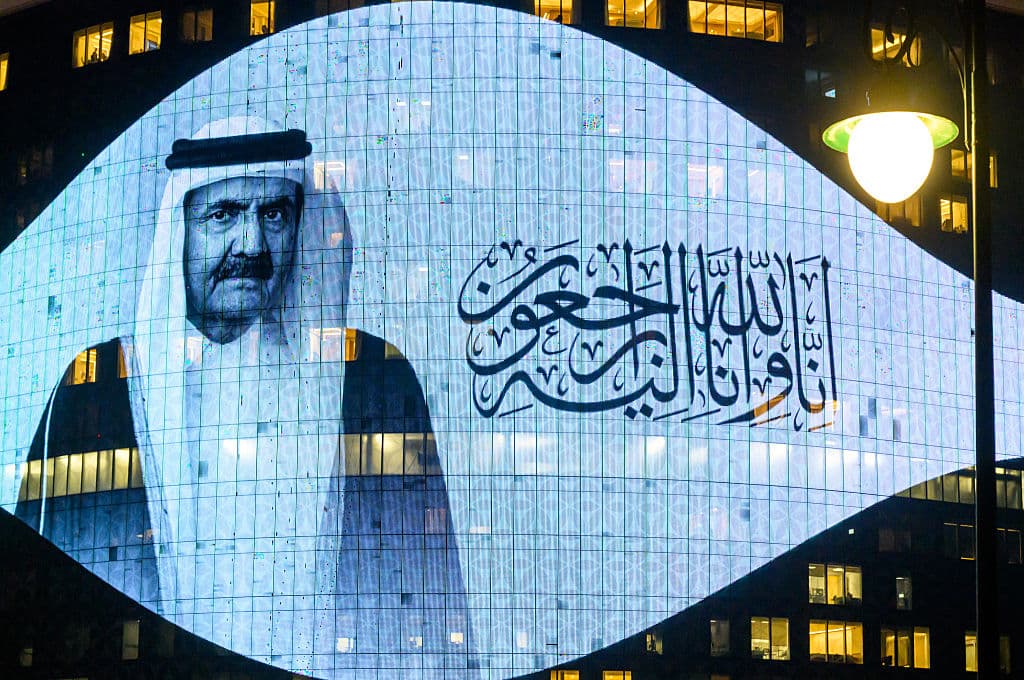
A portrait of the late former Emir of Qatar, Sheikh Hamad bin Khalifa Al Thani, is displayed on the LED facade of a building in Doha, Qatar, on July 12, 2026 (Noushad Thekkayil/NurPhoto via Getty Images)

Published: 14 July 2026

Last updated: 14 July 2026

Every parent knows the situation. A child comes home from school and tells you about the class bully who keeps picking on them. The usual parental response is simple: “Sweetheart, just ignore him. Smile, keep walking, and don't give him a reason to bother you. Sooner or later, he'll find another target.“

For decades, Qatar took that advice further than anyone else. Recognising its strategic weakness compared with its much stronger neighbour, the small emirate adopted a strategy aimed at reducing tensions with Iran, while protecting its own security. Instead of confronting Tehran, Qatar chose to live alongside it. As part of that strategy, it built deep political and economic ties with the Islamic Republic, hoping to reduce Tehran's incentive to disrupt the regional order. At the same time, it strengthened its strategic partnership with the United States, believing that when the moment of truth came, the world's strongest military power would protect it from external threats.

For decades, Tehran and Doha maintained good neighbourly relations without ever becoming besties. Their coordination on a range of regional issues reinforced Qatar's belief that its strategy toward Iran was working. For years, everything seemed to confirm that belief, but that is the deceptive nature of foreign policy. Any foreign policy. You can never know for certain whether a strategy is truly working. The only thing you can know for sure is when it fails.

For Qatar, that moment came when Iran attacked its territory. It is hard to overstate the shock felt by Qatar's leadership. Although Iran insisted that the strikes targeted American assets rather than Qatar itself, the facts were impossible to ignore. Iran had violated Qatar's sovereignty and exposed just how vulnerable the small emirate really was. It was no coincidence that Qatar's prime minister used unusually strong language, saying that he felt “a deep sense of betrayal.”
This should have been Doha's wake-up call. Its long-held assumptions had collapsed. End of story, or so it seemed. All three pillars that were supposed to guarantee Qatar’s security had failed when they were needed most: Qatar’s mediation could not prevent an American military strike against Iran; the American security umbrella proved unable to provide complete protection against ballistic missiles; and the policy of “managing the threat instead of confronting it” collapsed in the face of reality.

By any reasonable standard, this should have forced Doha to change course. It did not. Despite the major setback in relations between the two countries, Qatar continued to push for a diplomatic solution to the crisis, even as Iran continued to strike its territory. This raises important questions: Why would Qatar support a fragile ceasefire that appears designed mainly to create the illusion that the crisis is over, when there is little reason to believe it will restore freedom of navigation through the Strait of Hormuz? Why not encourage President Trump to do whatever it takes to eliminate the Iranian threat once and for all?

The answer is simple: For Doha, this was never a war that could truly be won. It was a crisis that had to be contained, rather than escalated. It understood how this war was likely to end, long before it began.

One does not need to be an expert on the history of American intervention in the Middle East, to know that, in most cases, attempts to reshape the region according to American interests, have failed. Iraq, Libya, Egypt, and Syria are clear examples. Beyond recognising the limits of American support, Qatar faces one reality it cannot escape: geography. No matter how hard the Qataris may pray, Iran will remain their neighbour, and after the Americans leave the region (once again), Qatar will still have to live alongside Iran. The region's strongest power will continue to cast a long shadow over the Gulf, while the small emirate will still lack the strategic capacity to face that threat on its own. Qatar's prime minister captured this reality just a few weeks after the war began: “Iran is our neighbour, and we have to maintain good neighbourly relations.”

That single sentence explains Qatar's strategy better than anything else. The war changed Qatar's circumstances, but not its geography. That is why, for Qatar, little is likely to change. Doha will continue to pursue diplomacy through a managed relationship with Iran: practical ties based on a clear understanding of the Iranian threat, Qatar’s own weakness, and the lack of any better alternative.

Given that Qatar has chosen to maintain its policy while adapting it to the new reality, it is hardly surprising that Doha continues to use mediation as a form of protection in the Iran-US war.  After all, for years Qatar mediated conflicts on the basis of three key assumptions: it was not a direct party to the conflict, the rival sides viewed it as a neutral and impartial mediator, and it sought a diplomatic solution without clearly favouring either side.

This time, however, the situation is fundamentally different. The small emirate is no longer watching the conflict from the sidelines. It has become one of its victims. Repeated Iranian attacks have exposed Qatar's vulnerability and severely undermined both its security and its economic resilience. Simultaneously, its survival depends heavily on American protection. Under these circumstances, even Qatar, with its well-known ability to shape an alternative version of reality, can no longer claim to be an impartial mediator.

Why, then, did Qatar choose to carry such a responsibility on its fragile shoulders, knowing it could shape its future for decades to come? Precisely because of that.

For Qatar, a long war, even at a low level, means more instability in the Gulf and a growing threat to its most important interests. Unlike in the past, Doha wants to play a central role in the talks not only to gain prestige, but to protect its own survival in an increasingly unstable region. Qatar is trying to show the US administration that it is an indispensable partner, one that cannot easily be replaced. At the same time, its leading role in the talks allows it to continue its traditional policy of not taking sides while maintaining close relations with countries that are in conflict with one another.

So did Qatar win or lose the war? The answer is simple: both.

Qatar did not win the war, but neither did it lose badly. The small emirate was hit hard by its powerful neighbour. Yet once again, it showed that it knows how to turn even the most difficult crises to its advantage. Qatar may always fear the neighbourhood bully. But thanks to its sophistication, boldness, creativity and a great deal of money, it will find a way to survive him too.

You might also like
  • Antisemitism, homophobia and a radical response to both
    Dennis Altman
  • Tame apologises – but with little grace
    Deborah Stone
  • Confronting Richard Flanagan and the myth of the Israel lobby
    Mary Garden
logomark.67a07ee3
We believe in the free flow of information

Republish our articles for free, online or in print, by using our Creative Commons licence

You might also like

    Woman with land and houses behind her
    NewsAustralia

    Australia to increase sanctions against West Bank settlements

    Deborah Stone 2
    Ms. Foundation Women of Vision Awards: Celebrating Generations of Progress & Power
    ReflectionWorld

    My memory of Gloria Steinem

    Michael Visontay
    Rozana Beit Oula
    PeacebuildingOpinionIsrael

    Peacebuilding through the eyes of a sceptic

    Ron Finkel

About the author

Michal Yaari

Michal Yaari

Dr Michal Yaari, an expert on Saudi foreign policy at Tel Aviv University, is a member of the panel of experts at the Israeli Peace Initiative, an Israeli non-profit dedicated to promoting a regional peace agreement.

More from the author

AnalysisWorld

Saudi nuclear deal fiasco: what was Trump thinking?

AnalysisIsrael

Iran-Israel war puts Saudi Arabia in a difficult position

AnalysisIsrael

Normalisation, Palestine, stability: Saudi Arabia’s agenda

Comments

No comments on this article yet. Be the first to add your thoughts.