Aa
  • Read, Watch, Listen
  • TJI Series
  • Community Action
  • Events
  • Zedi
Follow us and continue the conversation
  • LinkedIn
  • Instagram
  • FaceBook
  • X
  • YouTube
Test yourself with the TJI Quiz!

Adjust size of text

Aa

Follow us and continue the conversation

  • LinkedIn
  • Instagram
  • FaceBook
  • X
  • YouTube

Your saved articles

You haven't saved any articles

What are you looking for?

Original reporting, insightful analysis and diverse views, delivered straight to your inbox

  • LinkedIn
  • Instagram
  • FaceBook
  • X
  • YouTube
Your support fuels our mission to inform, entertain and inspire.

The Jewish Independent is bound by the Standards of Practice of the Australian Press Council. If you believe the Standards may have been breached, you may approach The Jewish Independent or make a complaint to the Australian Press Council in writing at www.presscouncil.org.au. The Council may also be contacted on 1800 025 712.

  • Our Story
  • Contact us
  • Our Team
  • Support us
  • Guidelines
  • Pitch your idea
  • Republishing us
  • Community Action
  • Our Awards
  • LinkedIn
  • Instagram
  • FaceBook
  • X
  • YouTube
Aboriginal FlagTorres Strait Islanders Flag

The Jewish Independent acknowledges Aboriginal and Torres Strait Islander peoples as the Traditional Owners and Custodians of Country throughout Australia. We pay our respects to Elders past and present, and strive to honour their rich history of storytelling in our work and mission.

© The Jewish Independent 2026All Rights Reserved
Website design and development by Your Creative, MelbourneTerms & ConditionsPrivacy Policy
HomeRead, Watch, ListenWorld
AnalysisWorld

Saudi nuclear deal fiasco: what was Trump thinking?

Trying to impose normalisation with Israel as an afterthought is not how you treat your most important Arab ally.
Michal Yaari
Print this
man in blue suit is clapped by man in white robe and red checked keffiyah as audience watches

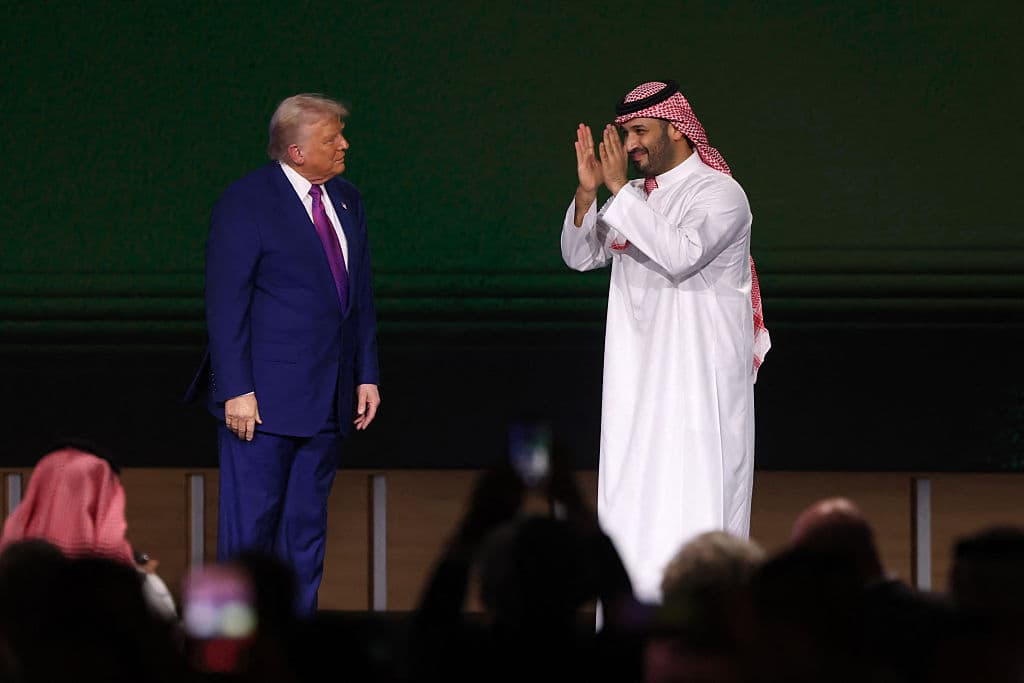
US President Donald Trump looks on as Saudi Crown Prince Mohammed bin Salman greets the crowd during the Saudi-US investment forum in Riyadh, Saudi Arabia on May 13, 2025 (FAYEZ NURELDINE/AFP via Getty Images)

Published: 28 July 2026

Last updated: 29 July 2026

Whenever people ask me why I chose to focus my research on Saudi Arabia, I always give the same answer: “Because I get them.” They have a vision, a strategy, and a sense of logic. Unfortunately, I can't say the same about the current governments of Israel and the United States.

Last week, the Saudis thought their biggest dream was finally coming true, thanks to Uncle Sam: a civilian nuclear program with the right to enrich uranium and relatively few restrictions. Then one day after signing the deal, just like that, the dream was gone. President Trump decided that the deal would only move forward if Saudi Arabia agreed to normalise relations with Israel.

Can somebody please tell the President that this isn't how it works?

Assuming President Trump is serious about conditioning approval of Saudi Arabia's civilian nuclear program on normalisation with Israel, which version of the “Abraham Accords” does he actually have in mind? Is it the 2020 version – the one that ignored the Palestinian issue and, in doing so, became one of the major catalysts for the horrific events of October 7, 2023?

If so, does he really want Saudi Arabia to sign an agreement with Israel that, given the current geopolitical reality, could jeopardise its security interests and undermine the prestige of his best buddy, Mohammed bin Salman (MBS)? Even if he does, that's simply not an option. MBS will accept nothing less than a genuine political pathway toward the establishment of a Palestinian state.

Or maybe the President is aiming for an updated version of the ״Abraham Accords״, one that addresses Palestinian political aspirations? That won't work either. Israel's current government categorically rejects even opening a discussion on the issue.
Talking about peace without meaning it

So what exactly is the strategy here? Talking about peace without really meaning it?

I've never had to make decisions much harder than choosing what to have for lunch, but I do know that a peace agreement between Israel and an Arab state, especially Saudi Arabia, is not a product you pick up at the supermarket, simply because it's on sale. Real leaders don't normalise relations because it's the easiest option. They pursue it because they believe it's the right thing to do for their country.

They understand both the benefits and the costs, and they are willing to pay a very high political price because it's worth it. Mr President, you don’t want the Saudis and the Israelis to sign a peace agreement simply because you forced them to. Normalisation is the final stage of a long evolutionary process. There are no shortcuts.

If we put the normalisation issue aside for a moment, one could argue that the US approval was intended to bring Riyadh closer to Washington and help restore a relationship that has been shaken in recent months. Saudi Arabia is disappointed with the United States because it believes its closest ally initiated a war it never wanted and is now leaving it to pay the price.

There is no doubt that a green light for a Saudi civilian nuclear program could have strengthened ties between the two countries and demonstrated that their partnership remains strong even in times of crisis.

Instead, reversing that decision within a single day only deepens Saudi mistrust. It pushes the Kingdom further into the arms of countries that are far less comfortable for the United States, such as Russia and China. Although President Trump is viewed by the Saudis as a more favourable partner than Biden and Obama, his conduct toward the Kingdom has often been patronising and disrespectful.

Three options for Saudi prince

So what options does the Saudi Crown Prince have now?

The most realistic option is to wait. Israel is expected to hold elections in about three months, and if the opposition replaces the most radical coalition in the country's history, the political process could resume. A new Israeli government is unlikely to support the establishment of a Palestinian state anytime soon.

It could, however, make clear that both Saudi Arabia and Israel share an interest in resolving the Israeli-Palestinian conflict through peaceful negotiations, opening the door to renewed talks between Riyadh and Jerusalem. Perhaps that alone would be enough to win President Trump's approval.

Another option is to put pressure on Washington to restore the civilian nuclear deal to its original form. Saudi Arabia could reduce new investments in the United States, purchase more weapons from non-American suppliers, strengthen its ties with China and Russia, and deepen cooperation with other partners.

A third option is simply to wait and see. Much will depend on factors that remain uncertain: Trump's unpredictable nature, developments in the war with Iran, Israel's elections, and other regional events. Waiting is not necessarily against Saudi Arabia's interests. It may even create new opportunities.

Whatever the Saudi Crown Prince decides, President Trump should remember one thing: Saudi Arabia is not just another country in the Middle East. It is America's most important and strategically significant Arab ally in the region.

Treating issues that lie at the very core of the Kingdom's national, security, and economic interests as part of a cynical political game is not only inappropriate. It is dangerous for the future of United States-Saudi relations and for the future of the Middle East itself.

Ultimately, the lesson from the past few days is simple: “It's the leader, stupid.”

You might also like
  • Tame apologises – but with little grace
    Deborah Stone
  • Confronting Richard Flanagan and the myth of the Israel lobby
    Mary Garden
  • UK’s dramatic policy change on Israel-Palestine
    Colin Shindler
logomark.67a07ee3
We believe in the free flow of information

Republish our articles for free, online or in print, by using our Creative Commons licence

You might also like

    Ms. Foundation Women of Vision Awards: Celebrating Generations of Progress & Power
    ReflectionWorld

    My memory of Gloria Steinem

    Michael Visontay
    Rozana Beit Oula
    PeacebuildingOpinionIsrael

    Peacebuilding through the eyes of a sceptic

    Ron Finkel
    Protest
    AnalysisIsrael

    Western ‘Palestinianism’ colonises everything – and hurts Palestinians

    Andres Spokoiny 5

About the author

Michal Yaari

Michal Yaari

Dr Michal Yaari, an expert on Saudi foreign policy at Tel Aviv University, is a member of the panel of experts at the Israeli Peace Initiative, an Israeli non-profit dedicated to promoting a regional peace agreement.

More from the author

AnalysisIsrael

Qatar diplomatic fine line survives, even after Iranian attacks

AnalysisIsrael

Iran-Israel war puts Saudi Arabia in a difficult position

AnalysisIsrael

Normalisation, Palestine, stability: Saudi Arabia’s agenda

Comments

No comments on this article yet. Be the first to add your thoughts.