What is the 23-state solution – and how could it change the trajectory for Israel-Palestine?
Influential US politician Rahm Emanuel has warned the US-Israel alliance is approaching a crossroads and endorsed a regional framework considered more feasible than the two-state solution
Shahar Burla
Influential Democrat Rahm Emanuel endorses a new regional framework for the Middle East (Bryan Bedder/Getty Images for Theodore Roosevelt Presidential Library)
Published: 14 July 2026
Last updated: 14 July 2026
When Rahm Emanuel addressed a packed audience at Tel Aviv University last week, his most significant message was not his sharp criticism of Benjamin Netanyahu's government. It was his endorsement of a different vision for resolving the Israeli-Palestinian conflict.
Often cited as a potential Democratic presidential candidate, Emanuel was White House Chief of Staff in the Obama administration and is a former US ambassador to Japan. He is likely to be influential in future Democratic administrations.
So he carried weight, warning that the US-Israel alliance is approaching a crossroads. Israel, he said, cannot rely indefinitely on military power while its international legitimacy continues to erode.
Instead of renewing the familiar call for a two-state solution, Emanuel endorsed what has become known as the 23-state solution, a regional framework first developed by the liberal pro-Israel advocacy group J Street. The proposal seeks to establish not only an Israeli-Palestinian agreement, but a broader regional compact involving Israel, a future Palestinian state and the 21 members of the Arab League. In Emanuel's words, it would deliver “Israel's best day and Iran's worst day”.
Supporters argue that Israeli security, Palestinian sovereignty and Arab normalisation should no longer be pursued separately, but as a single regional strategy
His endorsement matters because it reflects a broader shift taking place within the mainstream American Democratic centre-left and Israel's peace camp. Rather than abandoning the goal of Palestinian statehood, supporters argue that the assumptions underpinning three decades of peace diplomacy no longer reflect the political realities that emerged after October 7.
The new approach rests on two central ideas. Firstly, previous peace efforts expected Israelis and Palestinians to resolve core issues that neither side could realistically solve alone. Secondly, advocates increasingly argue that peace should be presented to Israelis primarily as a strategy for strengthening national security, economic prosperity and international legitimacy, rather than solely as a moral imperative.
Whether that new thinking can succeed where previous initiatives failed remains uncertain. But it represents one of the most significant attempts to rethink the traditional two-state framework since the Oslo Accords.
Why are supporters rethinking the two-state solution?
Despite its name, the 23-state solution does not abandon Palestinian statehood. Rather, it challenges the assumption that Israelis and Palestinians alone can negotiate and implement a lasting peace agreement.
For more than three decades, from the Oslo Accords to the Camp David summit and later negotiations between Israeli Prime Minister Ehud Olmert and Palestinian Authority President Mahmoud Abbas, peace efforts treated the conflict primarily as a bilateral dispute. The new approach argues that this overlooked its regional dimension.
Supporters contend that core issues, including Jerusalem, Palestinian refugees and long-term security arrangements, cannot be resolved by Israelis and Palestinians alone. Instead, they require active involvement from Arab states capable of providing political legitimacy, economic support and security guarantees.
The proposal also builds on recent regional developments. The Abraham Accords demonstrated growing Arab willingness to cooperate with Israel, while the Gaza war reinforced Saudi Arabia's position that lasting normalisation must include a credible pathway to Palestinian statehood.
Supporters therefore argue that Israeli security, Palestinian sovereignty and Arab normalisation should no longer be pursued separately, but as a single regional strategy.
What is the 23-state solution?
The proposal is named after its participants: Israel, a future Palestinian state and the 21 member states of the Arab League.
Rather than relying solely on Israeli-Palestinian negotiations, it seeks to align the interests of all parties by creating incentives that extend well beyond the conflict itself.
Under the framework, Israel would receive comprehensive diplomatic recognition across the Arab world, together with deeper regional economic, technological and security integration. Palestinians would gain an internationally supported pathway to an independent, demilitarised state. Arab governments would become active guarantors of security arrangements, governance reforms and economic development rather than remaining observers waiting to endorse a final agreement.
Emanuel argues that this broader regional framework would also reshape the strategic balance in the Middle East. Instead of confronting Iran primarily through military deterrence, Israel would become part of a wider regional coalition linking moderate Arab states through shared economic interests, intelligence cooperation and collective security.
The proposal also connects diplomacy with economics. Supporters envisage Israel becoming a central technological and transport hub linking Europe, the Middle East and India through emerging trade corridors such as the India-Middle East-Europe Economic Corridor. Rather than treating peace as an end in itself, they present regional integration as a source of long-term prosperity for all participants.
Crucially, the framework places obligations on every party. Arab governments would support the development of a Palestinian leadership committed to coexistence while encouraging educational reform and ending financial incentives for terrorism. Israel would be expected to halt unilateral expansion in the West Bank, strengthen moderate Palestinian partners and recommit itself to negotiations leading towards Palestinian sovereignty. In return, Arab states would progressively deepen diplomatic recognition and economic cooperation with Israel.
Why has the peace camp changed its message after October 7?
The October 7 attacks fundamentally altered Israeli public opinion and forced many supporters of a negotiated settlement to reassess not only their strategy, but also their language.
For decades, much of Israel's peace camp argued that ending the occupation was both a moral necessity and essential to preserving Israel's democratic character. While those arguments remain important, supporters of the 23-state solution believe they no longer resonate with an Israeli public traumatised by Hamas' attack and the subsequent war.
Instead, they argue that the case for compromise must begin with security. Nadav Tamir contends that October 7 exposed the limitations of previous assumptions. Israelis, he argues, are now more fearful, more suspicious and less willing to accept abstract moral arguments. If advocates of Palestinian statehood want to persuade the Israeli public, they must demonstrate that a diplomatic agreement would make Israel safer, not simply more just.
This represents one of the proposal's most significant innovations. Rather than asking Israelis to accept greater risks in pursuit of peace, supporters argue that regional diplomacy itself should become part of Israel's security doctrine.
How does the proposal build on the Arab Peace Initiative and the Abraham Accords?
The 23-state solution combines two previous diplomatic approaches. The 2002 Arab Peace Initiative offered Israel full normalisation with the Arab world in exchange for a negotiated settlement and Palestinian statehood. The Abraham Accords demonstrated that Arab states were increasingly willing to cooperate with Israel on trade, technology and security.
Supporters argue that each initiative addressed only part of the challenge. The Arab Peace Initiative lacked political momentum, while the Abraham Accords advanced regional cooperation without resolving the Palestinian issue.
Since October 7, Saudi Arabia has repeatedly insisted that full normalisation requires a credible pathway to Palestinian statehood. The 23-state solution, therefore, seeks to link regional integration and Palestinian sovereignty, arguing that progress on both must occur simultaneously.
What are the biggest obstacles?
The proposal faces significant political barriers. Israel's current government opposes Palestinian statehood and continues expanding settlements, while Hamas rejects negotiated coexistence and the Palestinian Authority faces ongoing questions about its legitimacy and capacity to govern.
Regional politics also remain challenging. Although many Arab states increasingly see Israel as a strategic partner against Iran, they continue to insist that normalisation must include meaningful progress towards Palestinian statehood.
Ultimately, the proposal depends on political leadership that does not currently exist. Supporters, consequently, present it less as an immediate peace plan than as a long-term regional framework.
Whether it succeeds where previous initiatives failed remains uncertain. But Emanuel's endorsement reflects a broader shift in thinking: that lasting peace may depend less on bilateral negotiations than on embedding Israeli-Palestinian reconciliation within a wider regional settlement.
About the author
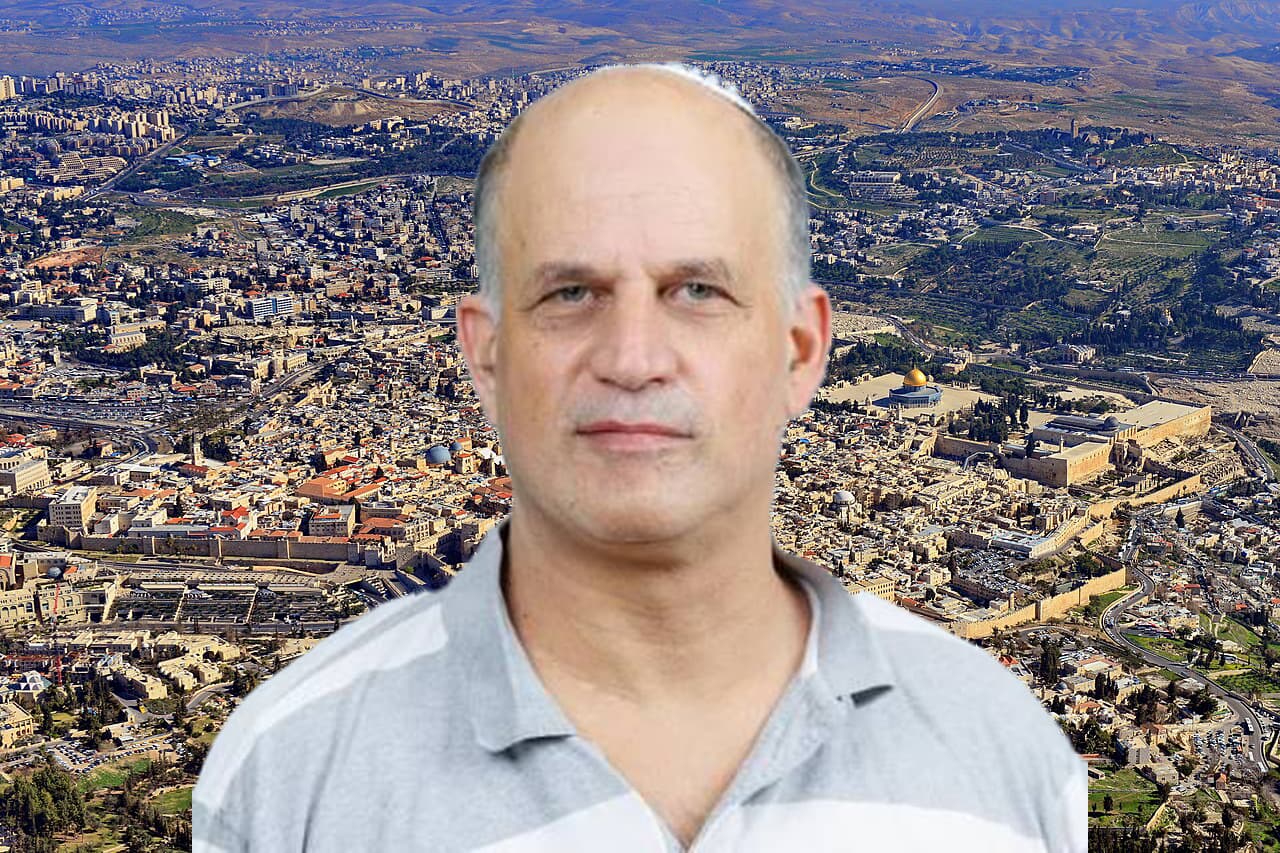
Dr Shahar Burla is a Sydney-based researcher, lecturer and Contributing Editor of TJI. Shahar holds a Master’s degree in political science from Hebrew University and a PhD in political science from Bar-Ilan University. He is the author of Political Imagination in the Diaspora: The Construction of a Pro-Israeli Narrative (2013) and co-editor of Australia and Israel: A Diasporic, Cultural and Political Relationship (2015).