Aa
  • Read, Watch, Listen
  • TJI Series
  • Community Action
  • Events
  • Zedi
Follow us and continue the conversation
  • LinkedIn
  • Instagram
  • FaceBook
  • X
  • YouTube
Test yourself with the TJI Quiz!

Adjust size of text

Aa

Follow us and continue the conversation

  • LinkedIn
  • Instagram
  • FaceBook
  • X
  • YouTube

Your saved articles

You haven't saved any articles

What are you looking for?

Original reporting, insightful analysis and diverse views, delivered straight to your inbox

  • LinkedIn
  • Instagram
  • FaceBook
  • X
  • YouTube
Your support fuels our mission to inform, entertain and inspire.

The Jewish Independent is bound by the Standards of Practice of the Australian Press Council. If you believe the Standards may have been breached, you may approach The Jewish Independent or make a complaint to the Australian Press Council in writing at www.presscouncil.org.au. The Council may also be contacted on 1800 025 712.

  • Our Story
  • Contact us
  • Our Team
  • Support us
  • Guidelines
  • Pitch your idea
  • Republishing us
  • Community Action
  • Our Awards
  • LinkedIn
  • Instagram
  • FaceBook
  • X
  • YouTube
Aboriginal FlagTorres Strait Islanders Flag

The Jewish Independent acknowledges Aboriginal and Torres Strait Islander peoples as the Traditional Owners and Custodians of Country throughout Australia. We pay our respects to Elders past and present, and strive to honour their rich history of storytelling in our work and mission.

© The Jewish Independent 2026All Rights Reserved
Website design and development by Your Creative, MelbourneTerms & ConditionsPrivacy Policy
HomeRead, Watch, ListenIsrael
OpinionIsrael

RALPH GENENDE: My pride in being a religious Zionist has been replaced by shame

Ralph Genende
Print this

Published: 20 January 2023

Last updated: 5 March 2024

I'm ashamed of the intolerance of Israel’s Zionist religious leaders to other Jews, their hatred of Palestinians, vitriol to homosexuals and women, and their undermining of the democratic scaffolding of Israeli society.

I have always been a proud dati (Orthodox) Jew and religious Zionist. But over the past few decades, my pride has been replaced by alarm and over the past few weeks it has been displaced by shame.

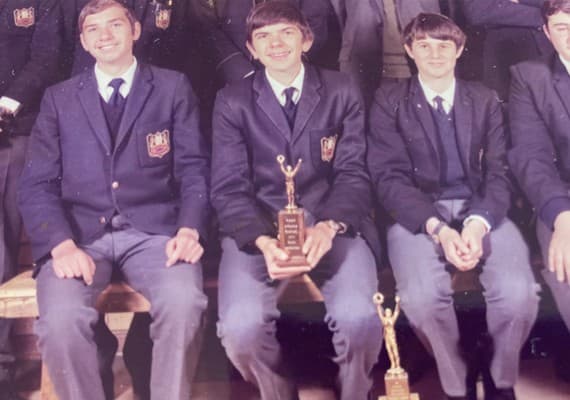
It was in South Africa that I became both religious and a Zionist. I was sent to a Modern Orthodox boys high school so I could receive bar mitzvah training. My parents got more than they bargained for.

I was fortunate to have some excellent teachers, youth leaders and rabbinic role models. Men and women who were as proud and principled in their Judaism as they were as members of wider society.

My exemplars, the Rosh Yeshiva of my high school, Rabbi Avraham Tanzer, the Av Beth Din of Johannesburg, Rabbi Moshe Kurtstag, and Leila Bronner, Orthodox feminist and associate professor at the University of Witwatersrand, were people of morality and principle, dedicated to Torah.

They understood that most Jews were not frum or likely to become religious but who were to be respected for who they were. They recognised the world around them and had a superb sensitivity to the complex wider society in which they were imbedded.

Bnei Akiva helped me to embrace the excitement of ideas from all sources, Jewish and non-Jewish, to have a social conscience, respect the other, especially the outsider - be they man or woman, black or Asian.

One of the golden threads of my religious education at school and Bnei Akiva was the love for and commitment to Israel and Hatikva sang loudly in my soul.

I still try to understand what drives religious Israelis to support the shameless hatred of the other and the jingoism and assumed superiority of so many of the settlers, now ministers of the Knesset.
Over the years I have struggled with the chauvinistic attitudes of much of the settler movement and their distortion of so many Torah values in the name of religious Zionism. I have agonised over my own love of the land, our ancestral land on which Abraham wondered and Jacob dreamed, and the connection I feel to so many places on the West Bank.

Yet I wondered how I could square this with the fact that the Shtachim were not terra nullius but settled by other people who had been living there for hundreds of years. The brilliant, controversial and deeply religious Hebrew University Professor Yeshayahu Leibowitz was as arresting a moral influence, as was his sister, Nechama, a superb intellectual (and Biblical) force.

He was prescient when, in 1967, he predicted the inevitable moral consequences of the Israeli occupation of the territories. He championed the role and right of Israel to restore independence to the Jewish nation in its own land.

It was, as he bluntly put it, "an expression of our being fed up with being ruled by the Goyim." Nevertheless, he was a severe critic of much of Israeli policy and pained by the injustices committed by Israel against the Palestinians.

I still try to understand what drives religious Israelis to support the shameless hatred of the other and the jingoism and assumed superiority of so many of the settlers, now ministers of the Knesset. Perhaps it is the deep fear we Jews have of living in a post-Shoah world, our precarious sense of self, our fear of existential extinction and yes, our recognition that we have to look after our own selves, and not rely on the beneficence of “the goyim”.
Ralph Genende (holding trophy) at Yeshiva ollege
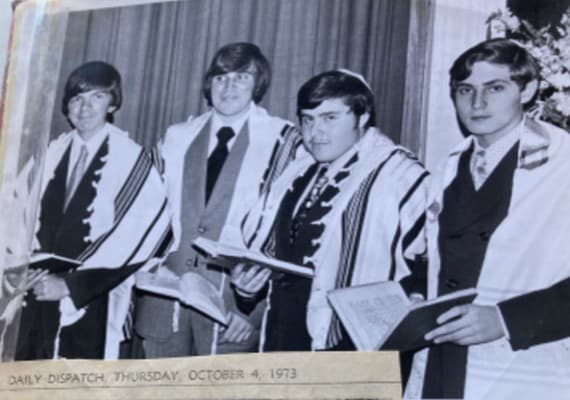
Leading the Rosh Hashanah services, aged 16

The irony of the name of the Noam Party (noam means pleasant) of Avi Moaz with its toxic anti-LGBTIQ+ stance is only matched by that of the Shas Party (it stands for Torah Guardians) of Aryeh Deri. What’s pleasant about those who can’t tolerate the other? 

Is Deri the guardian of a party and a Torah that allows a convicted criminal to be a leader? He certainly is no protector of the Torah principles I was taught and try to live by – being a moral and refined human being who in the words of our daily prayers loves justice and righteousness.

I am in despair about the avowed Zionist religious leaders who appear to know little or care less of Israel’s Declaration of Independence, which states that Israel will “ensure complete equality of social and political rights to all its inhabitants irrespective of religion, race or sex."

I am ashamed of their combative and derogatory attitude towards other Jews, their explicit and implicit attitude towards Israeli Arabs (who are  treated as second-class citizens), their hatred of Palestinians, their vitriol towards homosexuals and left-wingers; their minimisation of women (note the sparsity of women in this government); and their undermining of the democratic scaffolding of Israeli society.

These are moral failures, not only by the laws that define Western democracy, but also by our own Jewish moral code. It is what the late Rabbi Lubofsky of St Kilda Shul called sanctified intolerance.

I still pray and hope that the message and example of the early religious Zionists will be restored and renewed.

Leading American rabbi Yitz Greenberg gets to the heart of the issue: “The Deri law dramatises the corruption of Torah Judaism, which has spread from the Haredi sector to the modern Orthodox sector in recent decades.

“Observing a handful of rituals (Kashrut, Shabbat and family purity) has become the defining criterion of being an Orthodox Jew. Observing the ethical commandments laws regulating behaviours between people has been downgraded and violation is not considered repellent in the religious community.”

These religious people don’t speak in my name and can’t presume to speak in God’s name, either. The late Rabbi Jonathan Sacks said it well: “To invoke God to justify violence against the innocent is not an act of sanctity, but of sacrilege. It is a kind of blasphemy. It is to take God’s name in vain.’’

Our rabbis remind us that our forefather Jacob is called by two other names: Israel and Yeshurun. These reflect his dual spiritual character; Israel refers to the Jews relationship to one another as the people of a shared destiny; Yeshurun, from the Hebrew for upright and fair, reflects our moral responsibility to the world.

The early religious Zionists, like the first Chief rabbi of Israel, Avraham Kook, and Rav Neriah, the first official rabbi of Bnei Akiva (who served in the Knesset and received the Israel Prize for his contribution to society and state) lived their lives dedicated to these dual principles. They reached out to all Jews regardless of their religiosity, they reached out to the world around them in a spirit of love and compassion.

They spread the light not the darkness, the love not the hatred. They inspired me and I still pray and hope, despite the purveyors of religion and religious Zionism today, that their message and example will be restored and renewed, that the Torah’s torch “of pleasantness and peace” will pierce through the opacity and clouded minds of our generation.

You might also like
  • Fighting for a better Israel 
    Peter Kohn
  • Where are the women in this election campaign?
    Eetta Prince-Gibson
  • Your Israel election cheat sheet
    Deborah Stone
logomark.67a07ee3
We believe in the free flow of information

Republish our articles for free, online or in print, by using our Creative Commons licence

You might also like

    Protest held in Israel against Prime Minister Netanyahu and Israeli government
    Israel Votes 2026AnalysisIsrael

    How two divergent views of Oct 7 could shape Israel’s election

    Dan Perry
    [[:fr:Fez (coiffure)|Fez]] rouge à gland noir, en feutre.
    Israel Votes 2026AnalysisIsrael

    ‘Moroccan monkey’: Israel’s ethnic divide still shapes its elections

    Shahar Burla
    election maze copy 3
    Israel Votes 2026ExplainerIsrael

    There are three likely outcomes in Israel’s election. None is simple

    Sharon Offenberger 1

About the author

Ralph Genende

Ralph Genende

Rabbi Ralph Genende is the Interfaith and Community Liaison at the Australia Israel and Jewish Affairs Council. He is also Senior Rabbi to the Australian Defence Force and Rabbi of Kehilat Kesher Community.

More from the author

ReflectionWorld

A celebration of chutzpah, from Moses to modern times

AnalysisAustralia

Interfaith relations after Bondi 

DebateAustralia

Stopping the sacrifice of children on a new altar 

OpinionLifestyle

Forgiving our parents: a Yom Kippur challenge