Aa
  • Read, Watch, Listen
  • TJI Series
  • Community Action
  • Events
  • Zedi
Follow us and continue the conversation
  • LinkedIn
  • Instagram
  • FaceBook
  • X
  • YouTube
Test yourself with the TJI Quiz!

Adjust size of text

Aa

Follow us and continue the conversation

  • LinkedIn
  • Instagram
  • FaceBook
  • X
  • YouTube

Your saved articles

You haven't saved any articles

What are you looking for?

Original reporting, insightful analysis and diverse views, delivered straight to your inbox

  • LinkedIn
  • Instagram
  • FaceBook
  • X
  • YouTube
Your support fuels our mission to inform, entertain and inspire.

The Jewish Independent is bound by the Standards of Practice of the Australian Press Council. If you believe the Standards may have been breached, you may approach The Jewish Independent or make a complaint to the Australian Press Council in writing at www.presscouncil.org.au. The Council may also be contacted on 1800 025 712.

  • Our Story
  • Contact us
  • Our Team
  • Support us
  • Guidelines
  • Pitch your idea
  • Republishing us
  • Community Action
  • Our Awards
  • LinkedIn
  • Instagram
  • FaceBook
  • X
  • YouTube
Aboriginal FlagTorres Strait Islanders Flag

The Jewish Independent acknowledges Aboriginal and Torres Strait Islander peoples as the Traditional Owners and Custodians of Country throughout Australia. We pay our respects to Elders past and present, and strive to honour their rich history of storytelling in our work and mission.

© The Jewish Independent 2026All Rights Reserved
Website design and development by Your Creative, MelbourneTerms & ConditionsPrivacy Policy
HomeRead, Watch, ListenArts & Culture
AnalysisArts & CultureIsrael

The Sea: deserving award-winning film or one-sided disgrace?

A feature about a Palestinian child who wants to see the sea scooped Israel's film awards but has enraged many Israelis, including the Culture Minister.
Eetta Prince-Gibson
Print this
 Muhammad Gazawi the sea

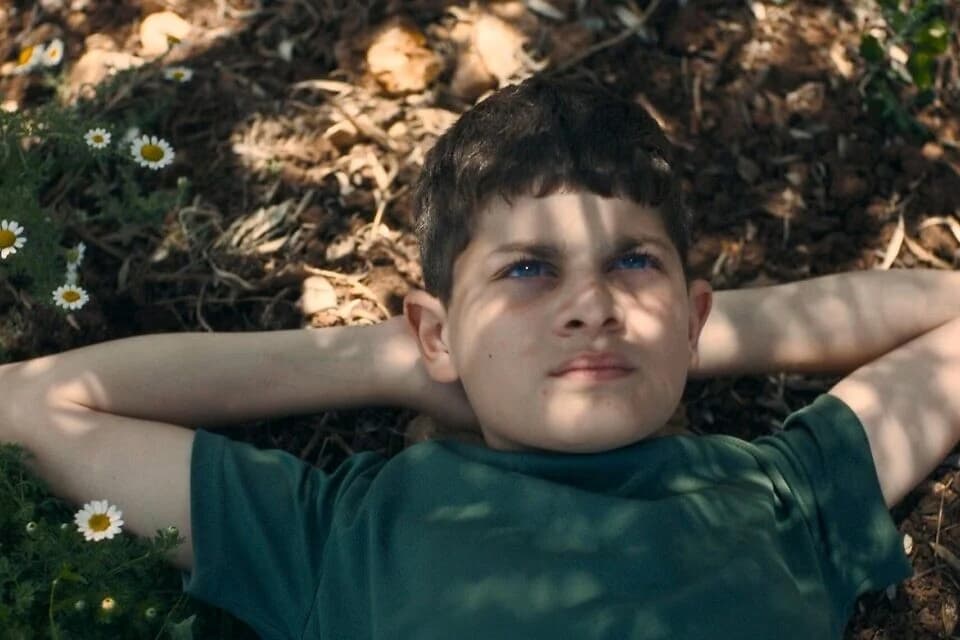
Muhammad Gazawi, who plays Khalid in the controversial film The Sea (Majdal films)

Published: 3 December 2025

Last updated: 4 December 2025

The Israeli film, The Sea, directed by Shai Carmeli-Pollak, swept up five trophies, including top prize for Best Picture, at The Ophirs, Israel’s national film awards. Minimalistic and almost lyrical, it can be viewed as an apolitical touching story about a boy from a nondescript village near Ramallah in the West Bank who runs away to Tel Aviv because he wants to see the Mediterranean Sea.  

Alternatively, The Sea, which also won the best screenplay, best actor, and best supporting actor, among other awards, and will represent Israel at the Oscars in the US, can be viewed as a political rant, deliberately intended to defame Israeli soldiers and Israel. 

The plot is simple. Khaled, a 12-year-old Palestinian boy, is on his way to visit the sea in Tel Aviv for the first time in his life as part of a class trip that had been okayed by the Israeli authorities. At an IDF checkpoint, the soldiers deny him entry because his papers are not in order. Khaled is returned home, but later sneaks into Israel and embarks on a journey to the sea in Tel Aviv. 

When Khaled’s grandmother calls his father, Ribhi, to tell him that Khaled has disappeared, Ribhi leaves his work in to find him.  But Ribhi is an unskilled construction worker who is working in Israel without a permit, and knows that, if caught, he will not only lose his work, but will likely face time in an Israeli prison. 

There is very little dialogue, and most of it is in Arabic (with Hebrew and English subtitles). Revealing the director’s background as a documentary filmmaker, the filming of both Tel Aviv and the unnamed Palestinian village is distant, almost uninvolved, with little visual commentary. 
Israeli citizens will not pay from their pockets for a ceremony that spits in the faces of our heroic soldiers

Culture Minister Michael Zohar

The acting is superb. Khalifa Natour, who plays Ribhi and took the best supporting actor award, provides a restrained, multi-layered performance.  But it is 12-year-old Muhammad Gazawi, who plays Khaled and is the youngest actor ever to receive an Ophir Award, who carries the film, his expressive, blue-grey eyes and gentle, child-like body language engaging the audience in his fear, curiosity, determination, and longing as he tries to navigate a large, strange, foreign city where he doesn’t speak the language.  

Some of the Israelis – Palestinians and Jews - that Khaled and Ribhi meet on their journey are kind and try to help them, others are dismissive and reveal disdain or fear.  One woman writes out a phonetic transliteration into Arabic letters so Khaled can approach passersby and ask them,  “Excuse me, where is the sea?” 

The soldiers they encounter are mostly doing their job.  While the ones who took Khaled off the bus might have been kinder or more sensitive, they were not rude or deliberately intimidating. Yet we, the viewers, can view the power the soldiers wield and the fear they instil in Khaled’s downcast eyes and in Rubhi’s submissive resignation as he obeys a soldier’s crisply worded command to pull up his shirt to show he is not hiding a bomb as he stands in front of a crowded, tony café in Tel Aviv where the servers continue to pour the coffee. 

I’m really happy I had the chance to do this and to give a voice to people whose voice is not heard very much in our society

Director Shai Carmeli-Pollak

There is something almost tragi-comic about the film.  Mostly, The Sea points to the complexity of the reality in which a boy with a decrepit plastic snorkel in his backpack is suspected of being a terrorist and a father avoids the police, rather than engaging their help in finding his run-away son. Indeed, the film places Palestinian experiences at the center and thus provides an unusual experience for Israeli Jews, who rarely, if ever, have the opportunity to see our cities and ourselves through the eyes of a Palestinian child and his father. 

'Disgraceful' says Culture Minister

Immediately after the Ophir Awards, Culture Minister Michael Zohar – who acknowledges that he has only seen a few clips and refuses to view the entire film – issued a written statement. “The film presents only the Palestinian view, and presents Israeli soldiers and the State of Israel in a negative manner. This scandalous win [at the awards ceremony] has enraged many Israeli citizens and soldiers, who are devoting their life to a defence of our homeland,” he wrote.   

Zohar further added, “This absurdity, in which Israeli citizens are still paying from their own pockets for the disgraceful Ophir Awards that represent less than one percent of the people of Israel, will come to an end because I have decided to stop it. Starting with the 2026 budget, this pathetic ceremony will no longer be funded by taxpayers’ money. Under my watch, Israeli citizens will not pay from their pockets for a ceremony that spits in the faces of our heroic soldiers. No more.” 

The film was produced with support from the Israel Film Fund, a public fund that is required to support artists without regard to their politics, and the Ophir Awards are supported by the Ministry of Culture and Sport.  However, according to the Association for Civil Rights, the ministry may not have the legal power to cut the funding, despite Zohar’s threats. 

Although filmed before October 2023, the film does indeed tick many of the boxes that annoy the Israeli right-wing. The statements by the winners at the Ofir Awards were all implicitly or explicitly critical of the War in Gaza and were met with energetic applause by the audience.  

Natour, who played Ribhi, refused to attend the awards, and sent a statement, read in his name, citing  “the army’s entry into Gaza and the genocide that frightens me greatly.” The child actor Gazawi attended and told the awards' audience, "I really enjoyed filming the movie. I wish that all the children in the world, everywhere, could have the same opportunity and could love and dream without war.” 

The film does not present any context, complained Yoav Lustig, in the right-wing Makor Rishon newspaper.  He writes, “The entire film is intended to create one-sided empathy, and does not take upon itself to present a broader view that would answer, from the very beginning, why the situation is the way it is and who is solely responsible for this situation.” 

Furthermore, Lustig writes, the movie has been released while Israel is defending itself against “antisemitic boycotts. Indeed, a spokesperson for Film Workers for Palestine, the group behind an international boycott of Israeli film institutions, told Variety this week that the Israel Film Fund meets its threshold for complicity with Israel.  

Giving a voice to Palestinians

Director Carmeli-Pollak responded to the criticism in an interview with the UK-based The Independent: “Making a film like this isn’t simple to do, even before the war. There’s always a spirit here [in Israel] that there is too much support for dissident films, which are not for the Israeli public but to go to audiences outside Israel and show how terrible we are.

"It’s always like this, but now it’s even stronger… Anyone without a political perspective who watches this film – even Israelis – can see it’s a story about someone being discriminated against just because of the place where they were born. It’s more complicated than Zohar’s reaction.” 

He credits the Israel Film Fund for its support in backing the film, but worries it may be “impossible” to operate in an environment with such constraints on artists.

“I’m really happy I had the chance to do this and to give a voice to people whose voice is not heard very much in our society.”

You might also like
  • ‘Israel is systemically eliminating Palestinian collective life’:  B’Tselem
    Deborah Stone
  • Tame apologises – but with little grace
    Deborah Stone
  • Confronting Richard Flanagan and the myth of the Israel lobby
    Mary Garden
logomark.67a07ee3
We believe in the free flow of information

Republish our articles for free, online or in print, by using our Creative Commons licence

You might also like

    Rozana Beit Oula
    PeacebuildingOpinionIsrael

    Peacebuilding through the eyes of a sceptic

    Ron Finkel
    Netanyahu
    Israel Hamas WarFeatureIsrael

    New evidence Netanyahu was warned about October 7

    Shahar Burla 2
    Segalovitz Abbas
    Israel Votes 2026AnalysisIsrael

    Segalovitz decision to join Arab party is a paradigm change for Israel

    Eetta Prince-Gibson

About the author

Eetta Prince-Gibson

Eetta Prince-Gibson, who lives in Jerusalem, was previously Editor-in-Chief of The Jerusalem Report, is the Israel Editor for Moment Magazine and a regular contributor to Haaretz, The Forward, PRI, and other Israeli and international publications.

More from the author

AnalysisIsrael

Segalovitz decision to join Arab party is a paradigm change for Israel

AnalysisIsrael

Netanyahu pre-election juggling act

AnalysisIsrael

Women disadvantaged by new powers for Israel’s religious courts

Comments

No comments on this article yet. Be the first to add your thoughts.