‘Relentless, vicious cesspool’: Royal Commission hears evidence of online antisemitism
The impact of online hate and the failure of social media platforms to act on antisemitism were the focus of evidence at the Royal Commission this week
Peter Kohn
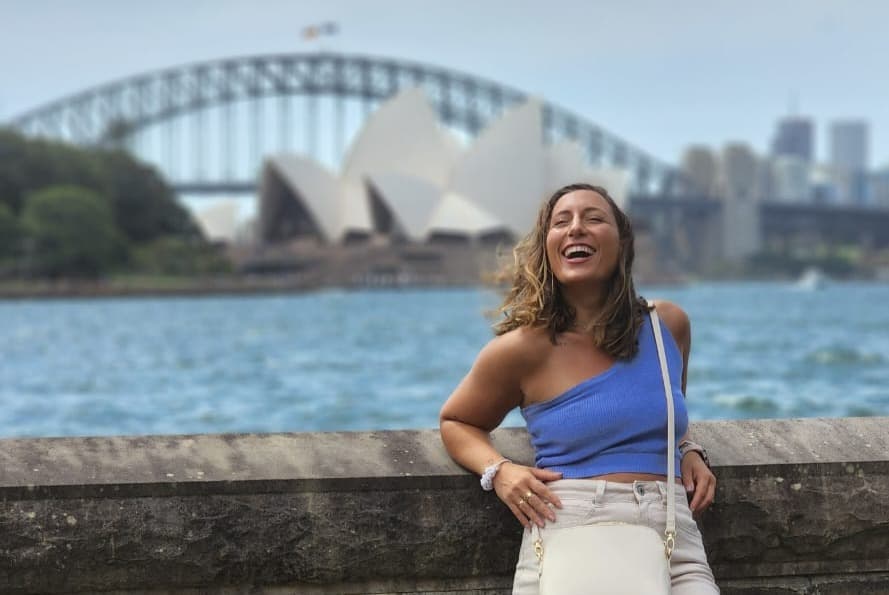
Among those who gave testimony at the Royal Commission into Antisemitism this week were (clockwise from top left) Hannah Rose, Tahlia Blicblau, Andre Oboler, Lee Kofman, Steven Lowy, Ben Adler
Published: 2 July 2026
Last updated: 9 July 2026
“Jill all Kews” – at first glance, it’s a nonsense. But the misspelling has a sinister purpose – to evade AI-driven moderation of social media platforms where certain words and phrases, like “kill” and “Jews”, have been flagged.
Other tricks used malevolently to avoid the words “Jews” being detected include the use of the word “Joos” or a juicebox emoji. That these haters’ hacks work effectively is a sign of the times – social media companies passing on responsibility for respectful discourse on their platforms from naturally intelligent humans to artificially intelligent algorithms.
The Royal Commission into Antisemitism and Social Cohesion this week heard that the “Jill all Kews” post successfully dodged the gatekeeping on TikTok and found its target – acclaimed Sydney Jewish communal icon Judy Lowy. The foundational president and long-time board member of Australia’s largest Jewish school, Moriah College in Sydney, was also called “Genocide Judy”.
But the sobering takeaway from this week’s sessions is that purveyors of online hate mostly do not need subterfuge. The RC was told repeatedly this week that social media platforms operating in Australia have their doors ajar to haters. The result is what Bondi Beach survivor Arsen Ostrovsky, in testimony, described as a “relentless, vicious cesspool”.
Now in the first week of Hearing Block 3, the RC is focusing on antisemitism in online and traditional media – the lived experience of Australian Jewish targets and potential new counter-measures. The conduct of public broadcasters ABC and SBS will also be examined.
The consistent message to the RC this week is that social media’s safeguards are sometimes non-existent, or at best weak, and online antisemites have become cunning manipulators who till the dirt at the crossroads of high technology and base hatred.
Online doors open to hatred
Tahli Blicblau, CEO of anti-hate organisation the Dor Foundation, said thousands of posts the group has monitored, including posts attacking RC witnesses – even witnesses who testified this week – have made it online and have remained online. Social media platforms’ responses to reported posts generally are at best slow, at worst not given at all, and altogether glaringly out of step with the Jewish community’s expectations of safety.
And beyond psychological safety – the right to live free of offence and insult – the concerns now are increasingly about physical safety, the RC heard. After Bondi, there can be no other conclusion. Blicblau detailed posts that talk about wanting Jews eradicated, executed and firebombed. There are calls for concentration camps to be set up in Australia, and for Jews to be expelled from the country.
Judy Lowy’s husband, Steven Lowy AM, former Westfield co-CEO, former Keren Hayesod-United Israel Appeal chair, and son of Australian business titan Sir Frank Lowy AC, detailed the online abuse against his family. The Lowys’ security monitoring identified 15,000 antisemitic posts, including calls for a “public execution”.
Randwick councillor told he doesn’t belong in Australia
Daniel Rosenfeld, a councillor for City of Randwick, NSW, related to counsel Chris Beshara SC about getting “hundreds of venomous comments” after posting on Facebook about attending a Sydney event for visiting Israeli President Isaac Herzog in February in the wake of the Bondi attack.
A setting on Rosenfeld’s account meant Facebook had automatically copied his post to the two other Meta platforms, Instagram and Threads. The explosion of venom was jawdropping. “Jews don’t belong in Australia”, read one post. “It made me feel quite unsafe,” the quietly spoken councillor admitted.
Bondi victim a ‘crisis actor’
Arsen Ostrovsky told Commissioner Virginia Bell that hatred, whether in person or online, “does lead to violence”. Injured in the Bondi Beach shootings, he’s the living embodiment.
The Sydney office head of the Australia/Israel & Jewish Affairs Council recounted how a photo of him at Bondi Beach on December 14, head covered in blood, was deepfaked to convey a false-flag operation. As he was being prepared for surgery two days after the attack, he managed to tap into his phone and saw himself described as a Mossad agent and an Oscar-deserving “crisis actor”. The blood on his head had been ketchup, they sneered.
His nine-year-old daughter, who was with the family in Israel for several years, told her father she felt safer there than here. But the important point was her father had survived, she told him. It was her way of comforting him, but it made him deeply discomfited. “Commissioner, do you know when we would say that? After the Holocaust, when our grandparents would say their victory is that we survived. And I now have a nine-year-old girl internalising this.”
‘I wish Hitler had gassed your family’
Questioned by counsel Matt Sherman SC, a Sydney mother, identified by the codename ACE, said she was distressed to hear from her Year Seven daughter in 2024 that children in her high school had posted slurs on TikTok, including, “I wish Hitler had gassed your family so we wouldn’t have had to meet”. The insults circulated among her classmates, and she was “devastated,” said ACE.
Angry at the school’s slow response, ACE reported the attacks to police, who were also in no hurry to see her. However, on viewing the evidence, the police officer she spoke to “flipped his demeanour”. Dishearteningly, one of two IP addresses that an investigation later unearthed was from a schoolmate who had been a close non-Jewish friend of her daughter.
In a moment of candour, the school’s deputy principal admitted to ACE that there was not much education on antisemitism at the school.
Jewish pupil told ‘You should kill yourself’
ACF, the father of a student in a metropolitan public high school, detailed how in 2024 his son, then 11, was on social media app Discord when he received slurs from friends at the school, including, “Hope Hamas bombs your fat arses”, “F**k Israel”, and “I hope your family in Israel is going to be killed”. There were also sexual slurs.
But the most dangerous words were in the message, “You should kill yourself”, and in the online ‘polls’ the students created, asking how many classmates thought he should take his life. Reading words like that about yourself at that age “can have a very serious effect”, ACF testified. “We focused on showing him love, that he’s not alone.”
Doxxed and stripped of her livelihood
Describing herself as “a left-wing Zionist”, a “progressive Jew” and supporting a two-state solution, Russian-born author Dr Lee Kofman traced the perilous descent experienced by Australia’s Jewish creatives since October 7, 2023. “Life has irrevocably changed for all of us,” she said.
An Open Letter For Humanity that Kofman and other creatives composed called for “empathy for both sides”, she said. She related how 630 Jewish writers on a WhatsApp group set up as a support network, which compiled the Open Letter For Humanity, were doxxed after The New York Times journalist Natasha Frost shared transcripts with an external party.
Kofman described the meticulous nature of the doxxing, a comprehensive spreadsheet of individuals’ names, their photos, workplaces, social media accounts, even how many posts each individual had made. This was no angry flourish posted in the heat of the moment, said Kofman, but a calculated exercise in exposing these individuals to ignominy and harm.
In early 2025, more than a year after the doxxing, she received her first contact from police, “who were lovely and polite – but nothing eventuated”. To date, there have been no prosecutions of doxxers, she noted.
Kofman testified that since the doxxing, she has lost three-quarters of her freelance work, much of it based on professional relationships spanning many years. Doxxed creatives have received death threats, she said, and have had their names removed from collaborative projects at universities. Employers have received defamatory messages about doxxed employees.
‘Zionism has become a slur’
Testifying on Tuesday, Jewish musician Ben Adler of klezmer fusion band Chutney and director of the Shir Jewish Music Festival, said before October 7, his sense of belonging in Australia was “unchallenged”, but since the Hamas attacks, there have been “experiences that make me feel highly unwelcome”.
He now spends nearly all of his time and energy battling to secure performance venues for Jewish-themed gigs. In late 2023, an invitation for Chutney to stage a klezmer street performance for a prominent Victorian music festival was withdrawn, with the organisers citing social media pressure over the “nuanced situation” in Israel and Gaza.
Challenging the festival that they were unfairly inflicting “erasure of Jewish cultural presence from Australia”, he managed to win back the gig. But when the Jewish creatives’ WhatsApp group was later doxxed, the letter he had sent to the festival (shared with the group in de-identified form) was among material plastered over the internet in an attempt to show Jewish influence and control, he said.
Jews targeting Jews online
Sarah Schwartz, executive director of the left-inclined Jewish Council of Australia, testified she has been targeted online from different directions. There have been social media attacks on her from neo-Nazis who, among various slurs, accuse her of “gatewaying” the rise of other minorities that are also detested by neo-Nazis.
But there have also been attacks on her from Israel supporters who have used derisive Holocaust terms against her, such as “kapo” and “Hitler’s Jew”, suggesting she is a traitor to the Jewish community.
“It’s alarming and concerning to me to have images of Jewish persecution aimed against me as a Jewish person,” said Schwartz, who explained she does not share the view that Israel speaks for all Jews or protects Jewish people.
Online complaints process broken
Macnamara Labor MP Josh Burns, who is Jewish and whose grandmother arrived in Australia before World War II to escape Nazism, testified he has been targeted with a constant stream of post-October 7 abusive material on social media.
The abuse came before and after the 2024 firebombing, smashing and daubing of his St Kilda electoral office. An electoral poster at the ravaged office had horns painted on his head, a traditional anti-Jewish trope.
The complaints process is broken, he argued. Of 44 reports of antisemitic and offensive posts he had submitted to Meta, only three had led to removal, nine were not responded to and 32 were not acted on.
Moreover, Burns said the requirement for the eSafety Commission to limit its investigations of online hate to attacks on groups is too limited. It should be expanded to cover attacks on individuals, because the underlying intent of attacking individuals is often to vilify their religious or ethnic group.
Expert witnesses: Providing haters an off-ramp
Dr Andre Oboler, founder and CEO of the Online Hate Prevention Institute (OHPI), explained the methodology of OHPI’s comprehensive sampling of antisemitic social media posts, concluding that the seven major platforms under OHPI’s review do not implement even their own standards to a level the public expects. Moreover, automated “clustering” based on user topics means Jews have a higher exposure to hate speech than the average population.
Platforms have gone part of the way and some have stronger rules than others, he explained. But there’s “an inability to enforce the rules”, he argued.
Oboler voiced particular concern about X after it was acquired by US tycoon Elon Musk, who removed 80 per cent of the trust-and-safety staff working under the former Twitter platform, while individuals banned from Twitter were invited back to X, making X “more toxic”, he said.
In recent years, volume analysis of social media has emerged alongside sampling as another form of tracking. The RC heard from Dr Matteo Vergani, associate Sociology professor at Deakin University and founder of Tackling Hate Lab, which uses AI to analyse millions of social media posts to identify trends that can be harnessed to ameliorate online hatred.
He said after October 7, there was a significant rise in the baseline number of antisemitic posts, with spikes triggered by news events. But when spikes in activity receded, they always returned to an ever-rising baseline.
Theresa Rajah of Moonshot, an online violence prevention group, explained that her organisation uses algorithms to identify individuals, some as young as 12, who are leaning into extremist views. (Anti-extremism researcher Hannah Rose of UK-based Institute for Strategic Dialogue said dummy accounts her organisation created, purporting to be from 15-year-olds, soon attracted antisemitic material).
Using technology similar to rage-baiting, Moonshot takes people in the other direction, said Rajah, offering a way back out.
There are clicks to pages that provide insight to these individuals into the true nature of the material that is influencing them. These are people often battling personal loneliness or anger issues, said Rajah. Moonshot works with social media platforms to steer potential perpetrators of violence back out of their online grievance communities and echo chambers, providing “off-ramps” to professional counselling.
Dr Robert Nicholls, a senior research associate at the University of Sydney’s Centre for AI Trust and Governance, called for extreme online content to be classified into three tiers – prohibited, restricted and borderline – and for platforms to be legally obliged not to amplify borderline material.
About the author
Peter Kohn is an Australian journalist who began his career at the Herald & Weekly Times. For 43 years, he was associated with The Australian Jewish News. For the past decade, he held the title of Senior Journalist at the newspaper. He is the author of two novels. Rachel’s Chance is the story of his family’s experiences as Jewish refugees in Shanghai during World War II, and View From A Sandcastle is based on his own story, growing up in Melbourne suburbia during the 1960s and 1970s.