Aa
  • Read, Watch, Listen
  • TJI Series
  • Community Action
  • Events
  • Zedi
Follow us and continue the conversation
  • LinkedIn
  • Instagram
  • FaceBook
  • X
  • YouTube
Test yourself with the TJI Quiz!

Adjust size of text

Aa

Follow us and continue the conversation

  • LinkedIn
  • Instagram
  • FaceBook
  • X
  • YouTube

Your saved articles

You haven't saved any articles

What are you looking for?

Original reporting, insightful analysis and diverse views, delivered straight to your inbox

  • LinkedIn
  • Instagram
  • FaceBook
  • X
  • YouTube
Your support fuels our mission to inform, entertain and inspire.

The Jewish Independent is bound by the Standards of Practice of the Australian Press Council. If you believe the Standards may have been breached, you may approach The Jewish Independent or make a complaint to the Australian Press Council in writing at www.presscouncil.org.au. The Council may also be contacted on 1800 025 712.

  • Our Story
  • Contact us
  • Our Team
  • Support us
  • Guidelines
  • Pitch your idea
  • Republishing us
  • Community Action
  • Our Awards
  • LinkedIn
  • Instagram
  • FaceBook
  • X
  • YouTube
Aboriginal FlagTorres Strait Islanders Flag

The Jewish Independent acknowledges Aboriginal and Torres Strait Islander peoples as the Traditional Owners and Custodians of Country throughout Australia. We pay our respects to Elders past and present, and strive to honour their rich history of storytelling in our work and mission.

© The Jewish Independent 2026All Rights Reserved
Website design and development by Your Creative, MelbourneTerms & ConditionsPrivacy Policy
HomeRead, Watch, ListenIsrael
Israel

The human voices of Israel’s worst day

TJI Wrap
Print this

Published: 13 October 2023

Last updated: 5 March 2024

Survivors of the Hamas massacre speak about their trauma, rescuers reveal what they found, and friends recall a family obliterated. 

‘I was like Anne Frank’

As Israelis begin to grapple with the enormity of the massacres that hundreds of Palestinian gunmen perpetrated on Saturday in communities near Gaza, one place is emerging as an epicentre of the tragedy: Kibbutz Be’eri.

With about 1200 residents before the assault, Be’eri is the largest of the 25 villages that make up the Eshkol Regional Council. At least 108 bodies have been located in the kibbutz, which used to be known mostly for its thriving printing shop and its art galleries.

Now, the kibbutz is searing itself into the Israeli consciousness as the scene of what is already called the “Be’eri Massacre” on Wikipedia, where the event received its own entry because it’s a symbol of the war launched by Hamas’s attacks.

“I was like Anne Frank,” said Uri Ben Tzvi, 71, who hid with his wife in a narrow and dark corridor in one of the kibbutz’s structures. They went there because the door to the corridor resembles that of a closet. “It was a pogrom. Like going back to the Kishinev Pogrom,” he said, referencing a 1903 series of massacres in what is now the capital city of Moldova that helped galvanize Zionist sentiment.

‘They killed them and cut some of their heads’

Davidi Ben Zion led the paratroopers who led the assault that rescued Kibbutz Kfar Aza from the terrorist attack.

"Thank God we saved many lives of many parents and children," he said. "Unfortunately, some were burned by Molotov [cocktails]. They are very aggressive, like animals."
Ben Zion said Hamas gunmen who killed families, including babies, were "just a jihad machine to kill everybody, [people] without weapons, without nothing, just normal citizens that want to take their breakfast and that's all."

Some of the victims, he said, were decapitated.

"They killed them and cut some off their heads, it's a dreadful thing to see … and we must remember who is the enemy, and what our mission is, [for] justice where there is a right side and all the world needs to be behind us."

Another officer pointed to a bloodied purple sleeping bag. A swollen toe poked out. He said the woman underneath had been killed and decapitated in her front garden.

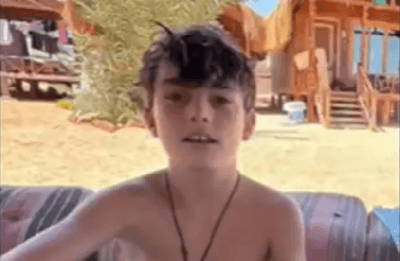
Eerez, aged 12, is among those kidnapped

'We don't know if they're alive or dead'

Early in the morning last Saturday, a group of Hamas militia entered the home of Erez, a 12-year-old boy living in Kibbutz Nir Oz.

Upon forcing their way into the home, Erez — along with his sister and father — escaped through a window and ran to hide in the bushes outside.

From there, Erez’s sister, Sahar, began sending panicked messages to their older sister, who was spending the weekend elsewhere with their mother.

“Oh my god, Gaia. They’re here. We’re hiding from them. We left the house,” read the last texts sent by the 16-year-old girl.

The family later saw a video of terrorists kidnapping Erez

“In the video, we saw one of the terrorists taking Erez. He’s 12 years old, a sweet, sweet boy,” said Erez’s aunt Sharon.

“That's the only sign that we have that he is alive,” Sharon said, pausing and correcting herself. “He was alive on Saturday noon. But that's it. We don't know anything more.”

“We're trying to tell people: please help us. Please give us a sign that they're okay. Please tell us where they are,” Sharon said. “We don't know if they're alive or dead. We don't know if they’re treating them well or maybe they're abusing them — we don't know anything, so we’re just shouting: please help us to find them.”

The Jewish Independent

‘We’re all going to be okay’ … then nothing

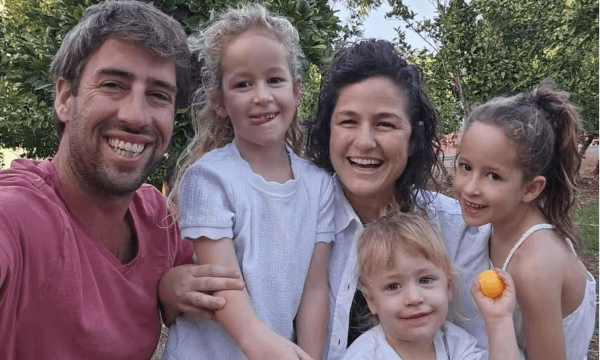
It remains unclear exactly what happened to the Kedem family, whose smiling family photo has become one of the most poignant images of the massacre.

A little after 11pm on Sunday, the Israeli government posted their photo. “Tamar, Yonatan and their children Shachar, Arbel, Omer,” the caption read. “An entire family wiped out by Hamas terrorists. There are no words. May their memory be a blessing.”

When the terrorists entered Kibbutz Nir Oz, the family rushed to their safe room and sent a What’s App message to friends, “Hi guys, we got into the shelter in our house, we’re all going okay,” the text read.

An hour later, however, Tamar had stopped responding to messages from Yishai and Mor Lacob, her friends in Sydney.  All five were found dead.

Mor Lacob said Tamar would be remembered for her loving nature and a strong sense of social justice.

“She was such a special woman,” Mor said. “She always cared about the poor people, always made sure that people less fortunate will have the same opportunities.

‘I prepared them coffee and cookies’

When Hamas terrorists broke into her home early Saturday morning, Rachel Adari didn’t have any guns.

But she had another kind of weapon: cookies, which she offered to the men who held her and her husband captive for the next 15 hours, as her city of Ofakim and dozens of other towns in southern Israel faced a brutal invasion by Hamas from Gaza.

Adari’s husband David said the terrorists told the couple they were to become “martyrs”.

“They threatened to kill us,” David said. “I was shaking and sweating.”

“I could see they were angry,” Adari told Israel’s Channel 12. “I asked them if they were hungry. I prepared them coffee and cookies.”

“She drove them crazy,” David said. “She kept asking them if they want something.”

The snacks helped buy the couple enough time for their sons, both police officers, to join an operation that resulted in their liberation, a rare moment of rescue on a day marked primarily by loss.

‘I never imagined I'd write an elegy for my home’

Sivan Klingball grew up on Kibbutz Nir Oz, which was obliterated in the Hamas attack.

Her parents survived hiding in a safe room. Many others did not.

“Once, many years ago, my father wrote a song for a holiday festival on the kibbutz, talking about its founders who had built such a nice place. For years, I thought that one day I’d return to the kibbutz and write about it too. About my childhood, the children’s home, the members of my group, my friends, the intrigues, the belief in mankind, the sobering up from socialism. I never thought that what I would write about my home would be an elegy.”

 Photo: A body found on Kibbutz Kfar Aza, among the 1300 Israelis killed in the Hamas massacre (AP Photo/Maya Alleruzzo)

You might also like
  • New evidence Netanyahu was warned about October 7
    Shahar Burla
  • Who is Ofer Winter and could he upset Netanyahu’s election?
    Shahar Burla
  • Palestinians disillusioned with Hamas and armed struggle: new survey
    Shahar Burla
logomark.67a07ee3
We believe in the free flow of information

Republish our articles for free, online or in print, by using our Creative Commons licence

You might also like

    Woman with land and houses behind her
    NewsAustralia

    Australia to increase sanctions against West Bank settlements

    Deborah Stone 2
    Erdogan Turkey
    AnalysisIsrael

    Turkey emerges as military threat to Israel

    Dror Doron
    Segalovitz Abbas
    Israel Votes 2026AnalysisIsrael

    Segalovitz decision to join Arab party is a paradigm change for Israel

    Eetta Prince-Gibson

About the author

TJI Wrap

TJI Wrap

TJI wraps consolidate essential news and analysis from multiple sources into digestable summaries.

More from the author

NewsAustralia

War crimes allegations against Australian IDF soldier

NewsWorld

Wave of attacks on Jewish sites sparks international alarm

AnalysisIsrael

Gaza, Lebanon, Syria, Iran: Israel’s tense security landscape

AnalysisIsrael

Middle East on edge as Iran and Israel inch closer to another war