Published: 13 May 2024
Last updated: 13 May 2024
I have only visited Israel once, maybe 40 years ago. While changing money at a bank, the teller looked at me and asked: So when will you make Aliyah? The question struck me as bizarre: I was born in Australia, a country that had given refuge to both my parents, and Israel was for me a foreign country.
The past year has taught me that it is not possible for a Jew to feel no connection with Israel. Neither the Israeli government, who offer me citizenship while denying it to Palestinians whose ancestors have lived there for generations, nor the opponents of Israel, who too often confuse Jewishness with support for Israel, will allow me that possibility.
Yet there is a crucial distinction to be made between Israelis and Jews. Twenty percent of Israel’s population are Arab; most Jews do not live in Israel. Of course, if we include the Occupied Territories the percentage of non-Jews is far higher. For many years Israeli commentators themselves have made the point that Israel’s policies of systematically settling the West Bank are creating a situation where Israel cannot remain simultaneously a Jewish and a democratic state.
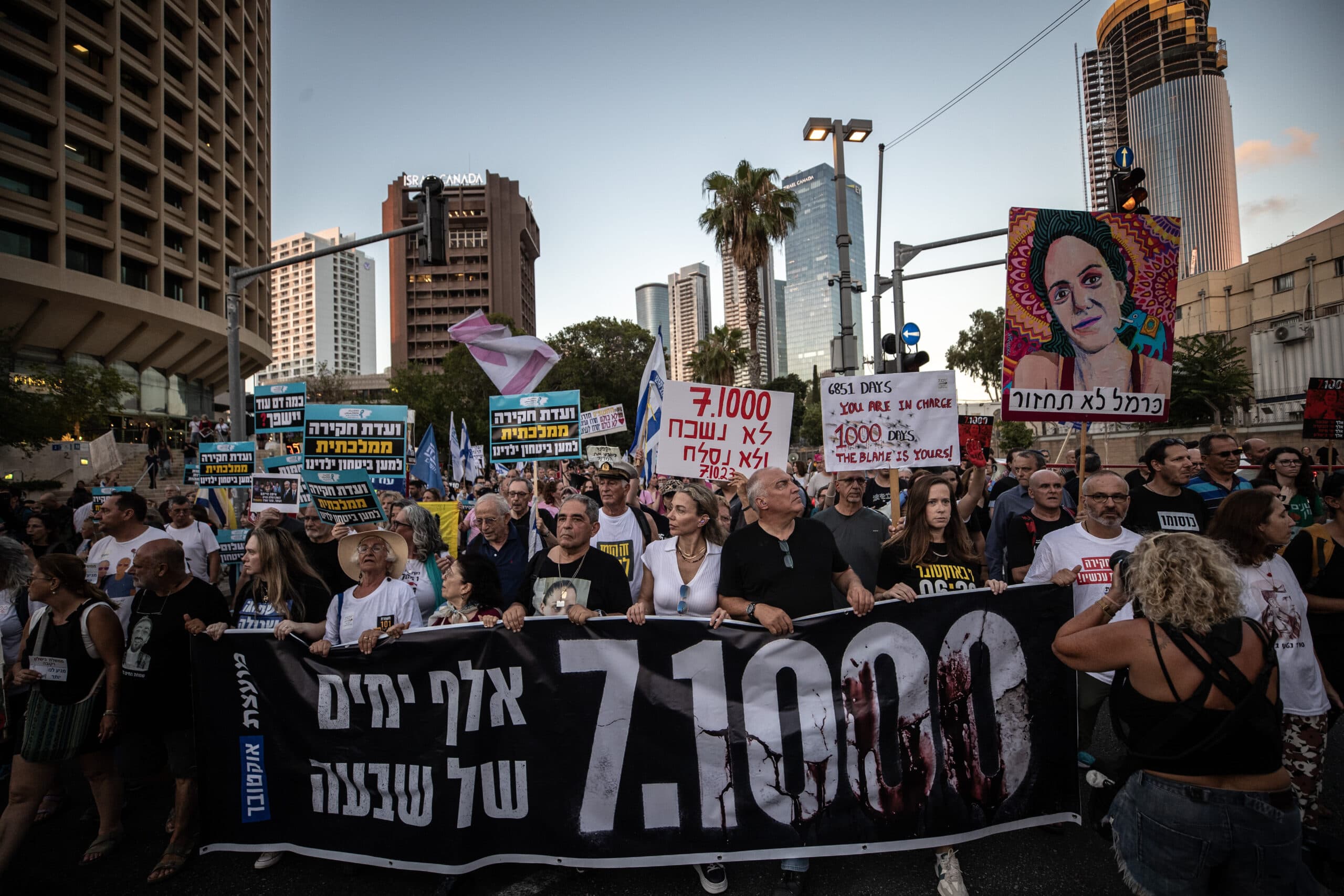
I was appalled by the brutality of October 7, but not surprised. The conditions under which Palestinians have been subjected - and the de facto acceptance by the Netanyahu government of Hamas’s role in Gaza - was a tinder box waiting to conflagrate. If I was surprised, it was at the failures of Israeli intelligence to foresee the attacks, which were clearly well planned and coordinated.
I am equally appalled by the brutality of Israel’s response and the incontestable fact that it is breaching international law. The Gaza War has done more to explode Australia’s long-standing support for Israel than 70 years of history. As more Australians come to terms with the brutality of Israel’s occupation, they are led to question the very basis of Israel’s existence.
![[[:fr:Fez (coiffure)|Fez]] rouge à gland noir, en feutre.](/_next/image/?url=https%3A%2F%2Fjewishindependent.yourcreativeagency.com.au%2Fwp-content%2Fuploads%2F2026%2F10%2Ffez-cap-eisenkot-netanyahu.jpg&w=3840&q=75)
