Aa
  • Read, Watch, Listen
  • TJI Series
  • Community Action
  • Events
  • Zedi
Follow us and continue the conversation
  • LinkedIn
  • Instagram
  • FaceBook
  • X
  • YouTube
Test yourself with the TJI Quiz!

Adjust size of text

Aa

Follow us and continue the conversation

  • LinkedIn
  • Instagram
  • FaceBook
  • X
  • YouTube

Your saved articles

You haven't saved any articles

What are you looking for?

Original reporting, insightful analysis and diverse views, delivered straight to your inbox

  • LinkedIn
  • Instagram
  • FaceBook
  • X
  • YouTube
Your support fuels our mission to inform, entertain and inspire.

The Jewish Independent is bound by the Standards of Practice of the Australian Press Council. If you believe the Standards may have been breached, you may approach The Jewish Independent or make a complaint to the Australian Press Council in writing at www.presscouncil.org.au. The Council may also be contacted on 1800 025 712.

  • Our Story
  • Contact us
  • Our Team
  • Support us
  • Guidelines
  • Pitch your idea
  • Republishing us
  • Community Action
  • Our Awards
  • LinkedIn
  • Instagram
  • FaceBook
  • X
  • YouTube
Aboriginal FlagTorres Strait Islanders Flag

The Jewish Independent acknowledges Aboriginal and Torres Strait Islander peoples as the Traditional Owners and Custodians of Country throughout Australia. We pay our respects to Elders past and present, and strive to honour their rich history of storytelling in our work and mission.

© The Jewish Independent 2026All Rights Reserved
Website design and development by Your Creative, MelbourneTerms & ConditionsPrivacy Policy
HomeRead, Watch, ListenIsrael
Israel

Why many Israeli Arabs are shunning Israel’s democracy protests

Ben Lynfield
Print this

Published: 20 January 2023

Last updated: 5 March 2024

Arab leaders say the opposition movement must acknowledge that it’s not democratic to rule over another people, or the Arab public won’t join the protests.

One might think that the segment of Israeli society likely to be first in the line of fire of Benjamin Netanyahu’s new government would be motivated to join the growing opposition movement.

Yet thus far, Arab Israelis, who make up about a fifth of the population, have largely stayed out of the fray, with only a very small number turning up at the demonstration in Tel Aviv last Saturday night that drew an estimated 80,000 people in what organisers hope will be the launch of a sustained effort to stop the Government’s plan to disempower the Supreme Court and thereby overturn traditional norms of governance.

A key question emerging as opposition coalesces is whether the battle to stop Israel’s slide to authoritarianism will include the Arab minority or further marginalise it. To date, the latter seems to be the case.

The demonstration was sponsored by the Movement for Quality Government in Israel, with participants including groups that had demonstrated in the past for Netanyahu’s resignation over corruption allegations, which he denied.

Its aim was to prevent the “dismantling of the final check [that] there is, the judiciary,” according to movement spokesman Nadav Lazare. He was referring to proposals by Justice Minister Yariv Levin that would erode the authority of the Supreme Court, including by giving the Knesset power to override its decisions with a simple majority.

But Arab leaders interviewed by The Jewish Independent say that agenda, as expressed in the protest, doesn’t address Arab concerns about broader problems in the Israeli system, and that defining and promoting democracy must include ending discrimination and halting the occupation of the West Bank.

"If we don’t speak of the whole threat and how judicial reform is only a tool of deeper overall racism in Israel, the protests won’t lead to real change.

Aida Touma Suleiman, Hadash party
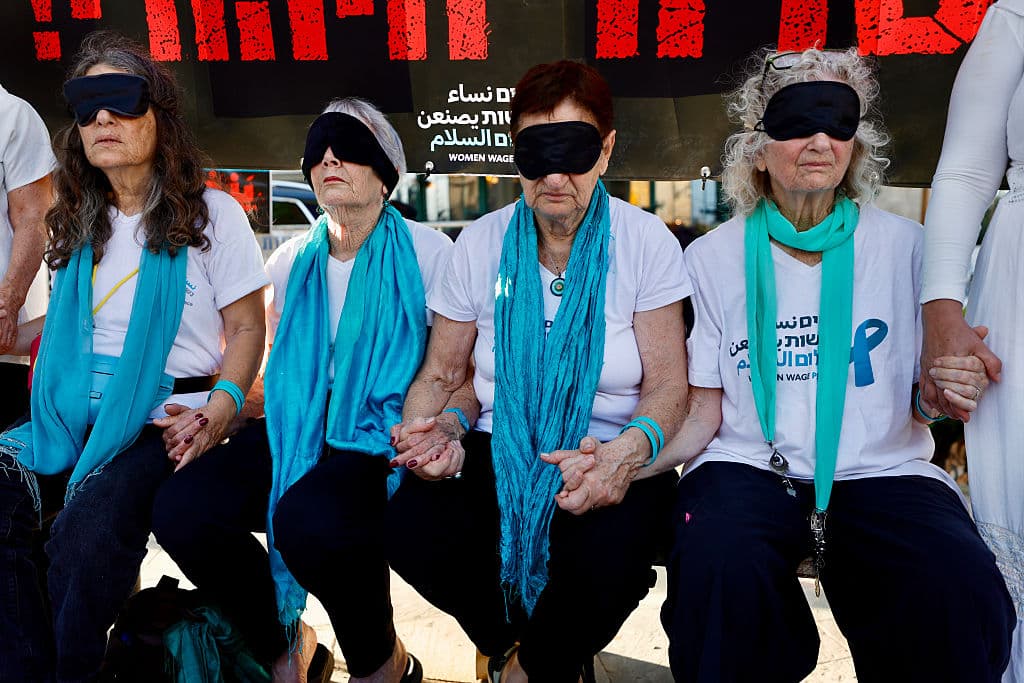
Turning back the clock to before this government was formed is not enough for Arabs, Aida Touma Suleiman, a legislator from the predominantly Arab Hadash party, told The Jewish Independent.

“I’m looking at how they are behaving and they are pushing out Arabs from the protests,” she said of the Movement for Quality Government. Lazare rejected this claim but also made clear that from his organisation’s viewpoint, “we don’t deal with the [Israeli-Palestinian] conflict.

“We deal with the nature of governance in Israel. We are a centrist movement, not identified with the Right or the Left. This is not a demonstration of the Left. There are leftists in our movement and rightists. The occupation is not the subject of the demonstration.”

Their lack of alignment sits in an overall climate in Israel that seems tinged with racism, a fact that may not be lost on those seeking to target the Jewish mainstream. A poll released this week by the Israel Democracy Institute showed that about half of Jewish Israelis believe they should have more rights than Arab citizens.

Issawi Frej, former minister of regional cooperation from the left-wing Zionist Meretz party, attended the demonstration but said he understood why the vast majority of Arab citizens ignored it.

“When you don’t mention equality, don’t expect the Arab public to come. Democracy is not just strengthening the Supreme Court; that’s why the Arab citizen feels he has no place there. For Arabs to come en masse, you have to also talk about that it’s not democratic to rule over another people As long as you define things so narrowly, the Arab public won’t be there.”

Frej added that for Arabs, the Supreme Court itself is a problematic institution that has at times upheld discrimination against them, such as when it failed to strike down the 2018 Nation State law that defines the country as belonging to the Jewish people and prioritises Jewish settlement as a national goal.

"When you don’t mention equality, don’t expect the Arab public to come. Democracy is not just strengthening the Supreme Court; that’s why the Arab citizen feels he has no place there."

Issawi Frej, former minister from Meretz party

Frej charged that the organisers were primarily interested in attracting the Jewish public even though they knew this would come at the expense of Arabs. “They thought they would lose the mainstream if there was too much emphasis on Arabness,” he said.

Touma Suleiman agrees it is important to safeguard the court. Without it, Arabs would be more at the mercy of “land theft” in the West Bank and racist legislation inside Israel, she believes. But she stresses: “If we don’t speak of the whole threat and how judicial reform is only a tool of deeper overall racism in Israel, the protests won’t lead to real change.

“We want to oppose racism and fascism but we don’t want to go under the slogan of defending the existing democracy because we don’t see it as democratic.” Still, she said “this doesn’t mean that Arabs won’t join the protests - it’s just that they want their voices heard.”

Lazare stressed that from his movement’s perspective, the struggle is also for the benefit of minorities, adding that Mansour Abbas, head of the Ra’am party that was in the previous coalition, attended the January 14 protest and had called on Arabs to come.

“It was very important to us that there be a lot of Israeli flags to show we support our country,” Lazare said. He said the movement “has nothing against Palestinian flags.”

Abbas, speaking before the demonstration on the Nazareth-based Radio Shams, called on Arab citizens to participate, but indicated that they need not bring flags. “We want to be partners in the protest with democratic tools in accordance with the law and not bring about direct confrontation.” His spokesman did not respond to a request to be interviewed for this article.

Younger activists are also voicing disquiet at the way last Saturday’s protest proceeded. Sally Abed, a leader of Standing Together, a Jewish-Arab group that supports equality and social change that was instrumental in a smaller protest said it was completely different from the massive protest a week later.

“We had four out of nine speakers who were Palestinian [citizens of Israel] and a Haredi and a transsexual woman. We tried to imagine a wide coalition of resistance. Unfortunately, many of the other organisations do not think this is strategic.

“They don’t think we should talk about the occupation, or about Arab-Jewish joint struggle or joint resistance. It’s almost that they are subscribing to a view that Palestinians under occupation and the existence of Palestinians in Israeli society are completely remote from Israeli democracy and have nothing to do with it.”

Meanwhile, the right-wing Im Tirzu group organised what it described as “counter-demonstrations” on university campuses. “We think everyone has the right to demonstrate but people must realise the elections decided matters,” said spokesman Joshua Lent. “People voted for reform and that is what we are hoping will happen.”

Protest: Israelis wave Palestinian and Israeli flags during a demonstration at Habima Square in Tel Aviv. (Eyal Warshavsky/SOPA/Sipa USA)

You might also like
  • Western ‘Palestinianism’ colonises everything – and hurts Palestinians
    Andres Spokoiny
  • ‘What about Hamas?’ The protesters’ blind spot that can’t be ignored
    Mary Garden
  • Israel’s pivotal election: A referendum on the nation’s future identity
    Shahar Burla
logomark.67a07ee3
We believe in the free flow of information

Republish our articles for free, online or in print, by using our Creative Commons licence

You might also like

    Arab Israeli Palestinian election vote
    Israel Votes 2026FeatureIsrael

    Fear of Netanyahu victory may drive big surge in Palestinian voter turnout

    Ben Lynfield
    Protest against settler violence in Jerusalem
    DebateAustralia

    Sanctioning settlements is a defence of Israel, not an attack

    Elisheva Madar 2
    Penny Wong
    DebateAustralia

    Sanctions must influence, not just perform disapproval

    Adam Slonim

About the author

Ben Lynfield

Ben Lynfield

Ben Lynfield covered Israeli and Palestinian politics for The Independent and served as Middle Eastern affairs correspondent at The Jerusalem Post. He writes for publications in the region and has contributed to the Christian Science Monitor, Foreign Policy and the New Statesman.

More from the author

FeatureIsrael

Fear of Netanyahu victory may drive big surge in Palestinian voter turnout

NewsIsrael

Abuse by IDF soldiers humiliates Muslim Palestinians

OpinionIsrael

Qusra siege exposes shared agenda of IDF and settler extremists

AnalysisIsrael

IDF ordered to evict West Bank camp in election show of strength