Aa
  • Read, Watch, Listen
  • TJI Series
  • Community Action
  • Events
  • Zedi
Follow us and continue the conversation
  • LinkedIn
  • Instagram
  • FaceBook
  • X
  • YouTube
Test yourself with the TJI Quiz!

Adjust size of text

Aa

Follow us and continue the conversation

  • LinkedIn
  • Instagram
  • FaceBook
  • X
  • YouTube

Your saved articles

You haven't saved any articles

What are you looking for?

Original reporting, insightful analysis and diverse views, delivered straight to your inbox

  • LinkedIn
  • Instagram
  • FaceBook
  • X
  • YouTube
Your support fuels our mission to inform, entertain and inspire.

The Jewish Independent is bound by the Standards of Practice of the Australian Press Council. If you believe the Standards may have been breached, you may approach The Jewish Independent or make a complaint to the Australian Press Council in writing at www.presscouncil.org.au. The Council may also be contacted on 1800 025 712.

  • Our Story
  • Contact us
  • Our Team
  • Support us
  • Guidelines
  • Pitch your idea
  • Republishing us
  • Community Action
  • Our Awards
  • LinkedIn
  • Instagram
  • FaceBook
  • X
  • YouTube
Aboriginal FlagTorres Strait Islanders Flag

The Jewish Independent acknowledges Aboriginal and Torres Strait Islander peoples as the Traditional Owners and Custodians of Country throughout Australia. We pay our respects to Elders past and present, and strive to honour their rich history of storytelling in our work and mission.

© The Jewish Independent 2026All Rights Reserved
Website design and development by Your Creative, MelbourneTerms & ConditionsPrivacy Policy
HomeRead, Watch, ListenIsrael
AnalysisIsrael

Zionism at the crossroads: internal divides dominate global congress

A volatile and forcibly truncated World Zionist Congress sent a clear message that the strongest threats to Zionism come from within.
Ittay Flescher
Print this
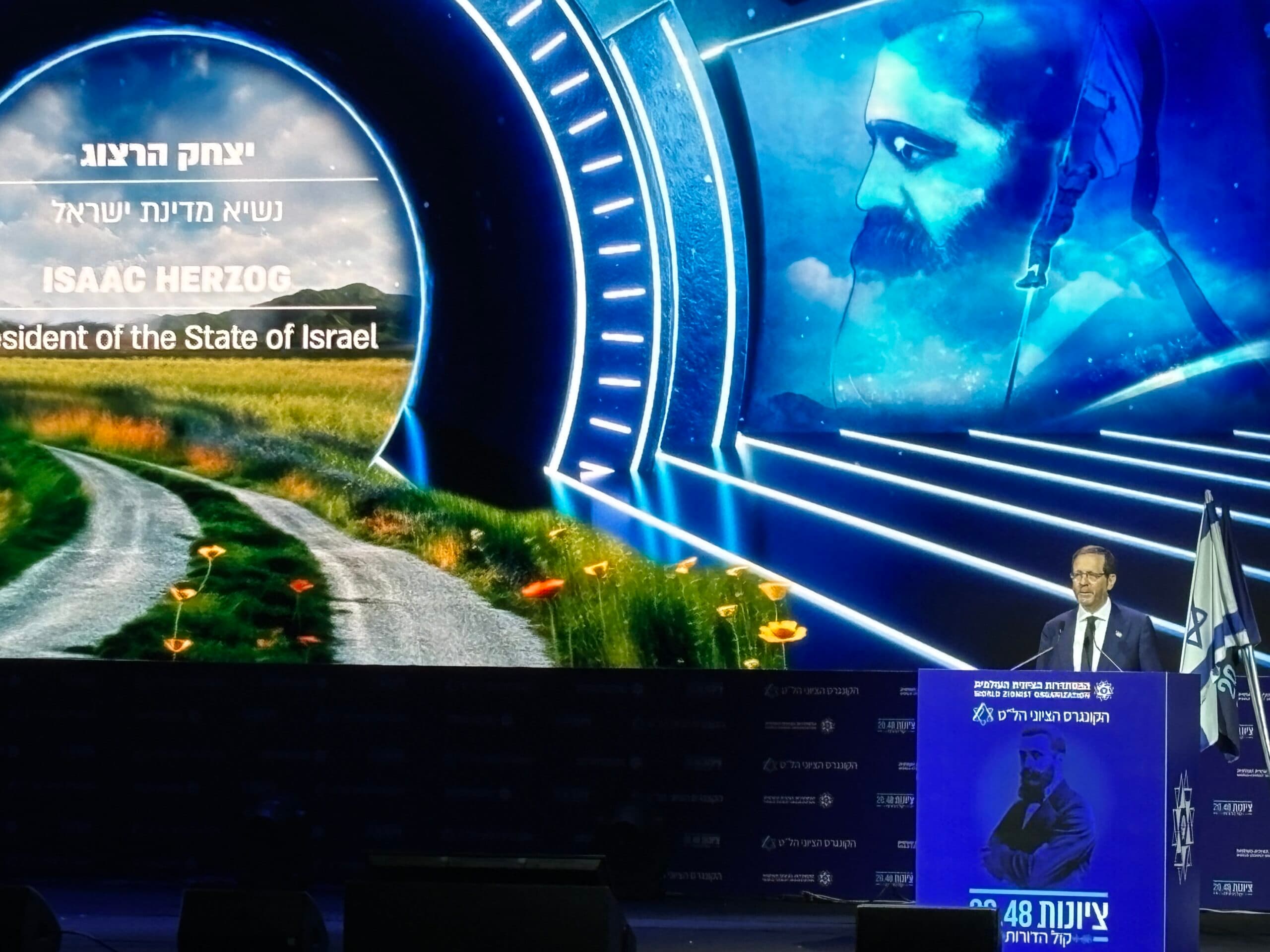
President Herzog Opening Speech

President Isaac Herzog addresses the audience at the World Zionist Congress (Ittay Flescher)

Published: 6 November 2025

Last updated: 6 November 2025

The 39th World Zionist Congress, held recently in Jerusalem, delivered a stark and at times volatile demonstration of the deep ideological fractures now running through global Zionism. 

 Set against the harrowing backdrop of the ongoing conflict and the devastating humanitarian crisis in Gaza following the October 7 attacks, the gathering laid bare the tension between external defense and internal ethical deliberation. 

Day One opened with Israeli President Isaac Herzog offering a staunch, uncompromising defence of Zionism in the face of escalating global criticism, including the coining of the derogatory term "Zios." He asserted that “These Zios are the finest of human beings,” who returned to their ancestral homeland to build a "Jewish, democratic, life-affirming and peace-seeking state." His concluding, emphatic declaration "We are proud of our Zionism and we will never forsake it... Am Yisrael Chai!" strongly resonated with the Orthodox and religious Zionist delegates. 

However, the President's focus on external threats and chest thumping felt insufficient to some progressive delegates who were looking for more soul searching and introspection at this time of such trauma for the Jewish people.  

The second day brought a significant victory for the more liberal wing. A crucial resolution, submitted by the Union of Progressive Zionism (UPZ) in partnership with Hatikvah Australia, proposed prohibiting the World Zionist Organization from financing settlements in the Gaza Strip, either directly or indirectly. 

The resolution passed with a clear majority: 300 votes in favor to 242 votes against. 
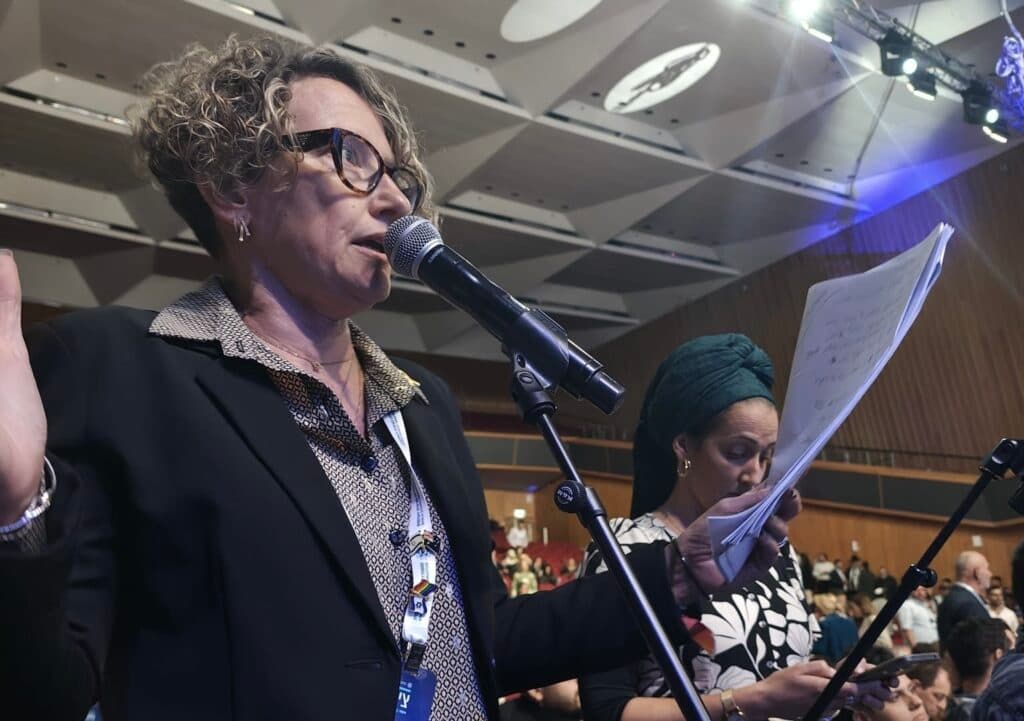
In a powerful speech to the Congress floor, Hatikvah Australia representative Nirit Eylon stressed that the organization's resources should be exclusively directed toward the rehabilitation of communities affected by the war, including mental health services and rebuilding efforts in the Gaza envelope and the North. 

“Hatikvah Australia promised voters we will fight so that resources of the congress would only go to rehabilitation of the war... I am pleased we were part of passing several important resolutions to this effect,” Eylon shared in a later interview with TJI. “It was a great feeling to see how the majority of the Jewish world remains liberal and democratic and wants to see the success of Israel.” 

Nirit Eylon speaks in favour of directing resources to rehabilitation, not Gaza settlement. (Ittay Flescher)

However, the large minority vote of 242 opposing the measure underscored the profound ideological divide, revealing a substantial number of delegates who support future Zionist settlements in Gaza. Eylon also spoke of the distress caused by the right wing’s conduct after several votes didn’t go their way: “It was very sad to see some delegates acting in a violent manner both physically and verbally towards our delegates.” 

The ideological friction intensified as the Congress progressed. A proposal by the Labor Zionist Alliance to urge the Israeli government to halt new settlements in the E1 area of the West Bank was thwarted when ultra-Orthodox, religious, and right-wing factions staged a walkout, preventing the required quorum for a legitimate vote. The resolution is still under legal discussion at the time of publication.  

Similarly, a resolution by the World Union of Progressive Judaism calling for institutionalized "equal opportunity" budgeting for all Jewish denominations, women, and LGBTQ+ groups across the National Institutions was met with heated resistance. After the resolution initially passed, opponents chanted "shame," necessitating a second vote, which again approved the measure, with proponents accusing the opponents of "gratuitous hatred." 

For the first time ever in Jerusalem, the final day of the Congress was abandoned due to a massive demonstration near the venue. Hundreds of thousands of ultra-Orthodox Israelis gathered to protest the IDF Draft. WZO Vice Chairman Dr Yizhar Hess, who is the senior Representative of Mercaz and a former Executive Director of the Masorti Movement in Israel, strongly condemned the fact that some delegates took part in this protest.  

“The fact that any delegate to the World Zionist Congress would participate in a protest against IDF service is a disgrace. National service is defined as a core Zionist value in the Jerusalem Platform. WZO must demand repayment from any delegate who traveled to Israel on the dime of the Zionist Movement and participates in promoting draft dodging,” he said. 

The early conclusion of the Congress was not merely an inconvenience; it was a devastating symbol of the severe domestic rift threatening Israeli cohesion. 

This Congress confirmed a painful truth: Zionism is anything but united. The ideological struggle for the soul of the Jewish state, between those prioritising a defense-first posture and maximum territorial claims, and those dedicated to liberal, democratic values, ethical accountability, and a focus on social and communal rehabilitation, is the defining Jewish conflict of Israel at this time.  

The message of the cancelled final day and the successful liberal resolutions is clear: the most dangerous threat to the future of Israel does not come only from without, but from the internal political and religious divisions that undermine its foundational principles of democracy and shared sacrifice. For Liberal Zionists committed to a thriving democratic Israel, the fight to ensure that global resources are directed toward healing and shared values, not endless expansion, is now the most urgent act of Zionism itself.  

You might also like
  • Tame apologises – but with little grace
    Deborah Stone
  • Confronting Richard Flanagan and the myth of the Israel lobby
    Mary Garden
  • UK’s dramatic policy change on Israel-Palestine
    Colin Shindler
logomark.67a07ee3
We believe in the free flow of information

Republish our articles for free, online or in print, by using our Creative Commons licence

You might also like

    haredi street guitar
    Photo EssayArts & Culture

    Jerusalemites through the lens

    Sharon Gabay
    Erdogan Turkey
    AnalysisIsrael

    Turkey emerges as military threat to Israel

    Dror Doron
    Arab Israeli Palestinian election vote
    Israel Votes 2026FeatureIsrael

    Fear of Netanyahu victory may drive big surge in Palestinian voter turnout

    Ben Lynfield

About the author

Ittay Flescher

Ittay Flescher

Ittay Flescher is the Jerusalem Correspondent for The Jewish Independent. For over twenty years, he has worked as an educator, journalist, and peacebuilder in Melbourne and Jerusalem. His book, The Holy and the Broken: A Cry for Israeli-Palestinian Peace from a Land that Must Be Shared, was longlisted for the 2025 Walkley Book Awards.

More from the author

AnalysisIsrael

What ‘Zionism’ means in Israel:  it’s not what you think

AnalysisIsrael

From haven to hotbed: how Israel’s perception of Australia has changed

FeatureIsrael

New wave of Russian-speaking migrants may be key to Israel’s future

AnalysisIsrael

How a new International Peace Fund could make a tangible difference

Comments1

  • Avatar of Rachel Sussman

    Rachel Sussman6 November at 08:22 am

    Thank you for this honest even if distressing article.
    Sadly, the divide is clearly growing and impacting on the Jewish community within and without Israel and it is very distressing to witness…
    If we allow this divide to grow within us we are headed for a fall…Of course it is inevitable to have different views within our community, but we must all learn to harbour the differences and to somehow build bridges between us on one hand, and focus on what unite us on the othet hand…
    I sincerely pray that we can find the wisdom and the love for our people, and Israel to build these bridges and ensure our future. Am Israel Chai…